
India has firmly established itself as the core engine of the global IT ecosystem, driving digital operations across continents. The country’s software sector is an undeniable powerhouse, with Software Companies in India currently commanding a massive $283 billion market size. This immense reach is felt worldwide, with Indian tech firms actively delivering critical solutions and services to clients in more than 80 countries. From building backend infrastructure to pushing the limits of new technology, the nation’s output directly impacts how modern organizations function every day.
The reason behind this deep global trust lies in a highly capable and rapidly growing talent pool. With a workforce of over 5 million developers, India offers a rare combination of technical expertise, adaptability, and strategic problem-solving. Because of this, 90% of Fortune 500 companies currently rely on this ecosystem to power their internal systems and customer-facing platforms. Organizations choose Indian partners not just for efficient scaling, but for their consistent ability to handle complex digital challenges and deliver reliable, high-quality results.
As the industry continues to evolve, keeping track of the key players shaping the market is helpful for both businesses seeking tech partners and professionals looking for career growth. The sector is incredibly diverse, ranging from massive global service providers to highly specialized product creators. In this article, we will cover the top 20+ companies, their specific categories, and valuable hiring insights to help you understand where the best opportunities lie.
Why India Dominates The Global Software Industry in 2026
India’s hold on the global software market isn’t just a byproduct of traditional outsourcing anymore; it is a deep, structural advantage built over decades. A major driver behind this success is the sheer scale of the country’s talent pool. India produces over 1.5 million STEM graduates every single year, creating a continuous, high-quality pipeline of engineers, developers, and tech specialists. When you pair this massive workforce with widespread English proficiency, communication barriers effectively vanish, making seamless collaboration with international teams a natural reality.
Beyond the talent itself, the operational economics remain incredibly compelling. Partnering with Indian tech hubs typically offers a 60% to 70% cost advantage compared to building teams in the US or Europe, all while maintaining top-tier quality. Additionally, geographic positioning plays a huge role. The natural time zone difference allows Western companies to establish a true 24/7 delivery cycle critical project work is handed off at the close of the US business day and is completed by the next morning. This high-speed efficiency has propelled the nation’s IT exports to a staggering $224 billion in FY25.
Finally, this growth doesn’t happen in a vacuum; it is heavily backed by proactive infrastructure and policy. Government initiatives like Digital India, alongside the rapid expansion of specialized IT parks and Special Economic Zones (SEZs), have created an ideal environment for tech firms to scale. More importantly, the narrative has shifted from purely service-based work to aggressive innovation. A fiercely competitive startup ecosystem is now driving the market forward, transforming India from the world’s back office into a premier global hub for product development and next-generation software solutions.
What Is a Software Company? Types and Business Models Explained
At its core, a software company is an organization that designs, builds, distributes, or maintains digital applications and systems. Instead of manufacturing physical goods, these businesses create the technology that helps other organizations operate, connects consumers, or solves specific technical problems. However, not all tech firms function the same way. The industry is generally broken down into four distinct business models based on how they generate revenue and deliver their solutions.
Service-Based Companies
These organizations act as external technology partners. Instead of selling a pre-packaged application, they sell their development expertise, time, and labor to clients. If a retail chain needs a custom inventory system or a hospital needs a patient portal built from scratch, they hire a service-based firm to create it. Income in this model is typically generated through long-term project contracts, hourly billing, or ongoing maintenance agreements.
Product-Based Companies
Product-based organizations invest their own resources to develop a specific, standalone piece of software intended for the mass market. The focus here is on creating a scalable solution that solves a common problem such as an operating system, an antivirus program, or a video game. Once development is complete, the company generates revenue by selling software licenses to consumers or other businesses, allowing them to install and use the finished product.
SaaS Companies
Software as a Service (SaaS) is essentially a modern evolution of the product-based model. Rather than forcing users to download and install a heavy program onto their local hard drives, the software is hosted securely in the cloud and accessed via a standard web browser. Customers don’t buy the software outright; they pay a recurring monthly or annual subscription fee to use it. This ensures users always have access to the latest features and security updates without any manual installations.
Hybrid Model
Many established organizations eventually adopt a hybrid approach to diversify their revenue streams. A company might initially build its reputation by offering custom IT consulting and development services. Over time, while solving problems for clients, they might create proprietary internal tools. Eventually, they package and sell those tools as a standalone software product to the public, while still maintaining their traditional consulting wing.
List OF Top 20+ Software Companies in India
1. Tata Consultancy Services (TCS) – The Global IT Titan
- Founded: 1968
- Headquarters: Mumbai, Maharashtra
- Employees: 600,000+
- Revenue: $29 Billion (Approx.)
- Website: www.tcs.com
As the crown jewel of the Tata Group, TCS stands as the undisputed leader in India’s technology sector. It operates on a massive scale, helping multinational banks, retail giants, and healthcare networks modernize their legacy systems. What sets TCS apart is its deep-rooted industry knowledge paired with a highly disciplined execution model. Instead of just writing code, the firm acts as a strategic consultant, guiding massive enterprises through complex digital overhauls while ensuring zero disruption to their daily operations.
Key Services:
- Cloud infrastructure and migration
- Cognitive business operations
- Enterprise cybersecurity
- Application development and modernization
2026 Highlights:
- Expanding the TCS AI WisdomNext platform while securing major multi-billion-dollar deals in the European financial sector.
- Establishing specialized global centers of excellence focused entirely on training staff in generative AI deployment.
2. Infosys – Pioneers of Next-Gen Digital Services

- Founded: 1981
- Headquarters: Bengaluru, Karnataka
- Employees: 315,000+
- Revenue: $18.5 Billion (Approx.)
- Website:www.infosys.com
Infosys, one of the leading Software Companies in India, changed the landscape of Indian offshore development and continues to be a benchmark for corporate governance and technical excellence. The firm is deeply focused on navigating clients through their digital journeys, particularly prioritizing cloud-first strategies. Their internal culture heavily emphasizes continuous learning and upskilling, which allows them to stay ahead of the curve on emerging tech. Whether building a seamless customer experience platform or developing advanced supply chain management software to streamline operations, Infosys blends speed with precision.
Key Services:
- Digital marketing tools and experience design
- Blockchain integration
- Advanced data analytics
- Internet of Things (IoT) engineering
2026 Highlights:
- Scaling the “Infosys Topaz” ecosystem to build generative AI-first solutions specifically tailored for global retail clients.
- Executing strategic partnerships with leading LLM providers while continuing heavy investments in carbon-neutral tech campuses.
3. Acquaint Softtech – Staff Augmentation and Custom Software Development
- Founded: 2013 (13+ years in operation)
- Headquarters: Ahmedabad, Gujarat
- Employees: 50–249
- Hourly Rate: $25–$49/hr
- Website: https://acquaintsoft.com/
Acquaint Softtech, one of the leading software companies in India, has built a strong reputation for helping overseas businesses extend their engineering teams rapidly and without the overhead of full-time hiring. As an Official Laravel Partner, the company is deeply focused on delivering staff augmentation, dedicated development teams, and custom software solutions across modern stacks including Laravel, MERN, MEAN, Python, Django, and AI/LLM development. Their structured onboarding process, NDA-backed workflows, and ISO-aligned delivery model allow them to deploy fully vetted developers within just 48 hours. Whether supporting a SaaS founder building their first product or an enterprise modernizing a legacy system, Acquaint Softtech blends engineering depth with delivery discipline.
Key Services:
- Staff augmentation and hire remote developers
- Dedicated development teams
- Custom software and web application development
- AI/LLM development and integration
- MVP and product development
- Migration, modernization, and legacy system upgrades
- DevOps and cloud deployment
- Software outsourcing and long-term development partnerships
2026 Highlights:
- Expanding its AI/LLM development capabilities to serve the growing demand for intelligent automation across healthcare, SaaS, and eCommerce platforms globally.
- Maintaining its Official Laravel Partner status while scaling dedicated development team engagements for enterprise clients across the United States and Europe.
4. HCLTech – Engineering and R&D Powerhouse
- Founded: 1976
- Headquarters: Noida, Uttar Pradesh
- Employees: 225,000+
- Revenue: $13.3 Billion (Approx.)
- Website:www.hcltech.com
HCLTech has carved out a unique position by dominating the engineering and research and development (ER&D) space. While many firms focus purely on software, HCLTech deeply integrates software with complex hardware and product engineering. Their working culture encourages frontline employees to drive innovation directly alongside clients. This hands-on, engineering-first DNA makes them the go-to partner for aerospace, automotive, and semiconductor companies looking to build the next generation of smart products.
Key Services:
- Digital and product engineering
- IT infrastructure management
- Operational technology (OT) security
- Enterprise SaaS implementation
2026 Highlights:
- Rapidly deploying the HCLTech AI Force framework to fully automate internal and client software engineering lifecycles.
- Aggressively expanding into global semiconductor design services and launching deep-tech labs for practical quantum computing.
5. Bigscal Technologies – Custom Software Development and IT Outsourcing
- Founded: 2013 (13+ years in operation)
- Headquarters: Surat, Gujarat
- Employees: 200+
- Website: www.bigscal.com
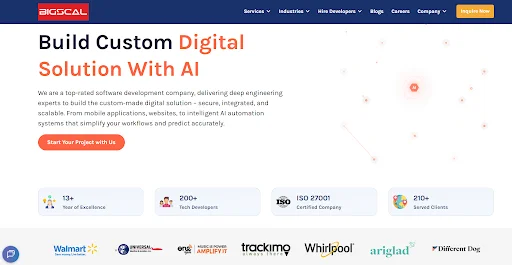
Bigscal Technologies, one of India’s established custom software outsourcing firms, has spent over a decade helping overseas businesses extend their engineering teams without the overhead of hiring in-house. Based in Surat with a second office in the US, the company built its early reputation on staff augmentation and dedicated development teams before branching into full custom software delivery. Its CMMI Level 5 and ISO 27001 certifications point to a structured, process-driven way of working, which suits the multi-year contracts many of its clients run. Whether it’s healthcare and fintech clients or retail and logistics platforms, Bigscal pairs outsourced flexibility with process discipline.
Key Services:
- Custom software and mobile app development
- IT staff augmentation and dedicated development teams
- Generative AI and agentic AI development
- QA and software testing
2026 Highlights:
- Growing its AI development line, including generative and agentic AI work, as a distinct service beyond core software delivery.
- Holding CMMI Level 5 and ISO 27001 certifications while delivering projects for enterprise clients such as Walmart and Adani Renewables.
6. Wipro – Masters of Transformation and Consulting
- Founded: 1945
- Headquarters: Bengaluru, Karnataka
- Employees: 240,000+
- Revenue: $10.5 Billion (Approx.)
- Website:www.wipro.com
Evolving from a vegetable oil manufacturer to a global technology behemoth, Wipro’s story is one of constant reinvention. Today, the company is highly regarded for its design-led approach to problem-solving. Among the top Software Companies in India, Wipro has strengthened its position by acquiring top-tier global consulting and design firms over the years. It has built a unique capability to not just execute IT projects, but to completely reimagine user experiences and business models for its clients, particularly within the healthcare and financial sectors.
Key Services:
- User experience and UI design
- Business process outsourcing (BPO)
- Cloud transformation and architecture
- Applied artificial intelligence
2026 Highlights:
- Integrating the “Wipro ai360” framework across all service lines and launching massive workforce training programs in responsible AI.
- Forging new health-tech alliances aimed at drastically improving the security and efficiency of global patient data management.
7. Tech Mahindra – Telecom and Network Innovators
- Founded: 1986
- Headquarters: Pune, Maharashtra
- Employees: 145,000+
- Revenue: $6.3 Billion (Approx.)
- Website:www.techmahindra.com
While it handles a wide array of IT services, Tech Mahindra is the undisputed heavyweight when it comes to telecommunications and network engineering. As 5G rollouts continue globally, telecom providers rely heavily on this firm to optimize their networks and monetize new infrastructure. Backed by the broader Mahindra Group, the company is also making aggressive moves into the manufacturing sector, helping traditional factories evolve into smart, highly interconnected facilities.
Key Services:
- 5G engineering and deployment
- Network modernization
- Enterprise architecture
- Metaverse and Web3 enterprise solutions
2026 Highlights:
- Launching specialized AI solutions designed specifically to automate telecom customer service and network troubleshooting.
- Forming strategic alliances to build open RAN architecture alongside driving green tech initiatives for European automakers.
8. LTIMindtree – The Next-Gen Tech Giant
- Founded: 1996 (Merger completed 2022)
- Headquarters: Mumbai, Maharashtra
- Employees: 82,000+
- Revenue: $4.3 Billion (Approx.)
- Website:www.ltimindtree.com
Formed from the mega-merger of L&T Infotech and Mindtree, this powerhouse stands among the leading Software Companies in India, bringing together deep engineering heritage with highly agile digital capabilities. LTIMindtree specializes in solving complex, data-heavy challenges for global enterprises, particularly in the banking, manufacturing, and insurance sectors. Their approach is highly pragmatic; rather than just offering theoretical digital strategies, they focus heavily on execution. They ensure that massive cloud migrations and enterprise AI integrations actually translate into measurable business growth.
Key Services:
- Cloud infrastructure orchestration
- Data engineering and advanced analytics
- Enterprise AI and cognitive automation
- Core banking modernization
2026 Highlights:
- Rolling out a proprietary GenAI framework designed specifically to automate legacy code conversion for top-tier global banks.
- Expanding their global delivery network with new nearshore centers in Eastern Europe to support rapid scaling.
9. Mphasis – Cloud and Cognitive First

- Founded: 1998
- Headquarters: Bengaluru, Karnataka
- Employees: 33,000+
- Revenue: $1.6 Billion (Approx.)
- Website: www.mphasis.com
Mphasis operates with a laser focus on what they call an “applied tech” approach, heavily prioritizing cloud computing system and cognitive solutions. Unlike firms that try to be everything to everyone, Mphasis excels by deeply integrating itself into the financial services, insurance, and logistics sectors. They are well-known for their unique Front2Back™ transformation strategy, which focuses on revolutionizing the customer experience first, and then modernizing the backend systems to support it seamlessly.
Key Services:
- Next-gen customer experience design
- Cognitive computing and AI integration
- Cyber risk and security management
- Application portfolio rationalization
2026 Highlights:
- Launching an advanced quantum-computing research lab dedicated entirely to developing unbreakable encryption for financial clients.
- Securing major partnerships with top cloud providers to accelerate zero-trust security implementations globally.
10. Zoho Corporation – The Bootstrapped SaaS Champion
- Founded: 1996
- Headquarters: Chennai, Tamil Nadu
- Employees: 15,000+
- Revenue: $1.2 Billion (Approx.)
- Website:www.zoho.com
Zoho represents a fundamentally different breed of Indian tech company. Entirely bootstrapped and fiercely independent, this SaaS titan builds world-class software that rivals global giants like Google and Microsoft. Among the top Software Companies in India, Zoho stands out for its innovation and scale. From CRM to finance and human resources, Zoho’s massive suite of over 50 interconnected apps allows businesses of any size to run their entire operation from a single ecosystem. Their commitment to rural tech development and strict data privacy has earned them intense loyalty worldwide.
Key Services:
- End-to-end business software suites
- Customer relationship management (CRM)
- IT helpdesk and security tools
- Financial and HR management platforms
2026 Highlights:
- Deeply integrating privacy-first, on-device AI across their entire software suite without relying on third-party LLMs.
- Aggressively expanding their “hub-and-spoke” rural office model to tap into previously ignored regional engineering talent.
11. Freshworks – Customer Engagement Redefined
- Founded: 2010
- Headquarters: Chennai, Tamil Nadu
- Employees: 5,000+
- Revenue: $650 Million (Approx.)
- Website:www.freshworks.com
Freshworks burst onto the global scene by proving that enterprise software doesn’t have to be clunky, expensive, or hard to use. They revolutionized the IT service management and customer support space by offering intuitive, beautifully designed tools that teams can set up in days rather than months. Born in Chennai and now a globally recognized name, Freshworks continues to disrupt the old guard of software by making AI-driven customer and employee engagement accessible to businesses of all sizes.
Key Services:
- AI-powered customer service software
- IT service management (ITSM)
- Sales CRM and marketing automation tools
- Omnichannel communication platforms
2026 Highlights:
- Launching a highly autonomous AI agent designed to resolve over 60% of tier-1 customer support tickets instantly.
- Expanding enterprise market share by introducing custom, industry-specific workflows for the healthcare and retail sectors.
12. Persistent Systems – Boutique Digital Engineering

- Founded: 1990
- Headquarters: Pune, Maharashtra
- Employees: 23,000+
- Revenue: $1.2 Billion (Approx.)
- Website:www.persistent.com
Persistent Systems is a highly specialized player that focuses almost entirely on digital product engineering. Among the top Software Companies in India, it stands out for partnering directly with software vendors and large enterprises to build the products those companies sell. Instead of handling routine IT maintenance, they focus on creating scalable digital solutions. Known for their deep technical expertise, Persistent is the hidden architecture behind many well-known global software applications. They are particularly dominant in the healthcare tech and life sciences sectors, where precision and regulatory compliance are critical.
Key Services:
- Software product engineering
- Cloud-native application development
- Data and AI enablement
- Intelligent enterprise automation
2026 Highlights:
- Executing a massive scale-up of their life sciences division to support AI-driven drug discovery platforms.
- Pioneering new frameworks for deploying decentralized applications (dApps) in enterprise supply chains.
13. Coforge – The Domain-Specific Experts
- Founded: 1992
- Headquarters: Noida, Uttar Pradesh
- Employees: 24,000+
- Revenue: $1.1 Billion (Approx.)
- Website:www.coforge.com
Previously known as NIIT Technologies, Coforge has rebranded and aggressively scaled its capabilities in recent years. Instead of spreading itself thin across all industries, the company dominates in specific verticals: travel, transportation, and public sector operations. Their approach is highly pragmatic, blending deep domain expertise with cutting-edge digital execution to ensure complex regulatory and operational hurdles are met smoothly without disrupting the client’s day-to-day business.
Key Services:
- Airline and travel tech solutions
- Public sector IT modernization
- Cognitive document processing
- Cloud infrastructure orchestration
2026 Highlights:
- Expanding their proprietary Copilot ecosystem to automate heavily regulated banking and insurance compliance workflows.
- Securing major multi-year digital transformation deals to modernize the backend systems of top-tier global airlines.
14. Hexaware Technologies – The Automation First Firm

- Founded: 1990
- Headquarters: Navi Mumbai, Maharashtra
- Employees: 30,000+
- Revenue: $1.5 Billion (Approx.)
- Website:www.hexaware.com
Hexaware, one of the notable Software Companies in India, operates with a bold “Automate Everything, Cloudify Everything” philosophy. They are known for their ability to take massive, clunky legacy IT environments and rapidly modernize them using a highly automated, agile delivery model. By relying heavily on AI-driven platforms from the very beginning of a project, they significantly reduce manual coding errors and drastically speed up the time it takes for clients to see a return on their technology investments.
Key Services:
- Extreme IT automation
- Cloud architecture and migration
- Enterprise data management
- Customer experience design
2026 Highlights:
- Deploying generative AI platforms that autonomously migrate complex legacy codebases into modern cloud environments.
- Expanding their global footprint with new specialized delivery centers across Latin America and Eastern Europe.
15. Cyient – Engineering the Physical and Digital
- Founded: 1991
- Headquarters: Hyderabad, Telangana
- Employees: 15,000+
- Revenue: $850 Million (Approx.)
- Website:www.cyient.com
When the world’s leading aerospace, mining, and rail companies need complex engineering problems solved, they turn to Cyient. This company uniquely bridges the gap between the physical and digital worlds, excelling in geospatial engineering, advanced manufacturing, and connected equipment. They don’t just build software applications; they design the digital nervous systems for jet engines, autonomous trains, and global telecommunications networks.
Key Services:
- Aerospace and rail engineering
- Geospatial technology (GIS) mapping
- Smart manufacturing operations
- IoT and connected product design
2026 Highlights:
- Launching predictive AI maintenance platforms specifically designed to reduce downtime in the global commercial aviation sector.
- Driving major sustainability initiatives by developing energy-efficient microgrid designs for heavy industrial clients.
16. Tata Elxsi – Where Design Meets Technology
- Founded: 1989
- Headquarters: Bengaluru, Karnataka
- Employees: 13,000+
- Revenue: $450 Million (Approx.)
- Website:www.tataelxsi.com
Tata Elxsi sits at the fascinating intersection of industrial design and software engineering. Among leading Software Companies in India, it stands out for focusing on user interface and physical experience rather than just backend systems. While other IT firms focus heavily on data, this company is obsessed with how technology feels and functions in real life. They are a massive force in automotive styling, broadcast media technology, and medical device design. If a new smart TV interface or a modern electric vehicle dashboard looks incredibly intuitive, there is a good chance Tata Elxsi built it.
Key Services:
- Industrial design and user styling
- Automotive software and connected cars
- Media and broadcast engineering
- Medical device technology
2026 Highlights:
- Pioneering immersive 3D and spatial computing interfaces for next-generation electric vehicle cabins.
- Expanding their digital health division to build software that supports AI-assisted robotic surgery platforms.
17. KPIT Technologies – The Automotive Software Engine
- Founded: 1990
- Headquarters: Pune, Maharashtra
- Employees: 12,000+
- Revenue: $600 Million (Approx.)
- Website:www.kpit.com
KPIT is fiercely dedicated to a single, rapidly evolving industry: mobility. As vehicles transform from mechanical machines into massive computers on wheels, KPIT acts as the software backbone for top global automakers. They specialize strictly in autonomous driving tech, electric powertrain software, and vehicle diagnostics. Their hyper-focused approach has made them an indispensable partner in the global race toward zero-emission and fully self-driving cars.
Key Services:
- Autonomous driving (ADAS) software
- Electric powertrain engineering
- Connected vehicle platforms
- Real-time vehicle diagnostics
2026 Highlights:
- Securing exclusive partnerships with European automakers to develop unified, central compute architectures for upcoming EV models.
- Deploying new machine learning frameworks that drastically improve real-time battery management in extreme climates.
18. Birlasoft – Enterprise to Cloud Champions
- Founded: 1990
- Headquarters: Pune, Maharashtra
- Employees: 12,000+
- Revenue: $650 Million (Approx.)
- Website:www.birlasoft.com
Backed by the immense CK Birla Group, Birlasoft stands out among leading Software Companies in India, specializing in guiding traditional enterprises through their mid-stage digital transformations. While other firms chase experimental tech, Birlasoft remains highly pragmatic. They focus on modernizing core ERP systems, streamlining supply chains, and seamlessly migrating legacy databases to the cloud. They are known for moving quickly while minimizing operational risk, making them a highly trusted partner for established manufacturing, banking, and life sciences companies globally.
Key Services:
- ERP consulting and implementation
- Cloud architecture and migration
- Data analytics and business intelligence
- Supply chain optimization
2026 Highlights:
- Expanding generative AI integration within core ERP platforms to automate complex financial reporting.
- Securing specialized multi-year contracts to modernize supply chain logistics for North American manufacturers.
19. Zensar Technologies – Experience-Led Engineering
- Founded: 1991
- Headquarters: Pune, Maharashtra
- Employees: 10,000+
- Revenue: $600 Million (Approx.)
- Website:www.zensar.com
Zensar takes a slightly different approach to IT services by putting human experience at the center of every engineering project. Supported by the RPG Group, this firm believes that great backend technology is useless if the frontend user interface is frustrating. They excel in creating seamless consumer experiences for retail, finance, and high-tech clients. From overhauling mobile banking apps to designing frictionless e-commerce platforms, Zensar ensures the technology genuinely serves the end user.
Key Services:
- Digital experience design
- Core IT modernization
- Advanced data engineering
- Consumer-facing app development
2026 Highlights:
- Launching an advanced behavioral analytics engine to help retail clients predict shifting consumer trends in real-time.
- Rolling out fully automated, zero-touch IT infrastructure management solutions for mid-market financial institutions.
20. Chargebee – The Subscription Management Leaders
- Founded: 2011
- Headquarters: Chennai, Tamil Nadu
- Employees: 1,200+
- Revenue: $150 Million (Approx.)
- Website:www.chargebee.com
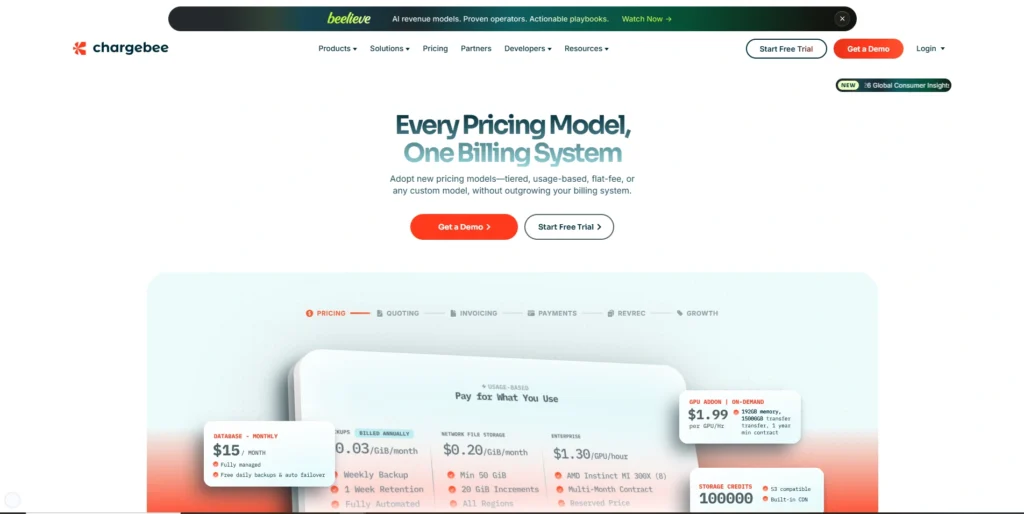
As the global economy increasingly shifts toward subscription-based models, Chargebee has positioned itself as the essential infrastructure for recurring revenue among leading Software Companies in India. This Chennai-born SaaS unicorn handles the incredibly complex backend logic of subscriptions, from automated billing and localized tax compliance to managing customer churn. Thousands of fast-growing startups and established enterprises rely on their platform to ensure their billing engines run flawlessly without needing to build custom financial software from scratch.
Key Services:
- Automated subscription billing
- Revenue recognition and forecasting
- Global tax compliance
- Churn management and retention tools
2026 Highlights:
- Introducing AI-driven predictive churn models to help businesses identify and retain at-risk subscribers before they cancel.
- Expanding hyper-localized payment gateways to seamlessly support emerging markets across Latin America and Southeast Asia.
21. Postman – The Global API Ecosystem
- Founded: 2014
- Headquarters: Bengaluru, Karnataka
- Employees: 800+
- Revenue: $120 Million (Approx.)
- Website:www.postman.com
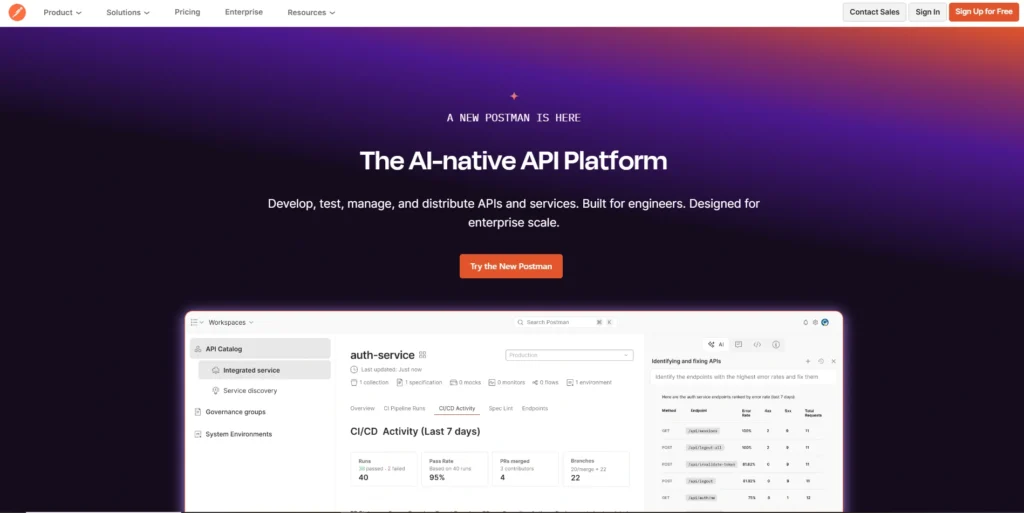
Modern software is rarely built in isolation; it relies on hundreds of different applications talking to each other through APIs. Postman is the platform that makes this communication possible. Originally built as a side project by a developer in Bengaluru, it is now the world’s leading API development environment. Over 30 million developers worldwide use this tool to build, test, and securely share APIs, making it an absolute cornerstone of the modern internet’s infrastructure.
Key Services:
- API development and testing
- Automated performance monitoring
- Secure API collaboration workspaces
- Developer onboarding and documentation
2026 Highlights:
- Releasing an autonomous AI testing agent that automatically writes and executes security checks for complex API networks.
- Deepening integrations with global cloud providers to allow instant, secure API deployment directly from the Postman workspace.
22. BrowserStack – The Software Testing Powerhouse
- Founded: 2011
- Headquarters: Mumbai, Maharashtra
- Employees: 1,000+
- Revenue: $200 Million (Approx.)
- Website:www.browserstack.com
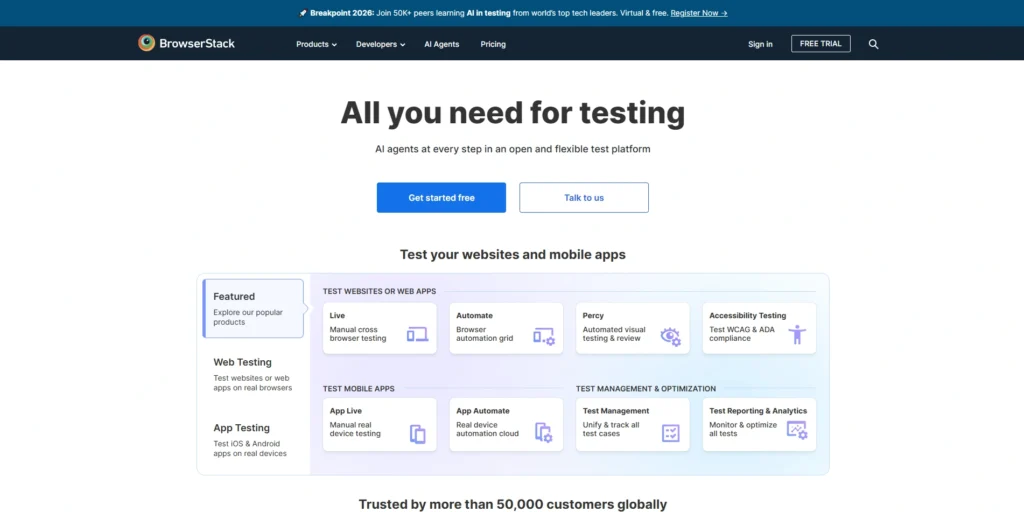
Before any major app or website is released to the public, it must be rigorously tested across thousands of different devices and browsers. Instead of companies buying mountains of physical phones and laptops, BrowserStack provides a massive cloud-based testing infrastructure. Developers can instantly access real mobile devices and browsers from anywhere in the world to find bugs before users do. It is a vital, behind-the-scenes product that ensures the digital experiences we use daily actually work flawlessly.
Key Services:
- Cross-browser testing
- Automated mobile app testing
- Visual regression testing
- Real device cloud access
2026 Highlights:
- Integrating smart AI visual checks to instantly detect subtle UI rendering errors across different screen sizes.
- Massively expanding their global data center footprint to ensure zero-latency testing for enterprise clients in Europe and Asia.
Rising Indian Software Startups to Watch in 2026
While massive IT service giants handle the heavy lifting for global enterprises, India’s vibrant startup ecosystem is where rapid, consumer-focused innovation happens. Here is a look at the key sectors and the specific startups defining them this year:
EdTech
Educational technology platforms are evolving past basic video lectures to offer highly personalized, hybrid learning models that bridge the gap between digital and physical classrooms.
Byju’s: In 2026, Byju’s is trending as it undergoes a massive strategic pivot, focusing heavily on AI-driven personalized tutoring to stabilize its core business. The platform is integrating advanced generative AI to provide real-time, interactive doubt resolution, attempting to regain consumer trust and dominance in the highly competitive K-12 segment.
PhysicsWallah: PhysicsWallah continues its explosive growth trajectory this year by heavily expanding its offline footprint across Tier 3 and Tier 4 cities. It remains a massive trendsetter because it successfully blends ultra-affordable online exam prep with high-quality physical learning centers, capturing a massive, loyal student base that competitors struggle to reach.
Fintech
Financial technology startups are democratizing money management, turning complex investing, lending, and credit processes into intuitive, mobile-first experiences.
Groww: Groww is dominating the 2026 fintech landscape by actively expanding beyond basic stock broking into comprehensive wealth management and consumer lending. Its incredibly frictionless onboarding and zero-commission models continue to attract millions of first-time retail investors from regional India, making it an absolute powerhouse in the financial sector.
CRED: CRED remains a top trend as it aggressively expands its ecosystem well beyond premium credit card payments. The company is successfully locking high-net-worth individuals into its platform by offering algorithmic instant personal loans, luxury vehicle management, and exclusive e-commerce experiences, solidifying its position as a super-app for the wealthy.
Healthtech
Healthtech companies are modernizing medical infrastructure by providing instant teleconsultations, digital health records, and seamless doorstep delivery of critical medicines.
Practo: Practo is a major company to watch due to its deep integration of AI symptom checkers and automated clinic management systems. The platform is shifting from a simple doctor-booking app to a complete preventative healthcare ecosystem, partnering with corporate networks to offer continuous, data-driven wellness tracking for employees.
Tata 1mg: Backed by the Tata Group, 1mg is trending this year through its massive expansion of hyper-local diagnostic labs and rapid pharmacy delivery networks. They are leveraging advanced predictive supply chain algorithms to ensure critical, temperature-sensitive medicines reach remote pin codes faster than ever, dominating the e-pharmacy space.
SaaS (Software as a Service)
Indian SaaS companies are the invisible engines of the internet, building the complex backend infrastructure and testing environments that global tech giants rely on.
Postman: Postman is essential in 2026 as global software development relies entirely on API integrations. The platform is trending heavily because it recently rolled out autonomous AI testing agents that automatically write and execute complex security checks, drastically speeding up how fast developers can safely launch new software.
BrowserStack: BrowserStack remains a critical trendsetter by dominating the cloud-based testing market. This year, they are rapidly expanding their global data centers and integrating smart visual AI to instantly detect rendering bugs across thousands of new mobile devices, ensuring zero-latency testing for enterprise clients worldwide.
Chargebee: As the global economy continues to shift toward subscription models, Chargebee is the ultimate backend necessity. They are trending in 2026 for introducing predictive, machine-learning models that actually identify at-risk subscribers and automatically execute retention strategies before a customer churns, saving businesses millions in lost revenue.
Proptech & Local Services
This sector focuses on removing middlemen and bringing absolute transparency and standardized pricing to real estate and everyday household services.
NoBroker: NoBroker is heavily trending by utilizing advanced predictive algorithms to instantly match tenants with ideal properties, completely bypassing traditional brokerage fees. Beyond just renting, they are rapidly expanding their comprehensive society management software, becoming the central digital dashboard for thousands of gated communities.
Urban Company: Urban Company continues to redefine the gig economy this year by aggressively upskilling its workforce to handle high-ticket, complex home repairs and premium beauty services. Their 2026 trend is driven by highly standardized quality control and deep expansion into Tier-2 cities, making premium, reliable home services a mainstream reality.
How to Choose the Best Software Company in India for Your Project
Finding the right development partner is about much more than just picking a recognizable name from a list. The success of your product ultimately depends on finding a team that seamlessly aligns with your technical requirements, working style, and business goals. Here is a practical checklist to help you evaluate potential partners effectively:
Aligning with Your Financial Reality
While cost efficiency is a major reason businesses look to the Indian IT sector, simply choosing the lowest bidder is a risky strategy that often leads to technical debt. Instead, focus on overall value. Ensure their pricing structure whether it is a fixed-bid contract or a dedicated monthly team model matches your budget expectations, and insist on complete transparency regarding potential extra costs.
Verifying Technical Depth
Almost every agency today claims to build cutting-edge software, but you need to verify their actual capabilities. If your roadmap requires advanced machine learning integration or complex cloud architecture, look past their marketing copy. Ask to see specific, live examples of those exact technologies functioning in the real world, rather than generic web development portfolios.
Deep Industry and Domain Experience
Writing clean code is only part of the equation; understanding your specific market is just as critical. If you are building a digital wallet or a patient management system, your partner must already understand the strict data compliance laws and unique user behaviors tied to the finance or healthcare sectors. You do not want to pay for a development team’s learning curve.
An Agile and Transparent Workflow
You should never hand over a project brief and wait six months in the dark for a finished product. The best tech firms operate on agile methodologies, providing you with bi-weekly sprint reviews and continuous feedback loops. This level of transparency ensures that if your business requirements suddenly change mid-development, the team can pivot without derailing the entire timeline.
Independent Reviews and Verified Feedback
Do not base your decision solely on the highly polished case studies featured on an agency’s own website. Cross-reference their reputation on independent B2B review platforms like Clutch or GoodFirms. Pay close attention to how past clients say the agency handled difficult situations—such as scope creep, unexpected bugs, or timeline delays.
Seamless Communication and Time Zone Syncing
A significant time difference can either be a massive productivity advantage or a deeply frustrating bottleneck. Clarify exactly how daily communication will be managed. The ideal partner will provide a dedicated, fluent project manager and guarantee at least two to three hours of overlap with your local workday to facilitate live meetings and rapid problem-solving.
Commitment to Post-Launch Support
A digital product is never truly “finished.” Once an application goes live, it instantly requires continuous server monitoring, security patching, and feature updates. Before signing any final agreements, establish clear Service Level Agreements (SLAs) to guarantee that the development team will be available to maintain and scale the software long after launch day.
Best Software Companies in India to Work For in 2026 (Salary & Culture)
Beyond just building great technology, the Indian IT sector has completely revamped how it treats its talent. Companies are fiercely competing to offer the best employee experience possible. Here is a quick breakdown of what professionals can expect regarding compensation and workplace culture this year:
- Salary Insights: Compensation has scaled significantly. Freshers entering the industry typically start between ₹3–8 LPA. However, experienced professionals especially those skilled in AI, cloud architecture, or cybersecurity are easily commanding packages of ₹25–50L+ per year, often supplemented by heavy stock options (ESOPs) at product-based startups.
- Top Launchpads for Freshers: Large service providers like TCS, Infosys, and HCLTech remain the absolute best starting grounds. They offer massive, structured training programs that smoothly transition recent graduates into production-ready engineers.
- Remote Work & Flexibility: The traditional 9-to-5 office grind is largely a thing of the past. Most modern SaaS companies and tech unicorns now operate on highly flexible hybrid models or offer permanent remote work, allowing developers to live in Tier-2 cities without sacrificing their global career trajectory.
- Continuous Learning Programs: Top employers do not want their teams falling behind. The best firms actively fund their employees’ upskilling, covering the costs for advanced tech certifications in machine learning, data engineering, and agile workflows.
- Women-Friendly Policies: The industry is making aggressive moves toward true inclusivity. Top-tier companies now offer specialized “returnship” programs to help women seamlessly re-enter the workforce after a career break, backed by strict pay-parity audits and dedicated leadership mentorship.
Future of Software Companies in India: Trends and Predictions for 2026-2030
The next half-decade will mark the most significant evolution in the Indian IT sector yet. The industry is shedding its old identity and stepping into a completely new era of global technological leadership. Here is what the landscape will look like as we approach 2030:
- The Shift from Outsourcing to Innovation: India is no longer just the world’s back office for cheap IT support. The narrative has fundamentally flipped. Over the next few years, the country will cement its reputation as a global hub for core product engineering, focusing on building proprietary technology and generating original intellectual property.
- GenAI Becomes Standard Infrastructure: We are moving rapidly past the experimental phase of Generative AI. By 2030, AI will not just be an experimental add-on; it will be deeply embedded into the very fabric of enterprise software, autonomously handling everything from active code generation to complex legacy system migrations.
- Explosive Growth in Custom Software: Global businesses are increasingly realizing that off-the-shelf software cannot solve highly specific industry challenges. This realization is driving a massive surge in bespoke development, with the Indian custom software market projected to hit a staggering $10.5 billion by 2030.
- The Data Center Boom: You cannot scale cloud technology and heavy AI workloads without the physical hardware to support them. To meet this intense computing demand, India is heavily expanding its digital infrastructure, with domestic data center capacity growing at an aggressive rate of over 20% annually.
- Beyond Bengaluru-The Rise of New Hubs: While Bengaluru will always be the historic heart of Indian IT, the tech map is expanding. Cities like Pune, Hyderabad, and Noida are rapidly maturing into world-class innovation centers. They are drawing in massive corporate investments and top-tier talent by offering state-of-the-art tech parks paired with a more manageable cost of living.
Conclusion
In conclusion, the Software Companies in India ecosystem has come a long way from its early days of simply providing basic IT support. Today, it stands as a global center for true innovation and high-quality engineering. From massive global service providers managing complex enterprise networks to agile startups building the next big cloud products, the ecosystem is incredibly diverse. It is clear that the world’s biggest brands no longer look to India just to save money; they partner with these companies to build better, smarter, and faster technology.
Whether you are a business owner searching for a reliable development partner or a professional looking to build a rewarding tech career, the opportunities in this space are massive. The key is to look beyond just the famous names and find the exact right fit for your specific goals. By keeping an eye on the rising startups, understanding the different business models, and using a practical checklist to evaluate your options, you can confidently navigate this fast-growing landscape and make the best choice for your future.
FAQs
1. Why Do Global Brands Consistently Choose Indian Tech Partners?
It essentially comes down to scale, skill, and economics. India produces over 1.5 million STEM graduates every year, creating an unmatched talent pool. When you combine this massive English-speaking workforce with a 60% to 70% cost advantage and a time zone difference that allows for continuous 24/7 development, it becomes the most efficient place in the world to build technology.
2. What Is The Difference Between Service-Based And Product-Based IT Companies?
Service-based firms act like digital contractors; they sell their time, expertise, and coding skills to build custom applications for other organizations. Product-based companies, on the other hand, invent, build, and own a specific piece of software (like a CRM or an operating system) and make money by selling licenses or subscriptions directly to the public.
3. Are Indian Tech Companies A Good Place For Freshers To Start Their Careers?
The massive IT service providers are essentially the ultimate training grounds. They hire fresh graduates and put them through rigorous, months-long training boot camps that bridge the gap between college theory and enterprise-level coding. It offers incredible job security and sets a solid foundation for a long-term tech career.
4. Which Indian Cities Are The Best Hubs For Software Engineering Jobs?
Bengaluru has historically been the “Silicon Valley of India” and remains a dominant force. However, the tech landscape has heavily decentralized. Cities like Pune, Hyderabad, Chennai, and Noida are now massive innovation hubs, drawing in top talent by offering world-class infrastructure alongside a much more manageable cost of living.
5. How Is The Indian IT Sector Changing In The Near Future?
The biggest transformation is the shift from backend maintenance to frontline innovation. Indian companies are no longer just fixing bugs in old systems; they are aggressively building proprietary AI tools, engineering smart electric vehicle software, and creating complex cloud ecosystems. The sector is moving rapidly from an outsourcing model to an original product engineering model.