
The Indian QSR (Quick Service Restaurant) scene is witnessing an unprecedented boom, and at the heart of this “crispy” revolution is KFC. The KFC franchise cost in India has become a major topic among investors as the market valuation for organized fast food in India has surged past $27 billion, with projections suggesting it will exceed $40 billion by 2030. With a massive footprint of over 1,100 stores across 280+ Indian cities, KFC has successfully transitioned from a metro luxury to a household staple in Tier 2 and Tier 3 towns.
The numbers behind the brand tell a compelling story for investors. Major franchise partners like Devyani International continue to report robust double-digit growth, fueled by a loyal customer base where over 60% of delivery orders specifically seek out the “Colonel’s secret recipe.” This dominance in the chicken segment offers a rare combination of global prestige and deep-rooted local demand that few other brands can match.
However, owning a piece of the world’s most famous chicken bucket is a high-stakes investment. It requires a clear understanding of the capital, logistics, and the “Yum! Brands” ecosystem. Whether you are a seasoned entrepreneur or a first-time investor looking to enter the booming Indian food industry, this guide breaks down the essential costs and the long-term ROI you can expect from a KFC franchise.
About KFC: Brand Overview
KFC (Kentucky Fried Chicken) is one of the world’s largest and most recognized quick-service restaurant (QSR) brands, famous for its signature fried chicken recipe created by Colonel Harland Sanders in the 1930s. Headquartered in Louisville, Kentucky, USA, the brand operates under Yum! Brands, which also owns Pizza Hut and Taco Bell.
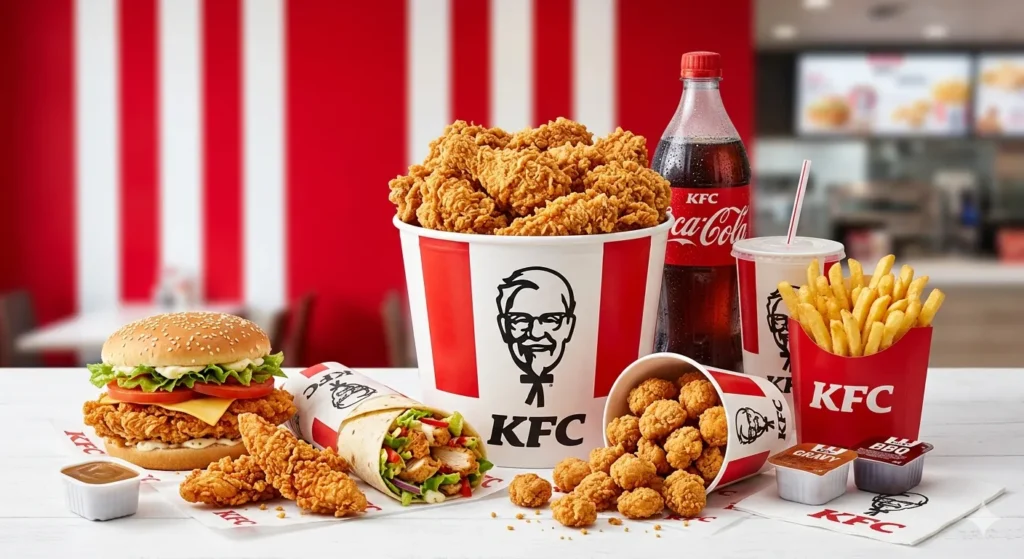
Today, KFC has a presence in more than 150 countries with over 30,000 outlets worldwide, making it a global leader in the fast-food chicken segment. The brand is widely known for its crispy chicken buckets, burgers, wraps, hot wings, and localized menu offerings designed to suit regional tastes.
KFC entered the Indian market in 1995 and has since grown rapidly across metropolitan cities as well as Tier 2 and Tier 3 markets. With more than 1,100 outlets across India, the brand has built a strong customer base through dine-in restaurants, takeaway services, drive-thrus, and delivery-focused formats, making it one of the leading fast food franchises in the country.
The company focuses heavily on innovation, digital ordering, and customer convenience through mobile apps, self-order kiosks, and partnerships with delivery platforms like Swiggy and Zomato. KFC’s strong brand value, standardized operations, and large-scale marketing campaigns make it one of the most sought-after franchise opportunities in the Indian food and beverage industry.
Why Invest in a KFC Franchise?
Investing in a KFC franchise provides a unique advantage by blending global brand authority with a business model tailored specifically for the Indian market. Here is why it stands out as a premier investment in 2026:
- Digital-First Success: KFC has seamlessly transitioned into the digital economy, with over 73% of Indian outlets featuring self-ordering kiosks. This technology not only streamlines operations but also consistently drives higher average transaction values.
- Resilient Omnichannel Strategy: The business model effectively balances high-volume delivery through partners like Swiggy and Zomato with a high-margin focus on premium dine-in experiences. This ensures the business remains profitable regardless of shifting consumer habits.
- Unrivaled Supply Chain “Moat”: Franchisees benefit from the massive buying power of Yum! Brands. This global supply chain allows for better profit margins and protects the business from local fluctuations in ingredient costs.
- Strategic Growth in Emerging Markets: The brand’s aggressive expansion into Tier 2 and Tier 3 cities offers investors access to high-growth territories that feature lower rental overheads paired with high aspirational demand.
- Strong Brand Loyalty and ROI: With a proven ROI cycle and a “gold standard” reputation, the franchise acts as a stable, long-term asset. It is positioned perfectly within an Indian QSR market that continues to grow at an annual rate of nearly 10%.
Is KFC Giving Franchises in India in 2026?
In 2026, KFC is indeed expanding its footprint in India, though the brand’s focus has shifted toward high-capacity partnerships. The current strategy prioritizes large-scale expansion via master franchisees, specifically through the consolidated operations of Devyani International and Sapphire Foods. While the brand aims to reach a milestone of 1,200+ outlets this year, new opportunities are primarily available for seasoned investors capable of managing multi-unit territories rather than single-store owners.
For prospective entrepreneurs, this means the selection process is more rigorous. Yum! Brands is currently favoring “power-operators” who can implement their latest digital-first store formats and maintain high operational standards across entire regions. While individual applications are still considered, the 2026 landscape is clearly designed for those with significant capital and the infrastructure to support KFC’s rapid growth into Tier 2 and Tier 3 markets.
KFC Franchise Models in India – Which Format Suits You?
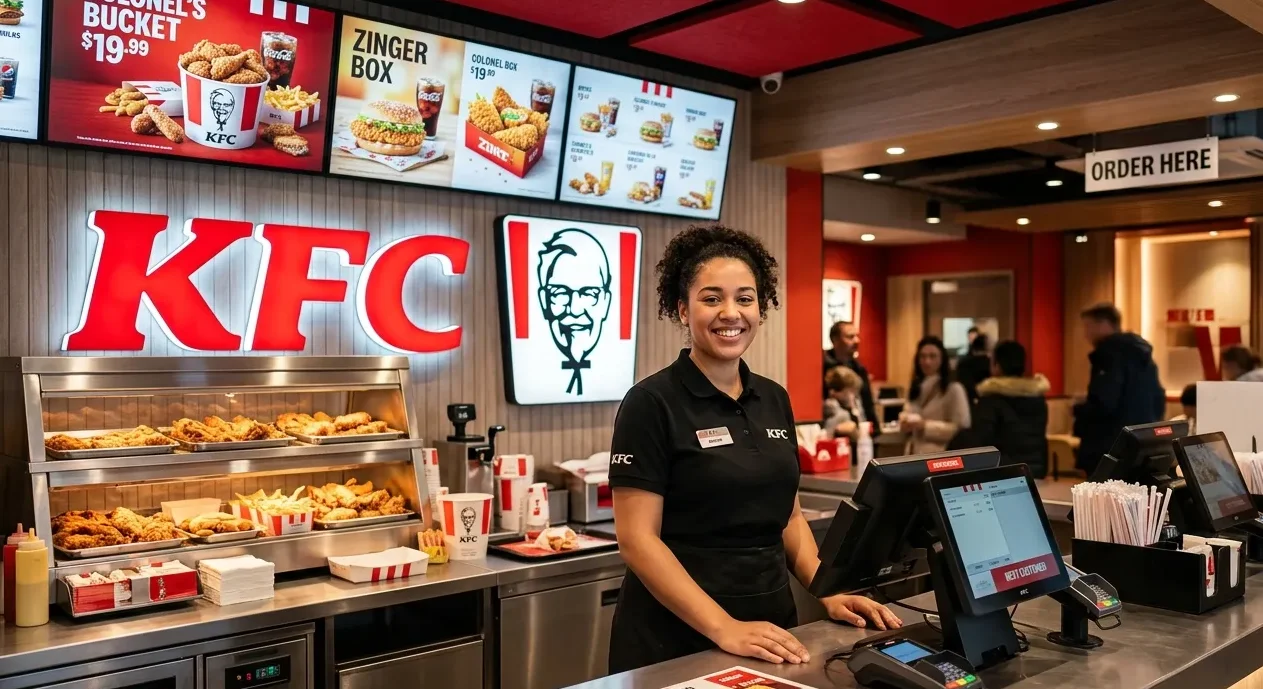
Selecting the right franchise model is a critical decision that dictates your operational scale, initial capital outlay, and long-term profitability. KFC offers diverse formats tailored to different urban landscapes and consumer behaviors.
1. Traditional Dine-In Franchise
This is the flagship KFC experience, offering the full menu and extensive seating for families and large groups. It is designed to be a destination rather than just a quick stop.
- Area Required: 1,500 – 3,000 sq. ft.
- Ideal Location: High-street premium markets, major commercial hubs, or standalone buildings in densely populated residential areas.
- Key Features: Full-service kitchen, extensive seating capacity, premium interior branding, and digital self-ordering kiosks.
- Investment Required: ₹2.5 Crore – ₹3.5 Crore+.
- Best Suited For: Experienced hospitality investors looking for a long-term, high-revenue asset with strong brand presence.
2. Drive-Thru Format
With the rise of highway travel and car-culture in India, the Drive-Thru model has become one of the most lucrative formats for suburban areas and transit corridors.
- Area Required: 2,000 – 4,000 sq. ft. (including dedicated vehicle lanes).
- Ideal Location: National highways, state expressways, or entry points of Tier 1 and Tier 2 cities.
- Key Features: Dual-lane ordering systems, limited indoor seating, and rapid-fulfillment kitchen specialized for speed.
- Investment Required: ₹3 Crore – ₹4 Crore (costs vary based on land development).
- Best Suited For: Investors with access to prime highway real estate looking to capture the “on-the-go” traveler demographic.
3. Express & Kiosk Model
The Express model focuses on high-speed service with a “grab-and-go” philosophy. It features a condensed menu focusing on best-sellers like buckets, burgers, and snacks.
- Area Required: 300 – 600 sq. ft.
- Ideal Location: Metro stations, airports, railway stations, and high-footfall transit hubs.
- Key Features: Minimal to no seating, high-efficiency compact kitchen, and heavy reliance on digital payments.
- Investment Required: ₹80 Lakhs – ₹1.2 Crore.
- Best Suited For: Entrepreneurs looking for lower overheads and high volume in areas with massive daily pedestrian traffic.
4. Food Court Outlets
Located within the ecosystem of a shopping mall, these units benefit from the mall’s existing footfall and shared amenities, reducing the need for private seating and restrooms.
- Area Required: 500 – 800 sq. ft.
- Ideal Location: Premium shopping malls and multiplex food courts.
- Key Features: Standardized front-counter service, shared mall seating, and high weekend peak-hour demand.
- Investment Required: ₹1.2 Crore – ₹1.8 Crore.
- Best Suited For: First-time KFC franchisees who want to leverage a mall’s marketing and security infrastructure.
5. Cloud Kitchen / Delivery-Only Model
This is the most modern, lean format designed strictly for the delivery era. It bypasses the need for expensive frontage and customer-facing staff.
- Area Required: 400 – 700 sq. ft.
- Ideal Location: Industrial areas or back-alleys with low rent but within a 3–5 km radius of high-density residential zones.
- Key Features: Zero seating, heavy integration with delivery partners (Swiggy/Zomato), and optimized packaging stations.
- Investment Required: ₹50 Lakhs – ₹80 Lakhs.
- Best Suited For: Tech-savvy investors focused on high margins, low operational complexity, and rapid scalability.
KFC Franchise Cost in India: Complete Investment Breakdown
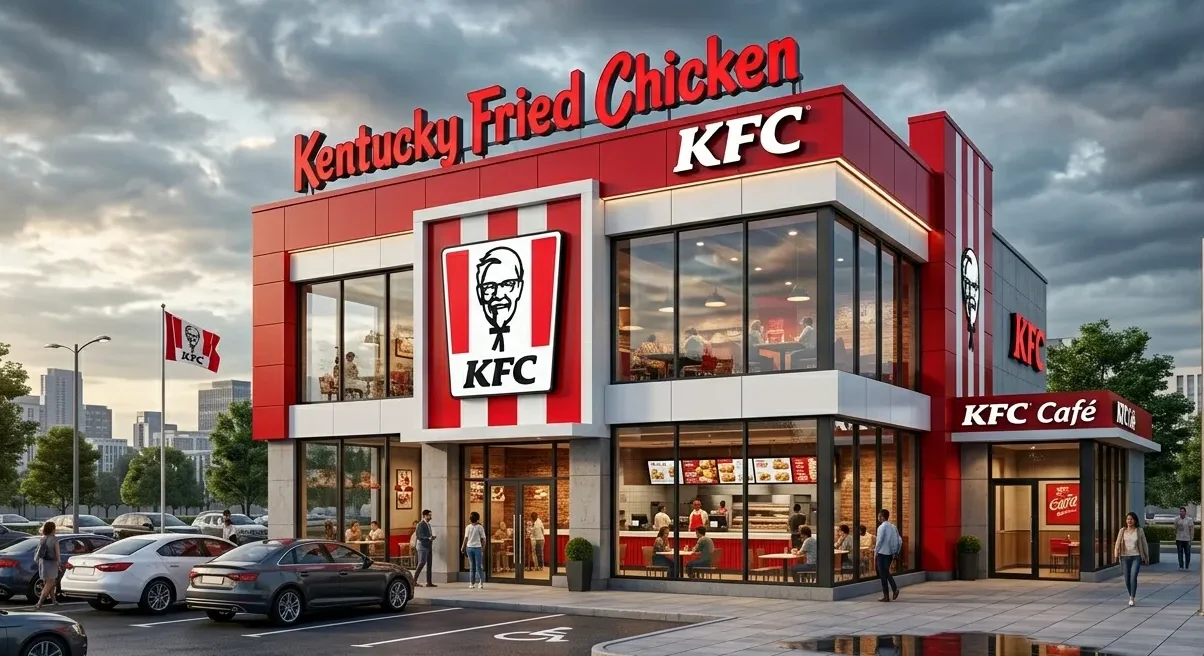
Entering the KFC network is a capital-intensive venture that requires a clear financial roadmap. The total investment varies significantly based on the chosen format and location, but most franchisees should prepare for an initial outlay ranging from ₹1.5 Crore to ₹3.5 Crore.
Below is a detailed breakdown of the setup costs, recurring fees, and regional variations you should expect.
One-Time Costs (Setup Investment)
The initial investment covers everything from the right to use the brand name to the physical construction of the store. These costs are paid upfront during the development phase:
- Franchise Fee: Approximately ₹35 Lakhs to ₹40 Lakhs for a standard term, granting you the license to operate under the KFC brand.
- Kitchen & Equipment: ₹60 Lakhs – ₹1 Crore for specialized pressure friers, holding cabinets, and cold storage units.
- Interior & Branding: ₹50 Lakhs – ₹80 Lakhs for furniture, lighting, digital signage, and the iconic “Colonel Sanders” decor.
- Initial Inventory: ₹10 Lakhs – ₹15 Lakhs for the first stock of raw materials and packaging.
Ongoing Monthly Costs (Royalty, Marketing Fee, Rent)
Beyond the setup, your monthly revenue will be subject to fixed and variable operational expenses. These are essential for maintaining global brand standards:
- Royalty Fee: Typically 4% to 5% of monthly gross sales, paid to Yum! Brands.
- Marketing & Advertising Fee: Approximately 5% of gross sales, which contributes to national TV campaigns and digital marketing.
- Operational Overheads: This includes staff salaries, utility bills (electricity/water), and high-speed internet for POS systems.
- Rent: Varies by location but usually accounts for 10% to 15% of monthly revenue.
City-Wise Investment Variation
The cost of real estate and labor varies across India. While the equipment costs remain standard, the “civil works” and rental deposits fluctuate depending on the city tier.
| City Tier | Average Setup Cost | Typical Monthly Rent | Footfall Potential |
| Tier 1 (Mumbai, Delhi, Bangalore) | ₹3.5 Crore+ | ₹5 Lakh – ₹10 Lakh | Very High / Constant |
| Tier 2 (Pune, Jaipur, Lucknow) | ₹2 Crore – ₹2.8 Crore | ₹2 Lakh – ₹4 Lakh | High / Growing |
| Tier 3 (Nagpur, Mysore, Patna) | ₹1.2 Crore – ₹1.8 Crore | ₹80k – ₹1.5 Lakh | Moderate / Emerging |
Hidden Costs
Investors often overlook the “soft costs” that arise before the first bucket of chicken is sold. It is wise to set aside a contingency fund for:
- Staff Training: Costs associated with training your core team at certified KFC training centers.
- Licenses & Permits: Legal fees for FSSAI, Fire Safety, Health Trade, and Music licenses.
- Security Deposits: Often 6–10 months of rent held by the landlord, which is not included in the setup capital.
- Pre-Opening Marketing: Local “Coming Soon” campaigns to build buzz before the launch.
KFC Franchise Profit & ROI
Understanding the financial return on a KFC investment is crucial for long-term planning. While initial costs are high, the brand’s massive popularity in India typically leads to stable, predictable revenue streams.
| Metric | Details |
| Average Profit Margins | Most outlets operate on a net profit margin of 12% to 18%. High-performing Tier 1 locations can see margins reach 20% due to high sales volume. |
| Break-even Timeline | The typical payback period is 3 to 5 years. Cloud kitchens usually see a faster ROI, while flagship dine-in units take longer but generate higher absolute profit. |
| Revenue Drivers | Profitability is boosted by upselling and high-margin add-ons. Self-ordering kiosks have increased average order values by nearly 15%, directly helping the bottom line. |
| Year-on-Year Growth | Investors can generally expect 10% to 12% annual sales growth, driven by aggressive marketing and rising demand in emerging Indian markets. |
KFC Franchise Eligibility & Requirements 2026
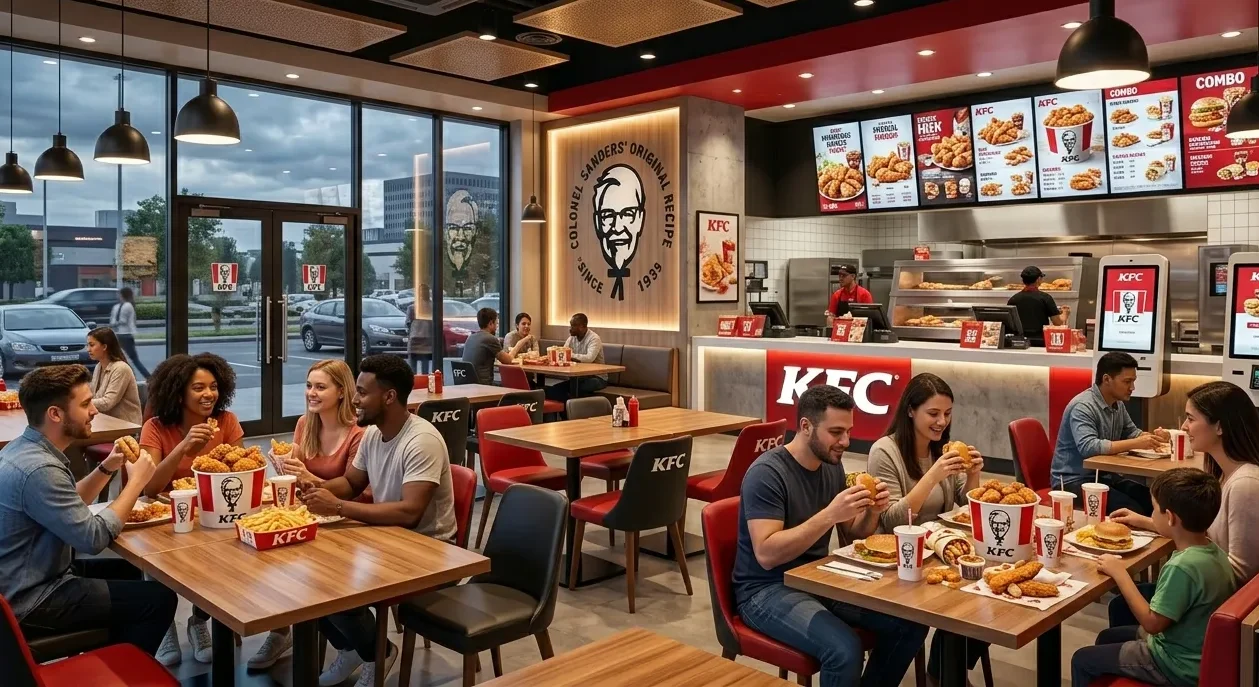
To maintain its global reputation, Yum! Brands have set a high bar for prospective partners. The focus has shifted toward “quality over quantity,” ensuring that every new franchisee has the financial muscle and operational expertise to sustain the brand’s standards.
Minimum Net Worth & Liquidity
- Net Worth: Prospective investors are generally required to have a minimum net worth of ₹5 Crore to ₹10 Crore.
- Liquid Assets: You must demonstrate liquid cash (or easily accessible funds) of at least ₹2 Crore to cover the initial setup and at least six months of operational runway.
Space & Location Requirements
- Visibility: The site must have a minimum frontage of 25–30 feet on a main road or high-traffic area.
- Utilities: The property must support a commercial electricity load of 40-50 KVA and have a robust water supply and proper drainage systems.
- Zoning: The location must be pre-approved for commercial food usage with clear “No Objection Certificates” (NOCs) from local municipal authorities.
Experience & Background Criteria
- Hospitality Portfolio: Preference is given to individuals or entities with a proven track record in the Food & Beverage (F&B) or retail sectors.
- Management Focus: The brand looks for “active” owners or partners who can commit to day-to-day operations rather than purely silent investors.
- Multi-Unit Capability: KFC favors applicants who demonstrate the vision and infrastructure to scale up to 3–5 outlets within a specific territory over 2–3 years.
Financial & Legal Documentation
- Identity Proof: PAN Card, Aadhaar Card, and Passport-sized photographs of all directors/partners.
- Business Proof: GST Registration, Trade License, and Partnership Deed or Incorporation Certificate.
- Financial History: Last 3 years of audited financial statements, Income Tax Returns (ITR), and a bank-certified solvency certificate.
Additional Strategic Requirements
- Staffing Commitment: You must agree to hire and train a minimum of 20–30 employees per shift for a standard dine-in unit, following the mandatory KFC training certification.
- Tech-Readiness: Applicants must be willing to invest in and maintain the latest “Digital-First” infrastructure, including AI-driven inventory systems and integrated delivery management software.
- Ethics & Compliance: A clean background check is mandatory, ensuring no prior involvement in financial defaults or legal disputes within the hospitality industry.
Documents Required for a KFC Franchise
The documentation process for a KFC franchise is thorough, designed to verify your financial stability, legal standing, and operational capability. Having these documents prepared will significantly streamline the verification process with the master franchisees.
- Personal Identity & Address Proof: Submit self-attested copies of Aadhaar Card, PAN Card, Passport, and passport-sized photographs for identity verification. Address proof can include a utility bill or a Voter ID matching your current address.
- Financial & Investment Documents: Provide bank statements from the last 6–12 months, Income Tax Returns (ITR) for the previous 3 years, a CA-certified Net Worth Certificate, and a bank Solvency Certificate to verify financial stability.
- Business & Entity Proof: Corporate applicants need a Certificate of Incorporation, MoA, and AoA, while partnerships must submit a registered Partnership Deed. A GST Registration Certificate is also required.
- Property & Location Documents: Submit property ownership papers or a long-term lease agreement, along with site layout plans, landlord NOC, and photographs of the proposed outlet location.
- Legal Licenses & Certifications: Required approvals include an FSSAI License, Trade License, Fire Safety NOC, and Health Trade License to ensure legal and food safety compliance.
Step-by-Step Application Process for KFC Franchise India
Navigating the application process for a KFC franchise requires patience and meticulous attention to detail. The brand follows a stringent selection protocol to ensure that only the most capable partners represent the “Colonel’s” legacy.
Step 1: Initial Research and Site Selection
Before reaching out to the brand, you must conduct extensive market research to identify a high-potential territory. In this stage, you should finalize a location that meets KFC’s strict frontage and visibility requirements, ensuring it is situated in a high-footfall area such as a premium high street or a popular shopping mall. Simultaneously, you should review your financial readiness to ensure you meet the minimum net worth and liquidity thresholds required for your chosen store format.
Step 2: Formal Application Submission
Once your site and finances are in order, you must visit the official websites of the master franchisees—Devyani International or Sapphire Foods to fill out the franchise inquiry form. This application requires you to provide detailed personal information, professional background, and specifics regarding your proposed location. Most initial screening is handled through digital portals where you may also be asked to upload a preliminary business plan outlining your vision for the outlet.
Step 3: Preliminary Screening and Background Check
If your initial application meets the brand’s criteria, the franchise development team will conduct a thorough background check. This includes a review of your financial history, a verification of your professional track record in the retail or hospitality sector, and a preliminary assessment of your proposed site’s commercial viability. You may be contacted for a short telephonic or video interview during this stage to clarify your investment capacity and operational involvement.
Step 4: Face-to-Face Meetings and Site Audit
Successful candidates are invited for a series of formal meetings with the regional franchise managers. During this phase, a technical team will visit your proposed site to conduct a “Feasibility Study,” checking for utility access, structural integrity, and neighborhood demographics. This is also the time when you will present your detailed business plan and discuss the territorial rights and expected growth targets for your region.
Step 5: Document Verification and Legal Agreement
After the site is approved, you enter the legal phase where all the documents mentioned in the previous section are scrutinized. Once the due diligence is complete, you will be issued the Franchise Disclosure Document (FDD). After reviewing the terms, you will sign the formal Franchise Agreement and pay the initial one-time franchise fee. This legal contract officially binds you to KFC’s global operating standards and grants you the license to use the brand’s intellectual property.
Step 6: Construction, Training, and Grand Launch
With the paperwork finalized, the brand provides you with the standardized architectural design and equipment list to begin store construction. While the outlet is being built, you and your core management team must undergo a mandatory, multi-week training program at a certified KFC training center to master the “Gold Standard” of food preparation and service. Once the store passes the final quality audit and all local licenses are secured, you are ready for the grand opening and your first day of operations.
What Support Does KFC Provide to Its Franchisees?
Your KFC franchise comes with a complete support system that drives operational excellence and ensures your business aligns with global standards. From the moment you sign the agreement, the brand provides a 360-degree ecosystem designed to minimize risk and maximize efficiency.
1. Initial Training and Onboarding
KFC helps franchisees become skilled at their systems through a multi-layered educational approach. This begins with a mandatory three-day intensive training program at the head office, covering vital product knowledge, profit margin management, and localized selling skills. To ensure the storefront runs smoothly, the brand provides Key Operator Restaurant Training for core team managers, supplemented by ongoing computer-based modules through the “Learning Zone” program. New owners also benefit from hands-on, on-the-job training at established outlets and comprehensive classroom instruction on the “Gold Standard” of KFC operations.
2. Marketing and Brand Support
One of the greatest advantages of this franchise is the ability to leverage KFC’s massive brand equity. Your outlet gains from high-impact national and regional advertising campaigns that maintain constant customer awareness. During your launch phase, the brand provides specialized grand opening marketing support and online initiatives to spark immediate local buzz. Furthermore, you get access to sophisticated loyalty programs and digital marketing tools specifically built to engage India’s tech-savvy, younger demographic.
3. Supply Chain and Logistics
KFC runs a robust and highly optimized supply network that removes the guesswork from procurement. Franchisees have exclusive access to a list of KFC-approved suppliers who deliver standardized, high-quality ingredients at competitive prices. The brand’s efficient distribution systems guarantee timely deliveries even in remote locations, while their integrated inventory management systems help prevent wastage. This is all backed by stringent quality control protocols that ensure every piece of chicken tastes the same, whether in Mumbai or Mysore.
4. Technology and POS Systems
Modern tech solutions are at the heart of KFC’s operational model. Every outlet is equipped with specialized Point of Sale (POS) systems that handle everything from efficient billing to real-time inventory tracking. To cater to modern consumer habits, the brand provides hardware and software for self-ordering kiosks and dynamic digital menu boards. Additionally, your store will be seamlessly integrated into online ordering platforms, complemented by immediate performance-tracking tools that allow you to monitor sales and service speeds from your smartphone.
5. Ongoing Operational Guidance
The relationship with the brand doesn’t end after the store opens; rather, it evolves into a partnership of regular support. KFC conducts frequent operational reviews to help you maintain strict quality and hygiene standards. When new menu items or technologies are introduced, the brand offers refresher training programs to keep your staff updated. You will also receive continuous guidance on the best practices in restaurant management and customer service excellence to ensure your outlet remains competitive and profitable.
Benefits of Owning a KFC Franchise
Owning a KFC franchise places you at the forefront of the Indian QSR industry, providing a level of business security that few independent ventures can offer. By joining this global network, you inherit a legacy of operational excellence and market dominance.
- Unmatched Brand Recognition: You benefit from immediate “top-of-mind” awareness, as KFC is a household name in India. This saves significant time and capital that would otherwise be spent on building brand trust from scratch, ensuring high footfall from day one.
- Proven, Recession-Resilient Model: Fast food remains one of the most stable industries during economic fluctuations. KFC’s value-driven pricing and diverse menu ranging from budget snacks to premium family buckets allow it to capture a wide demographic regardless of market conditions.
- Technological Competitive Edge: Franchisees gain access to KFC’s “Digital-First” infrastructure, including AI-integrated delivery tracking and self-ordering kiosks. This advanced tech stack reduces human error, speeds up service, and has been proven to increase the average transaction value.
- High-Volume Supply Chain Margins: Being part of the Yum! Brands ecosystem allows you to leverage massive economies of scale. You get access to premium ingredients at prices far lower than independent restaurants, protecting your profit margins against rising inflation.
- Scalability and Growth Support: The KFC model is designed for expansion. Once your first outlet is successful, the brand provides a structured roadmap for opening multiple units, supported by data-driven site selection and a continuous pipeline of menu innovation to keep the brand relevant.
Challenges of Owning a KFC Franchise
While the rewards are significant, navigating the operational and financial hurdles of a KFC franchise requires a resilient strategy. Below are the primary challenges you will face as a franchisee:
- Substantial Financial Barrier to Entry The capital required to launch a KFC outlet is a major hurdle, with total investments often reaching ₹2 Crore or more. This upfront cost covers franchise fees, specialized equipment, and premium interiors. Additionally, you must maintain a dedicated contingency fund for staff salaries and utilities during the initial months, while the recurring 4% to 6% royalty on gross sales requires disciplined financial planning to protect your net margins.
- Rigid Global Brand Standards Protecting the “Colonel’s” worldwide reputation means operating under a zero-compromise policy regarding quality. Your outlet will be subject to frequent, unannounced quality control audits to ensure every meal meets global expectations. Maintaining these strict food safety rules and operational guidelines requires constant vigilance and leaves no room for local shortcuts.
- Complex Workforce Management Running a high-volume outlet is a massive human resources task, often requiring a team of 40 to 70 employees to cover multiple shifts. Finding skilled service staff is difficult, and high turnover rates in the QSR industry make retention a constant struggle. Beyond people management, your specialized kitchen equipment also requires regular care and periodic reinvestment to avoid downtime.
- Aggressive Market Competition The Indian food market is incredibly crowded, with global giants like McDonald’s and Burger King constantly competing for the same customers and real estate. Locally, you also face pressure from brands like Haldiram’s, as well as aggressive price wars from home-grown players like Wow! Momo and Faasos who offer similar products at lower price points.
- Navigating Local Tastes and Trends Success in India requires balancing KFC’s global identity with regional preferences. You must manage the operational complexity of a strong vegetarian menu to satisfy local culture, which is essential for the Indian market. Additionally, as more customers become health-conscious, traditional fried food can be a harder sell, requiring you to effectively market grilled or balanced meal options.
KFC Franchise Cost vs Other Popular Fast Food Franchises
If the high capital requirements or strict selection process of KFC are not the right fit for your investment profile, the Indian QSR market offers several strong alternatives. These range from global giants to high-growth local brands that cater to different budget tiers.
The following table compares KFC with its primary competitors in the chicken and fast-food segment:
| Brand | Model Type | Initial Investment | Space Required | Royalty Fee | ROI Period |
| KFC | Global QSR | ₹1.5 Cr – ₹3.5 Cr | 1,000 – 3,000 sq. ft. | 4% – 6% | 3 – 5 Years |
| Burger King | Global QSR | ₹1.5 Cr – ₹2.5 Cr | 1,000 – 2,500 sq. ft. | 4.5% | 3 – 4 Years |
| Five Star Chicken | Value Kiosk | ₹10 Lakh – ₹30 Lakh | 250 – 500 sq. ft. | 5% | 1 – 2 Years |
| Popeyes | Global QSR | ₹2 Cr – ₹3 Cr | 1,200 – 2,000 sq. ft. | 5% | 3 – 4 Years |
| One Bite | Multi-Cuisine | ₹7 Lakh – ₹15 Lakh | 100 – 300 sq. ft. | 0% (No Royalty) | 1 – 1.5 Years |
| McDonald’s | Global QSR | ₹4 Cr – ₹6 Cr | 2,000 – 4,000 sq. ft. | 4% – 5% | 4 – 6 Years |
Explore more franchise options
- Mochinut Franchise Cost
- Little Caesars Franchise Cost
- Smoothie King Franchise Cost
- Naturals Ice Cream Franchise Cost
Conclusion
In conclusion, investing in a KFC franchise is a significant commitment that offers the chance to partner with one of the most recognizable brands in the global food industry. Understanding the KFC franchise cost in India is essential, as the initial costs and strict operational standards might seem daunting, but they are the very factors that ensure the brand’s long-term stability and high customer trust. With the Indian QSR market expanding rapidly into smaller towns and the brand’s aggressive push toward digital-first “smart” stores, the potential for a high-volume, profitable business is stronger than ever for those with the right capital and vision.
In summary, success with a KFC outlet depends on your ability to balance global consistency with local operational efficiency. Whether you choose a high-traffic Dine-In model or a lean, delivery-focused Cloud Kitchen, the brand’s robust support system ranging from supply chain management to national marketing provides a solid foundation for growth. If you are prepared to meet the rigorous eligibility criteria and can manage a large-scale team, owning a piece of the “Colonel’s” legacy remains one of the most prestigious and secure investments in the modern Indian hospitality sector.