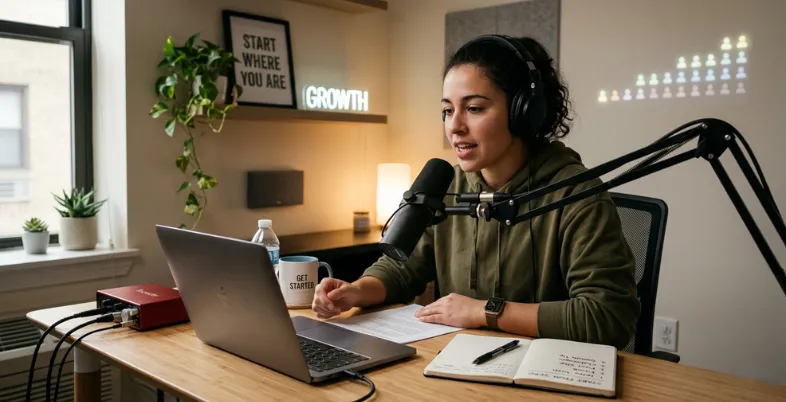
Starting a podcast with no audience may seem challenging, but it’s actually one of the best times to begin. Today, there are over 5 million podcasts worldwide and around 460 million podcast listeners globally, showing how fast the industry is growing. Even more impressive, podcast consumption has increased by nearly 20% year over year, proving that new creators still have strong opportunities to grow from zero.
The truth is, every big podcast once started without listeners. Platforms like Spotify and Apple Podcasts now prioritize content quality, consistency, and relevance over existing popularity, giving beginners a fair chance to get discovered. If you are learning how to start a podcast with no audience, focus on choosing a clear niche, creating valuable episodes, and optimizing your titles and descriptions for search.
Consistency is key. Many new podcasters gain their first 100 listeners within weeks by simply showing up regularly and promoting smartly on social media. With the right strategy, starting from zero is not a limitation, it’s the beginning of growth.
Why Start a Podcast?
Starting a podcast is a powerful way to share your ideas, build your personal brand, and connect with people who are genuinely interested in your topic. Unlike many other content formats, podcasting allows you to speak directly to your audience in a more personal and engaging way, helping you build trust over time.
It’s also one of the easiest digital platforms to start with, as you don’t need a big budget or advanced technical skills. With just a clear idea, basic recording tools, and consistency, you can begin your journey. Podcasting also helps you improve communication skills, express your thoughts clearly, and position yourself as an authority in your niche.
Another major benefit is networking. Through interviews and collaborations, you can connect with experts, creators, and professionals in your field. Most importantly, a podcast can grow into a long-term asset that builds a loyal community around your voice and ideas.
How to Find Your Podcast Niche?
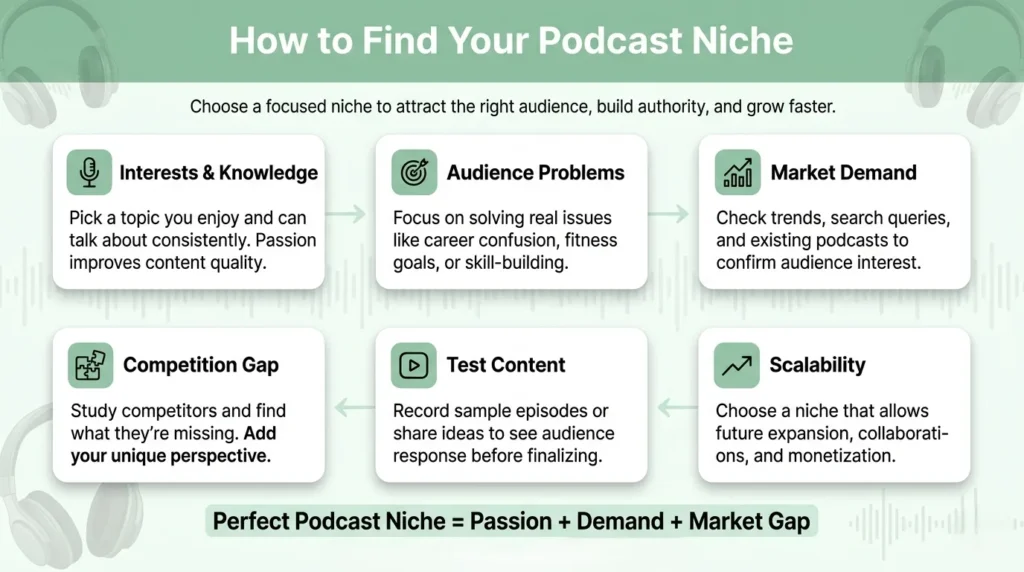
Finding the right podcast niche is the most important step when starting with zero followers. Success doesn’t come from broad topics but from focused, value-driven niches that solve specific problems. A clear niche helps you attract the right listeners, build authority, and grow faster without relying on a large audience.
- Start with Your Interests & Knowledge: Choose a topic you genuinely enjoy and can talk about consistently. Passion ensures long-term sustainability and better content quality.
- Identify Audience Problems: Focus on solving specific problems your listeners face, such as career confusion, fitness goals, or learning new skills.
- Research Market Demand: Analyse trending topics, search queries, and existing podcasts to ensure there is real audience interest in your niche.
- Check Competition Gap: Look at competitors and identify what they are missing. Add your unique perspective or format to stand out.
- Test Before Committing: Record a few sample episodes or share content ideas to see audience response before finalising your niche.
- Think Long-Term Scalability: Choose a niche that allows future expansion into multiple topics, collaborations, and monetisation opportunities.
The best podcast niche is where your interest + audience demand + a clear gap in the market come together.
Step-by-Step – How to Start a Podcast with No Audience
Step 1: Define Your UVP (Unique Value Proposition)
The foundation of a successful podcast with zero audience is having a clear Unique Value Proposition (UVP). This simply means understanding why someone should listen to your podcast instead of thousands of others available online. Without a strong UVP, your podcast will struggle to stand out or attract loyal listeners.
To define your UVP, start by focusing on these key elements:
- Clarity of Topic (What You Talk About): Choose a specific subject instead of covering too many topics. A focused theme makes it easier for listeners to understand what your podcast is about and why they should follow it.
- Target Audience (Who It’s For): Clearly define your audience. It could be students, working professionals, entrepreneurs, beginners, or any specific group. Knowing your audience helps you create content that truly connects with them.
- Problem You Solve (Why It Matters): Your podcast should provide value. It can educate, entertain, inspire, or solve a specific problem. When listeners find value, they are more likely to return.
- Your Unique Angle (What Makes You Different): Add your personal style, storytelling approach, or unique perspective. This is what makes your podcast different from others covering similar topics.
A strong UVP ensures your podcast is memorable and meaningful, even when you are starting with no audience.
Step 2: Choose Format
Your podcast format defines how your content is delivered to your audience. It plays a very important role in shaping listener experience, maintaining consistency, and keeping your episodes structured. The right format also makes it easier for you to create content regularly without confusion.
Popular Podcast Formats
- Solo Podcast: In this format, you speak alone and share your knowledge, opinions, or stories. It is the easiest to start and gives you full control over your content and schedule.
- Interview Podcast: You invite guests and discuss relevant topics with them. This format adds variety, builds credibility, and helps you reach a wider audience through your guests’ network.
- Co-hosted Podcast: Two or more hosts share conversations and insights. It feels more dynamic and engaging due to natural discussions and different perspectives.
- Storytelling / Narrative Podcast: This format focuses on storytelling, case studies, or real-life experiences. It is highly engaging and works well for educational or entertainment-based content.
How to Choose the Right Format
- Choose what feels natural and sustainable
- Consider your communication strengths
- Ensure consistency in every episode
- Align format with your niche and audience
The best format is the one you can maintain consistently over time.
Step 3: Name Your Podcast
Your podcast name is the first impression of your show. It is one of the most important branding elements because it helps listeners understand what your podcast is about within seconds. In 2026, having a clear and searchable name is especially important because it improves discoverability on platforms like Spotify, Apple Podcasts, and Google—even if you have no audience.
How to Choose a Good Podcast Name
- Keep It Clear & Simple: Choose a name that is easy to understand. Avoid long, confusing, or complicated words that are hard to remember.
- Include Keywords: Using relevant keywords in your podcast name helps improve search visibility and makes it easier for new listeners to find you.
- Reflect Your Topic: Your podcast name should clearly hint at your niche or subject so listeners immediately know what to expect.
- Make It Memorable: Pick a name that is catchy, easy to pronounce, and simple to recall. This helps people remember and recommend your podcast.
A strong podcast name improves both branding and discoverability from day one, giving your show a better chance to grow even without an existing audience.
Step 4: Equipment Setup
Starting a podcast does not require expensive equipment or a professional studio. You can easily begin with basic tools and upgrade later as your audience and content grow. The most important factor is clear audio and consistent delivery, not high-end gear.
Basic Equipment You Need
- Recording Device: You can start with a smartphone or laptop. Both are capable of recording good-quality audio when used correctly.
- Microphone: A basic USB microphone is recommended because it significantly improves sound clarity compared to built-in device microphones.
- Headphones: Headphones help you monitor your voice while recording and reduce background noise issues during editing.
- Recording Software: Free tools are available to record and edit your podcast. These tools are enough for beginners to create clean and professional-sounding episodes.
Setup Tips
- Record in a quiet environment to avoid background noise and distractions.
- Try to maintain consistent audio levels throughout your episodes.
- Focus on speaking clearly instead of trying to sound perfect.
Good audio quality is more important than expensive equipment when you are starting out. A simple setup done well will always perform better than a complex setup used incorrectly.
Step 5: Record & Edit
Recording and editing are the most important stages where your podcast actually comes to life. This is the point where your idea turns into a real episode that listeners can hear and connect with. You don’t need perfect production—what matters most is clear communication, simple structure, and consistent quality.
How to Record & Edit Effectively
- Plan Your Episode: Before recording, create a simple outline of key points. This helps you stay focused, avoid unnecessary rambling, and maintain a smooth flow throughout the episode.
- Record in a Quiet Space: Choose a calm and quiet environment to reduce background noise. Good recording conditions instantly improve audio quality, even with basic equipment.
- Speak Clearly & Naturally: Talk in a conversational tone, as if you are speaking to one person. This makes your content more engaging and easier for listeners to connect with.
- Basic Editing: Remove long pauses, background noise, mistakes, or repeated sentences. Keep the audio clean but avoid over-editing, so it still feels natural.
- Keep It Consistent: Maintain a similar style, tone, and episode length. Consistency helps build listener trust and makes your podcast feel more professional.
Remember, clarity and value are far more important than expensive studio-level production when you are starting out.
Step 6: Branding & Cover Art
Your podcast branding is your visual identity. It is what people see first before they even listen to your content. Strong branding helps you stand out in a crowded space and build recognition, even if you are starting with zero audience.
Key Branding Elements
- Cover Art: Your podcast cover should be simple, clear, and visually appealing. It must be easy to read even on small screens like mobile devices, since most users browse podcasts on their phones.
- Color & Style: Choose a consistent color theme, fonts, and overall design style. This creates a professional look and makes your podcast easily recognizable across platforms.
- Tagline: Add a short and clear line that explains what your podcast is about. A good tagline helps people quickly understand your topic and value.
- Tone & Personality: Your branding should reflect your niche and personality—whether it is professional, friendly, fun, or educational. This helps attract the right audience.
Good branding improves visibility, increases clicks, and builds trust instantly, making your podcast look more professional from day one.
Step 7: Hosting & Distribution
To make your podcast available to listeners worldwide, you need a podcast hosting platform. This is the service that stores your audio files and distributes them across major podcast platforms automatically. Without hosting, your podcast cannot be accessed easily on apps like Spotify or Apple Podcasts.
Popular Podcast Platforms
- Spotify for Podcasters: A free and beginner-friendly platform with wide reach. It allows you to upload, manage, and distribute your podcast easily.
- Buzzsprout: An easy-to-use hosting platform that offers analytics, performance tracking, and monetization options for growing podcasts.
- Apple Podcasts: Essential for reaching iOS users and building credibility. Being available here increases your podcast’s visibility and trust.
How It Works
- First, you upload your podcast episode to a hosting platform.
- The platform then automatically distributes your episode to multiple podcast directories like Spotify, Apple Podcasts, and others.
- Once published, your podcast becomes searchable and accessible globally.
Why It Matters
Hosting and distribution save you time by removing manual uploads to each platform. It ensures your content reaches a wider audience effortlessly, helping your podcast grow faster and more efficiently.
Step 8: Launch with 2–3 Episodes
Launching your podcast with multiple episodes instead of just one is a smart strategy, especially when you have no audience. It gives new listeners more content to explore right away, which increases the chances that they will stay and listen longer.
Why Launch with Multiple Episodes
- Builds Instant Credibility: Having more than one episode makes your podcast look more established and professional, even if you are just starting.
- Encourages Binge Listening: When listeners find multiple episodes at once, they are more likely to listen to more than one, increasing engagement.
- Improves Early Engagement: More content at launch keeps new listeners interested and reduces the chances of them leaving after one episode.
- Increases Platform Recommendations: Podcast platforms favor content that gets longer listening time and engagement, improving your chances of being recommended.
Launch Tips
- Release 2–3 episodes on day one so your audience has options to explore immediately.
- Promote your launch on social media platforms and within your personal network to gain initial traction.
- Ask early listeners for feedback to improve future episodes and build stronger content.
A strong launch creates momentum from day one and helps your podcast grow faster, even when starting with zero audience.
How to Build a Podcast Audience from Scratch
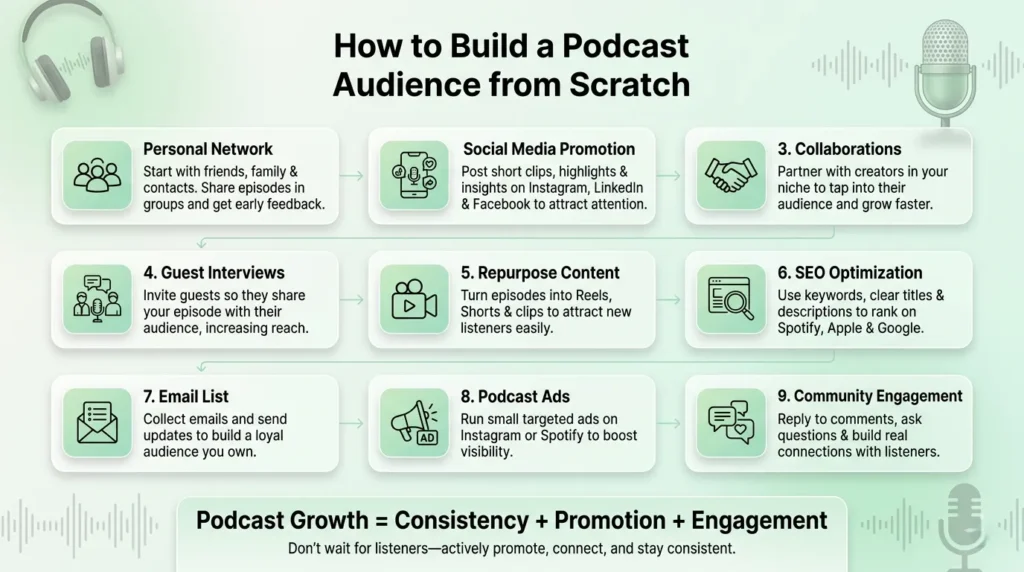
Growing a podcast from zero listeners is completely possible with the right strategy. You don’t need a big audience to start-what you need is consistent promotion, smart distribution, and meaningful engagement. Focus on reaching the right people rather than chasing numbers.
Here’s a clear and engaging explanation of each point:
- Use Your Personal Network: When you start a podcast, your first listeners will most likely come from people you already know. Share your episodes with friends, family, WhatsApp groups, and professional contacts. This helps you get initial feedback, early engagement, and builds confidence to keep going.
- Social Media Promotion: Platforms like Instagram, LinkedIn, and Facebook are powerful tools for podcast growth. Share short clips, highlights, and key insights from your episodes. This grabs attention quickly and encourages people to listen to the full episode.
- Collaborations: Working with other creators in your niche helps you reach new audiences. When you cross-promote each other’s content, both sides benefit from increased visibility and credibility.
- Guest Interviews: Inviting guests brings fresh perspectives and new listeners. When your guests share the episode with their audience, your podcast naturally reaches more people.
- Repurpose Content (Reels, YouTube Shorts): Turn your podcast episodes into short videos, reels, or clips. Short-form content is highly engaging and helps you attract people who may later become long-form listeners.
- SEO Optimization: Use clear titles, relevant keywords, and detailed descriptions so your podcast can be discovered on platforms like Spotify, Apple Podcasts, and Google search. Good SEO increases organic reach.
- Build an Email List: Collect emails from your listeners and send updates about new episodes. This creates a loyal audience you can reach anytime without depending on algorithms.
- Podcast Ads: Running small paid ads on Instagram or Spotify can help you reach targeted listeners faster. Even a small budget can boost visibility in your niche.
- Community Engagement: Engage with your audience by replying to comments, asking questions, and encouraging discussions. When listeners feel connected, they are more likely to share and recommend your podcast to others.
Podcast growth is driven by consistency + multi-platform promotion + audience connection-not just uploading episodes and waiting for listeners.
Common Podcasting Mistakes to Avoid
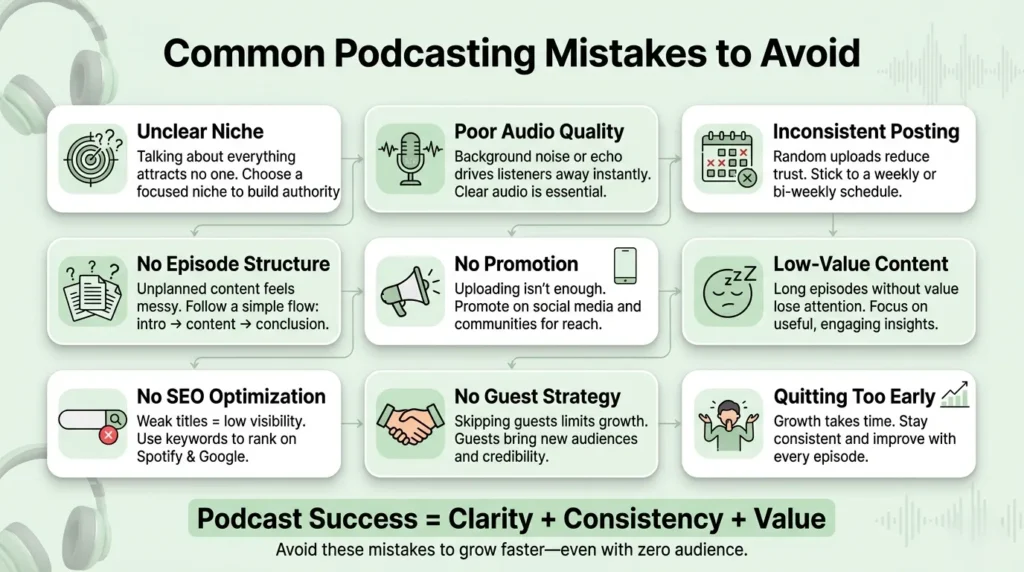
Starting a podcast is easier than ever, but many creators struggle because they overlook basic fundamentals. Avoiding these common mistakes can save time, improve quality, and help you grow faster- even with zero audience.
- Choosing a Broad or Unclear Niche: Talking about everything makes it hard to attract a specific audience. A focused niche helps you build authority and loyal listeners.
- Poor Audio Quality: Listeners may forgive average content, but not bad audio. Background noise, echo, or unclear sound can make people leave instantly.
- Inconsistent Posting Schedule: Posting randomly reduces trust and growth. Consistency (weekly or bi-weekly) is key to building audience loyalty.
- No Clear Episode Structure: Unplanned episodes often feel confusing. A simple structure (intro, main content, conclusion) keeps listeners engaged.
- Ignoring Promotion: Uploading episodes without marketing limits reach. Promotion on social media and communities is essential for growth.
- Focusing Only on Length, Not Value: Long episodes without value lose attention. Focus on delivering useful, engaging content instead of just increasing duration.
- Not Using SEO (Titles & Descriptions): Poor titles reduce discoverability. Optimised titles and keywords help your podcast get found on platforms.
- Avoiding Guest Opportunities: Not inviting guests means missing exposure to new audiences. Guest interviews accelerate growth.
- Giving Up Too Early: Many podcasters quit after a few episodes. Growth takes time, consistency, and continuous improvement.
In podcasting, success comes from clarity, consistency, and audience-focused content-avoid these mistakes, and your growth will be much smoother.
Can You Make Money Podcasting with No Audience?
Yes, you can make money podcasting even with no audience, but it usually doesn’t happen immediately. In the beginning, the focus is on building trust, consistency, and valuable content. Once you start attracting even a small number of listeners, monetization opportunities begin to open up.
One common way is through sponsorships, where brands may pay you once you show consistent engagement, even if your audience is small but highly targeted. Another option is affiliate marketing, where you recommend products or services and earn a commission on sales. Many podcasters also use their show to promote their own services, such as coaching, consulting, courses, or digital products.
As your podcast grows, additional income streams like paid memberships, exclusive content, and donations can also become possible. The key is not the size of your audience at the start, but how engaged and relevant it is.
With patience and the right strategy, monetization becomes a natural next step in your journey of Can You Make Money Podcasting with No Audience?
How to Make Money with a Small or Zero Audience
- Offer Services (Fastest Way): Use your podcast to attract clients for coaching, consulting, or freelancing. Even 10-20 listeners can become paying clients.
- Sell a Simple Product: Launch a low-ticket product like an ebook, template, or mini-course related to your podcast topic.
- Affiliate Marketing: Recommend tools or products you genuinely use and earn commissions when listeners purchase through your links.
- Leverage Guest Network: Invite guests and build relationships. This can lead to collaborations, referrals, and paid opportunities.
- Build Authority First: Use your podcast to position yourself as an expert. Authority converts into speaking gigs, partnerships, and higher-paying clients.
Podcast monetization is less about audience size and more about value, positioning, and offers-start small, monetize smart, and scale gradually.
Conclusion
In conclusion, starting a podcast from zero audience is not a disadvantage—it is actually a strong beginning point in today’s growing digital landscape. With millions of podcasts already active, success is no longer about starting big, but about starting smart. Platforms now reward consistency, valuable content, and clear positioning, which means even new creators can get discovered over time.
If you focus on choosing the right niche, delivering consistent episodes, and promoting your content strategically, growth becomes a natural process. Many successful podcasts today began with no listeners at all and slowly built loyal communities through trust and quality content.
Podcasting also offers long-term benefits like personal branding, networking, and monetization opportunities, making it a powerful platform in 2026. With patience and the right strategy, your podcast can evolve from zero to a strong, engaged audience.
That’s the real potential of how to start a podcast with no audience.
FAQs
How Long Does It Take To Start A Podcast?
You can start a podcast in 1-7 days. Planning your topic, recording your first episode, and setting up hosting can be done quickly with basic tools.
How Much Does It Cost In 2026?
You can start for ₹0-₹10,000 ($0-$120). Free tools are available, but investing in a microphone and editing software improves quality significantly.
What Equipment Is Needed?
At minimum, you need a smartphone or laptop, a microphone, headphones, and recording software. Advanced setups may include audio interfaces and editing tools.
How Often Should I Post?
Consistency matters more than frequency. Posting once a week is ideal for beginners, but even one episode every 10-14 days works if maintained consistently.
How To Get Your First 100 Listeners?
Share episodes on social media, WhatsApp groups, and communities, collaborate with others, optimise titles for search, and repurpose clips into short-form content.
Can I Start A Podcast For Free?
Yes, you can start completely free using your phone, free recording apps, and free hosting platforms. Upgrade tools later as your podcast grows.
Is Podcasting Worth It In 2026?
Yes, podcasting remains highly valuable due to growing audio consumption, personal branding opportunities, and multiple monetisation options like sponsorships and memberships.