
India’s logistics sector is expanding rapidly, with the market valued at nearly ₹32,500 crore and ecommerce demand continuing to accelerate nationwide. As online shopping, quick commerce, and hyperlocal deliveries grow, many entrepreneurs are exploring the Ekart Franchise Cost in 2026 to enter this booming industry with an established brand.
Ekart Logistics has become one of India’s largest logistics networks, handling more than six million daily shipments through over 3,800 delivery hubs while covering approximately 98 percent of Indian PIN codes. Backed by the Flipkart ecosystem, the company offers franchise opportunities for small investors, mid level operators, and large scale logistics entrepreneurs seeking long term scalability. However, understanding investment requirements, profitability, operational challenges, and franchise models is essential before investing capital.
In this blog, we break down everything — from ₹50K entry cost to 35–45% annual ROI.
What is Ekart Logistics?

Ekart Logistics was founded in 2009 as the in house logistics division of Flipkart, created to manage the growing demand for fast ecommerce deliveries across India. The company initially focused on supporting Flipkart orders, helping the retailer improve delivery speed, warehouse management solution, and customer satisfaction in highly competitive online markets.
In 2015, Ekart rebranded itself as a third party logistics provider, allowing external businesses to access its nationwide delivery infrastructure Along with handling shipments for Flipkart and Myntra, the company now serves more than 140 third party clients Its headquarters are located in Bangalore, supporting large scale ecommerce operations daily.
Ekart currently manages more than six million shipments every day through over 3,800 hubs, covering 98.7 percent of Indian PIN codes The company also operates using the FOFO model, meaning Franchise Owned, Franchise Operated Under this structure, franchise partners invest in facilities and operations while following Ekart standards and processes
Unique Selling Proposition
One of the biggest USPs of Ekart Logistics is its deep ecommerce delivery expertise built through years of handling high volume online orders across India. Unlike many traditional courier companies, Ekart specializes in fast last mile fulfillment, reverse logistics, hyperlocal delivery, and large scale warehouse operations designed for modern ecommerce businesses. Its massive reach across urban and rural markets gives sellers access to customers in nearly every serviceable region of the country.
For business minded investors, Ekart’s FOFO franchise structure reduces brand building challenges because franchise partners operate under an already recognized logistics network. The company’s technology driven tracking systems, route optimization, and strong association with Flipkart and Myntra also create credibility, operational efficiency, and consistent shipment demand for long term business scalability and profitability.
Ekart’s role in Flipkart Ecosystem
Ekart Logistics plays a major role in strengthening the ecommerce ecosystem of Flipkart by managing warehousing, order fulfillment, and last mile delivery operations across India. With growing interest in the Ekart Franchise Cost, many entrepreneurs are exploring opportunities to join its expanding logistics network. Its logistics network helps Flipkart process millions of online orders efficiently while maintaining delivery speed and customer satisfaction in highly competitive ecommerce markets nationwide daily.
Ekart supports Flipkart during high demand sales events by handling large shipment volumes, inventory movement, and reverse logistics operations. The company ensures products move smoothly between sellers, warehouses, delivery hubs, and customers. Its infrastructure also helps reduce delivery delays, improve order tracking accuracy, and maintain operational efficiency for ecommerce businesses throughout the country every year.
Apart from serving Flipkart, Ekart also supports Myntra and multiple third party businesses through its expanding logistics network. This integration allows Flipkart Group companies to scale faster, improve customer experience, strengthen supply chain reliability, and compete effectively against major ecommerce and logistics companies operating in India today.
Key Milestones & Growth Timeline
Ekart Logistics has grown from an internal ecommerce delivery unit into one of India’s largest logistics networks. Its expansion reflects the rapid rise of online shopping, supply chain technology, and nationwide ecommerce demand.
- 2009 – Foundation Stage: Ekart was established as Flipkart’s in house logistics arm to improve delivery speed, inventory movement, and customer experience during India’s early ecommerce growth phase across major metropolitan and tier two cities nationwide.
- 2011–2013 – Rapid Network Expansion: The company expanded warehousing, sorting centers, and delivery hubs aggressively to support increasing Flipkart orders, helping strengthen same day and next day delivery capabilities across multiple Indian regions and markets.
- 2015 – Transformation into 3PL Provider: Ekart officially rebranded as a third party logistics company, opening its services to external businesses while continuing to support Flipkart and Myntra’s growing ecommerce and supply chain operations nationwide efficiently. If you are evaluating similar 3pl service providers in India, understanding how established players like Ekart structure their operations can help you make a more informed logistics partnership decision.
- 2017–2019 – Technology and Scale Growth: The company invested heavily in automation, route optimization, shipment tracking, and warehouse technology, improving operational efficiency while significantly increasing delivery capacity and expanding its nationwide logistics infrastructure rapidly.
- 2020 – Pandemic Driven Demand Surge: During the COVID nineteen period, Ekart handled rising ecommerce deliveries across India, strengthening essential supply chains and boosting online retail accessibility as consumer dependence on digital shopping increased dramatically nationwide.
- 2022–Present – Nationwide Logistics Leadership: Ekart now manages millions of daily shipments through thousands of hubs, covering most Indian PIN codes while serving Flipkart, Myntra, and more than one hundred forty third party business clients successfully nationwide.
Why Invest in an Ekart Franchise in 2026?
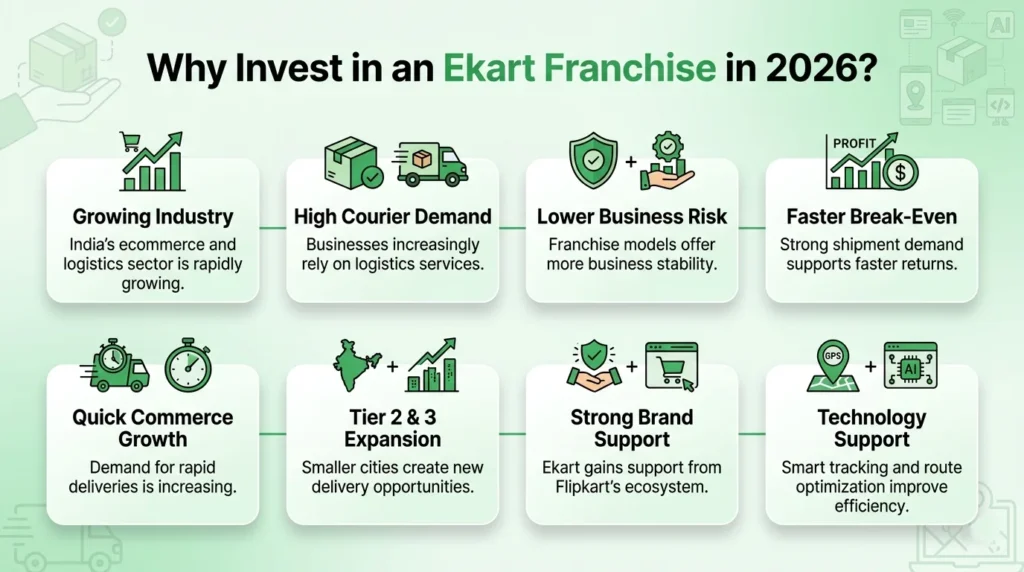
Investing in an Ekart Logistics franchise in 2026 attracts entrepreneurs because India’s ecommerce and quick commerce sectors continue expanding rapidly. Rising digital shopping habits, faster delivery expectations, and increasing courier dependence create strong long term business opportunities.
- High Industry Growth: India’s logistics and courier sector is growing at a strong 21.7 percent annual CAGR, creating continuous franchise expansion opportunities nationwide.
- Business Dependency on Courier Services: Around 78 percent of Indian businesses now depend on courier and logistics services for ecommerce deliveries, inventory movement, and operations daily.
- Lower Startup Risk: Franchise businesses reportedly experience 87 percent lower failure rates compared to independent startups because of established operational systems and brand recognition.
- Faster Break Even Potential: Approximately 92 percent of franchise owners achieve operational break even within twelve months through existing customer demand and shipment volumes nationwide.
- Quick Commerce Expansion: India’s quick commerce boom is increasing demand for faster last mile delivery, warehousing, and hyperlocal logistics infrastructure across urban markets rapidly.
- Tier Two and Three City Growth: Ecommerce penetration in tier two and tier three cities is creating strong logistics demand and new franchise opportunities beyond metropolitan regions.
- Established Brand Advantage: Ekart benefits from association with Flipkart and Myntra, helping franchise owners gain trust, shipment consistency, and operational credibility faster nationwide.
- Technology Driven Operations: Advanced shipment tracking, route optimization, and warehouse systems improve efficiency, helping franchise partners manage deliveries and reduce operational challenges effectively.
Market Opportunity in India (2026 data)
India’s ecommerce industry continues create major opportunities for logistics businesses in 2026. The market has reached nearly ninety eight billion dollars, driven by rising smartphone usage, digital payments, and growing online shopping demand across urban and rural regions. Increasing consumer preference for faster deliveries is also strengthening the need for efficient logistics infrastructure nationwide significantly, which is why many entrepreneurs are now searching for details about Ekart Franchise Cost and business opportunities in the delivery sector.
The Indian retail sector is expected to achieve nearly eighteen percent ecommerce penetration by 2028, showing strong long term digital commerce growth potential. This expansion is increasing demand for warehousing, supply chain management solutions, last mile delivery, and hyperlocal logistics services. Businesses are investing heavily in faster fulfillment networks to remain competitive in evolving online retail markets.
India’s logistics industry is projected to reach approximately forty seven thousand two hundred crore rupees by 2028, creating opportunities for franchise investors and supply chain companies. Growing ecommerce activity, quick commerce expansion, and tier two city demand are accelerating logistics sector growth across India rapidly.
Advantages Over Starting Independently
Starting an independent logistics company requires heavy investment, customer acquisition, operational planning, and brand building from scratch. An Ekart Logistics franchise provides structured support, existing market demand, and proven operational systems for faster business stability.
- Established Brand Recognition: Franchise owners benefit from Ekart’s nationwide reputation, reducing customer trust issues and helping attract business opportunities faster than newly launched independent logistics companies across competitive markets.
- Existing Shipment Network: Unlike independent startups, franchise partners receive access to established delivery routes, warehouses, operational systems, and shipment volumes already generated through large ecommerce partnerships nationwide.
- Lower Marketing Expenses: Independent businesses spend heavily on advertising and customer acquisition, while Ekart franchisees leverage existing brand visibility and corporate partnerships to reduce promotional costs significantly nationwide.
- Operational Training Support: Ekart provides operational guidance, logistics management support, and process training, helping franchise owners avoid common mistakes often faced by first time independent entrepreneurs in logistics.
- Technology and Tracking Systems: Franchise partners gain access to advanced shipment tracking, route optimization, and delivery management systems without investing heavily in developing independent logistics technology infrastructure initially.
- Faster Scalability Potential: Ekart’s established supply chain ecosystem helps franchisees expand operations faster through growing ecommerce demand, quick commerce growth, and increasing nationwide logistics service requirements across India.
Ekart Franchise Models Explained
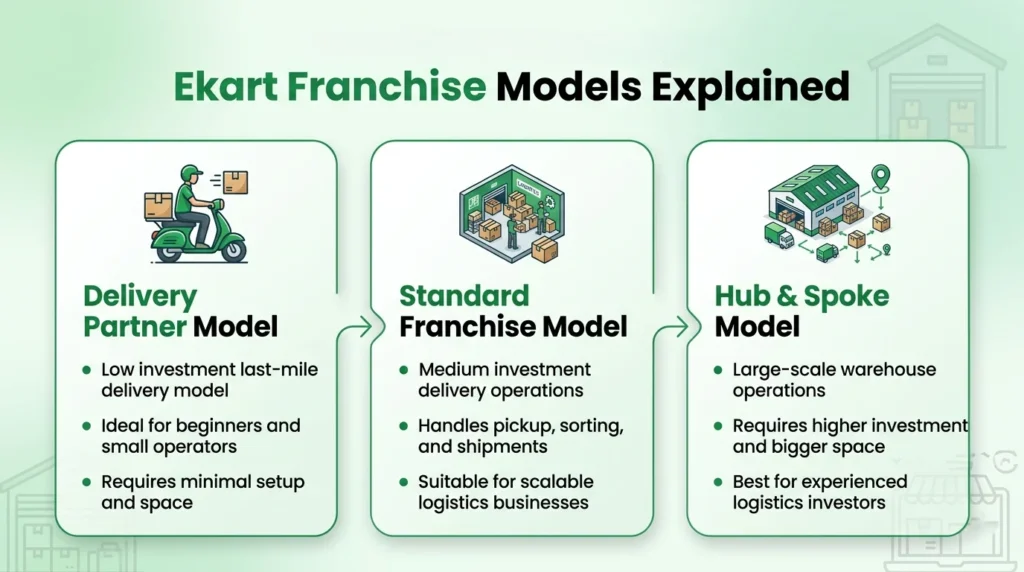
Ekart Logistics offers multiple franchise models to match different investment capacities and operational goals. From small delivery partnerships to large regional logistics hubs, investors can choose models based on budget, experience, scalability, and local market demand.
Delivery Partner Model (Entry Level)
The Delivery Partner Model offered by Ekart Logistics is designed for individuals seeking a low investment entry into India’s growing logistics sector. With an estimated investment between fifty thousand and one lakh rupees, this model mainly focuses on last mile deliveries within assigned local areas.
It requires minimal operational space, making it suitable for small towns, residential areas, and urban delivery zones. The model works well for first time entrepreneurs, gig workers, students, and people looking for side income opportunities. Since operations are comparatively simple, franchise owners can start quickly while benefiting from Ekart’s established shipment demand and delivery network nationwide.
Standard Franchise Model (Full Operations)
The Standard Franchise Model is considered the most balanced option for entrepreneurs wanting stable logistics operations with moderate investment requirements. This model generally requires an investment between one lakh and two lakh rupees along with approximately four hundred to six hundred square feet of operational space.
Franchise owners manage pickup services, parcel sorting, shipment handling, and local delivery operations within assigned territories. It suits mid level investors looking for scalable business opportunities in ecommerce logistics and courier services. Compared to entry level delivery partnerships, this model offers higher shipment handling capacity and better revenue potential while still remaining manageable for growing business owners across India today.
Hub & Spoke Model (Scale Up)
The Hub and Spoke Model is designed for experienced logistics operators and entrepreneurs aiming to manage larger regional delivery operations efficiently. This model usually requires an investment between two lakh and five lakh rupees along with more than one thousand square feet of warehouse or operational space.
Franchise owners oversee regional hubs responsible for coordinating multiple smaller delivery centers and handling larger shipment volumes daily. The model supports parcel sorting, inventory movement, route coordination, and distribution management across wider territories. Because of higher operational responsibility and scalability, this structure suits investors seeking long term expansion opportunities within India’s rapidly growing ecommerce, quick commerce, and supply chain logistics ecosystem today.
| Model | Investment | Space | Daily Volume | Best For | Estimated Monthly Income |
| Delivery Partner Model | ₹50K–₹1 Lakh | Minimal Space | Low to Medium | Gig workers, side income seekers | ₹25,000–₹60,000 |
| Standard Franchise Model | ₹1–₹2 Lakhs | 400–600 sq ft | Medium to High | Mid level investors | ₹60,000–₹1.5 Lakhs |
| Hub & Spoke Model | ₹2–₹5 Lakhs | 1000+ sq ft | High Volume | Experienced operators | ₹1.5–₹4 Lakhs |
Ekart Franchise Cost Breakdown 2026
Understanding the complete investment structure is important before starting an Ekart Logistics franchise in 2026. Costs vary depending on franchise model, infrastructure size, fleet requirements, staffing, and operational scale across different Indian markets.
Initial Franchise Fee by Model
| Model | Initial Franchise Fee | What This Fee Covers |
| Delivery Partner Model | ₹50,000–₹1 Lakh | Brand access, onboarding, delivery app integration, basic operational training, and access to Ekart’s last mile delivery network. |
| Standard Franchise Model | ₹1–₹2 Lakhs | Operational rights, shipment handling systems, staff training, sorting support, branding materials, and logistics management platform access. |
| Hub & Spoke Model | ₹2–₹5 Lakhs | Regional hub management rights, large scale operational support, advanced logistics systems, network coordination tools, and infrastructure guidance. |
Facility and Setup Costs
| Cost Component | Estimated Cost Range | Purpose |
| Rent & Security Deposit | ₹50,000–₹5 Lakhs | Usually includes 3–6 months advance rent or lease deposit depending on city and operational space size. |
| Interior Setup & Modifications | ₹50,000–₹3 Lakhs | Sorting zones, parcel storage arrangement, flooring, branding, lighting, and operational layout customization. |
| Shelving, Racks & Storage Systems | ₹25,000–₹1.5 Lakhs | Parcel organization, inventory management, temporary storage, and shipment sorting efficiency improvements. |
| Office Furniture Setup | ₹20,000–₹1 Lakh | Desks, chairs, counters, staff workstations, meeting space, and administrative furniture requirements. |
| Computers & Office Equipment | ₹25,000–₹1.5 Lakhs | Printers, barcode scanners, computers, CCTV systems, internet setup, and shipment tracking devices. |
| Warehouse or Sorting Space Setup | ₹1–₹5 Lakhs | Required mainly for Standard and Hub models handling larger shipment volumes and regional operations. |
Vehicle and Fleet Costs
| Vehicle Type | Estimated Cost | Best Use Case | Monthly Fuel Budget | Monthly Insurance & Maintenance |
| Two Wheeler (Bike/Scooter) | ₹70,000–₹1.5 Lakhs | Short range last mile deliveries within local urban and residential areas. | ₹4,000–₹10,000 | ₹1,500–₹4,000 |
| Electric Two Wheeler | ₹90,000–₹1.8 Lakhs | Cost efficient local deliveries with lower fuel expenses and reduced operational costs. | ₹1,000–₹3,000 charging cost | ₹1,000–₹3,000 |
| Mini Commercial Vehicle | ₹4–₹8 Lakhs | Medium scale parcel transportation, bulk shipment movement, and intercity logistics operations. | ₹15,000–₹40,000 | ₹5,000–₹12,000 |
| Large Commercial Vehicle | ₹8–₹18 Lakhs | Regional distribution, warehouse transfers, and high volume logistics transportation across wider territories. | ₹40,000–₹1 Lakh | ₹10,000–₹25,000 |
| Rented or Leased Fleet | ₹15,000–₹80,000 monthly | Flexible option for reducing upfront investment during early operational stages. | Depends on operational usage | Often included partially in lease agreements |
Technology and Equipment Costs
| Equipment | Estimated Cost | Purpose |
| Computers & Workstations | ₹30,000–₹50,000 | Shipment management, billing, tracking operations, reporting, and administrative tasks for daily logistics activities. |
| Barcode Scanners | ₹5,000–₹20,000 | Fast parcel scanning, inventory tracking, shipment verification, and operational accuracy improvements during sorting and dispatching. |
| Printers & Label Printers | ₹5,000–₹15,000 | Printing invoices, shipping labels, manifests, receipts, and operational documentation required for logistics management. |
| Internet & WiFi Setup | ₹3,000–₹10,000 | High speed connectivity for shipment tracking systems, cloud software access, and communication between operational teams. |
| Mobile Devices for Delivery Staff | ₹8,000–₹20,000 per device | Delivery confirmation, GPS navigation, customer communication, OTP verification, and real time shipment updates during operations. |
| CCTV & Security Systems | ₹10,000–₹50,000 | Parcel security, warehouse monitoring, theft prevention, and operational surveillance within logistics facilities and sorting centers. |
Staffing and Working Capital
| Expense Category | Estimated Cost | Purpose |
| Delivery Staff Salaries | ₹15,000–₹25,000 per staff monthly | Daily parcel pickup and delivery |
| Admin & Operations Staff | ₹18,000–₹35,000 monthly | Billing, coordination, operational management tasks |
| Warehouse or Sorting Staff | ₹12,000–₹22,000 monthly | Parcel sorting and inventory handling |
| Initial Salary Buffer (2–3 Months) | ₹1–₹4 Lakhs | Early operational financial stability support |
| Fuel & Transportation Reserve | ₹30,000–₹1 Lakh monthly | Daily fleet and delivery operations |
| Utility & Internet Expenses | ₹10,000–₹40,000 monthly | Electricity, connectivity, operational facility expenses |
| Emergency Operational Reserve | ₹50,000–₹2 Lakhs | Unexpected logistics and maintenance costs |
| Working Capital (3–6 Months) | ₹2–₹10 Lakhs | Sustaining operations before stable profits |
Total Estimated Investment
| Franchise Model | Minimum Estimated Investment | Maximum Estimated Investment |
| Delivery Partner Model | ₹10 Lakhs | ₹18 Lakhs |
| Standard Franchise Model | ₹18 Lakhs | ₹30 Lakhs |
| Hub & Spoke Model | ₹30 Lakhs | ₹50 Lakhs |
Ekart Franchise Profit & ROI Analysis
| Franchise Model | Monthly Revenue | Monthly Expenses | Estimated Monthly Profit | Net Profit Margin | Break-Even Timeline | Estimated Annual ROI |
| Delivery Partner Model | ₹1.5L–₹3L | ₹80K–₹1.5L | ₹70K–₹1.5L | 15–20% | 4–12 Months | 15–20% |
| Standard Franchise Model | ₹5L–₹10L | ₹2.5L–₹5L | ₹2.5L–₹5L | 15–22% | 7–18 Months | 18–22% |
| Hub & Spoke Model | ₹10L–₹20L | ₹5L–₹10L | ₹5L–₹10L | 18–25% | 10–36 Months | 20–25% |
Eligibility Criteria & Requirements
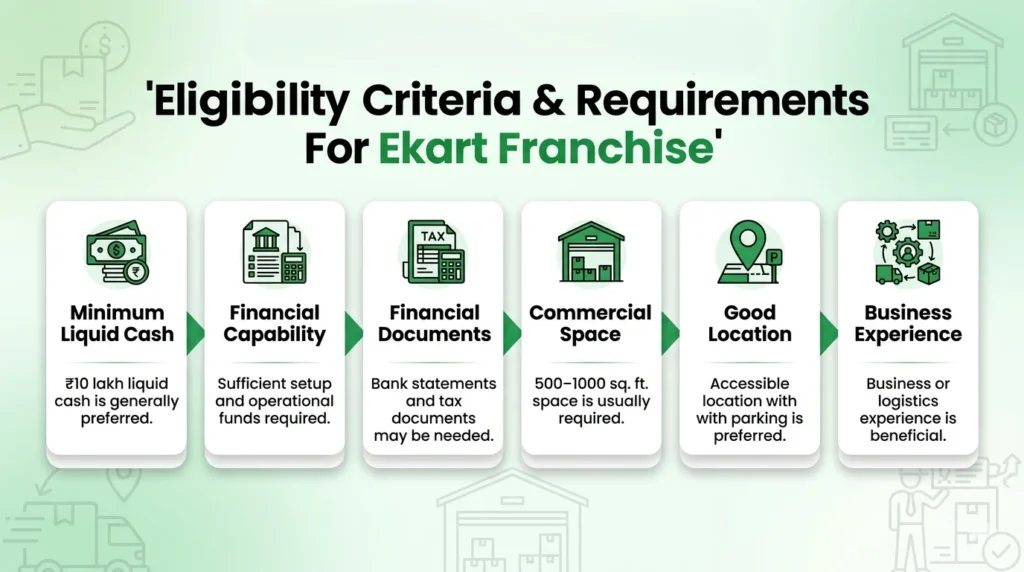
Ekart Logistics evaluates franchise applicants based on financial capability, operational infrastructure, and management experience. These requirements help ensure franchise partners can maintain delivery quality, operational stability, and long term business scalability successfully.
- Minimum Liquid Cash Requirement: Applicants generally need at least ten lakh rupees in liquid cash to manage franchise setup, staffing, technology, vehicles, and initial operational expenses efficiently during launch.
- Total Accessible Funds Requirement: Ekart franchise applicants should ideally demonstrate access to approximately fifteen lakh rupees or more through savings, loans, investments, or business financial resources for operational stability.
- Proof of Financial Capability: Bank statements, income records, tax returns, loan approvals, and financial documents are commonly required to verify investment capacity and long term operational sustainability before franchise approval.
- Commercial Space Requirements: Franchise locations typically require five hundred to one thousand square feet of ground floor operational space with parcel handling areas, office setup, and storage facilities available.
- Location and Accessibility Standards: Properties with parking space, loading access, and visibility from main roads are preferred because efficient vehicle movement directly impacts delivery speed and operational productivity daily.
- Educational and Business Experience Criteria: Applicants preferably hold bachelor’s degrees with three years business, logistics, ecommerce, or operations management experience to effectively supervise staff, customer service, and daily logistics activities professionally.
Documents Required for Ekart Franchise
Applying for an Ekart Logistics franchise requires submitting financial, identity, business, and property related documents. These documents help verify investment capability, operational readiness, and legal compliance before franchise approval.
- Identity Proof Documents: Aadhaar card, PAN card, passport, voter ID, or driving license required for applicant identity verification and legal registration purposes.
- Address Proof Documents: Electricity bill, bank statement, rental agreement, or passport accepted for residential address verification during franchise application processing and onboarding procedures.
- PAN Card and GST Registration: PAN card mandatory for taxation purposes, while GST registration required for commercial billing, invoicing, and operational compliance management nationwide.
- Bank Statements and Financial Records: Recent bank statements, income tax returns, and investment records required to demonstrate financial stability and operational funding capability clearly.
- Property Ownership or Rental Documents: Lease agreements, ownership papers, or NOC from property owner required for operational warehouse, office, and logistics facility verification processes.
- Business Registration Documents: Sole proprietorship, partnership, LLP, or company registration certificates required if franchise operations will run under registered business entities legally.
- Educational Qualification Certificates: Degree certificates or academic qualification documents may be requested to assess management capability and operational understanding during franchise evaluation processes.
- Experience and Resume Documents: Professional resume, business experience details, and logistics or ecommerce background information strengthen franchise application credibility and approval possibilities significantly.
How to Apply for Ekart Franchise Step by Step
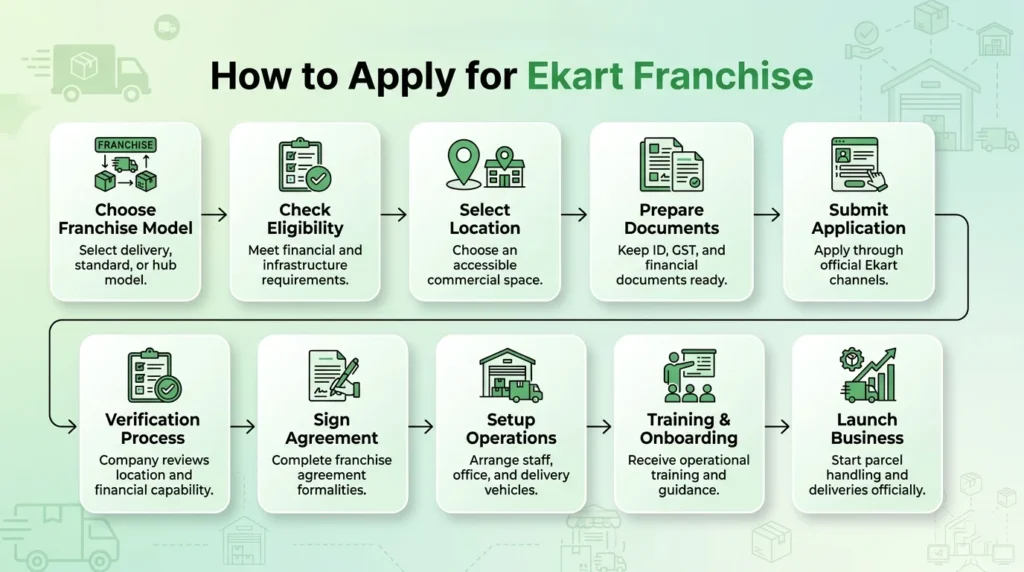
Applying for an Ekart Logistics franchise involves financial verification, infrastructure evaluation, and operational approval processes. Following the correct application steps improves approval chances and helps applicants prepare for successful logistics business operations efficiently.
- Step 1: Research Franchise Models– Understand Delivery Partner, Standard, and Hub models carefully before selecting investment level, operational responsibilities, infrastructure requirements, and long term business goals.
- Step 2: Check Financial Eligibility– Ensure availability of minimum liquid capital, accessible operational funds, and financial documents required for franchise application approval and setup expenses.
- Step 3: Finalize Business Location– Select commercially suitable ground floor property with parking, loading access, operational space, and strong connectivity to delivery serviceable areas nearby.
- Step 4: Prepare Required Documents– Organize identity proofs, financial statements, GST registration, property papers, educational certificates, and business registration documents before application submission process begins.
- Step 5: Submit Franchise Inquiry– Contact Ekart through official business communication channels, submit franchise interest details, and provide operational information for initial business evaluation procedures.
- Step 6: Attend Verification and Discussions– Company representatives may review financial capability, property suitability, operational readiness, and business experience before moving toward franchise approval decisions officially.
- Step 7: Sign Franchise Agreement– Carefully review operational terms, territory rights, investment conditions, revenue structure, and compliance policies before signing official franchise partnership agreements legally.
- Step 8: Complete Infrastructure Setup– Arrange office setup, warehouse space, technology systems, staffing, and delivery fleet according to Ekart operational standards and business requirements properly.
- Step 9: Staff Training and Onboarding– Delivery staff, administrators, and operational teams receive training regarding shipment handling, customer service, tracking systems, and logistics management processes professionally.
- Step 10: Launch Operations Officially– Start parcel pickup, sorting, shipment handling, and delivery operations while maintaining operational quality standards and customer satisfaction within assigned business territories consistently.
Training & Support Provided by Ekart
Ekart Logistics provides operational training and business support to help franchise partners manage logistics activities efficiently from the beginning. Training programs generally cover shipment handling, parcel sorting, warehouse coordination, customer communication, and delivery management processes. Franchise owners and staff are introduced to company operational standards, safety procedures, and service quality expectations before business launch officially. Understanding the Ekart Franchise Cost beforehand also helps partners plan their investment and operational setup more effectively.
The company also provides technology related guidance for using shipment tracking systems, barcode scanners, delivery applications, route optimization tools, and reporting platforms. These systems help franchise partners improve operational accuracy, monitor deliveries in real time, and manage customer service more effectively during daily logistics operations. Staff members also receive onboarding assistance regarding software usage and workflow management procedures properly.
Apart from technical support, Ekart assists franchisees with operational setup, branding guidance, and process implementation. Ongoing support may include performance monitoring, operational recommendations, issue resolution assistance, and business scalability guidance to maintain consistent logistics service standards across expanding delivery networks nationwide successfully.
Ekart Franchise vs Competitors: Which is Better?
| Feature | Ekart Logistics | Delhivery | Blue Dart | DTDC | XpressBees |
| Parent Ecosystem Strength | Flipkart + Myntra network support | Independent logistics platform | DHL backed logistics network | Large domestic courier network | Ecommerce focused logistics operations |
| Primary Business Focus | Ecommerce and last mile logistics | B2B + ecommerce logistics | Premium express delivery services | Courier and parcel delivery | Ecommerce fulfillment and deliveries |
| Investment Range | ₹10L–₹50L | ₹15L–₹60L | ₹20L+ | ₹5L–₹25L | ₹10L–₹40L |
| Best Suitable For | Ecommerce focused franchise investors | Large logistics operators | Premium courier business investors | Small and medium entrepreneurs | Ecommerce delivery entrepreneurs |
| Delivery Network Reach | 98.7% PIN code coverage | Pan India operations | Strong metro connectivity | Extensive domestic network | Rapid ecommerce expansion network |
| Technology Integration | Strong ecommerce tracking systems | Advanced AI logistics tools | Premium shipment monitoring | Standard tracking systems | Ecommerce optimized technology |
| Franchise Scalability | Multiple operational models available | Large scale regional operations | Higher investment expansion model | Flexible city wise operations | Growing quick commerce opportunities |
| Competitive Advantage | Flipkart ecosystem shipment demand | Broad logistics diversification | Premium brand reputation | Lower entry investment | Fast ecommerce sector growth |
| Ideal Market Segment | Ecommerce logistics and fulfillment | Enterprise logistics clients | Corporate courier solutions | General parcel delivery services | Online retail delivery operations |
Challenges & Things to Know Before Investing
Investing in an Ekart Logistics franchise offers growth opportunities, but logistics businesses also involve operational risks and management responsibilities. Understanding these challenges helps investors make informed decisions before committing significant capital and resources.
- High Operational Pressure: Logistics operations require continuous coordination, fast deliveries, shipment accuracy, and customer service management daily across multiple delivery locations consistently.
- Dependence on Ecommerce Demand: Revenue growth often depends heavily on ecommerce shipment volumes, seasonal sales, and online retail market performance throughout operational business cycles annually.
- Staff Management Challenges: Managing delivery executives, warehouse workers, and operational teams efficiently becomes difficult during high demand periods and rapid business expansion phases frequently.
- Fuel and Transportation Costs: Rising fuel prices and vehicle maintenance expenses can directly impact profitability margins and increase operational costs significantly over long term operations.
- Strict Delivery Timelines: Delayed deliveries, failed pickups, and operational disruptions may negatively affect customer satisfaction, franchise performance ratings, and business credibility within competitive markets.
- Technology Dependence: Logistics operations rely heavily on tracking systems, internet connectivity, and software platforms, making technical failures operationally challenging during business activities occasionally.
- Competitive Logistics Industry: Strong competition from established courier companies and emerging quick commerce delivery networks creates constant pricing and operational efficiency pressure nationwide regularly.
- Working Capital Requirements: Franchise owners must maintain sufficient operational reserves for salaries, fuel, maintenance, and unexpected expenses during slower revenue generation periods initially.
Conclusion
For entrepreneurs looking to enter India’s fast growing logistics sector, understanding the Ekart Franchise Cost can help evaluate the overall business potential in 2026. An Ekart Logistics franchise can be a strong business opportunity as the rapid expansion of ecommerce, quick commerce, and hyperlocal delivery services continues increasing demand for reliable logistics infrastructure across metro, tier two, and tier three markets. Ekart benefits from its connection with Flipkart and Myntra, providing consistent shipment flow, brand credibility, and large scale operational support.
However, profitability depends heavily on operational efficiency, location selection, staff management, and delivery performance. Investors should carefully evaluate working capital requirements, competition, and long term scalability before investing. For business minded individuals willing to manage logistics operations professionally, Ekart offers structured systems, growing market demand, and strong scalability potential within India’s expanding ecommerce driven supply chain industry over the coming years.