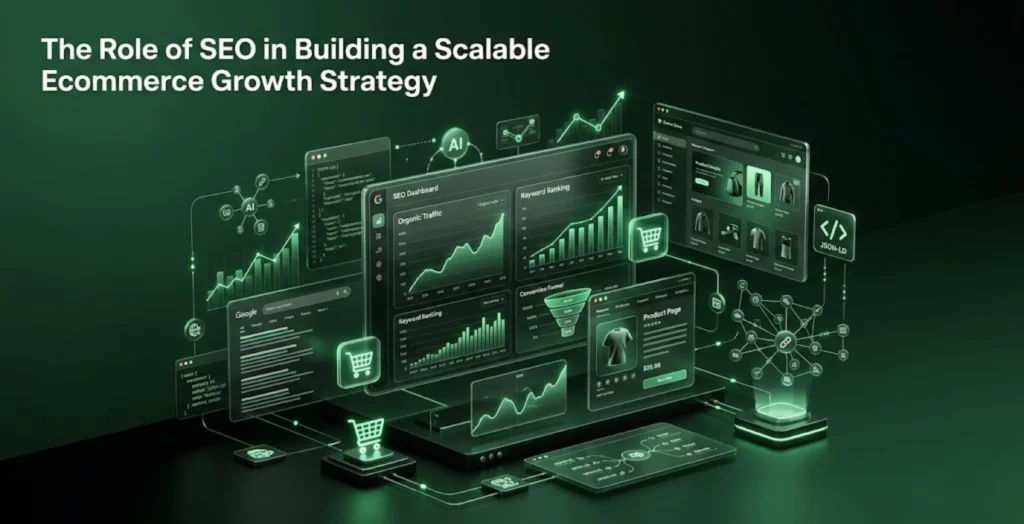
Unlike short ad campaigns, SEO helps you build a lasting asset. Your store can keep attracting new customers over time. The goal is to make sure your online shop is not just live, but easy to find when people search for your products. This means setting up your site structure, content, and performance in a way that fits what search engines and shoppers expect, so more visitors turn into buyers.
For brands that want to scale-whether that means handling large product catalogs or reacting to market changes-clear SEO direction can be the difference between slow growth and strong growth.
No matter if you run a small shop or a large store, it helps to understand and apply SEO well. If you want to improve your online store, especially on WordPress with WooCommerce, getting help from WooCommerce SEO consultants can give you useful guidance.
Core Benefits of SEO for Ecommerce Growth
1. Drives Organic Traffic and Lowers Acquisition Costs
For e-commerce, organic search is often the biggest traffic source. Studies show organic search can account for about 53% of all website traffic, which makes it a key channel. Organic traffic is valuable not just because of how much you can get, but because it can cost less than paid traffic over time. SEO can lower customer acquisition cost (CAC). HubSpot reports inbound methods like SEO can reduce CAC by up to 61% compared to outbound marketing. With ads, you pay for every click. With SEO, a strong ranking can keep sending traffic with no per-click cost. As your search visibility grows, you can attract a steady flow of shoppers already looking for what you sell, which supports long-term profit.
2. Improves Conversion Rates and Customer Retention
SEO does more than bring visitors-it can help you convert and keep customers. Since e-commerce SEO targets people searching for specific products, it often attracts visitors with higher buying intent, which can improve conversion rates. Econsultancy reported SEO leads can convert at 14.6%, compared with 1.7% from outbound methods like print ads. Conversion rates also improve when your site is easy to use. Fast pages, mobile-friendly layouts, and clear navigation help people stay, browse, and buy. Google research shows even a 1-second delay can reduce conversions by 7%. Over time, SEO can also support a higher Customer Lifetime Value (LTV) by bringing in customers who have a good experience and return.
3. Increases Brand Credibility and Trust
Online, trust matters. Sites that rank higher often feel more reliable to users. A Moz study found about 70% of users trust websites on the first page more than those on later pages. A Search Engine Land survey also found 60% of consumers prefer organic results over ads. This trust is linked to how Google ranks pages, which often rewards relevance, quality, and authority. When your site performs well, has solid content, and works smoothly, your brand can appear more credible, which supports repeat customers and a stronger reputation.
4. Enhances Competitive Advantage in Crowded Markets
E-commerce is crowded, and SEO can help you stand out. Many companies do some SEO, but many still skip deeper work. Ahrefs reported that over 90% of web pages get no organic traffic from Google, which often shows weak or missing optimization. That creates an opening. If you keep up with SEO best practices and apply them well, your store can outrank competitors. This often means going beyond broad keywords and focusing on what customers actually want, including smaller niche searches that competitors miss. With steady SEO work, your products can be found by more shoppers, more often.
5. Provides Actionable Insights into Customer Behavior
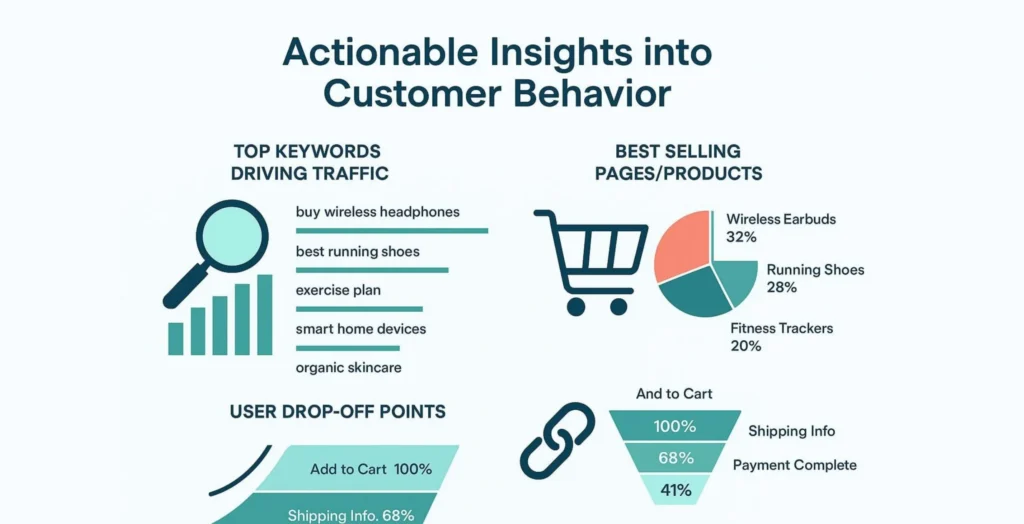
A strong e-commerce SEO plan also gives you useful data about what customers want and how they act. SEO is not only technical work-it is also learning what people search for, how they move through your site, and where they get stuck. Tools like Google Analytics, Ahrefs, and SEMrush can show:
- Which keywords bring traffic
- Which pages sell best
- Where users drop off
A good SEO specialist looks beyond rankings and tracks KPIs tied to revenue. This reduces guessing. You can improve content, product focus, and site experience based on real behavior, and plan marketing that fits how people shop.
Critical Elements of a Scalable Ecommerce SEO Strategy
Building a Strong Technical SEO Foundation
An e-commerce website needs a solid technical base to rank and run well. Technical SEO covers behind-the-scenes factors that help users and search engines access and understand your site. Key areas include speed, mobile support, crawl access, and security. Slow sites frustrate users and can hurt rankings; Google has shown even a 1-second delay can lower conversions. With more than half of e-commerce traffic coming from mobile devices, mobile-friendly design is required for both rankings and sales.
Before other SEO work can deliver results, you need to fix technical problems. A technical audit can find issues like crawl errors, broken internal links, wrong canonical tags, or heavy code. Fixing these early helps all other SEO work perform better. Without a strong technical base, even great content and keyword planning may struggle to rank, which limits growth.
Optimizing Site Architecture for User Experience and Indexing
For an e-commerce store with many products, site structure matters a lot. It helps shoppers find products and helps search engines understand your pages. A common guideline is that important pages should be reachable within about three clicks from the homepage. Pages that are buried deep can look less important to search engines and may rank worse.
Good architecture means:
- Grouping products into clear categories and subcategories
- Using clear URLs that match that structure
- Building internal links that connect categories, subcategories, and products
Your homepage usually has the most authority, so it should link to key category pages. Those category pages should link to related subcategories and products. This improves shopping flow and spreads page authority across the site, which can help more pages get indexed and rank.
Conducting Keyword Research for Scale and Search Intent
If you manage hundreds or thousands of SKUs, keyword research must work at scale. It is not only about popular keywords. It is about finding search terms that match what people are trying to do (search intent). Are they researching, comparing, or ready to buy? Looking at search results (SERPs) for a query can help you understand the intent and build pages that match what users expect.
A strong e-commerce keyword plan includes:
- Branded keywords (with your brand name)
- Non-branded keywords (general product searches)
- Long-tail keywords (longer, more specific phrases)
Long-tail keywords often have lower search volume but higher conversion rates because they show a specific need. Tools like Google Keyword Planner, Ahrefs, and SEMrush can help you find terms, estimate demand, and check competition. Mapping keywords to pages helps avoid overlap, improves relevance, and puts the right products in front of the right shoppers.
Mapping Branded, Non-Branded, and Long-Tail Keywords
A good keyword plan uses several keyword types, each with a role:
- Branded keywords: Capture people who already know you (example: “[Brand] discount code” or “[Brand] vs [Competitor]”). These searches often convert well, and dedicated landing pages can help.
- Non-branded keywords: Bring in new shoppers who are still exploring (example: “durable dog toys”).
- Long-tail keywords: Bring in very targeted traffic with strong buying signals (example: “eco-friendly chew toys for large dogs”).
Using a mix of short and long phrases, plus informational keywords, helps you show up across the full buying journey-from research to purchase-and reach both loyal customers and new shoppers.
On-Page Optimization Across Product and Category Pages
Product and category pages are the core of an e-commerce site, so on-page SEO matters for both rankings and sales. On-page SEO means improving what is on each page so it matches search needs and helps users.
For product pages, this includes writing clear, useful descriptions that explain benefits, not just features. In many cases, longer content can help (often aiming for 1,000+ words where it makes sense), with keywords used naturally. Images and videos should be high quality, and images should include descriptive alt text for accessibility and SEO. Reviews and star ratings also help because they build trust and add fresh content.
For category pages, use unique titles and meta descriptions that match the category. Add helpful category text that explains what shoppers can find there, without making the page hard to scan. Internal links from category pages to subcategories and products help both users and search engines.
Across both page types, focus on:
- Short, clear URLs that include keywords
- Headings that follow a clear structure (H1, H2, H3)
- Schema markup (Product, Offer, Review) to improve search result displays
These steps help search engines read your pages and can lead to rich snippets that improve click-through rates.
Content Marketing to Build Authority and Relevance
Content marketing helps e-commerce brands bring in organic traffic and build trust, even when the content is not a direct sales page. The goal is to publish useful content that answers questions and supports buying decisions.
Blogging is a common method. You can write guides, how-to posts, and product comparisons that match what your audience asks. For example, a post like “Why Your Dog Needs Durable Toys” can link to your “Dog Toys” category page, moving readers closer to a purchase. These content pages can also bring in long-tail traffic.
User content like reviews, testimonials, and customer stories adds social proof and keeps your site updated with new text. Video can also help with product demos and tutorials. By publishing helpful content that matches user intent, you can build authority, support rankings, and attract visitors who are more likely to buy.
Link Building and Off-Page Signals that Scale
Links from other websites still matter for SEO, especially for growing e-commerce brands. High-quality backlinks from trusted sites signal to Google that your store is reliable and relevant. This can improve rankings and bring more traffic.
A scalable approach can include:
- Claim unlinked mentions: Find sites that mention your brand without linking, then ask for a link.
- Partner with influencers: Work with creators or related brands who can mention and link to your products.
- Broken link building: Find broken links on relevant sites and offer your content as a replacement.
- Digital PR: Create shareable reports, infographics, or events that can earn press coverage and links.
- Guest blogging: Write helpful articles for industry sites and include a link back to your store.
Quality matters more than quantity. A few strong, relevant links usually beat many low-quality ones. Strong off-page work can improve rankings, build trust, and support your brand’s reputation.
Mobile and Performance Optimization
Mobile shopping is now standard, so mobile and speed work is required for growth. With more than 50% of e-commerce traffic coming from mobile (Statista reports 54.67% of global web traffic in 2026), your site needs to work well on phones. Responsive design helps pages fit different screens. A mobile-friendly checkout also helps reduce cart abandonment.
Speed matters on every device. Fast sites keep users engaged, reduce bounce rates, and improve conversions. Google reports that cutting load time by 0.1 seconds can reduce bounce rates by 5.7% and increase conversions by 8.4%. Faster pages also help search engines crawl your site more efficiently. Some stores use Progressive Web Apps (PWAs) to improve speed and reliability, support offline access, and send push notifications for abandoned carts or deals. Strong performance helps both rankings and sales.
Implementing SEO for Scalable E-commerce Operations
Scaling Keyword Management and Landing Page Production
As your store grows, managing keywords and building pages one by one for every product variation becomes unrealistic. Scalable SEO relies on systems. Keyword research should group terms into clusters, find long-tail opportunities, and apply them across categories. A keyword mapping plan helps each page target a clear set of searches, reducing overlap and improving relevance.
Landing pages also matter for scale. These pages focus on a clear search intent and can improve rankings and conversions. At scale, this may mean using page templates, dynamic content blocks, and ongoing A/B testing. This lets you launch new products or promotions quickly with SEO-friendly pages that guide users to buy. Targeting lower-competition long-tail keywords can also create faster wins that you can add to product copy, meta tags, and blog content.
Integrating SEO into Product Launches and Promotions
For a scalable growth plan, SEO needs to be part of daily work, especially during launches and promotions. If you add SEO late, you often create extra fixes later and miss early demand.
For new products or category launches, include SEO from the start:
- Research how customers search for the new items
- Write product and category content before launch
- Create supporting content (guides, comparisons) around launch topics
This helps products get found right away. Before big paid campaigns, SEO prep also helps because extra visitors land on pages that load fast and convert well. SEO data can also support PPC by finding organic keywords that convert, or by turning blog content into email and ad content. When teams work together, marketing becomes more consistent and cost-effective, with fewer short-lived spikes and more long-term gains.
Using Structured Data and Schema for Visibility
For e-commerce, having content is not enough-search engines need clear signals about what each page contains. Structured data (schema markup) helps by adding extra meaning to your pages.
Using Product, Offer, and Review schema can lead to rich snippets in search results. Products may show star ratings, price, and stock status, which can increase click-through rates and help you stand out. Google’s Structured Data Markup Helper can help you add markup. Category pages can also benefit from special structured data types, like Carousel formats. As search results add more AI-driven features (including SGE), structured data helps your product details get understood and shown in richer formats.
Leveraging Automation and SEO Tools for Efficiency
Large e-commerce SEO needs speed and consistency. Doing everything manually across thousands of pages does not scale. Automation can help apply metadata and patterns across product pages, saving time while keeping quality steady.
SEO tools can support key tasks, such as:
- Keyword research and competitor review
- Technical audits and issue tracking
- On-page suggestions across many pages
- Backlink tracking and link opportunities
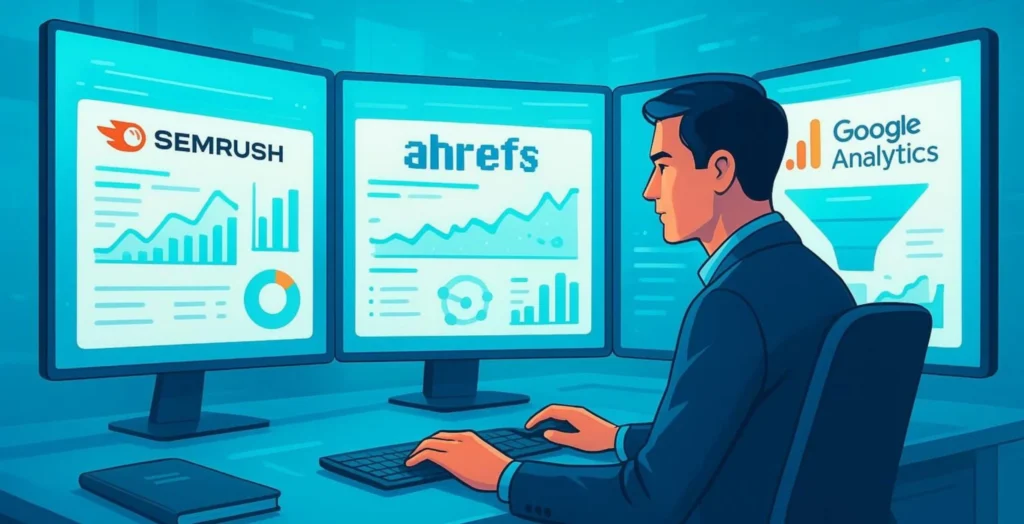
Common platforms include Semrush, Ahrefs, and Moz. Free tools like Google Search Console and Google Analytics show performance and user behavior. Google Merchant Center (GMC), including Product Studio, can help with product data and content work. Some platforms like Shopify also offer apps that automate meta tags and product text. With the right tools, teams can spend less time on repeated tasks and more time on strategy and growth.
Practical Recommendations for Scalable Ecommerce SEO Success
Prioritizing Technical Audits and Regular SEO Maintenance
If you want scalable growth, regular technical audits and ongoing maintenance are required. Think of it like routine care for your store. It helps you catch small problems before they hurt rankings and sales. Before large SEO work or growth pushes, an audit should come first. It can uncover issues like slow pages, mobile problems, crawl errors, and weak internal links.
Tools like Screaming Frog, Ahrefs, Semrush, Google Search Console, and PageSpeed Insights can help. Use the results to fix the highest-impact problems first. After that, keep up with maintenance: track Core Web Vitals, fix broken links, manage canonicals, and respond to algorithm changes. Regular care keeps your site competitive and stable — if you’d rather have specialists handle this, NON.agency offers technical SEO audits and ongoing maintenance for e-commerce stores.
Fostering Collaboration Across Digital Marketing Teams
A scalable SEO plan should not sit alone. It works best when SEO, PPC, content, social, and email teams share data and plans. Examples of how this helps:
- SEO supports PPC: Organic keywords that convert well can guide paid campaigns and reduce wasted ad spend.
- Reuse content: SEO blog posts (buying guides, how-to content) can also be used in emails and social posts.
- Social proof helps trust: Reviews and user posts shared on social can increase brand interest and engagement.
When teams work from the same insights, your marketing becomes clearer and more cost-effective. Strong teams bring SEO into campaign planning, UX choices, and budgeting so growth targets stay aligned.
Evaluating and Selecting the Right Ecommerce Platform for SEO
Your platform choice affects how well SEO can scale. The best platform depends on your goals, your team’s skills, and how much control you need. Here is a simple comparison:
| Platform | Best for | SEO strengths | Main trade-off |
| Shopify | Small to mid-size stores, fast setup | Built-in basics (sitemaps, mobile themes), app ecosystem | Less technical control than custom builds |
| WooCommerce (WordPress) | Content-heavy stores | Strong customization, SEO plugins like Yoast/Rank Math | Depends on hosting and setup quality |
| Magento | Large enterprises, complex catalogs | High control over technical SEO, strong scalability | Needs more technical resources |
| BigCommerce | Fast-growing brands, international growth | Many features built in, supports global selling | Customization limits vs fully custom setups |
| Next.js | Performance-focused, custom stores | SSR/SSG for speed and Core Web Vitals, full control | Requires developer-heavy build and maintenance |
Pick a platform that fits your long-term needs and the resources you have, so SEO work can grow with your business.
Balancing SEO with Paid Channels for Growth
Many growing e-commerce brands get the best results by using both SEO and paid ads in a planned way.
SEO builds long-term traffic. It brings steady visitors without paying per click, but it often takes time (commonly 3-6 months) to show strong results.
Paid ads (PPC) bring fast traffic. They work well for promotions, seasonal pushes, and product launches where you need immediate reach.
Using both together often works best. SEO builds a stable base and lowers long-term CAC. PPC supports fast wins and testing. SEO data can also improve PPC, such as using strong organic keywords in ads. This combined approach supports both quick results and long-term growth.
Key Takeaways for Building a Scalable Ecommerce Growth Strategy with SEO
Building a scalable e-commerce growth strategy with SEO is ongoing work, not a one-time project. In 2026, search is changing fast, with more AI features in results and shifting customer habits. Brands that do well treat SEO as a core part of how they operate. Technical health, useful content, smart keyword targeting, and strong links still matter, but you need to keep improving them as conditions change.
A strong SEO plan helps you stay steady when markets and ad platforms change. It can bring consistent traffic and lower long-term acquisition costs. It also helps you learn what customers want through data, so you can improve the site at each step of the buying process. By focusing on technical audits, teamwork across marketing, smart platform choices, and a balanced mix of organic and paid traffic, you can build an online store that attracts buyers and keeps growing with them.