
The health and wellness space is seeing a massive shift, and people are actively seeking cleaner, better food choices that fit into a fast-paced lifestyle. It’s no longer just a fitness trend—nutrition on the go has become the daily standard for a huge part of the population.
Because of this, the demand for premium smoothie brands is rising fast. Smoothies have evolved from a simple post-workout drink into a daily habit and quick meal replacement for many. Naturally, business owners and investors are paying attention. Investing in a recognized, health-focused franchise right now is one of the smartest ways to tap into a market with a strong, built-in customer base.
If you are considering Smoothie King Franchise Cost before making your next business move, you need the real numbers before jumping in. In this guide, we’re cutting the fluff—you’ll get the complete breakdown of franchise costs, earning potential, and the exact step-by-step process to open your own store.
What Is a Smoothie King? Brand Overview & 2026 Market Position
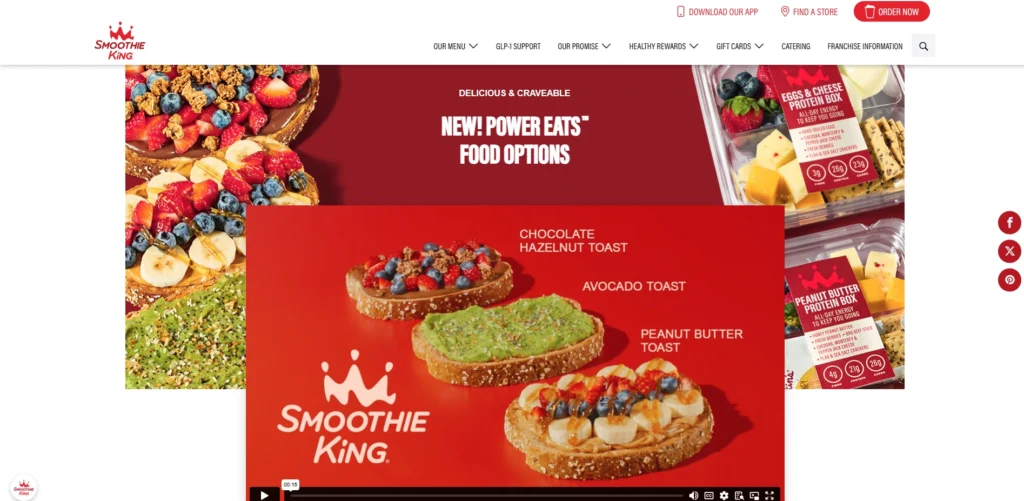
Smoothie King isn’t just another juice brand; it’s an established, USA-based giant that practically invented the nutritional smoothie category. The story started back in 1973 when founder Steve Kuhnau began mixing custom blends in Louisiana to help manage his own food allergies. What began as a personal health mission to create purpose-driven, functional drinks quickly evolved into a highly successful, scalable business model.
Today, that single local shop has grown into a massive operation with a global footprint of over 1,300 stores. The brand’s staying power and aggressive growth strategy have kept it at the top of the industry, earning it the impressive #17 spot on the highly competitive Entrepreneur Franchise 500 list. For prospective owners, this kind of industry recognition is a strong indicator of a resilient, well-supported franchise system that knows how to expand.
Looking at the landscape, the market opportunity is clear. People are actively moving away from traditional fast food and seeking out quick, genuinely healthy alternatives that fit their active routines. By aligning with a brand that has decades of authority in the health food space, investors get immediate access to a rapidly expanding market of fitness enthusiasts and everyday health-conscious consumers.
Should You Buy a Smoothie King Franchise in 2026?
Deciding whether to buy a franchise is a huge financial commitment, and you need to look past the hype to see the real picture. While Smoothie King has an incredible track record, it isn’t going to be the perfect fit for every single investor.
To help you decide if it makes sense for your portfolio this year, let’s weigh the pros and the cons.
Pros
- Strong brand: Trusted name, 1300+ stores, easy customer attraction.
- Health trend: Growing demand for healthy, functional drinks (protein, vitamins, immunity).
- Good positioning: Seen as meal replacement & fitness drink brand.
- Full support: Help with location, store setup, training, and marketing from company.
Cons
- High investment: ₹3–10+ crore (approx.), requires strong cash + net worth.
- Location critical: Success depends on high-traffic spots like gyms, colleges, or busy roads.
- Risk factor: Wrong location can seriously hurt revenue.
- Veteran benefit: 20% discount on franchise fee under VetFran program for eligible veterans.
Smoothie King Franchise Fee Breakdown (2026)
When you buy into a franchise system, you are paying for the rights to use their name, recipes, and business model. This means your financial commitment is broken down into an upfront entry fee and ongoing monthly costs. Let’s look at exactly what you will be paying to corporate .
1. Initial Franchise Fee
Before you pour a foundation or buy a single blender, you have to pay an initial franchise fee just to sign your agreement. Smoothie King splits this into two categories depending on the type of store you want to open:
- Traditional Location ($30,000): This is your standard, full-sized store. Whether it is a freestanding drive-thru or an inline space in a busy shopping center, this fee grants you a standard 10-year franchise agreement.
- Non-Traditional Location ($15,000): This lower fee applies if you are opening a much smaller footprint inside a captive-audience space— think airports, college campuses, military bases, or massive gyms.
The Difference: Why the massive price drop? Non-traditional locations usually operate in smaller square footage, have a limited menu, and don’t require the same level of exterior marketing. Because you are piggybacking off the foot traffic of the larger building you are inside of, the upfront entry fee is cut in half.
2. Royalty Fee & Ongoing Costs
Once your doors are open and you are blending drinks, you have to pay ongoing fees to stay in the Smoothie King system. These are calculated based on your gross weekly sales.
- Royalty Fee: You will pay a standard 6% royalty fee on your gross sales. Keep in mind, corporate requires a minimum payment of $500 per month, regardless of how slow your sales might be.
- National Marketing Fee: 3% of your gross sales goes directly to the corporate advertising fund.
- Local Marketing Requirement: You are also required to spend at least 2% of your gross sales on local store marketing.
3. National vs Local Marketing Fee: What is the Difference?
You might be wondering why you have to pay for marketing twice. Here is how that 5% total marketing budget is actually split up and used:
National Marketing (3%) goes into a massive corporate pool. You don’t control this money. Smoothie King uses this fund to grow the brand’s overall reputation. It pays for high-level digital marketing, nationwide ad campaigns, app development, and major brand partnerships. This ensures people across the country know and trust the name on your building.
Local Marketing (2%) stays in your hands. This is money you are required to spend directly in your own community to drive foot traffic straight to your specific register. You use this budget for localized social media ads, sponsoring local high school sports teams, setting up tasting booths at nearby gyms, or printing direct mailers for your immediate zip code.
Total Investment Required to Open a Smoothie King Franchise
Before you start blending, you have to build the store. Your total initial investment is going to swing wildly depending on the physical footprint you decide to build. Here is a breakdown of where your money actually goes during the startup phase.
1. Traditional Store Investment
A traditional store is your classic “inline” or “end-cap” location usually nestled inside a busy strip mall or shopping center. When you are building out one of these spaces, the bulk of your investment isn’t just the franchise fee; it goes directly into getting the physical space ready for customers.
Your major expenses will include:
- Equipment: Commercial-grade blenders, walk-in coolers, ice machines, and prep stations.
- Leasehold Improvements: This is usually your biggest expense. It includes plumbing, electrical work, flooring, and transforming a bare commercial shell into a health-department-approved restaurant space.
- Furniture & Fixtures: Custom millwork, counter spaces, menu boards, and customer seating.
- Technology: State-of-the-art POS (Point of Sale) systems, back-office software, and security cameras.
Depending on local labor rates and the condition of the real estate you lease, the total estimated cost to open a traditional store generally ranges from ~$264,000 to over $679,000 (with the absolute highest-end builds pushing closer to the $1.2M mark if combined with premium build-outs).
2. Non-Traditional / Drive-Thru Investment
While grouped together as alternatives to the standard strip-mall model, non-traditional locations and drive-thrus are actually on opposite ends of the financial spectrum.
a. Non-Traditional Locations (The Budget-Friendly Option):
If you want to keep costs low, non-traditional units are the way to go. These are small-footprint kiosks located inside massive foot-traffic hubs like college campuses, airports, or large commercial gyms. Because you are essentially renting a tiny corner of an already-built building, your space cost is significantly lower, leasehold improvements are minimal, and your initial franchise fee is slashed in half.
b. Free-Standing Drive-Thrus (The High-Volume Trend):
On the flip side, the drive-thru growth trend is dominating 2026. Consumers want healthy food without leaving their cars. However, building a free-standing drive-thru from the ground up is the most expensive route you can take. You are paying for exterior architecture, drive-thru tech, specialized zoning, and premium real estate. While the upfront cost is massive, these locations historically drive the highest sales volume.
3. Cost Comparison Table
Here is a quick side-by-side look at how the three different store models compare when it comes to your total initial investment:
| Store Type | Best Fit For | Estimated Total Investment (2026) |
| Non-Traditional (Kiosk) | Gyms, college campuses, airports, military bases. | $165,000 – $300,000+ |
| Traditional (Inline / End-Cap) | Busy strip malls, high-visibility retail centers. | $346,350 – $679,465 |
| Free-Standing Drive-Thru | High-traffic commuter routes, standalone pads. | $661,150 – $1,277,650 |
Financial Requirements To Qualify As a Smoothie King Franchisee
Smoothie King isn’t going to hand over the keys to their brand to just anyone. Before you even get to look at real estate or talk to lenders, the corporate team is going to run a strict financial background check to make sure you have the capital to actually pull this off.
To even be considered as a candidate, you need to hit these baseline financial minimums:
- Minimum Net Worth ($300,000): You need to show a total net worth of at least $300k. This is the total value of all your assets (like properties, investments, and savings) minus your liabilities and debts.
- Liquid Capital ($100,000): You must have a minimum of $100,000 in liquid cash. This means actual, accessible money sitting in a bank account that you can use immediately not money tied up in your primary residence or an untouchable retirement fund.
The Importance of Your Credit Score
Having the cash isn’t the only hurdle. Corporate and any lender you plan to work with is going to look closely at your credit history. A strong credit score (typically 700 or higher) is non-negotiable. It proves to the brand that you have a history of managing debt responsibly and making reliable financial decisions. If your credit is messy, your application will likely be tossed out, regardless of how much cash you have on hand.
Why Do These Strict Requirements Exist?
It might feel like they are just gatekeeping, but these financial minimums are actually in place to protect you as much as the brand.
Opening a retail business is unpredictable. Construction delays happen, equipment costs fluctuate, and it almost always takes time for a brand-new store to build a regular customer base and start turning a profit. If you drain every single penny you own just to open the doors, you will be in deep trouble during those critical first few months. Corporate enforces these minimums to guarantee you have a solid financial cushion to weather the startup phase, pay your staff, and keep the business running smoothly without panicking.
Smoothie King Franchise Revenue & Profit Potential (2026)
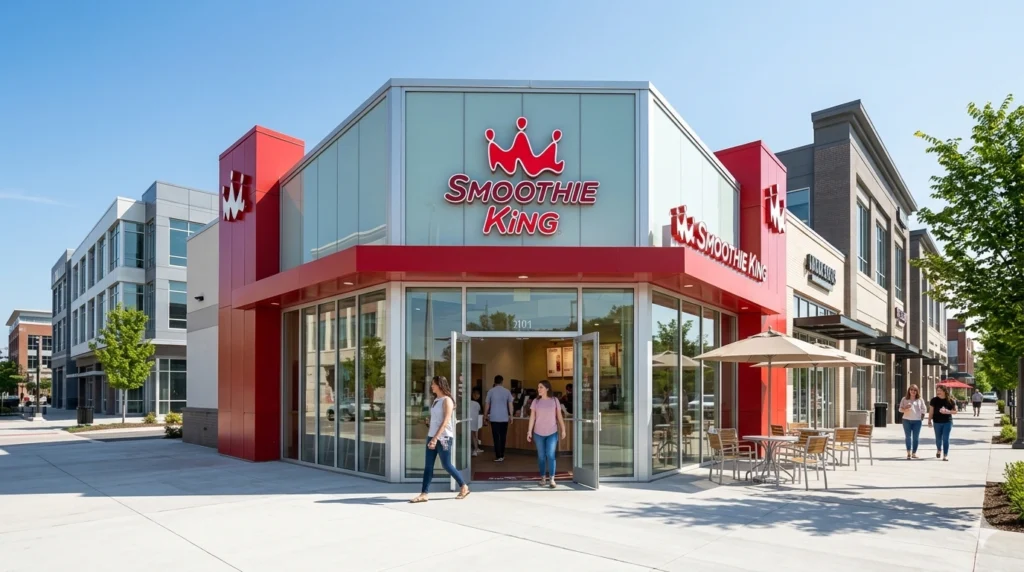
If you are going to invest half a million dollars or more into a business, you need to know what you can realistically expect to get back. While Smoothie King is a top-tier brand with strong average unit volumes (AUVs), the smoothie business operates on high volume and tight margins.
Let’s look at the realistic numbers you can expect based on recent Franchise Disclosure Document (FDD) data and industry averages.
- Average Annual Revenue: Across the board, a typical Smoothie King location generates around $600,000 to $660,000 in gross annual sales. However, the top 50% of traditional stores often see much higher numbers, with average gross sales crossing the $828,000 mark.
- Profit Margin Estimate: The juice and smoothie industry is notorious for slim margins. After accounting for food costs, labor, rent, and the 9% combined royalty and national marketing fees, the average net profit margin sits between 12% and 15%. For a store doing average sales, this translates to an estimated owner take-home pay of around $80,000 to $100,000 annually.
- Break-Even Time: Because of the high initial startup costs (especially for drive-thru locations), the payback period is typically 4 to 7 years. This is a long-term play, not a get-rich-quick scheme.
It is crucial to understand that these numbers are highly location and management dependent. An owner-operator who actively manages inventory, keeps labor costs in check, and secures a high-visibility location next to a busy gym will see significantly higher profitability than an absentee owner in a low-traffic strip mall.
To succeed with this franchise, you must have realistic expectations. You are buying a proven system, but you still have to put in the operational work to drive daily volume and protect your bottom line.
Smoothie King Training & Support System
You don’t need to be a restaurant industry veteran to run a successful Smoothie King. The corporate team knows that their growth relies entirely on yours, so they don’t just hand you the keys and wish you luck. They put every new owner through a rigorous, hands-on preparation process before a single drink is ever blended.
Here is exactly how they get you ready for opening day and beyond:
- The 20-Day Training Program Before your store is ready to operate, you are required to complete an extensive 20-day management training course. This isn’t just watching a few videos; it’s an immersive, full-time commitment averaging about eight hours a day (plus homework) designed to teach you their operational standards from the ground up.
- Online & Classroom Training The program is split to give you the best of both worlds. You will start with virtual/online orientation sessions and then move into intense classroom training at the Smoothie King headquarters in Dallas, Texas. Here, you will dive deep into inventory management, labor costs, POS technology, and the brand’s core product knowledge. You’ll also spend time in a certified training store getting actual hands-on blending and customer service experience.
- On-Site Support (5 Days of Opening Help) Opening a new business is chaotic, so the corporate sends an experienced Store Opener directly to your location. They stay on-site for up to five days—typically three days right before your grand opening and two days after. This gives you and your newly hired team a massive confidence boost, ensuring that your equipment is running smoothly and you are handling the grand opening rush perfectly from day one.
- An Ongoing Support System The backing doesn’t end after your first week. As an owner, you get access to a massive franchisee intranet for continuous learning, updated marketing materials, and direct communication with over 1,300 other store owners. Whether it’s negotiating supply chain costs, troubleshooting tech issues, or rolling out national ad campaigns to drive foot traffic, you have a dedicated field operations team in your corner for the lifetime of your business.
How to Apply For a Smoothie King Franchise (Step-by-Step)
If the numbers make sense and you are ready to make a serious move, you can’t just write a check and open a store tomorrow. Smoothie King is highly protective of its brand, and they put every candidate through a strict vetting process to ensure it’s a mutual fit.
Here is the exact roadmap from your first click to opening day:
- Step 1: Submit the Initial Inquiry Form Everything starts online. You will need to fill out a short application on the Smoothie King franchise website. This is basically a quick financial temperature check—they want to see if you hit the baseline requirements (at least $150,000 in liquid capital and a $350,000 minimum net worth).
- Step 2: Connect with a Franchise Development Director If your initial numbers check out, you will be assigned a dedicated Franchise Development Director. This is an introductory phone call where you’ll talk about your background, why you want to join the brand, and your target market. Think of it as a two-way interview; they are evaluating your business acumen, but you should also be evaluating if their vision aligns with yours.
- Step 3: Candidate Due Diligence & FDD Review Things get serious in this stage. You will submit formal financial statements, agree to background and credit checks (they look for a 700+ credit score), and dive into the paperwork. You will receive the Franchise Disclosure Document (FDD). Take this to your lawyer and accountant. During this phase, you are highly encouraged to call existing franchisees and ask them the hard questions about their daily operations and true profitability.
- Step 4: Attend Discovery Day If you pass the deep-dive vetting phase, you will be invited to “Discovery Day” at the Smoothie King headquarters in Dallas, Texas. You will meet the executive leadership team face-to-face, tour a working facility, and get a feel for the corporate culture. At the end of this trip, the leadership team will decide if you get the final green light.
- Step 5: The Franchise Award & Agreement If you are approved after Discovery Day, congratulations you are officially awarded a franchise! You will wait a mandatory seven-day “cooling off” period after receiving the final agreement. Once that passes, you sign on the dotted line, wire your initial franchise fee (up to $30,000), and officially become an owner.
- Step 6: Site Selection & Training Now the physical work begins. You will attend a virtual orientation, start hunting for the perfect real estate location with their dedicated property team, and eventually head into the rigorous 4-week training program we discussed earlier. Once your store build-out is done and your staff is trained, you are ready to cut the ribbon and open your doors.
How to Finance Your Smoothie King Franchise
Unless you have half a million dollars in liquid cash sitting in a bank account, you are going to need a solid financing strategy to get your doors open. The good news? Because Smoothie King is a highly recognized, top-tier brand with a proven track record, banks and lenders are much more willing to give you capital compared to an unproven, independent startup.
Smoothie King doesn’t offer direct, in-house financing, but they do have a network of third-party lenders. Here are the most common ways future owners fund their new locations:
- SBA Loans (Small Business Administration) This is the gold standard for franchise financing. SBA 7(a) loans are partially backed by the federal government, which makes them less risky for banks to issue. Because of this, you get access to lower interest rates and longer repayment terms. The catch? The application process is notoriously slow, and you will have to deal with a mountain of paperwork.
- Equipment Financing A huge chunk of your initial investment goes directly into the physical build-out-commercial blenders, walk-in coolers, digital menu boards, and POS systems. Instead of taking out a massive general business loan, you can specifically finance the equipment. The equipment itself acts as the collateral, which often makes this type of loan easier and faster to secure.
- ROBS (Rollovers for Business Startups) If you have been working in the corporate world for a while, you might be sitting on a hefty retirement account. A ROBS strategy allows you to tap into your 401(k) or IRA to fund your franchise without triggering massive early withdrawal penalties or upfront taxes. It’s a great way to fund your business debt-free, but you are literally risking your retirement, so consult a financial advisor first.
- Specialized Franchise Lenders There are lending institutions that specialize entirely in franchising. Smoothie King’s corporate team can connect you with preferred financial partners who already know the brand’s Franchise Disclosure Document (FDD) inside and out. Since these lenders already trust the Smoothie King business model, the approval process is usually much smoother.
Pro-Tips for Getting Approved Fast
Lenders are going to put your financial life under a microscope before handing over hundreds of thousands of dollars. If you want to secure the best rates, you need to prepare early.
- Dial In Your Credit Score: Do not wait until you are talking to a lender to check your credit. Smoothie King requires a minimum credit score of 700 just to be considered. Pay down high-interest debt and clear up any errors on your report months before you apply.
- Have Your Financial Documents Ready: Lenders hate waiting. Have your personal financial statement, the last three years of tax returns, your bank statements, and proof of your liquid assets fully organized and ready to hand over on day one. Showing up prepared makes you look like a serious, reliable business owner.
Smoothie King Franchise vs Competitors (2026 Comparison)
Before you wire a massive franchise fee and sign a 10-year agreement, you have to look at the rest of the playing field. The juice and smoothie space is highly competitive , and depending on your operational goals, another brand might actually be a better fit for your portfolio.
How does Smoothie King stack up against other heavyweights and rising stars in the industry? Here is a head-to-head breakdown of the top contenders based on cost, brand positioning, and returns.
| Brand | Initial Investment (Cost) | Brand Strength & Focus | ROI & Revenue Potential | Franchise Support |
| Smoothie King | $346,350 – $1.2M+ | Fitness & Health Giant. Hyper-focused on clean meal replacements and fitness goals. (#17 on Franchise 500) | $600K–$828K average revenue. Clean operation with zero food-prep headaches. Profit margins hover around 12–15%. | Intense. 20 days of training plus 5 full days of on-site grand opening support. |
| Tropical Smoothie Cafe | $341,000 – $815,000 | Fast-Casual Hybrid. Blends smoothies with a heavy menu of wraps, sandwiches, and flatbreads. | ~$955K–$1M+ average revenue. Higher gross sales, but dealing with fresh food prep increases kitchen complexity and labor costs. | Strong. Comprehensive classroom training and excellent ongoing field operations backing. |
| Jamba | $236,100 – $806,000 | The Legacy Brand. Highly recognizable mall and strip-center staple, leaning more toward casual “treat” consumers. | ~$689K average revenue. Cheaper entry point for smaller footprints, but historically lower daily volume than food-heavy competitors. | Standard. Strong national supply chain access and typical corporate training protocols. |
| Planet Smoothie | $206,400 – $412,250 | Flexible Footprint. Part of the massive Kahala Brands portfolio. Focuses on great-tasting, lower-calorie options. | Lower Entry, Lower Volume. Great for non-traditional spots (kiosks, transit hubs), but AUVs are generally lower than the top three. | Solid. Leverages Kahala Brands’ massive corporate resources and marketing engine. |
| Robeks | $286,850 – $399,000 | Premium Fresh & Acai. West-coast roots, heavily leaning into the premium fresh juice, toasts, and acai bowl trends. | ~$500K–$700K+ average revenue. Strong margins due to premium pricing, but smaller brand footprint nationally. | Hands-On. Strong regional support and highly involved corporate guidance for site selection |
Is Smoothie King Franchise Worth It In 2026?
Ultimately, deciding if a Smoothie King franchise is worth the investment comes down to your financial runway and long-term business goals. If you have the capital, it is undeniably one of the strongest health-focused concepts you can buy into right now. The brand’s refusal to complicate its menu with heavy food prep makes the day-to-day operations incredibly clean compared to a traditional fast-food restaurant. You are stepping into a proven system with massive brand equity, catering to a fitness-minded customer base that treats your product as a daily routine rather than an occasional indulgence.
That being said, you have to approach this with your eyes wide open. With initial build-out costs potentially crossing the $1 million mark for a drive-thru model, the barrier to entry is steep, and the typical four-to-seven-year break-even period requires serious patience. To make the math work and hit those top-tier profit margins, you must be obsessive about real estate selection and active management. But if you can secure a highly visible spot next to a busy gym or a major commuting route, and you are ready to hustle for community engagement, Smoothie King remains a highly lucrative and resilient business opportunity.
Some Suggested Read:
Conclusion
In conclusion, at the end of the day, investing in a Smoothie King franchise is a big move, and understanding the Smoothie King Franchise Cost is a major part of that decision. It requires a solid chunk of upfront cash and a real commitment to running the business day in and day out. But in return, you are buying into a powerhouse brand that has completely figured out the health and wellness market.
The beauty of this business model is its simplicity. You get to skip the messy kitchens, complicated menus, and heavy restaurant staff turnover. Instead, you get a clean, highly streamlined operation with a loyal customer base that treats your product as part of their daily routine.
If you have the financial backing, a great location in mind, and the drive to build something profitable, Smoothie King is an incredible vehicle to get you there. Take your time, crunch the numbers with your accountant, and talk to current owners. If the math makes sense for your personal goals, taking that first step could be the best business decision you make this year.
FAQs
How Much Is The Initial Franchise Fee For Smoothie King?
The standard franchise fee is $30,000 for a traditional location. However, if you are looking to open a non-traditional spot (like inside an airport or college campus), the fee drops to $15,000. Additionally, honorably discharged military veterans get a 20% discount on the standard fee.
How Much Profit Does A Smoothie King Owner Actually Make?
The juice and smoothie business relies heavily on volume. On average, a Smoothie King operates at a 12% to 15% net profit margin. For a store hitting the average $600,000 to $660,000 in annual sales, an owner-operator can generally expect to take home roughly $80,000 to $100,000 a year.
Does Smoothie King Offer Direct Financing To New Owners?
No, corporate does not offer in-house financing. However, because it is such an established and trusted brand, they have strong relationships with preferred third-party lenders. They can easily connect you with financial partners who specialize in SBA loans or equipment financing for their franchisees.
What Are The Ongoing Royalty And Marketing Fees?
Like most major franchises, you pay ongoing fees to use the brand and systems. You will pay a royalty fee of 6% of your weekly gross sales. On top of that, there is a 3% national marketing fee to fund broad advertising campaigns, and you are required to spend a minimum of 2% on your own local store marketing.
Can I Open a Location If I Don’t Have Prior Restaurant Experience?
Smoothie King does not require you to have a background in the food industry. Because there is no raw meat, cooking, or complex food prep, the operation is very straightforward. Plus, corporations require all new owners to complete a rigorous 20-day training program that teaches you exactly how to run the business from the ground up before you ever open your doors.