The quick commerce industry in India has witnessed remarkable growth, changing the way people shop for groceries and daily essentials. Blinkit, one of India’s leading quick commerce platforms, has expanded its presence by delivering products within minutes through its network of dark stores. According to industry reports, India’s quick commerce market is expected to grow significantly in the coming years, driven by increasing internet usage, urban demand, and changing consumer habits.
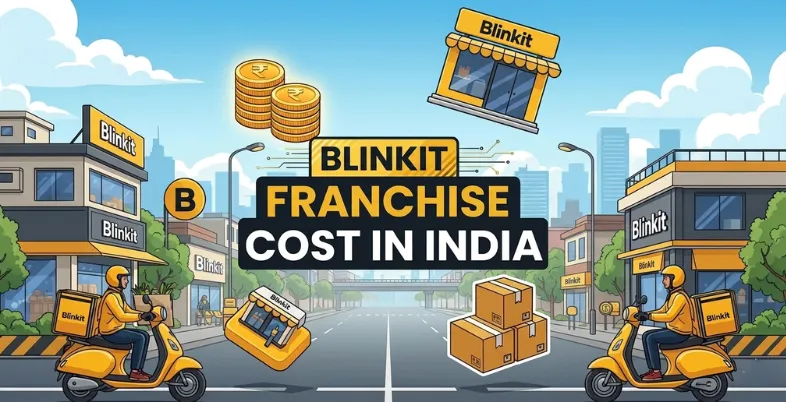
For entrepreneurs looking to enter this growing sector, understanding the Blinkit Franchise Cost in India is essential before making an investment decision. The overall investment depends on factors such as location, store setup, infrastructure, technology, and operational requirements. This guide covers the estimated costs, eligibility criteria, business model, and potential earning opportunities associated with starting a Blinkit-related venture in India.
About Blinkit? Brand Overview and Quick Commerce Rise

Blinkit is one of India’s leading quick-commerce platforms, known for delivering groceries, daily essentials, electronics, and other products within minutes. Founded in 2013 as Grofers, the company rebranded to Blinkit in 2021 to reflect its focus on ultra-fast delivery. Today, it operates through a network of dark stores and technology-driven logistics systems across numerous Indian cities. Many businesses looking to build similar digital commerce solutions often collaborate with a food delivery app development company to create scalable platforms with advanced ordering, delivery, and logistics features.
The rise of quick commerce has transformed consumer behavior in India. Instead of planning weekly shopping trips, customers can order products instantly through mobile apps and receive them in as little as 10 minutes. Companies such as Blinkit, along with competitors like Zepto and Swiggy, have accelerated this trend by investing heavily in local fulfillment centers and rapid delivery networks.
Quick commerce has become one of the fastest-growing segments of India’s digital economy. Its popularity is driven by urban lifestyles, smartphone adoption, digital payments, and demand for convenience. While the sector faces challenges such as profitability and operational costs, Blinkit remains a major player shaping the future of on-demand retail and instant delivery services.
Does Blinkit Offer a Franchise in India?
As of 2026, Blinkit does not offer a traditional franchise model in India. Unlike many retail chains that allow entrepreneurs to purchase franchise rights and operate branded outlets independently, Blinkit primarily runs its operations through company-managed dark stores and delivery networks. The company focuses on maintaining control over inventory, technology, logistics, and customer experience to ensure fast and consistent deliveries.
However, Blinkit does provide business opportunities through partnerships with store owners, sellers, and delivery partners in selected locations. These arrangements differ from a standard franchise and are usually managed directly by the company based on market demand and operational requirements. Entrepreneurs interested in working with Blinkit should monitor the company’s official announcements and partnership programs for the latest opportunities and eligibility criteria.
Blinkit Franchise Models Explained

Quick-commerce businesses operate through different partnerships and operational structures rather than traditional retail store franchises. While Blinkit does not publicly offer a standard franchise model, understanding the Blinkit Franchise Cost in India is important for entrepreneurs exploring opportunities within its ecosystem. There are several business models associated with Blinkit’s operations that partners may encounter, including delivery partnerships, dark store operations, and other support-based opportunities. These models can involve different investment requirements, infrastructure needs, and operational responsibilities depending on the type of business arrangement selected.
1. Dark Store Partner Model
The Dark Store Partner Model involves operating a small warehouse dedicated to fulfilling online orders within a limited delivery radius. These facilities are strategically located in residential and commercial areas to enable rapid deliveries. A partner may provide the space and assist with local operations, while Blinkit manages technology, inventory planning, and customer acquisition.
This model focuses on efficiency rather than walk-in customers, as all orders are placed through the app. Success depends on location, inventory availability, operational discipline, and fast order processing. It is the backbone of Blinkit’s quick-commerce strategy across major Indian cities.
2. Seller Partnership Model
Under the Seller Partnership Model, local businesses and suppliers list products that can be sold through Blinkit’s platform. Instead of managing deliveries independently, sellers gain access to Blinkit’s customer base and logistics ecosystem. This arrangement helps businesses increase visibility, expand market reach, and improve sales without investing heavily in technology infrastructure.
Sellers are responsible for maintaining product quality, stock availability, and compliance with platform requirements. Blinkit handles customer interactions, order placement, and delivery coordination. This model is particularly attractive for wholesalers, FMCG distributors, and brands seeking access to high-demand urban markets.
3. Delivery Partner Model
The Delivery Partner Model is designed for individuals who wish to earn income by completing customer deliveries. Delivery partners use their own vehicles, such as bikes or scooters, and receive orders through the Blinkit delivery application. Earnings generally depend on completed deliveries, distance covered, incentives, and peak-hour demand.
This model requires minimal investment and offers flexible working hours. Delivery partners play a critical role in maintaining Blinkit’s promise of ultra-fast deliveries. While it is not a business franchise, it provides an entrepreneurial opportunity for individuals seeking independent work and supplemental income.
4. Warehouse and Logistics Support Model
The Warehouse and Logistics Support Model involves providing operational services that support Blinkit’s supply chain. Partners may assist with inventory handling, storage management, packaging, sorting, and movement of goods between distribution centers and dark stores.
This model is often suited to logistics companies and warehouse operators with existing infrastructure and expertise. Efficient inventory control and timely replenishment are essential for maintaining product availability and delivery speed. By supporting backend operations, logistics partners contribute directly to the smooth functioning of Blinkit’s quick-commerce network while benefiting from long-term business collaborations.
Blinkit Franchise Cost in India 2026 – Full Breakdown
Starting a Blinkit dark store partnership requires a significantly higher investment than a traditional grocery franchise. The total investment depends on the city, store size, inventory requirements, and operational model. Most estimates place the overall investment between ₹10 lakh and ₹40 lakh+, while larger dark stores in metro cities may require even higher capital.
Estimated Initial Investment Breakdown
| Cost Component | Estimated Cost |
| Partnership / Franchise Fee | ₹2 lakh – ₹5 lakh |
| Store Setup & Infrastructure | ₹5 lakh – ₹12 lakh |
| Initial Inventory | ₹3 lakh – ₹7 lakh |
| Security Deposit & Rent | ₹1 lakh – ₹10 lakh |
| Licenses & Compliance | ₹50,000 – ₹1 lakh |
| Staff Training & Onboarding | ₹50,000 – ₹1 lakh |
| Working Capital | ₹3 lakh – ₹5 lakh |
| Total Estimated Investment | ₹10 lakh – ₹40 lakh |
Ongoing Monthly Costs
Apart from the initial investment, franchise partners must manage recurring operational expenses. Monthly rent, staff salaries, electricity, internet, maintenance, inventory losses, packaging materials, and miscellaneous operating expenses form the largest cost categories.
Manpower expenses alone can exceed ₹4 lakh per month for larger dark stores with multiple pickers, supervisors, and support staff. Some partnership structures may include revenue-sharing or commission-based payments to Blinkit. Maintaining fast delivery standards and inventory accuracy also increases operating costs. Entrepreneurs should keep sufficient working capital to handle fluctuations in demand and operational requirements.
Financial Eligibility Requirements
Blinkit generally prefers applicants with strong financial stability and business management capability. Investors should have adequate liquid capital to cover setup costs, inventory purchases, and working capital needs. Commercial space, GST registration, business documentation, and the ability to manage staff and daily operations are commonly expected.
Depending on the partnership model, some operators may need substantial refundable security deposits or additional capital reserves. A good credit profile and access to business financing can improve approval chances. Financial preparedness is important because quick-commerce operations often require continuous investment before reaching long-term profitability.
Blinkit Franchise Profit Margin and Monthly Income in 2026
| Business Model | Estimated Monthly Revenue | Estimated Net Profit Margin | Estimated Monthly Income / Profit | Investment Level |
| Dark Store Partner Model | ₹10 lakh – ₹25 lakh | 8% – 15% | ₹1 lakh – ₹3 lakh | High |
| Mini Dark Store Model | ₹6 lakh – ₹15 lakh | 8% – 12% | ₹60,000 – ₹1.2 lakh | Medium |
| Seller Partnership Model | Depends on product sales volume | 10% – 25% product margins | Varies significantly | Medium |
| Warehouse & Logistics Support Model | Contract-based revenue | 10% – 20% operational margin | ₹50,000 – ₹2 lakh+ | Medium to High |
Eligibility Criteria to Apply for a Blinkit Franchise
Blinkit generally looks for financially stable individuals or businesses capable of managing fast-paced quick-commerce operations. While exact requirements may vary by location and partnership model, applicants are typically evaluated on financial strength, operational capability, and infrastructure readiness.
- Minimum Age Requirement: Applicants should generally be at least 18 years old and legally eligible to enter business agreements and contracts.
- Adequate Investment Capacity: Sufficient capital is required to cover setup costs, inventory purchases, security deposits, and working capital requirements.
- Commercial Space Availability: Applicants should own or lease suitable commercial property meeting Blinkit’s location, size, and operational requirements.
- Business Management Skills: Prior experience in retail, logistics, inventory management, or business operations can improve approval prospects significantly.
- Valid Business Documentation: GST registration, PAN card, Aadhaar card, bank account details, and other required business documents must be available.
- Strong Financial Background: Applicants should demonstrate financial stability, adequate cash reserves, and the ability to sustain ongoing operational expenses.
- Staffing and Operations Capability: The ability to recruit, train, and manage store personnel efficiently is important for maintaining service standards.
- Compliance with Company Standards: Partners must follow Blinkit’s operational guidelines, technology systems, inventory procedures, and customer service requirements.
Documents Required for Blinkit Franchise Application
To evaluate potential partners, Blinkit typically requires identity, financial, business, and property-related documents. The exact list may vary depending on the partnership model, location, and operational requirements.
- Aadhaar Card: Required for identity verification, address confirmation, KYC compliance, and validating the applicant’s personal information accurately.
- PAN Card: Used for tax identification, financial verification, business registration processes, and compliance with regulatory requirements.
- Passport-Size Photographs: Recent photographs are needed for application records, partner profiles, documentation, verification, and official onboarding processes.
- GST Registration Certificate: Mandatory for conducting taxable business transactions, invoicing customers, claiming input credits, and maintaining compliance.
- Bank Account Statements: Recent statements help assess financial stability, transaction history, liquidity position, and business funding capability.
- Property Ownership or Lease Agreement: Proof of commercial space ownership or tenancy confirming legal rights to operate from the proposed location.
- Business Registration Documents: Required when applying as a company, partnership, LLP, or proprietorship to verify legal business existence.
- Income Tax Returns (ITRs): Help demonstrate financial credibility, income history, repayment capacity, and overall business or personal financial health.
- NOC and Local Approvals: Certain locations may require No Objection Certificates and municipal approvals before commercial operations can begin.
- Cancelled Cheque: Used for bank account verification, payment processing, revenue settlements, and financial transaction authentication purposes.
Step-by-Step Process to Apply for a Blinkit Franchise in 2026
Although Blinkit does not publicly offer a traditional franchise program, interested entrepreneurs can apply for available partnership opportunities. The process generally involves application submission, business evaluation, location assessment, and operational onboarding.
- Step 1: Research Partnership Opportunities: Review available Blinkit partnership models, investment requirements, operational responsibilities, and market demand before proceeding with applications.
- Step 2: Assess Financial Readiness: Ensure sufficient capital for setup costs, inventory purchases, security deposits, staffing expenses, and ongoing working capital.
- Step 3: Secure a Suitable Location: Identify commercial space meeting Blinkit’s size, accessibility, infrastructure, and local demand requirements for efficient operations.
- Step 4: Gather Required Documents: Prepare identity proofs, business registrations, financial records, property documents, GST certificates, and other mandatory paperwork.
- Step 5: Submit an Application: Complete the partnership inquiry form through official channels and provide accurate business and contact information.
- Step 6: Attend Verification and Evaluation: Participate in discussions, interviews, and assessments regarding financial capability, business experience, and operational preparedness.
- Step 7: Location Inspection and Approval: Blinkit’s team may evaluate the proposed site for accessibility, demand potential, logistics suitability, and operational feasibility.
- Step 8: Sign Partnership Agreement: Review partnership terms carefully, understand obligations, and execute the agreement after receiving final approval.
- Step 9: Complete Store Setup: Arrange infrastructure, inventory systems, staffing, technology installations, and operational requirements according to company guidelines.
- Step 10: Training and Business Launch: Undergo onboarding and operational training before launching services and managing day-to-day quick-commerce operations successfully.
Blinkit Franchise Profit Factors – What Decides Your Earnings
Profitability in a Blinkit partnership depends on much more than investment size alone. Factors such as location, order volume, operating efficiency, and inventory management directly influence monthly earnings and long-term returns.
- Location Quality: High-demand residential and commercial areas generate more orders, improving revenue potential and increasing overall profitability significantly.
- Daily Order Volume: Higher daily order counts directly increase sales turnover, commissions, and opportunities to achieve performance-based incentives.
- Inventory Availability: Maintaining popular products in stock prevents missed sales opportunities and improves customer satisfaction and repeat purchases.
- Operational Efficiency: Faster order processing, accurate inventory management, and streamlined workflows help reduce costs and maximize profit margins.
- Staffing Costs: Efficient workforce management controls salary expenses while ensuring adequate manpower for smooth daily operations and deliveries.
- Competition in the Area: Lower competition from quick-commerce rivals can increase customer acquisition, market share, and long-term revenue growth.
- Customer Retention Rate: Satisfied customers place repeat orders frequently, creating stable revenue streams and reducing customer acquisition costs.
- Cost Control Measures: Managing rent, utilities , wastage, maintenance, and operational expenses effectively helps improve net earnings and profitability.
Blinkit Franchise vs Other Franchises – Which is Better?
| Factor | Blinkit Partnership | Zepto Partnership | Instamart (Swiggy) Partnership |
| Business Type | Quick Commerce | Quick Commerce | Quick Commerce |
| Initial Investment | ₹10–40 lakh+ | ₹10–50 lakh+ | ₹10–40 lakh+ |
| Customer Footfall Dependency | No | No | No |
| Delivery-Based Revenue | High | High | High |
| Brand Recognition | Very Strong | Strong | Very Strong |
| Technology Support | Advanced | Advanced | Advanced |
| Inventory Management | Company-Driven | Company-Driven | Company-Driven |
| Operating Complexity | High | High | High |
| Profit Margin Potential | Moderate | Moderate | Moderate |
| Scalability | High | High | High |
| Market Growth Rate | Very High | Very High | Very High |
| Risk Level | Medium to High | Medium to High | Medium to High |
Pros and Cons of Blinkit Franchise
A Blinkit partnership can be attractive due to the rapid growth of India’s quick-commerce sector. However, like any business opportunity, it comes with both advantages and challenges that potential investors should evaluate carefully.
Pros
Blinkit partnerships benefit from a growing quick-commerce market, strong brand awareness, established technology infrastructure, and increasing consumer demand nationwide.
- Strong Brand Recognition: Blinkit’s established reputation attracts customers quickly, reducing marketing efforts and helping partners gain market visibility faster.
- Growing Quick-Commerce Demand: Increasing consumer preference for instant deliveries creates strong business opportunities and supports long-term growth potential.
- Technology-Driven Operations: Advanced technology systems simplify inventory tracking, order management, and operational efficiency across daily business activities.
- Large Customer Base: Access to Blinkit’s existing customer network helps generate orders without extensive independent customer acquisition efforts.
- Multiple Revenue Opportunities: Earnings may come from order volumes, incentives, performance rewards, and growth in local market demand.
- Expansion Potential: Successful operations may create opportunities to manage larger facilities or participate in future expansion programs.
Cons
While the business offers growth potential, investors should also understand the operational and financial risks involved before committing.
- High Initial Investment: Setup costs, infrastructure expenses, inventory purchases, and working capital requirements can be substantial for many entrepreneurs.
- Tight Profit Margins: Quick-commerce businesses often operate on relatively narrow margins due to intense competition and operational expenses.
- Operational Complexity: Managing inventory, staffing, logistics, and service quality requires continuous attention and effective operational oversight.
- Dependence on Company Policies: Changes in partnership terms, commissions, or operational guidelines can directly impact profitability and business planning.
- High Competition: Competition from other quick-commerce platforms may affect customer acquisition, order volumes, and long-term market share.
- Staffing Challenges: Recruiting, training, and retaining reliable employees can be difficult, especially in high-demand urban markets.
Is Blinkit Franchise Worth It in 2026?
Blinkit’s business ecosystem offers access to India’s rapidly expanding quick-commerce industry. However, profitability depends on investment capacity, location quality, operational efficiency, and long-term market conditions.
- Growing Industry Opportunity: Quick-commerce demand continues expanding across urban India, creating strong long-term growth opportunities for capable business partners.
- Strong Brand Advantage: Blinkit’s established brand recognition helps attract customers quickly and reduces the effort required for market penetration.
- High Revenue Potential: Well-located operations with consistent order volumes can generate substantial revenue and attractive long-term business returns.
- Significant Capital Requirement: The business requires considerable investment, making it more suitable for financially prepared entrepreneurs and investors.
- Technology-Led Operations: Advanced systems improve inventory management, order fulfillment, and operational efficiency, supporting scalable business growth.
- Competitive Market Environment: Intense competition from quick-commerce rivals can affect customer acquisition, order volumes, and overall profitability levels.
- Operational Commitment Needed: Success requires active management of staffing, inventory, logistics, compliance, and daily operational performance standards.
- Best for Long-Term Investors: Entrepreneurs seeking exposure to high-growth retail trends may find Blinkit’s ecosystem worthwhile despite associated risks.
Blinkit Franchise Contact Details and Official Support
| Support Type | Details |
| Official Partnership Portal | https://partners.blinkit.com/ |
| Partnership Opportunities | https://blinkit.com/partner |
| General Contact Page | https://blinkit.com/contact |
| Support Email | info@blinkit.com |
| Customer Support | 0114059237 |
Explore more franchise options:
Conclusion
Blinkit represents one of the most exciting opportunities within India’s rapidly growing quick-commerce sector. The business benefits from strong consumer demand, brand recognition, technology-driven operations, and a market that continues to expand across major cities. For entrepreneurs researching Blinkit Franchise Cost in India, understanding the investment requirements, operational structure, and partnership opportunities is essential before entering this high-growth industry. With adequate capital, operational expertise, and access to a strategic location, a Blinkit partnership can provide exposure to a fast-growing market with significant long-term potential.
However, success is not guaranteed. Profitability depends on factors such as order volume, cost control, inventory management, staffing efficiency, and local competition. Before investing, business owners should carefully evaluate financial commitments, partnership terms, and market conditions. Those who approach the opportunity with realistic expectations and a long-term growth mindset are more likely to achieve sustainable returns.