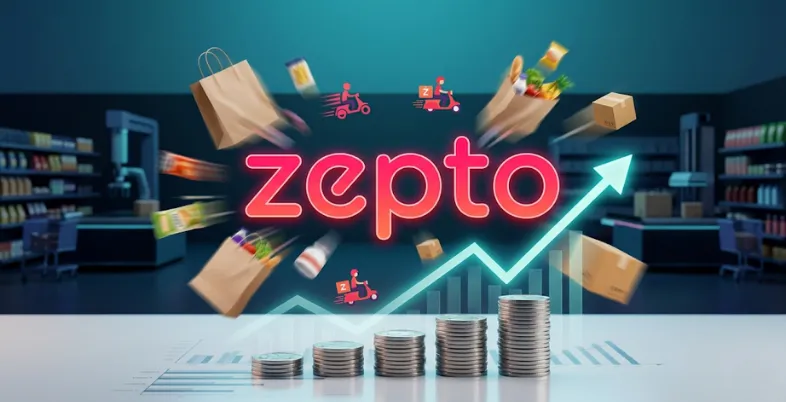
The quick commerce industry in India is booming, and Zepto has emerged as a leading player with its ultra-fast grocery delivery model. By leveraging a network of dark stores and advanced logistics, Zepto is transforming how people shop for daily essentials. This rapid growth has opened up exciting opportunities for entrepreneurs looking to enter the hyperlocal delivery space.
Understanding the Zepto franchise cost is essential before making an investment decision. Unlike traditional retail franchises, Zepto operates on a partnership-based model where you manage store operations while the company handles technology, inventory flow, and branding. With rising demand in urban areas, this business model offers strong potential for scalable growth and consistent returns.
About Zepto? Brand Overview & Quick Commerce Model
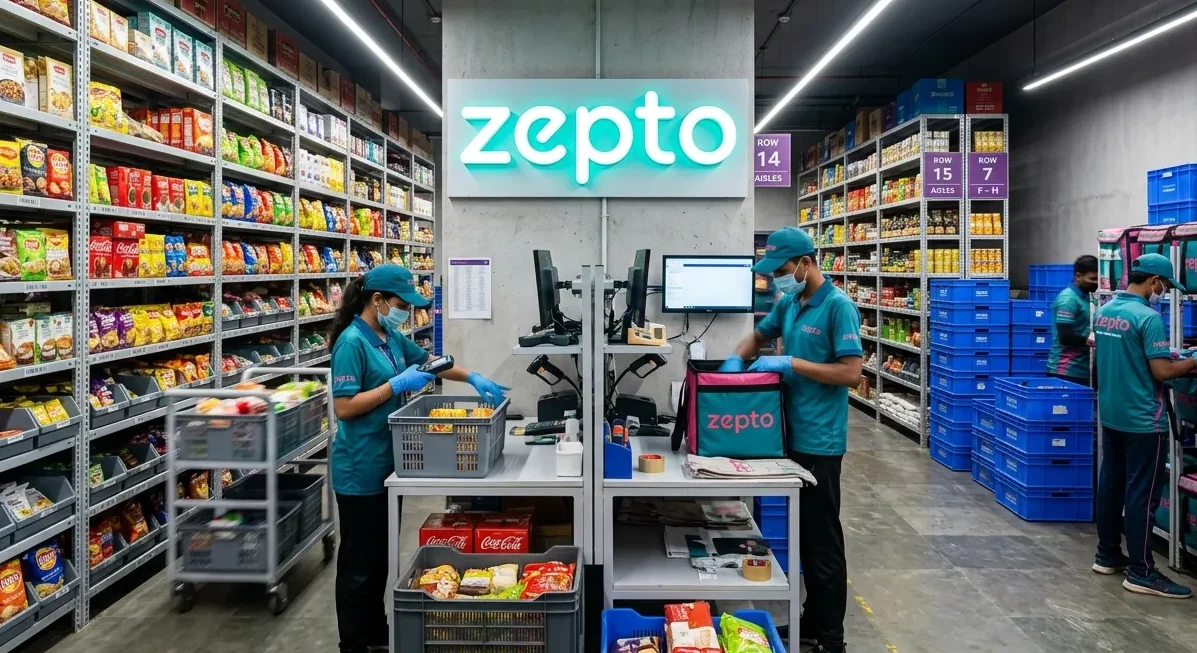
Zepto is an Indian quick commerce startup that delivers groceries and daily essentials to customers in minutes through a mobile app. Founded in 2021 by Aadit Palicha and Kaivalya Vohra, the company revolutionized online shopping by promising ultra-fast delivery using a network of hyperlocal warehouses.
Instead of traditional e-commerce timelines, Zepto focuses on instant convenience, enabling users to order everything from fruits to household items and receive them quickly at their doorstep. It operates across major Indian cities with thousands of dark stores and handles millions of orders daily, making it one of the fastest-growing players in the quick commerce space.
Zepto has rapidly built a strong brand around speed, convenience, and technology-driven retail. In just a few years, it has grown into a multi-billion-dollar company with a valuation exceeding $5–7 billion and a presence in multiple metro cities. Its brand identity revolves around saving time for urban consumers, reflected in its promise of near-instant delivery and seamless app experience.
Backed by major investors and advanced logistics routing systems, Zepto has positioned itself as a next-generation retail platform, competing directly with players like Blinkit and Swiggy Instamart. Its rapid expansion, strong funding, and focus on innovation make it one of the most influential brands shaping India’s quick commerce industry today.
Quick Commerce Model (How Zepto Works)
Before diving into the steps, it’s important to understand that Zepto operates on a speed-first, hyperlocal logistics model designed to deliver essentials within minutes by combining smart inventory placement, efficient operations, and technology-driven decision-making.
- Inventory-Led Model: Zepto buys products in bulk and owns inventory instead of acting as a marketplace.
- Dark Store Network: Products are stored in small urban warehouses located close to customers for faster delivery.
- Hyperlocal Delivery Radius: Each store serves customers within a 2–3 km radius to reduce delivery time.
- Ultra-Fast Fulfillment: Orders are picked and packed within minutes using optimized layouts and trained staff.
- Last-Mile Delivery System: Riders stationed at dark stores ensure quick dispatch and doorstep delivery.
- Technology & Data Optimization: AI-driven demand forecasting and route planning improve efficiency and speed.
- Revenue Streams: Earnings come from product margins, delivery fees, subscriptions, and ads.
Zepto USP (Unique Selling Proposition)
- Ultra-Fast Delivery: Promises delivery in 10–15 minutes
- Dark Store Network: Hyperlocal warehouses ensure speed and efficiency
- Tech-Driven Operations: Real-time tracking, smart inventory & route optimization
- Convenience Focus: Instant access to daily essentials anytime
- High Availability: Wide product range with quick restocking
- Urban Targeting: Designed for high-density areas with frequent demand
How Does Zepto’s Dark Store Model Work?
Zepto operates on a highly optimized dark store model designed for ultra-fast grocery delivery (typically within 10 minutes). A dark store is a small warehouse located in densely populated areas, not open to walk-in customers, and used exclusively for fulfilling online orders.
- Order Placement: Customers place an order through the Zepto app, selecting groceries, snacks, or essentials. The system automatically assigns the nearest dark store based on the user’s location to ensure minimal delivery time.
- Smart Inventory Mapping: Each dark store stocks around 2,000–3,000 high-demand products based on local buying patterns. Advanced algorithms predict demand and ensure fast-moving items are always available, reducing delays and stockouts.
- Picking & Packing: Once the order is received, in-store staff (pickers) quickly locate items using optimized shelf layouts. Orders are picked within 60–90 seconds and packed efficiently to maintain speed and accuracy.
- Rider Dispatch: As soon as packaging is complete, a delivery partner (rider) is assigned. Riders are usually stationed near or inside the dark store, minimizing waiting time and ensuring immediate dispatch.
- Hyperlocal Routing: The system uses real-time navigation and traffic data to determine the fastest delivery route. Since dark stores are strategically placed within 1–3 km of customers, delivery is extremely quick.
- 10-Minute Delivery: With minimal travel distance, efficient picking, and instant dispatch, Zepto achieves its promise of delivery within 10 minutes—making it one of the fastest players in India’s quick commerce space.
Zepto Franchise Models Explained — COFO vs FOFO
COFO Model (Company Owned, Franchisee Operated)
The COFO (Company Owned, Franchisee Operated) model used by Zepto is designed to balance operational control with local execution efficiency. In this model, Zepto retains ownership of key assets such as the brand, technology platform, inventory systems, and often the dark store infrastructure, while the franchise partner is responsible for day-to-day operations.
The franchisee manages staff hiring, order fulfillment, store maintenance, and ensuring fast deliveries within the promised time (usually 10 minutes). Since the company controls pricing, supply chain, and app operations, consistency in customer experience is maintained across locations. This reduces the strategic burden on the franchisee but also limits pricing flexibility.
For partners, the COFO model lowers risk compared to full ownership, as brand power and demand generation come from Zepto itself. However, profitability depends heavily on operational efficiency, order volume, and cost management, making execution the key success factor.
Key Responsibilities of a Franchisee in the COFO Model
In the COFO (Company Owned, Franchisee Operated) model of Zepto, the franchisee plays a crucial role in executing daily operations efficiently while the company handles strategic control. The success of a dark store largely depends on how well the franchisee manages on-ground activities. Key responsibilities include:
- Store Operations Management: Overseeing day-to-day functioning of the dark store, ensuring smooth order processing and adherence to Zepto’s operational standards.
- Staff Hiring & Training: Recruiting pickers, packers, and supervisors, and training them for speed, accuracy, and customer satisfaction.
- Order Fulfillment: Ensuring orders are picked, packed, and handed over within strict time limits (usually under 2 minutes).
- Inventory Handling: Monitoring stock levels, minimizing wastage, and coordinating with the company for timely replenishment.
- Rider Coordination: Managing delivery partners to ensure quick dispatch and efficient last-mile delivery.
- Quality & Hygiene Control: Maintaining cleanliness, product quality, and proper storage conditions.
- Cost Control: Managing operational expenses like salaries, utilities, and minor maintenance.
What Zepto Handles in COFO
In the COFO (Company Owned, Franchisee Operated) model, Zepto takes full control of the strategic and backend aspects of the business, allowing the franchisee to focus on execution. This centralized control ensures consistency, scalability, and a seamless customer experience across all dark stores. Key responsibilities handled by Zepto include:
- Brand & Marketing: Zepto manages branding, advertising campaigns, discounts, and customer acquisition through its app and digital channels.
- Technology Platform: The company provides and maintains the app, order management system, inventory tracking, and real-time analytics tools.
- Supply Chain & Procurement: Zepto sources products directly from suppliers, manages warehousing, and ensures timely stock replenishment.
- Pricing Strategy: Product pricing, offers, and margins are controlled by Zepto to remain competitive in the quick commerce market.
- Dark Store Setup (in many cases): Infrastructure planning, layout design, and technology integration are often handled or guided by the company.
- Logistics Optimization: Route planning algorithms and delivery time optimization systems are managed centrally.
- Customer Support: Handling complaints, refunds, and app-related issues through dedicated support teams.
Pros and Cons of the COFO Model
| Standardized processes ensure consistency and quality | Cons of COFO Model |
| Lower business risk as the company owns key assets | Limited control over pricing and product selection |
| Strong brand support and built-in customer demand | Profit margins can be restricted by company policies |
| No need to manage supply chain or procurement | High dependency on company systems and decisions |
| Access to advanced technology and logistics systems | Less flexibility in customizing operations |
| Faster setup due to company-backed infrastructure | Revenue share or fixed margins may reduce earnings |
| Marketing and customer acquisition handled by company | Performance pressure to meet strict delivery timelines |
| Standardized processes ensure consistency and quality | Limited autonomy compared to FOFO model |
FOFO Model (Franchise Owned, Franchise Operated)
The FOFO (Franchise Owned, Franchise Operated) model represents a more independent business approach compared to COFO. In this setup, the franchise partner associated with Zepto takes full ownership and control of the dark store, including investment, infrastructure, and daily operations.
Under FOFO, the franchisee is responsible for setting up the store, managing inventory procurement, hiring staff, handling logistics, and ensuring timely deliveries. While Zepto may still provide brand access, technology support, and platform visibility, the operational and financial risks lie primarily with the franchise owner.
This model offers greater flexibility and higher profit potential, as the franchisee can optimize costs and operations independently. However, it also requires higher capital investment, stronger management skills, and deeper involvement. Success in FOFO depends on the franchisee’s ability to maintain efficiency, manage supply chains, and meet customer expectations consistently.
Who Should Choose FOFO?
The FOFO model suits entrepreneurs who want full control over operations, investment, and profits. It is ideal for those with strong business experience, capital capacity, and risk-taking ability. If you prefer independence and decision-making freedom rather than relying heavily on Zepto, FOFO is a better fit.
- Experienced Entrepreneurs: Individuals with prior retail or supply chain experience can efficiently manage operations, inventory, and logistics without relying heavily on company support systems.
- High Investment Capacity: Those who can invest significant capital upfront and sustain operational expenses during initial months should consider this model for long-term growth potential.
- Risk-Taking Ability: Entrepreneurs comfortable handling financial and operational risks independently will find FOFO rewarding due to higher control and profit opportunities.
- Operational Expertise: People skilled in staff management, vendor coordination, and process optimization can run the business more efficiently and maximize overall profitability.
- Desire for Independence: If you prefer full decision-making authority over pricing, sourcing, and operations, FOFO provides unmatched flexibility compared to structured franchise models.
- Long-Term Business Vision: Those aiming to build and scale a business over time, rather than seeking quick returns, will benefit most from the FOFO model.
COFO vs FOFO – Side-by-Side Comparison Table
| Parameters | COFO | FOFO |
| Ownership | Company (Zepto) owns assets | Franchisee owns entire business |
| Initial Investment | Moderate (₹25–₹60 Lakhs approx.) | High (₹40 Lakhs–₹1 Cr+) |
| Operational Control | Shared (company + franchisee) | Full control with franchisee |
| Supply Chain | Managed by company | Managed by franchisee |
| Pricing Control | Fixed by company | Flexible (franchisee decides) |
| Technology & App | Provided by company | Provided by company (limited customization) |
| Marketing & Branding | Fully handled by company | Partially supported, but local marketing needed |
| Risk Level | Lower risk | Higher risk |
| Profit Potential | Moderate (fixed margins/revenue share) | High (depends on efficiency) |
| Decision-Making Power | Limited | Full autonomy |
| Setup Support | Strong company support | Mostly self-managed |
| Scalability | Limited to company expansion plans | High if franchisee expands independently |
Zepto Franchise Cost in India 2026
The Zepto franchise cost in India (2026) mainly depends on the dark store model, city, and scale of operations. Unlike traditional franchises, Zepto follows a partnership-based model where you manage operations while the company handles branding, technology, and supply chain.
Total Investment Required
| Investment Type | Estimated Cost (INR) |
| Minimum Investment | ₹20 – ₹25 Lakhs |
| Average Investment | ₹30 – ₹60 Lakhs |
| Metro City Investment | ₹70 Lakhs – ₹1 Crore |
| Typical Range (Most Cases) | ₹25 – ₹50 Lakhs |
Itemized Cost Breakdown – Where Does Your Money Go?
| Cost Component | Estimated Cost (INR) | Purpose |
| Franchise / Partnership Fee | ₹2 – ₹10 Lakhs | Brand access & onboarding |
| Dark Store Setup & Infrastructure | ₹10 – ₹20 Lakhs | Shelving, interiors, cold storage |
| Initial Inventory | ₹3 – ₹20 Lakhs | Grocery & essential stock |
| Equipment & Technology | ₹1 – ₹5 Lakhs | POS, scanners, systems |
| Rent & Security Deposit | ₹2 – ₹12 Lakhs | Location-based cost |
| Licenses & Permits | ₹0.5 – ₹1 Lakh | GST, FSSAI, compliance |
| Working Capital (3 months) | ₹5 – ₹10 Lakhs | Salaries, operations |
Monthly Operating Costs – What to Expect Every Month
- Staff Salaries: ₹2 – ₹5.5 Lakhs
- Includes pickers, packers, and store manager
- Rent & Utilities: ₹1 – ₹3 Lakhs
- Covers rent, electricity, and maintenance
- Inventory Replenishment: ₹5 – ₹15 Lakhs
- Continuous stock refill based on demand
- Platform / Tech Fees: ₹30,000 – ₹90,000
- System usage and software support
- Logistics / Delivery Operations: ₹1 – ₹3 Lakhs
- Rider salaries and dispatch management
- Miscellaneous Costs: ₹50,000 – ₹1 Lakh
- Repairs, packaging, and other expenses
City-Wise Zepto Franchise Cost Comparison
| City Type | Investment Range | Rent Cost | Profit Potential | Key Insight |
|---|---|---|---|---|
| Metro Cities (Delhi, Mumbai, Bangalore) | ₹40L – ₹1Cr+ | High | High | High demand but expensive setup |
| Tier-1 Cities (Pune, Hyderabad, Chennai) | ₹30L – ₹60L | Medium-High | High | Balanced cost & returns |
| Tier-2 Cities (Jaipur, Lucknow, Indore) | ₹20L – ₹40L | Medium | Moderate | Lower competition, growing demand |
| Tier-3 Cities / Small Towns | ₹15L – ₹30L | Low | Low–Moderate | Lower cost but slower order volume |
Zepto Franchise Profit Margin & ROI — Real Numbers
| Metric | Conservative Case | Moderate Case | High Performance Case |
|---|---|---|---|
| Daily Orders | 200–300 | 400–600 | 700–900 |
| Average Order Value | ₹250–₹300 | ₹300–₹350 | ₹350–₹400 |
| Monthly GMV (Revenue) | ₹20–25 Lakhs | ₹40–50 Lakhs | ₹70–85 Lakhs |
| Partner Revenue Share | ₹80K – ₹1L | ₹2L – ₹2.5L | ₹3L – ₹4L+ |
| Operating Costs | ₹50K – ₹70K | ₹70K – ₹1L | ₹1L – ₹1.5L |
| Net Monthly Profit | ₹30K – ₹60K | ₹1L – ₹2L | ₹2L – ₹3L+ |
| Net Profit Margin | 10% – 15% | 12% – 20% | 15% – 25% |
| Break-even Period | 18–24 months | 12–18 months | 10–15 months |
| Annual ROI | 20% – 25% | 25% – 35% | 30% – 40% |
Zepto Franchise Eligibility & Requirements
Space Requirements for Zepto Dark Store
- Minimum Space: 500 – 1,500 sq. ft.
- Ideal Size: 800 – 1,200 sq. ft.
- Location Type: High-density residential or urban areas
- Accessibility: Easy access for delivery riders with good road connectivity
- Layout Needs: Storage racks, packing zone, and dispatch area
- Nature of Store: Warehouse setup (no walk-in customers)
Financial Requirements & Investment Capacity
- Minimum Investment Capacity: ₹20 – ₹30 Lakhs
- Ideal Investment Range: ₹25 – ₹60 Lakhs
- Working Capital: ₹5 – ₹10 Lakhs
- Financial Stability: Ability to sustain 3–6 months of operations
- Creditworthiness: Required for approvals and scaling
- Business Experience: Preferred (especially in retail or logistics)
Documents Required to Apply
- Identity Proof: PAN Card, Aadhaar Card
- Address Proof: Utility bill or rental agreement
- Property Documents: Ownership papers or lease agreement + NOC
- Business Registration: GST certificate, MSME/Udyam (optional but useful)
- Licenses: Trade license, FSSAI license
- Financial Documents: Bank statements, ITR
- Photographs: Passport-size photos
- Additional: Store images, Letter of Intent (LOI)
How to Apply for Zepto Franchise – Step-by-Step Process
Applying for a franchise (or dark store partnership) with Zepto involves a structured process of application, evaluation, and onboarding. Below is a clear step-by-step guide with direct links to apply.
- Step 1: Check Eligibility: Ensure you meet basic requirements like investment capacity, suitable space, and operational readiness.
- Step 2: Finalize Location: Identify a high-demand urban/residential area with 500–1500 sq. ft. space suitable for a dark store.
- Step 3: Prepare Documents: Keep all required documents ready:
- KYC (PAN, Aadhaar)
- Property papers/lease agreement
- GST & licenses
- Bank statements, ITR
- Step 4: Apply Online / Contact Zepto: Visit Zepto’s official website or reach out through business inquiry channels to express your interest.
- Step 5: Initial Screening & Discussion: Zepto team evaluates your:
- Location feasibility
- Investment capability
- Business background
- Step 6: Site Inspection & Approval: Their team may inspect your location to check:
- Delivery feasibility
- Demand potential
- Infrastructure suitability
- Step 7: Agreement Signing: Once approved, sign a partnership agreement (usually COFM model – Company Owned, Franchise Managed).
- Step 8: Store Setup & Training
- Setup racks, inventory systems, packing area
- Get trained on Zepto’s tech & operations
- Step 9: Launch Operations: Start fulfilling orders, manage staff, and ensure fast delivery timelines.
Zepto focuses heavily on location + speed efficiency, so approval mainly depends on area demand and delivery feasibility, not just investment.
Zepto Franchise Advantages & Challenges – Full Honest Review
Key Benefits of Owning a Zepto Franchise
- Strong Brand Recognition: Leverages Zepto’s growing popularity and trust among urban consumers, helping franchisees attract customers quickly without spending heavily on branding or awareness.
- High Demand Market: Operates in India’s booming quick commerce sector, where demand for instant grocery delivery continues rising rapidly, ensuring consistent daily order flow.
- Fast Revenue Generation: High order volumes and frequent repeat purchases enable faster cash flow cycles, helping businesses generate steady revenue within short operational timelines.
- Technology-Driven Operations: Access to advanced apps, inventory systems, and routing algorithms ensures smooth operations, efficiency, and data-driven decision-making for better performance outcomes.
- Supply Chain Support: Centralized procurement and logistics reduce the burden of sourcing products, ensuring timely restocking and consistent product availability across categories.
- Quick Scalability: Successful stores can expand into multiple dark store locations, increasing revenue potential and creating a scalable business model across high-demand areas.
- Marketing & Customer Acquisition: Zepto handles promotions, discounts, and digital marketing, bringing customers directly to the platform without requiring major local advertising investment.
- Growing Industry Opportunity: Being part of the rapidly expanding quick commerce ecosystem offers long-term growth potential as urban lifestyles increasingly demand speed and convenience.
Real Challenges You Should Know Before Investing
- High Initial Investment: Requires significant upfront capital for setup, inventory, and working capital, especially in metro cities where costs rise sharply.
- Thin Profit Margins: Quick commerce operates on low margins, so profitability depends heavily on high order volume and strict cost control.
- Intense Competition: Facing strong rivals like Blinkit and Swiggy Instamart makes customer retention and growth challenging.
- Operational Pressure: Maintaining 10-minute delivery requires flawless execution, fast picking, and efficient rider coordination, increasing daily operational stress.
- Dependency on Company Policies: In COFO models, pricing, margins, and major decisions are controlled by Zepto, limiting flexibility.
- High Monthly Expenses: Recurring costs like rent, salaries, and inventory replenishment can be substantial, impacting net profit if sales fluctuate.
- Location Sensitivity: Success depends heavily on choosing a high-demand area; a poor location can significantly reduce orders and revenue.
- Inventory & Waste Management: Managing perishable goods efficiently is crucial, as spoilage and overstocking can directly reduce profitability.
Is Zepto Franchise Worth It in 2026?
In 2026, ina venture in a Zepto franchise (dark store partnership) can be worth it—but only under the right conditions. The quick commerce industry in India is booming, with rapid expansion, increasing urban demand, and plans to add thousands of new dark stores across cities. This creates strong revenue potential, especially in high-density locations where order volumes are consistently high. However, the model is also highly competitive and cost-intensive, with players investing heavily to capture market share.
A key concern is profitability. Despite massive growth, companies like Zepto are still working toward sustainable profits, with industry-wide losses and thin margins being common. The business relies heavily on high order volume and operational efficiency, meaning even small inefficiencies can impact earnings.
For franchisees, this means success is not guaranteed. If you secure a prime location, manage costs well, and achieve strong daily orders, returns can be attractive within 1–2 years. But in less optimal locations or with poor execution, profits may be limited or delayed.
Zepto vs Alternatives: Franchise Comparison Table (2026)
| Parameters | Zepto | Blinkit | Swiggy | Dunzo |
| Investment | ₹20L – ₹1 Cr | ₹15L – ₹80L | ₹25L – ₹90L | ₹10L – ₹50L |
| Monthly Profit | ₹1L – ₹5L+ | ₹1.5L – ₹6L+ | ₹1L – ₹4L | ₹50K – ₹2L |
| Break-even Period | 12 – 24 months | 10 – 18 months | 12 – 24 months | 18 – 30 months |
| Cities Presence | 15+ cities | 25+ cities | 25+ cities | Limited / declining |
| Business Model | COFO + FOFO mix | Partner / franchise-heavy | Hybrid (owned + partner) | Aggregator / partner-based |
| Support Level | High (tech + supply chain) | Very High (Zomato backing) | High (Swiggy ecosystem) | Moderate |
| Delivery Speed | 8–10 minutes | 10–12 minutes | 12–15 minutes | 20–30 minutes |
| Market Strength | Fastest-growing | Market leader | Strong | Weakening position |
Other Ways to Partner with Zepto (Without Full Franchise)
| Model | Investment | Monthly Earnings | Risk Level | Time Commitment | Scalability | Best For | Key Advantage | Main Challenge |
| Delivery Partner | ₹5K – ₹10K | ₹25K – ₹40K+ | Low | Flexible (Part/Full-time) | Low | Students, gig workers | Quick start, instant income | Physically demanding, income fluctuates |
| Property Leasing | Minimal (owned property) | ₹50K – ₹2L | Very Low | Very Low (passive) | Low–Moderate | Property owners | Stable passive income | Location-dependent demand |
| Seller on Platform | ₹1L – ₹10L | ₹2L – ₹10L+ revenue | Moderate | High (business involvement) | High | Retailers, wholesalers | Access to large customer base | Inventory & margin pressure |
Conclusion
In 2026, partnering with Zepto is not just about opening a store-it’s about entering the future of retail, where speed, data, and logistics define success. The dark store model flips traditional business thinking: you don’t wait for customers to walk in-you reach them in minutes. For business-minded individuals, this is a high-volume, execution-driven opportunity. The real winners won’t be those who simply invest money, but those who optimize operations, choose the right location, and scale intelligently.
With India’s quick commerce market growing rapidly, early movers have a clear advantage. However, this is not a passive income stream. It demands discipline, efficiency, and constant monitoring. If you’re ready to treat it like a serious, fast-paced business-not a side hustle-Zepto can offer strong long-term returns and scalability.
FAQs
Does Zepto Officially Offer A Franchise In India?
Zepto does not offer a traditional franchise. It operates via dark store partnerships (COFO/FOFO models) with selected partners.
What Is The Total Zepto Franchise Cost In India?
Investment typically ranges between ₹20 Lakhs to ₹1 Crore+, depending on city, store size, and business model.
How Much Profit Does A Zepto Franchise Make Per Month?
Average profits range from ₹1–₹5 Lakhs/month, while high-performing stores can earn ₹5 Lakhs+ with strong order volume.
Can I Open A Zepto Franchise In A Tier-2 City?
Yes, Tier-2 cities are expanding rapidly and offer lower costs with good growth potential, making them attractive for new partners.
How Do I Contact Zepto For A Franchise Inquiry?
You can apply through official partner forms or business inquiry pages on Zepto’s website and wait for shortlisting and callback.
What Is The Minimum Space Required For A Zepto Dark Store?
A space of 500–1,500 sq. ft. is required, ideally in a high-density residential area for faster delivery.