Wholesale businesses depend on accurate orders, reliable inventory information, and smooth communication with retailers. As customer networks expand, coordinating these activities becomes increasingly important for maintaining efficient operations.
A wholesale order management system helps distributors and suppliers organise purchases, automate routine tasks, and manage fulfilment through connected workflows. Many modern platforms also provide customer ordering portals, personalised pricing, and inventory integrations.
But which solution fits your business model?
We’ve selected seven wholesale order management platforms for 2026, exploring their capabilities and the types of businesses they serve.
Top 7 Wholesale Order Management Systems to Consider in 2026
| Software | Ideal For | Main Capability |
| EasyVend | Wholesale distributors | Online ordering and deliveries |
| BlueCart | Foodservice wholesalers | Digital ordering and procurement |
| Handshake | Wholesale sales teams | B2B sales ordering |
| Odoo | Growing wholesale businesses | Integrated business management |
| B2B Wave | Wholesale brands | Customer-specific ordering portals |
| SalesBinder | Small distributors | Inventory and order tracking |
| QuickBooks Enterprise | Established wholesalers | Inventory and financial management |
These solutions address different wholesale requirements, from managing repeat purchases to coordinating stock and accounting. Here’s a closer look at what each platform offers.
1. EasyVend
Best For: Wholesale distributors managing recurring orders and scheduled deliveries.
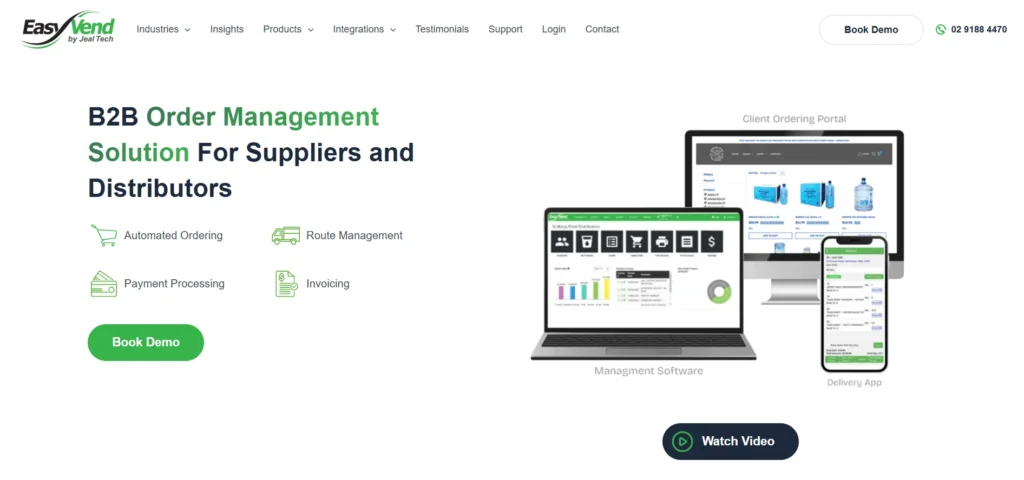
EasyVend provides a customisable wholesale order management system that brings customer ordering, inventory tracking, invoicing, and delivery coordination into one centralised platform.
Designed for wholesalers and suppliers, the software allows customers to place orders through a branded online portal while giving businesses control over pricing, product availability, and delivery schedules.
EasyVend also supports recurring orders and flexible order entry, including customer portals, internal administration, and bulk imports. Its delivery management capabilities help coordinate routes and track fulfilment, while accounting integrations simplify financial administration.
Key Features:
- Branded online wholesale ordering portal
- Customer-specific pricing and product catalogues
- Automated invoicing and payment reminders
- Inventory tracking and stock synchronisation
- Recurring orders and delivery route management
- Xero and MYOB accounting integrations
2. BlueCart
Best For: Foodservice distributors and hospitality wholesalers.
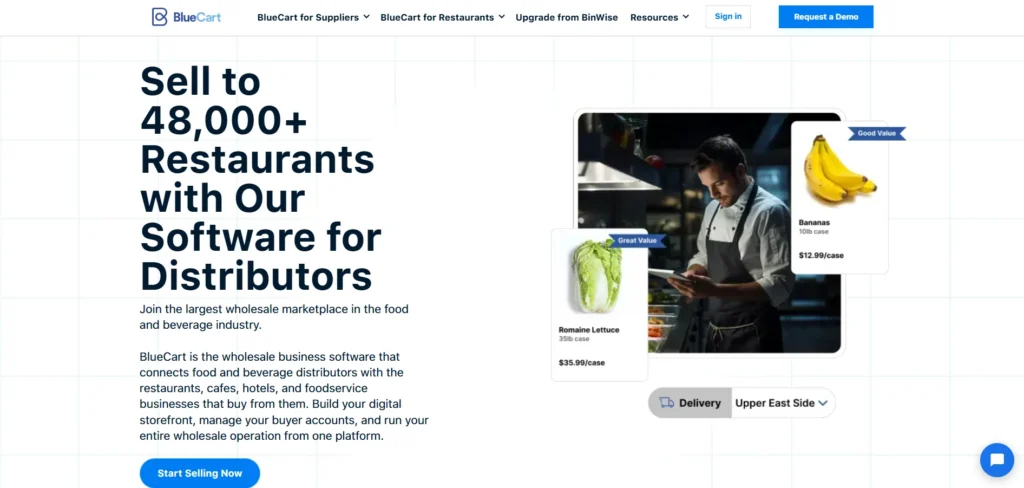
BlueCart offers digital wholesale ordering and procurement tools that connect suppliers with restaurants, hospitality businesses, and other commercial buyers.
Its platform helps wholesalers receive customer orders electronically, manage product catalogues, and maintain organised purchasing relationships. Buyers can browse available products and submit orders through digital ordering channels.
For foodservice businesses handling frequent transactions, BlueCart provides a convenient way to connect wholesale purchasing with everyday supplier operations.
Key Features:
- Digital wholesale ordering
- Online product catalogue management
- Supplier and buyer communication
- Order history and purchasing records
- Payment and transaction management
3. Odoo
Best For: Growing wholesalers seeking integrated business management.
Odoo provides a collection of connected business applications covering sales, inventory, purchasing, accounting, and customer relationship management.
Wholesale businesses can use its sales management tools to create quotations, confirm orders, and coordinate fulfilment with available inventory. Its modular structure allows companies to introduce additional applications as operational requirements expand.
The platform also supports warehouse management and automated replenishment, making it useful for distributors managing purchasing and stock across multiple locations.
Key Features:
- Sales quotation and order processing
- Inventory and warehouse management
- Automated purchasing workflows
- Accounting and CRM integration
- Multiwarehouse stock visibility
- Modular business applications
4. B2B Wave
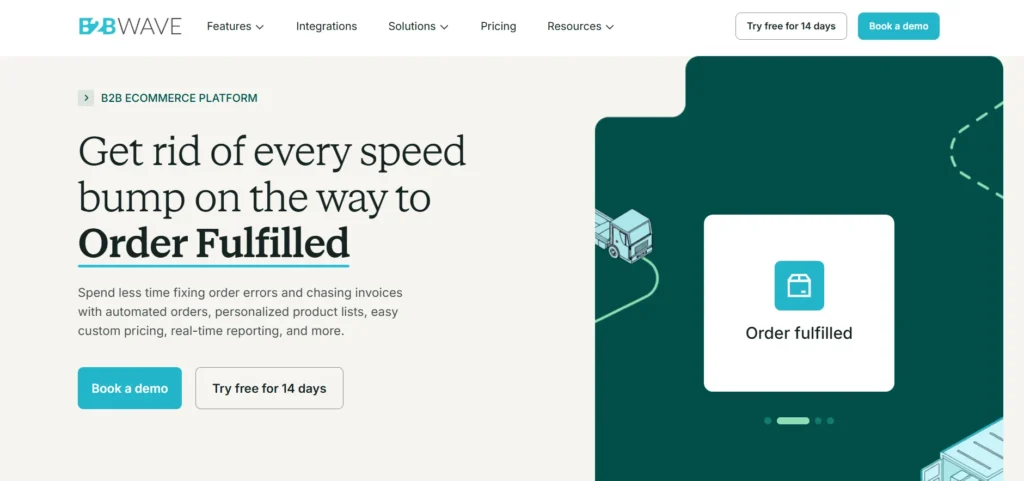
Best For: Wholesale brands offering personalised online ordering.
B2B Wave is a B2B eCommerce and wholesale ordering platform designed to simplify transactions between suppliers and business customers.
It enables wholesalers to create private online catalogues where customers can view relevant products, access negotiated pricing, and submit orders directly.
Businesses can also manage customer accounts, organise product information, and connect ordering activities with supported accounting and inventory applications. This creates a more convenient purchasing experience for retailers and other wholesale buyers.
Key Features:
- Private B2B ordering portal
- Customer-specific wholesale pricing
- Product catalogue management
- Order and customer account tracking
5. SalesBinder
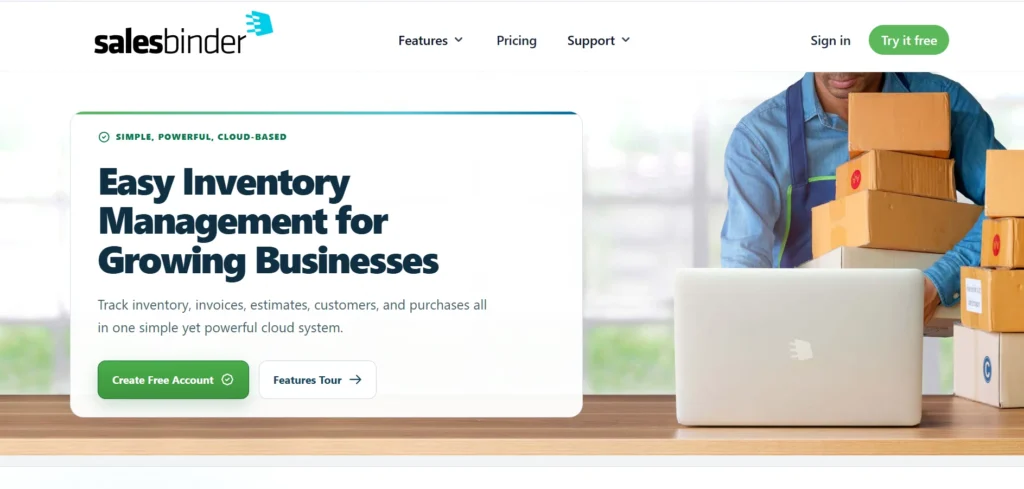
Best For: Small wholesalers needing straightforward inventory and order tracking.
SalesBinder offers cloud-based inventory management software with tools for organising customer accounts, sales orders, and purchasing activities.
The platform allows distributors to maintain product records, monitor inventory quantities, and manage transactions through a centralised workspace.
Its customer and supplier management capabilities also help businesses organise commercial relationships alongside stock movements, making it suitable for smaller wholesale operations.
Key Features:
- Sales and purchase order management
- Inventory quantity tracking
- Customer and supplier records
- Product organisation and reporting
- Barcode and inventory management tools
6. QuickBooks Enterprise
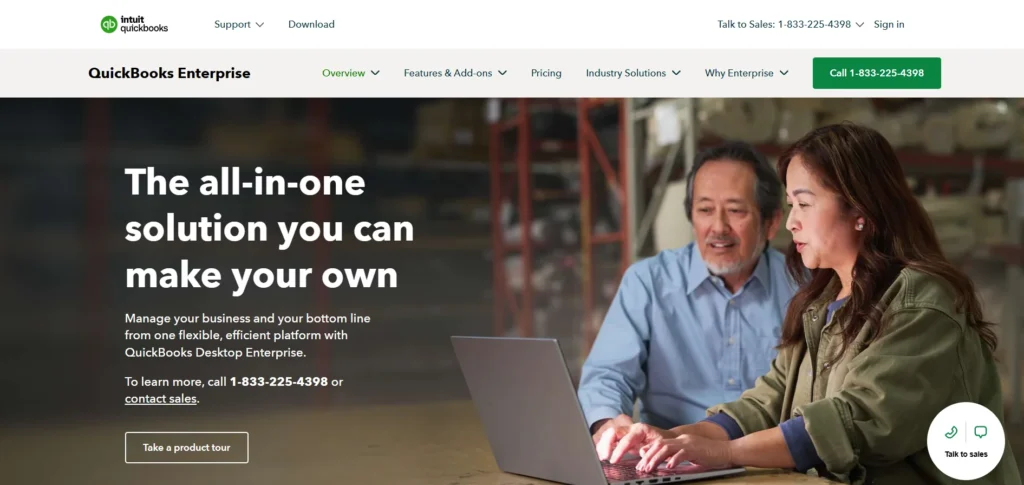
Best For: Established wholesalers connecting inventory and financial operations.
QuickBooks Enterprise combines accounting capabilities with inventory, purchasing, and sales order management features.
Wholesale businesses can use the platform to organise customer transactions, monitor stock, create invoices, and coordinate purchasing with financial records.
Its inventory management capabilities include features for tracking products across locations and supporting warehouse workflows, depending on the selected subscription and configuration.
Key Features:
- Sales order and invoice management
- Inventory and purchasing tools
- Customer and supplier account tracking
- Financial reporting and accounting
- Advanced inventory capabilities on eligible plans
- Warehouse and stock management support
7. Zoey
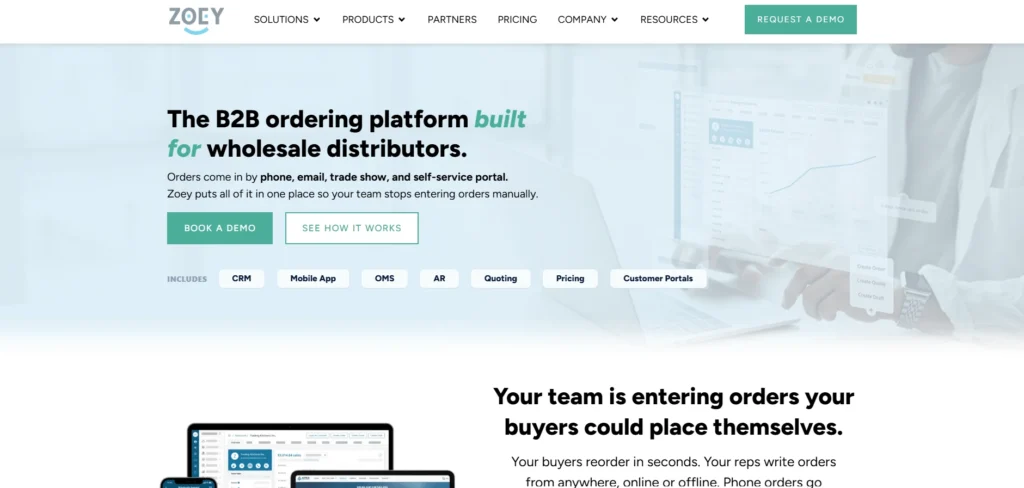
Best For: B2B merchants managing wholesale eCommerce.
Zoey provides a B2B commerce platform that helps wholesalers, manufacturers, and distributors manage online purchasing experiences for business customers.
The software supports customer-specific catalogues, negotiated pricing, and account-based purchasing workflows. Businesses can also offer online ordering experiences that reflect their wholesale relationships.
Zoey’s B2B commerce capabilities help companies connect digital sales with customer account management and existing business processes.
Key Features:
- B2B eCommerce storefront
- Customer-specific pricing and catalogues
- Business account management
- Wholesale ordering workflows
Conclusion
Wholesale order management technology continues to evolve as distributors adopt digital purchasing, automated workflows, and integrated inventory systems.
We expect customer self-service portals, personalised pricing, and connected fulfilment capabilities to play an increasingly important role in wholesale operations throughout 2026 and beyond.
The most suitable platform will depend on your distribution model, customer relationships, inventory requirements, and existing business systems.
Invest in wholesale order management technology that strengthens daily operations while supporting more efficient, scalable growth.