Search habits are changing fast. People no longer use search engines only to scan a list of links. Many now ask full questions and expect direct answers from AI-powered tools.
This shift has changed how brands need to think about visibility. Ranking on Google is still valuable, but it is no longer the only goal. A brand also needs to be understood, mentioned, and trusted by AI systems that create answers for users.
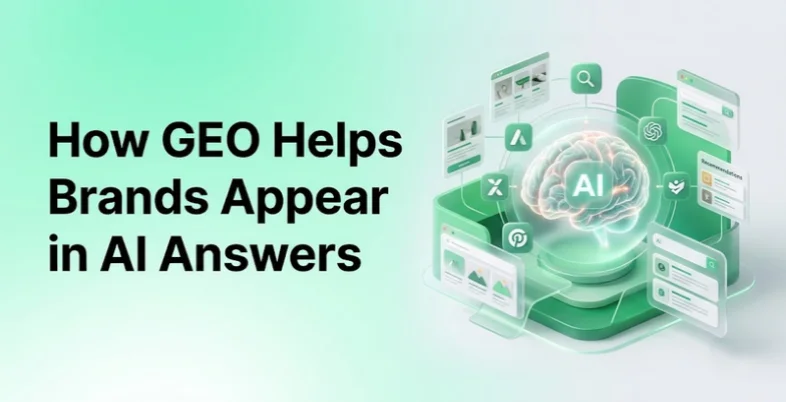
That is where Generative Engine Optimization, or GEO, comes in. GEO helps brands improve their chances of appearing in AI-generated answers across search engines, chat tools, and answer platforms.
For marketers, this is not a small SEO update. It is a new layer of search strategy.
What GEO Means in Simple Terms
GEO is the process of preparing a brand’s content, website, and online signals so AI systems can understand and include that brand in relevant answers.
A user may ask:
- “What are the best tools for small business marketing?”
- “Which agency can help with AI search visibility?”
- “How does a brand improve online trust?”
- “What should a company check before choosing a service provider?”
SEO Is Still the Foundation
GEO does not replace SEO. It depends on it. A weak website will not suddenly perform well in AI answers just because a few GEO tactics are added. Brands still need strong technical SEO, helpful content, clear page structure, internal links, backlinks, and strong user experience.
The difference is that GEO looks beyond rankings and clicks. It asks whether AI systems can clearly understand:
- Who the brand is?
- What the brand offers?
- Which audience it serves?
- Where the brand operates?
- Why the brand should be trusted?
- What makes it relevant to a user’s question?
SEO vs GEO: What Changes?
SEO and GEO share many basics, but their goals are different.
| Area | SEO Focus | GEO Focus |
| Main Goal | Rank pages in search results | Get brands mentioned in AI answers |
| Content Need | Keyword and intent-based content | Clear, answer-ready content |
| Authority Signal | Backlinks, traffic, reviews | Citations, mentions, entity clarity |
| Measurement | Rankings, traffic, leads | AI mentions, answer accuracy, visibility |
| User Behaviour | Clicks from search results | Decisions shaped by summaries |
| Brand Risk | Low rankings | Being absent from AI answers |
Why AI Answers Matter for Brands
AI answers can shape a buyer’s first impression. A user may ask for a comparison, a recommendation, or an explanation before visiting any website. If an AI answer mentions three competitors and leaves out one brand, the missing brand loses visibility at an early stage. The user may never search again.
This creates a new challenge for marketers. Brand visibility is no longer only about being seen in search results. It is also about being included in the answer that helps the user decide what to do next. GEO supports this by improving the signals AI systems may use when forming answers.
What Helps a Brand Appear in AI Answers?
There is no single GEO trick. Strong AI visibility comes from a mix of content quality, clarity, trust, and consistency.
1. Clear Service Pages
A service page should explain exactly what the brand offers. Vague pages make it harder for both users and AI systems to understand the business.
A strong page should answer:
- What is the service?
- Who is it for?
- What problem does it solve?
- How does the process work?
- What results can customers expect?
- What makes the provider credible?
2. Question-Based Content
AI search often starts with full questions. Brands should create content that answers those questions directly.
Useful formats include:
- Guides
- Comparisons
- FAQs
- How-to articles
- Buyer checklists
- Glossary pages
- Use-case pages
- Problem-solution articles
For example, a software brand should not only write product pages. It should also explain how buyers can compare tools, avoid mistakes, check pricing factors, and choose the right solution.
3. Strong Entity Signals
An entity is a clear, identifiable thing, such as a company, person, service, product, or location.
AI systems need to understand the brand as an entity. That means the brand name, business category, services, location, team details, and descriptions should be consistent across the web.
Important places to check include:
- Website pages.
- Google Business Profile.
- LinkedIn.
- Industry directories.
- Review sites.
- Partner pages.
- Guest articles.
- Media mentions.
If a brand describes itself differently on every platform, AI systems may struggle to connect the signals.
4. Helpful and Structured Content
AI systems work better with content that is easy to scan and summarize. Long blocks of text with unclear headings are less useful.
Marketers should use:
- Clear H2 and H3 headings.
- Short paragraphs.
- Bullet points.
- Tables.
- Definitions.
- Step-by-step sections.
- Summary sections.
- FAQs.
5. Third-Party Mentions
A brand’s own website matters, but outside validation also helps.
Third-party mentions can include:
- Industry articles.
- Business directories.
- Expert roundups.
- Interviews.
- Customer reviews.
- Podcast features.
- Local listings.
- Partner websites.
These signals help confirm that the brand exists, serves a real market, and has relevance in its industry. This is one reason some businesses explore professional GEO Services when they want help improving AI search visibility, content structure, and brand signals across the web.
How Marketers Can Start With GEO
A brand does not need a complete rebuild to begin. The best first step is to review current search and content assets.
Step 1: Audit Existing Content
Marketers should check whether current pages clearly answer user questions. Many websites have service pages that are too broad, too short, or too focused on the company instead of the customer’s problem.
A content audit should review:
- Thin pages.
- Missing FAQs.
- Weak explanations.
- Outdated content.
- Unclear service descriptions.
- Poor internal links.
- Missing comparison content.
The goal is to find gaps that stop users and AI systems from understanding the brand.
Step 2: Map Questions to the Buyer’s Path
Different users ask different questions depending on where they are in the buying process.
At the early stage, users ask:
- What is this service?
- Why does it matter?
- What problems does it solve?
At the comparison stage, they ask:
- Which option is better?
- What should buyers compare?
- What mistakes should be avoided?
At the decision stage, they ask:
- Which provider is suitable?
- What proof should be checked?
- What questions should be asked before hiring?
Brands should create content for each stage.
Step 3: Make the Brand Easy to Verify
AI systems are more likely to trust clear and consistent information. Businesses should make sure their name, category, address, service list, and descriptions match across key platforms.
This also helps users. A buyer who sees consistent information across the website, business profiles, and third-party mentions is more likely to trust the brand.
Step 4: Add Proof to Content
Claims without proof are weak. Pages should include signals that help users believe the brand.
Useful proof includes:
- Case studies.
- Client types.
- Reviews.
- Awards.
- Certifications.
- Process details.
- Team experience.
- Clear pricing notes.
- Results where available.
A brand does not need to overstate its results. It only needs to make its credibility visible.
Step 5: Track AI Visibility
Marketers should test how AI platforms describe the brand. This can be done by asking questions related to the brand, service, market, and competitors.
Useful prompts include:
- “What is this brand known for?”
- “Best providers for this service”
- “Compare this brand with competitors”
- “Which company offers this service?”
- “What should buyers know before choosing this provider?”
The results should be reviewed over time. This helps identify missing mentions, incorrect details, and content gaps.
Where Agencies Fit Into GEO
Some brands can handle basic GEO work in-house. Others may need support when the website has technical issues, weak content, poor authority signals, or limited AI visibility.
An SEO-focused agency such as Rankpage can be relevant when a business wants GEO to work alongside traditional SEO, local visibility, technical improvements, and content strategy. The key is to avoid treating GEO as a quick fix. It should be part of a wider search plan that supports both users and AI systems.
Common GEO Mistakes to Avoid
Many brands misunderstand GEO. They assume it means publishing more content or using AI tools to create pages faster.
That can create problems.
Common mistakes include:
- Writing vague content.
- Ignoring technical SEO.
- Repeating the same keyword too often.
- Using inconsistent brand details.
- Skipping FAQs.
- Publishing content without proof.
- Ignoring third-party mentions.
- Tracking only traffic and rankings.
- Expecting instant AI visibility.
GEO takes time because trust, clarity, and authority take time.
Conclusion
The new rules of SEO are not about replacing Google rankings. They are about expanding how brands think about visibility.
Users still search, compare, and click. But many now form opinions through AI-generated answers before they visit a site. Brands that want to stay visible need content that is clear, structured, helpful, and easy to verify.
GEO helps brands prepare for this shift. It improves how a company is understood by AI systems, how often it may be mentioned in answers, and how accurately it is represented.
For marketers, the next step is clear: keep building strong SEO foundations, then add GEO practices that make the brand easier to understand, trust, and recommend.