
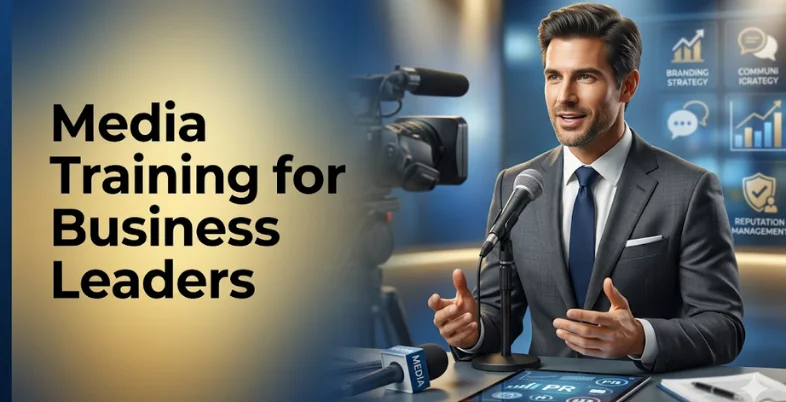
You’ve invested in SEO. You’ve built out your content calendar. You’re running ads, optimising funnels, and tracking every conversion. But here’s a question worth asking: when the camera turns on, or a journalist calls, are you and your leadership team actually ready?
Media training is one of the most overlooked growth levers in a marketer’s toolkit. And most businesses? They only figure that out the hard way. Something goes sideways, a leader says the wrong thing on camera, and the damage is done before the PR team even knows. It didn’t have to happen that way.
Whether you’re a founder building a personal brand, a marketing lead prepping your CEO for a podcast appearance, or an executive stepping into a more public-facing role, this guide breaks down what spokesperson coaching is, why it matters, and how to make it work for your business growth strategy.
What Is Spokesperson Coaching (And Why Should Marketers Care)?
Think of it this way — at some point, someone on your team is going to have to talk to a journalist, sit down for a podcast, or go live on camera. This kind of coaching just makes sure they don’t bomb it when that moment comes.
For marketers, this matters for one simple reason: your brand is only as strong as how it’s communicated. A great product won’t save you if your CEO falls apart on camera. People lose trust fast, and they don’t always tell you why.
On-camera coaching bridges the gap between what your brand stands for and how it actually comes across in high-stakes, real-time communication.
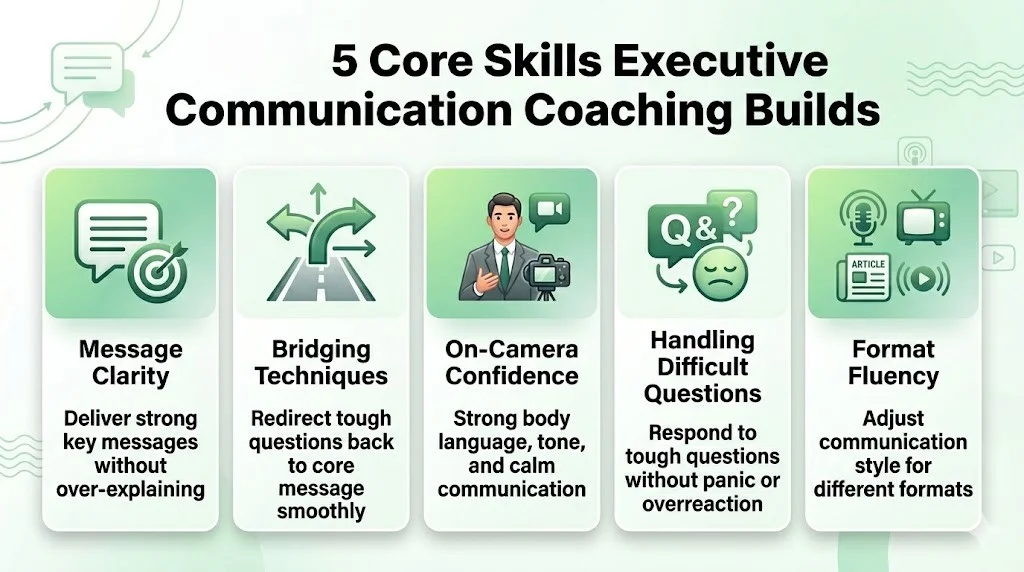
The 5 Core Skills Executive Communication Coaching Builds
1. Message Clarity
One of the biggest mistakes executives make in media settings is over-explaining. Good coaching gets your leaders to a point where they always know what they’re there to say — and they find their way back to it no matter what gets asked. When your CEO nails that in an interview, that 30-second clip becomes content you can use everywhere.
2. Bridging Techniques
Bridging is the art of transitioning from a journalist’s question back to your key message without sounding evasive. And honestly, it’s something anyone can get good at with the right practice. When a question catches them off guard or gets a bit confrontational, a prepared executive doesn’t panic. They just redirect. That skill is especially useful in podcasts and live Q&As where you never really know where things are headed.
3. On-Camera Confidence
People pick up on more than just your words. How you hold yourself, whether you make eye contact, how fast you talk, the tone of your voice — all of that is sending a signal whether you mean it to or not. The more time someone spends on camera practicing, the less they’re in their own head about it. And that’s when they start coming across as someone worth listening to. For video-first marketing strategies, this is a non-negotiable skill.
4. Handling Difficult Questions
Nobody wants to get asked about a product recall or a bad business call on camera. But it happens. And when it does, people who haven’t prepared for it tend to either say way too much, freeze up, or blurt out something they wish they could take back. Someone who’s been through proper coaching knows how to handle it without making things worse.
5. Format Fluency
A podcast chat and a live TV segment are worlds apart. So are a print interview and a social media live. They all feel different, move at different speeds and catch you off guard in different ways. Knowing how to adjust depending on where you are is half the battle.
A Content and Brand Strategy Tool in Disguise
Here’s the angle that most marketing teams miss: executive communication coaching isn’t just about managing risk. It’s a content multiplier.
When your executive is well-prepared, every interview, every panel appearance, and every podcast episode becomes high-quality, on-brand content. Sharp soundbites can be clipped for social media. Interview answers can be repurposed into blog posts. Thought leadership moments can be amplified across email newsletters and LinkedIn.
A founder who can speak compellingly about industry trends in a 20-minute podcast is generating weeks’ worth of content in a single session, but only if they’re trained to deliver those insights in a quotable, structured, and engaging way. Without proper preparation, the same founder might ramble, go off-message, or fail to articulate the ideas that set your brand apart.
Think of it as the backend optimisation for your brand’s most visible content: the people behind it.
When Should You Invest in Spokesperson Preparation?
The honest answer is: before you need it. But here are the specific moments where communication coaching delivers the clearest ROI:
- Product or service launches. When you’re generating press around something new, your spokespeople need to be sharp, consistent, and compelling across every media touchpoint.
- Entering a new market. Brand visibility in a new geography or audience segment often starts with earned media. Prepared executives make a stronger first impression.
- Building a personal brand. Founders and executives who want to be recognised as industry thought leaders need to show up consistently and credibly in media settings. Proper coaching accelerates that process significantly.
- Before a funding round or IPO. Investor relations and media relations overlap more than people think. How your leadership communicates publicly influences potential backers’ perceptions.
- During or after a crisis. This is the most urgent use case, but preparing in a crisis is far harder than preparing in advance. Teams that have trained beforehand respond with far more composure and strategic clarity.
How to Get Started: A Practical Checklist
If you’re ready to build executive communication coaching into your marketing and leadership strategy, here’s a simple framework to start with:
- Audit your spokespeople. Who in your organisation is likely to face media attention? Don’t limit this to the CEO, marketing leads, product heads, and CSR officers often end up in front of cameras too.
- Define your key messages. Before any coaching begins, align on the three to five core messages your brand needs to communicate consistently across all media.
- Hire a professional communication coach. Look for coaches with backgrounds in journalism or broadcast media; they know exactly what interviewers are looking for and how to prepare your team for it.
- Run mock interviews on camera. Simulated interviews with recorded playback are the fastest way to identify blind spots in delivery, body language, and message discipline.
- Train regularly, not just once. Media landscapes evolve. What works on a 2020 press call may not land the same way in a 2026 podcast or short-form video clip. Schedule refresher sessions at least annually.
- Integrate it with your content strategy. Coordinate coaching sessions with your content calendar so that well-prepared executives are immediately deployed to support upcoming campaigns, launches, or PR pushes.
The Bottom Line
In the marketing world, we talk constantly about building trust, growing authority, and creating content that converts. Investing in how your leadership team communicates publicly is how you deliver on all three, live, in real time, in front of audiences that matter.It’s not a luxury for large corporations with big PR budgets. It’s a smart, scalable investment for any business that wants its people to show up powerfully in the moments that shape brand perception. The brands winning in 2026 aren’t just producing great content; they’re putting forward great communicators. And the right media training programme is how you build them.