
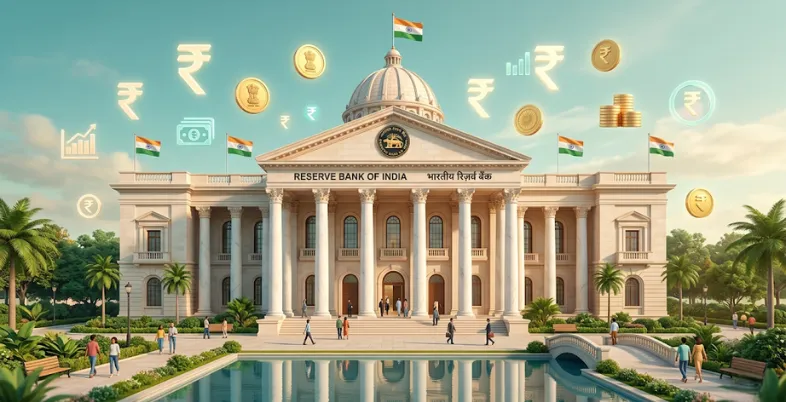
India’s banking sector plays a crucial role in supporting economic growth, financial stability, and inclusive development. Public sector banks, owned largely by the Government of India, form the backbone of this system by offering reliable banking services across both rural and urban areas. The List of Govt Banks in India highlights a well-structured network of institutions that cater to diverse financial needs, including savings, loans, investments, and digital payments.
These banks are instrumental in funding key sectors such as agriculture, MSMEs, and infrastructure, which are vital for national development. In 2026, government banks are increasingly adopting digital technologies like mobile banking and UPI to enhance customer experience and accessibility. They also play a major role in implementing government schemes and ensuring financial inclusion for underserved populations, making them essential contributors to India’s overall economic progress and social development.
Role in Economic Growth, Financial Inclusion, Rural & Urban Banking
Public Sector Banks (PSBs) continue to play a pivotal role in shaping India’s financial ecosystem in 2026. Beyond traditional banking functions, they act as key drivers of inclusive growth, digital transformation, and government policy implementation. The impact of government banks in India is especially visible in the following areas:
Promoting Economic Growth
PSBs remain central to India’s economic expansion by providing credit to priority sectors such as agriculture, MSMEs, infrastructure, and renewable energy. There is a stronger focus on green financing, startup funding, and production-linked incentive (PLI) sectors, helping accelerate industrial growth and job creation. Their participation in large-scale infrastructure projects continues to support India’s long-term GDP growth.
Strengthening Financial Inclusion
Financial inclusion has deepened significantly with the continued success of the Pradhan Mantri Jan Dhan Yojana, along with Aadhaar and mobile banking integration (JAM Trinity). PSBs are now leveraging digital banking, UPI, and mobile apps to reach underserved populations, ensuring not just account access but active financial participation, including insurance, pensions, and micro-credit.
Rural Development Support
PSBs remain the backbone of rural finance by offering affordable credit to farmers, self-help groups (SHGs), and rural entrepreneurs. Their role has expanded into agri-tech financing, digital Kisan credit cards, and rural fintech partnerships, improving productivity and income levels. Their widespread branch and banking correspondent networks ensure last-mile connectivity in even the most remote villages.
Urban Banking & Digital Ecosystem
In urban areas, PSBs are rapidly evolving to meet modern financial needs. They now provide advanced digital banking services, AI-driven customer support, seamless UPI payments, wealth management, and SME financing solutions. With increasing competition from private banks and fintech companies, PSBs are focusing on customer experience, cybersecurity, and innovation to stay relevant in urban markets.
Implementation of Government Schemes
PSBs continue to act as the primary channel for delivering government benefits through Direct Benefit Transfer (DBT) systems. From subsidies to welfare schemes, funds are transferred directly into beneficiary accounts, ensuring transparency, reducing leakages, and improving efficiency. This system is further strengthened through real-time payment infrastructure and enhanced digital verification systems.
What are Government Banks in India?
Government banks, also known as Public Sector Banks (PSBs), are financial institutions in which the Government of India holds a majority stake of 51% or more. While the terms “Government banks,” “Public Sector Banks,” and “Nationalized banks” are often used interchangeably in common conversation, they all refer to these entities where the state maintains ultimate control. This majority ownership ensures that the banks align with national economic goals and provide a high level of security for depositors’ funds.
To ensure stability and transparency, these Govt Banks in India operate under a dual layer of oversight. They are primarily governed by the Reserve Bank of India (RBI), which sets monetary policy and regulatory frameworks for all banking operations. Simultaneously, they are controlled by the Ministry of Finance, which oversees their strategic direction, capital infusion, and management appointments. This structure ensures that public sector banks remain accountable to both financial regulators and the Indian public.
| Feature | Public Sector Banks | Private Sector Banks |
| Ownership | Majority share owned by the Government of India. | Majority share owned by private individuals or corporations. |
| Objective | Dual objective of profit and social welfare. | Primarily driven by profit maximization. |
| Reach | Extensive branch network, including rural areas. | Concentrated in urban and semi-urban areas. |
| Governance | Significant government oversight and regulation. | More autonomy in decision-making and operations. |
| Job Security | Generally offer high job security due to government backing. | Performance-based incentives and variable pay structures are common. |
| Focus | Priority sector lending and implementation of government schemes. | Focus on customer-centricity, innovation, and niche segments. |
While government banks (public sector banks) form the backbone of India’s banking infrastructure, the financial landscape is also supported by entities that operate beyond traditional banking—commonly known as non banking financial companies (NBFCs). These institutions engage in lending, credit, and financial services without holding a full banking license.
How Many Govt Banks Are There in India?
As of April 2026, there are exactly 12 Public Sector Banks (PSBs) operating in India. This number has remained stable following the massive structural overhaul of the banking sector aimed at creating “Next-Gen” banks with stronger balance sheets and global reach.
The landscape has changed dramatically over the last decade. To give you some perspective on how much the sector has consolidated, here is a quick look at the numbers:
Types of Government Banks in India
While we often refer to them all as “government banks,” they are actually categorized into different groups based on their legal structure and purpose. Here are the five key types:
- Nationalized Banks: These are the backbone of the public sector. They were originally private banks that the government took over in two major waves (1969 and 1980) to ensure banking reached the common man. Today, after several mergers, this group includes 11 major entities like PNB, Bank of Baroda, and Canara Bank.
- State Bank of India (Special Category): SBI stands in a class of its own. Unlike nationalized banks, it was created under a separate Act of Parliament (the SBI Act of 1955). Because of its massive scale and unique history as the successor to the Imperial Bank of India, it is often treated as a distinct “Public Sector Bank” category by the RBI.
- Regional Rural Banks (RRBs): These are “scheduled commercial banks” specifically designed to serve rural and semi-urban areas. They are unique because they are jointly owned by the Central Government (50%), the State Government (15%), and a Sponsor Bank (35%), focusing specifically on credit for agriculture and small traders.
- IDBI Bank (The Special Case): IDBI was once a full public sector bank, but in 2019, the RBI reclassified it as a “Private Sector Bank” after LIC (Life Insurance Corporation) acquired a majority stake. However, because both the Government and LIC (which is state-owned) hold significant shares, many still view it through a “government-associated” lens even though it technically sits in the private category now.
- Development Financial Institutions (DFIs): These aren’t traditional “savings and withdrawal” banks for the general public. Instead, they are specialized entities like NABARD (for agriculture) or NHB (for housing) that provide long-term finance to specific sectors of the Indian economy.
Complete List of Top 12 Govt Banks in India — Detailed Overview
1. State Bank of India (SBI)
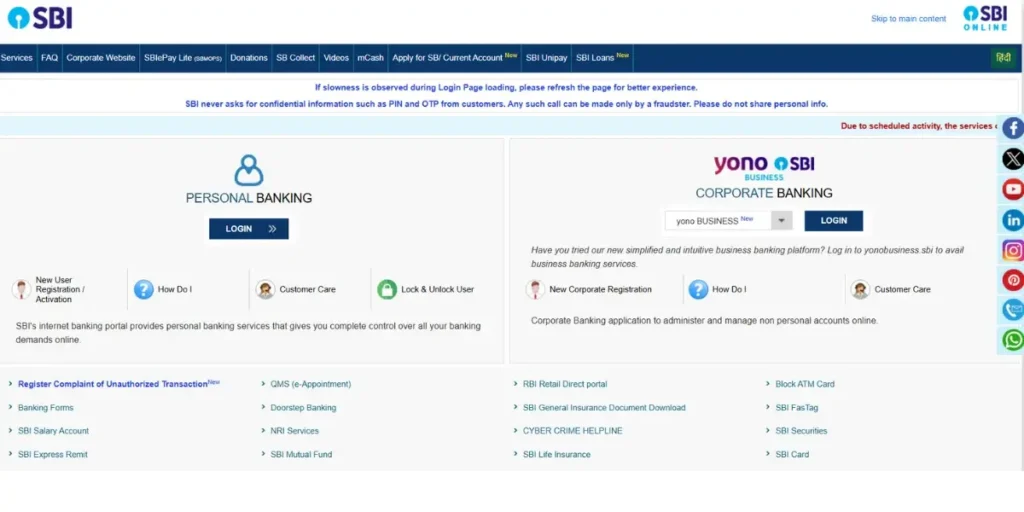
- Founded: July 1, 1955 (Origin date back to 1806)
- Branches: 22,980+
- Chairman: Challa Sreenivasulu Setty
- Govt Stake %: ~57.49%
State Bank of India (SBI) isn’t just a bank; it’s a financial institution that touches almost every Indian household. As the largest name in the List of Govt Banks in India, it carries the legacy of the Imperial Bank of India. Whether it is through its massive physical network in rural areas or its “YONO” digital platform, SBI consistently sets the benchmark for Indian banking. It remains the only Indian bank to feature in the Fortune Global 500 list.
Key Highlights:
- Largest network with over 22,000+ branches and 65,000+ ATMs.
- Market leader in retail, MSME, and corporate banking.
- Massive international presence with over 230 offices in 30+ countries.
2. Punjab National Bank (PNB)
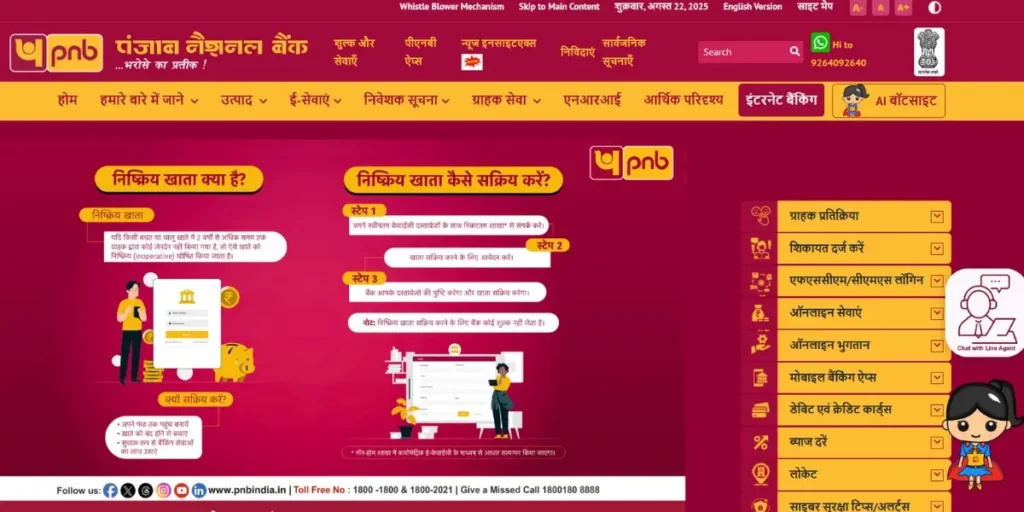
- Founded: May 19, 1894
- Branches: 10,189+
- MD & CEO: Ashok Chandra
- Govt Stake %: ~70.08%
Punjab National Bank (PNB) holds the title of being the first “Swadeshi” bank, started by nationalist leaders like Lala Lajpat Rai. It is one of the most prominent Govt Banks in India, and today stands as the second-largest public sector bank after its mega-merger with Oriental Bank of Commerce and United Bank of India. The bank has a particularly strong foothold in Northern India and has been a pioneer in digitizing traditional banking services for the common man.
Key Highlights:
- Serves a massive customer base of over 180 million people.
- Ranked second in terms of business volume among all public sector banks.
- Highly active in supporting the agricultural sector and rural development.
3. Bank of Baroda (BoB)
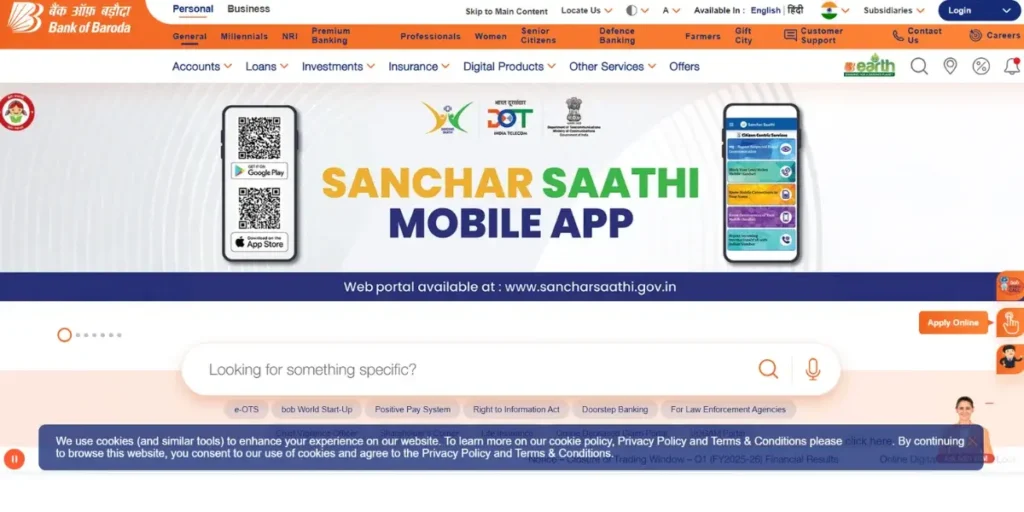
- Founded: July 20, 1908
- Branches: 9,693+
- MD & CEO: Debadatta Chand
- Govt Stake %: ~63.97%
Bank of Baroda (BoB) was founded by the Maharaja of Baroda, Sayajirao Gaekwad III, and has since transformed into a global banking powerhouse. It is one of the leading Govt Banks in India, known for its strong domestic and international presence. Following its successful merger with Vijaya Bank and Dena Bank, it solidified its position as India’s third-largest state-owned lender. BoB is widely recognized for its sophisticated technology adoption and its distinct identity as “India’s International Bank,” driven by its extensive overseas operations.
Key Highlights:
- Vast international reach with operations in 17 countries.
- Pioneered the “BoB World” digital ecosystem for seamless mobile banking.
- Strong focus on corporate lending and high-value retail loans.
4. Canara Bank
- Founded: July 1906
- Branches: 9,861+
- MD & CEO: K. Satyanarayana Raju
- Govt Stake %: ~62.93%
Canara Bank is deeply rooted in the values of social concern and customer-centricity. Since its inception in Mangaluru, it has grown into a premier financial conglomerate and is recognized among the leading Govt Banks in India. After merging with Syndicate Bank, it has expanded its reach significantly across South India. The bank is widely respected for its consistent profitability and its proactive approach toward funding “New India” startups and MSMEs.
Key Highlights:
- Known for “Canara ai1,” a highly-rated super app for all-in-one banking.
- Deeply involved in Corporate Social Responsibility (CSR) and skill development.
- Strong presence in the education loan and housing loan segments.
5. Union Bank of India
- Founded: November 11, 1919
- Branches: 8,621+
- MD & CEO: Ms. A. Manimekhalai
- Govt Stake %: ~74.76%
Union Bank of India was inaugurated by Mahatma Gandhi himself, giving it a rich historical legacy. It is a prominent name in the List of Govt Banks in India and recently entered the “mega-bank” club after amalgamating with Andhra Bank and Corporation Bank. This merger provided the bank with a diverse geographical footprint, making it a dominant force in both the western and southern regions of India. It is currently one of the leaders in implementing tech-driven banking solutions.
Key Highlights:
- First large PSB to implement a 100% Core Banking Solution (CBS).
- Consistently wins awards for technology excellence and digital innovations.
- High government shareholding, reflecting strong sovereign support.
6. Indian Bank
- Founded: August 15, 1907
- Branches: 5,909+
- MD & CEO: Shri Binod Kumar
- Govt Stake %: ~73.84%
Indian Bank was born out of the Swadeshi movement, standing as a symbol of self-reliance during the colonial era. It is one of the well-established Govt Banks in India, known for its stability and trust among customers. After its merger with Allahabad Bank—the oldest joint-stock bank in the country—Indian Bank has transformed into a pan-India banking giant. It is highly regarded for its conservative yet stable approach to banking, making it a preferred choice for risk-averse depositors. Its headquarters in Chennai continues to serve as a central hub for its strong influence across South India.
Key Highlights:
- Operates over 5,800 branches across India.
- Strong focus on MSME lending and agricultural credit.
- Features a robust digital suite, including the popular ‘IndOASIS’ app.
7. Bank of India (BoI)
- Founded: September 7, 1906
- Branches: 5,100+
- MD & CEO: Shri Rajneesh Karnatak
- Govt Stake %: ~73.38%
Bank of India has a storied history, having been founded by a group of eminent businessmen from Mumbai. It was among the first group of banks to be nationalized in 1969. While many banks focused inward, BoI was a pioneer in going global, opening branches in London and Tokyo as early as the 1940s and 50s. Today, it remains a pillar of the Indian banking system, known for its balanced portfolio of retail and corporate clients.
Key Highlights:
- One of the founding members of SWIFT in India.
- Massive presence in the “Star” brand of financial products.
- Extensive international network spanning five continents.
8. Central Bank of India
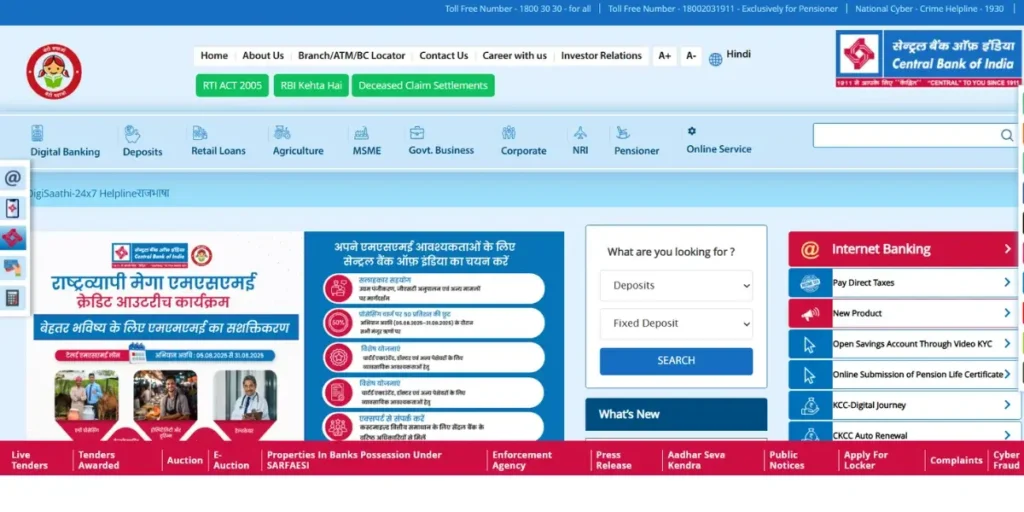
- Founded: December 21, 1911
- Branches: 4,541+
- MD & CEO: Shri Kalyan Kumar
- Govt Stake %: ~93.08%
Central Bank of India truly lives up to its name, as it was the first commercial Indian bank to be wholly owned and managed by Indians. Founded by Sorabji Pochkhanawala, who famously described it as the “property of the nation,” the bank holds a unique place among Govt Banks in India. Unlike many of its peers, the Central Bank of India has remained a standalone entity through recent merger waves, preserving its independent legacy. It also maintains a significantly high government stake, reflecting its deep-rooted identity as a purely state-backed financial institution.
Key Highlights:
- Introduced several “firsts” like the Home Savings Safe (Gullak) to encourage small savings.
- Operates a vast network of over 4,500 branches.
- Strong focus on social banking and priority sector lending.
9. UCO Bank
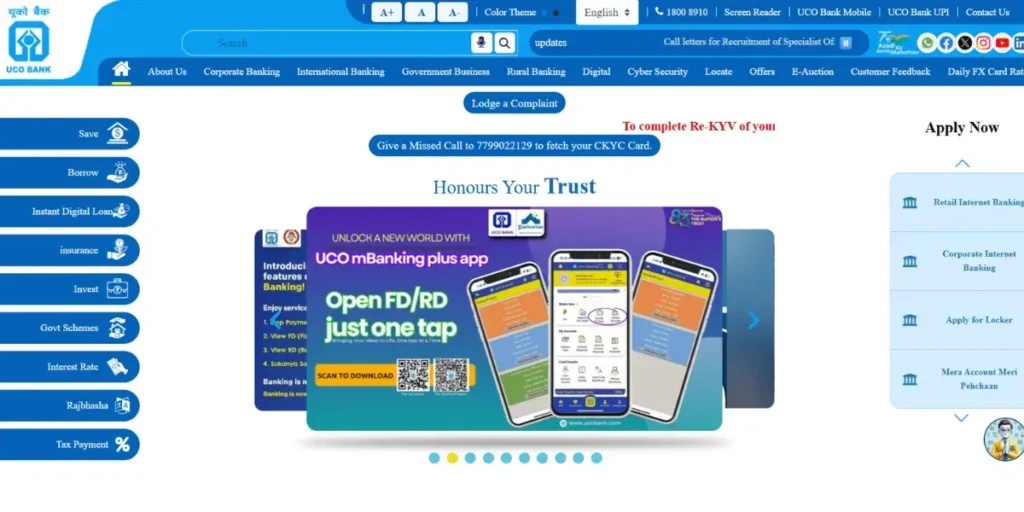
- Founded: January 6, 1943
- Branches: 4,500+ (approx.)
- MD & CEO: Shri Ashwani Kumar
- Govt Stake %: ~90.95%
UCO Bank (formerly United Commercial Bank) was established under the leadership of the legendary industrialist G.D. Birla shortly after the Quit India movement. Headquartered in Kolkata, it is the face of public sector banking in Eastern India. The bank has successfully navigated tough financial cycles to emerge as a digitally-ready lender. It is particularly well-known for its role in facilitating Indo-Russian trade through specialized Vostro accounts.
Key Highlights:
- A leading player in government-sponsored social security schemes.
- Strong presence in international centers like Hong Kong and Singapore.
- Notable for its “UCO mBanking Plus” digital platform.
10. Bank of Maharashtra
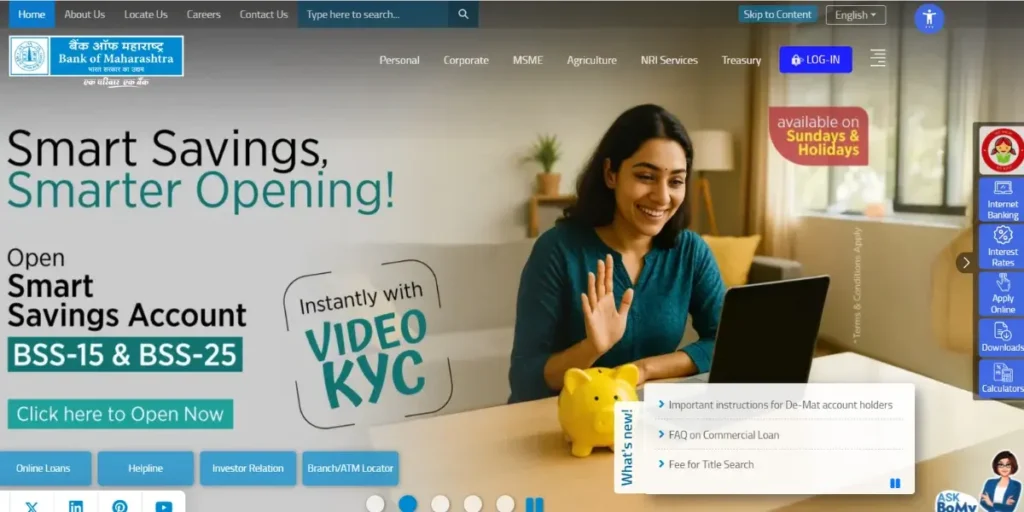
- Founded: September 16, 1935
- Branches: 2,641+
- MD & CEO: Shri Nidhu Saxena
- Govt Stake %: ~79.06%
Bank of Maharashtra is often referred to as the “Common Man’s Bank.” It is one of the fast-growing Govt Banks in India, known for its strong regional roots and expanding national presence. While it enjoys a massive and loyal customer base in its home state, the bank has aggressively expanded across India in recent years. During 2024 and 2025, it consistently ranked among the best-performing public sector banks in terms of loan growth and asset quality. It is widely recognized as a lean, efficient, and tech-savvy institution that prides itself on quick turnaround times and personalized customer service.
Key Highlights:
- Consistently reports some of the lowest Net NPA (Non-Performing Asset) ratios among PSBs.
- Largest branch network of any public sector bank in the state of Maharashtra.
- Deeply involved in supporting the “Startup India” and “Standup India” initiatives.
11. Punjab & Sind Bank
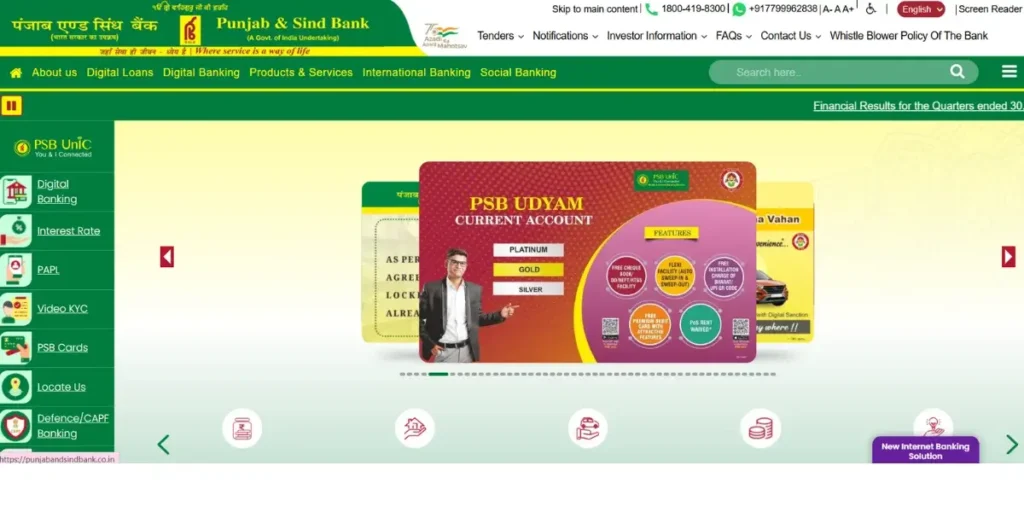
- Founded: June 24, 1908
- Branches: 1,570+
- MD & CEO: Shri Swarup Kumar Saha
- Govt Stake %: ~93.85%
Punjab & Sind Bank was established with the noble vision of upliftment through social service and economic empowerment. Despite its relatively smaller size compared to the “mega-banks,” it has maintained a fierce independence and a very loyal customer base, particularly in Northern India. The bank has successfully modernized its operations while staying true to its tagline, “Where Service is a Way of Life.” It is currently undergoing a digital transformation to appeal to younger, tech-savvy entrepreneurs.
Key Highlights:
- Highest government shareholding among several peers, ensuring massive stability.
- Strong focus on the MSME and Priority Sector Lending (PSL) segments.
- Known for its “PSB UnIC” digital banking app, which integrated multiple services into one platform.
12. Indian Overseas Bank (IOB)
- Founded: February 10, 1937
- Branches: 3,236+
- MD & CEO: Shri Ajay Kumar Srivastava
- Govt Stake %: ~92.44%
Indian Overseas Bank (IOB) is a standout performer that has seen a remarkable turnaround in recent years. It is one of the resilient Govt Banks in India, known for its strong revival and strategic growth. Founded with a specific focus on foreign exchange and overseas banking, it has evolved into a major banking force in South India. IOB is frequently in the news for its impressive profit growth and its aggressive efforts to reduce non-performing assets (NPAs). It continues to be a pioneer in specialized banking services, particularly catering to customers engaged in international trade and the SME sector.
Key Highlights:
- Major Turnaround: From being under the RBI’s Prompt Corrective Action (PCA) framework years ago to reporting record-breaking quarterly profits.
- Global Footprint: Strong presence in Southeast Asian markets like Singapore, Hong Kong, and Thailand.
- Digital Excellence: Heavily focused on its “IOB Mobile” and “Internet Banking” platforms, which have received significant UI/UX updates to compete with private sector rivals.
Recent Bank Mergers & Consolidations (2019–2020)
The landscape of Indian banking changed forever between 2019 and 2020. The government moved away from having dozens of small, competing state banks toward a “Mega Bank” model. This wasn’t just about changing names; it was a strategic move to build institutions that could compete on a global scale.
The Big Result: 27 Banks Down to 12
Before these reforms, India had 27 Public Sector Banks (PSBs). By the end of 2020, through a series of massive consolidations, this number was streamlined to just 12 banks. This lean structure allows the government to focus its resources and capital on fewer, more powerful entities.
Why Did the Mergers Happen?
- Massive Scale: Larger banks have higher lending capacity, allowing them to fund massive national infrastructure projects that smaller banks couldn’t handle alone.
- Reduced NPAs (Bad Loans): Merging allowed banks to consolidate their balance sheets. Stronger banks absorbed the stressed assets of weaker ones, leading to a more professional and centralized recovery process for bad loans.
- Operational Efficiency: Instead of having five different government bank branches on the same street, consolidation helped optimize the branch network and reduced overlapping administrative costs.
| Merged Banks | Into (Anchor Bank) | Year |
| Dena Bank + Vijaya Bank | Bank of Baroda | 2019 |
| Oriental Bank of Commerce (OBC) + United Bank of India | Punjab National Bank (PNB) | 2020 |
| Andhra Bank + Corporation Bank | Union Bank of India | 2020 |
| Syndicate Bank | Canara Bank | 2020 |
| Allahabad Bank | Indian Bank | 2020 |
History & Nationalization of Banks in India
The Indian banking sector has undergone a massive transformation over the last few decades, moving from a scattered group of private entities to a consolidated powerhouse of 12 “mega-banks.” This journey was driven by the government’s goal to ensure that financial services reach every corner of the country.
- 1969 – 14 Banks Nationalized: Under the leadership of then-Prime Minister Indira Gandhi, 14 major private commercial banks were brought under government ownership to ensure credit was available for the “priority sector,” including agriculture and small businesses.
- 1980 – 6 More Banks Nationalized: A second wave of nationalization occurred, bringing 6 more private banks under state control. This further solidified the government’s grip on the financial landscape to drive social and economic welfare.
- 2019–2020 – The Mega Mergers: To improve operational efficiency and create banks with global scale, the government initiated a series of consolidations. In 2019, Bank of Baroda absorbed Vijaya and Dena Bank. This was followed by the massive April 2020 merger, where 10 Public Sector Banks were consolidated into just 4, bringing the final count down to the 12 banks we see today.
Benefits of Banking with a Government Bank
Choosing a Public Sector Bank (PSB) offers a unique blend of traditional security and modern accessibility. While private banks often compete on high-end tech, government banks provide a foundational stability that is hard to match.
- Unmatched Deposit Safety: Every bank in India is covered by the DICGC (Deposit Insurance and Credit Guarantee Corporation), which insures your deposits up to ₹5 lakh. However, with a government bank, there is an implicit “Sovereign Guarantee.” The public perceives that the government will never let a state-owned bank fail, providing a level of mental peace that private institutions simply cannot offer.
- Absolute Government Backing: Because the Government of India is the majority shareholder, these banks are instruments of national stability. This backing means they have easier access to capital infusion during financial crises, making them the safest “parking spots” for your life savings, retirement funds, and large fixed deposits.
- Low Minimum Balance Requirements: Government banks are designed for the masses, not just the elite. They offer very affordable “Basic Savings Bank Deposit Accounts” (BSBDA) and generally maintain much lower minimum balance requirements compared to private banks. In many rural or semi-urban branches, you can maintain an account with as little as ₹500 to ₹1,000.
- Extensive Physical & Digital Reach: Whether you are in a bustling metro or a remote village in the Himalayas, you are likely to find an SBI or PNB branch nearby. This wide physical reach is invaluable for those who prefer “face-to-face” banking or need to access services in areas where internet connectivity might be spotty.
- Access to Welfare & Subsidies: If you want to benefit from government schemes like the Atal Pension Yojana, Sukanya Samriddhi Yojana, or receive Direct Benefit Transfers (DBT) for subsidies, government banks are the most efficient gateways. They are the primary partners for all major national financial inclusion initiatives.
Challenges of Public Sector Banks
While government banks offer unmatched security, they face several systemic hurdles that can sometimes impact the user experience. Understanding these challenges is key to having a realistic expectation when banking with them.
- Bureaucratic Hurdles: Since these banks are state-owned, they operate under a complex web of administrative protocols. This “red tape” can lead to slower decision-making processes, especially for complex loan approvals or specialized services, as multiple levels of clearance are often required.
- The Service Speed Gap: Despite massive improvements, the “high footfall” at government banks remains a challenge. Because they serve such a vast portion of the population, branches are often crowded. This can result in longer wait times for basic over-the-counter services compared to the “instant” culture of private competitors.
- Legacy Tech & Digital Integration: While apps like YONO and BoB World are excellent, the backend infrastructure in some older PSBs can still be a bit sluggish. Transitioning decades of physical records into a seamless, 24/7 digital environment has led to occasional downtime or “server busy” issues during peak hours.
- Non-Performing Assets (NPAs): Government banks often bear the brunt of “social banking.” Because they are mandated to lend to risky but essential sectors like agriculture and small-scale industries, they often carry a higher load of bad loans (NPAs). While the recent mergers have helped clean up balance sheets, managing these stressed assets remains a constant financial strain.
- Workforce Transition: As the banking sector moves toward an AI-first approach, upskilling a massive, multi-generational workforce remains a logistical challenge. Bridging the gap between traditional banking methods and the needs of Gen Z and Gen Alpha customers is an ongoing process for many PSBs.
Which is The Best Govt Bank in India?
Choosing the “best” bank depends entirely on your specific needs—whether you’re looking for a smooth mobile app, a business loan, or a bank that has a branch in your hometown. The 12 PSBs have specialized further into their respective strengths.
Here are our top recommendations based on specific use-cases:
- Best Overall: State Bank of India (SBI) If you want a “one-stop-shop,” SBI remains the undisputed leader. Its YONO 3.0 ecosystem is now one of the most advanced banking apps in the world. With the largest network of branches and ATMs, it offers the most comprehensive range of products, from insurance to investments, backed by maximum trust.
- Best for International Banking: Bank of Baroda (BoB) For NRI services, export-import business, or those who travel frequently, BoB is the top pick. Its “India’s International Bank” tag is well-earned, with a sophisticated foreign exchange desk and a seamless digital interface through BoB World that handles cross-border transactions efficiently.
- Best for Rural & Semi-Urban Reach: Punjab National Bank (PNB) / Indian Bank PNB has an unparalleled footprint across Northern and Central India, while Indian Bank (following its merger with Allahabad Bank) has a massive presence in the South and East. These banks are the best for those who need a physical branch nearby in smaller towns and villages.
- Best for MSME & Business Loans: Canara Bank / Union Bank of India These two banks have become the go-to choices for entrepreneurs and small business owners. They offer specialized MSME credit hubs that provide faster loan processing times and dedicated relationship managers for “New India” startups and traditional manufacturing units.
Region-Wise Suggestions:
- South India: Indian Bank or IOB (Strongest local presence and regional language support).
- West India: Bank of Maharashtra (Exceptional service speed in the Maharashtra-Gujarat belt).
- East India: UCO Bank (Deeply rooted in West Bengal and the North-East).
- North India: Punjab & Sind Bank (Personalized service for those in Punjab, Haryana, and Delhi).
Govt Banks Ranked by Market Capitalization
Market capitalization (Market Cap) is a key indicator of a bank’s size and investor confidence on the stock exchange. The ranking of Public Sector Banks saw significant movement, with the State Bank of India hitting historic highs and mid-sized banks showing impressive growth.
The following table provides the ranking of the 12 government banks based on their market valuation as of April 2026.
Market Capitalization Ranking Table
| Rank | Bank Name | Market Status |
| 1 | State Bank of India (SBI) | Reclaimed India’s 2nd most valuable bank spot. |
| 2 | Bank of Baroda (BoB) | Leading the “mega-merged” pack. |
| 3 | Union Bank of India | Significant growth in corporate valuation. |
| 4 | Punjab National Bank (PNB) | Steady recovery post-merger integration. |
| 5 | Canara Bank | Strong performance in retail and MSME. |
| 6 | Indian Bank | Highest growth in the mid-cap segment. |
| 7 | Indian Overseas Bank (IOB) | Remarkable turnaround from previous years. |
| 8 | Bank of India (BoI) | Stable international and domestic valuation. |
| 9 | Bank of Maharashtra | Top performer in terms of efficiency ratios. |
| 10 | UCO Bank | Rising valuation due to trade finance niche. |
| 11 | Central Bank of India | Maintained value as a standalone entity. |
| 12 | Punjab & Sind Bank | Niche player with a loyal capital base. |
Conclusion
In conclusion, the landscape of Indian banking has settled into a powerful and streamlined structure. The List of Govt Banks in India now stands at exactly 12 institutions after the historic consolidation phase, making them stronger, more efficient, and better equipped to handle the demands of a digital economy. While the State Bank of India (SBI) continues to stand as the undisputed giant of the sector, the mega-mergers have ensured that even mid-sized banks now possess the scale and stability to compete globally, providing a robust financial backbone for the nation.
Choosing the right bank ultimately depends on your personal or business priorities. Whether you prioritize the massive reach of SBI, the international prowess of Bank of Baroda, or the specialized MSME support of Canara Bank, the current public sector lineup offers something for everyone. By aligning your financial goals with the specific strengths of these 12 banks, you can enjoy the perfect balance of modern digital convenience and the unmatched security that only government-backed banking can provide.
FAQs
How Many Government Banks Are There in India in 2026?
As of April 2026, there are exactly 12 Public Sector Banks in India. This follows the massive consolidation phase where several smaller nationalized banks were merged into larger, more stable “mega-banks.”
Which is the No. 1 Government Bank in India?
The State Bank of India (SBI) is undisputedly the No. 1 government bank. It leads in every major category, including market capitalization, number of branches, total deposits, and digital users via its YONO platform.
What is The Difference Between Nationalized and Public Sector Banks?
While often used interchangeably, there is a technical difference:
- Nationalized Banks: These were originally private banks taken over by the government in 1969 and 1980 (e.g., PNB, Bank of Baroda).
- Public Sector Banks (PSBs): This is a broader term that includes nationalized banks plus the State Bank of India (SBI), which was created under its own separate Act of Parliament.
Is IDBI Bank a Government Bank?
Technically, no. The RBI reclassified IDBI Bank as a Private Sector Bank in 2019 after LIC (Life Insurance Corporation) acquired a majority stake. However, since the Government of India and LIC (a state-owned entity) still hold significant shares, it is often perceived as a “quasi-government” institution.
Which Government Bank Has the Most Branches?
The State Bank of India (SBI) has the largest network, with over 22,500 branches across the country. Following SBI, Punjab National Bank (PNB) and Canara Bank have the next largest physical footprints.
Are Deposits in Government Banks Safe?
Yes, they are considered the safest in the country. Beyond the mandatory ₹5 lakh insurance provided by the DICGC, government banks have the “sovereign backing” of the Indian state, meaning the government is unlikely to let these institutions fail.
Which Govt Bank is Best for Home Loans?
SBI is widely considered the best for home loans due to its transparent “Floating Rate” linked to the Repo Rate, minimal processing fees, and specialized schemes like SBI Maxgain. Bank of Baroda and Union Bank are also highly recommended for their competitive interest rates and digital-first loan approval processes.