

South Korea’s influence on the Indian industrial landscape has evolved from simple market entry to a deep-rooted strategic partnership. Major Korean companies in India have moved beyond importing goods, instead choosing to treat India as a primary manufacturing and R&D hub. This shift has not only reshaped the Indian consumer electronics and automotive sectors but has also established a blueprint for how foreign brands can successfully achieve mass localization under the “Make in India” framework.
The economic scale of this relationship is now reaching unprecedented levels. Bilateral trade between the two nations climbed to a record $27.8 billion in the 2022-23 period, and South Korea remains a top-tier investor with cumulative FDI inflows surpassing $5.4 billion. These statistics represent more than just capital; they reflect a massive network of manufacturing plants and supply chains that currently employ hundreds of thousands of Indian professionals across various states.
As we look toward 2026, the collaboration is expanding into high-growth areas like green energy, semiconductors, and specialized infrastructure. While household names like Samsung and Hyundai remain the pillars of this presence, a secondary wave of Korean firms is now securing a foothold in the market. This article breaks down the top 15 Korean companies currently leading the charge in India and examines the specific strategies that have made them dominant players in their respective fields.
Why Korean Companies Are Investing in India
South Korea and India have moved beyond simple trade to building deep industrial roots. This shift is happening because India now offers the specific infrastructure and policy support that Korean tech and auto giants need to scale globally.
- Utilization of PLI Schemes: Korean giants are heavily utilizing India’s Production Linked Incentive (PLI) schemes. For instance, Samsung has established one of the world’s largest mobile manufacturing units in Noida, while Hyundai is using these incentives to localise its electric vehicle (EV) supply chain.
- Localized Product Engineering: Instead of just selling global models, companies are designing products specifically for Indian conditions. This includes “India-specific” features like ACs that handle high voltage fluctuations and SUVs with higher ground clearance to manage diverse road conditions.
- Developing a “Vendor Ecosystem”: When a major company like Kia or LG enters, they bring hundreds of smaller Korean parts suppliers with them. This creates a self-sustaining “cluster” in states like Tamil Nadu and Andhra Pradesh, reducing the need for expensive imports.
- R&D Hubs for Global Software: India has become the primary global R&D hub for Korean firms outside of Seoul. Samsung’s Bangalore center, for example, develops crucial AI and 5G software that is used in their devices worldwide, not just in India.
- Supply Chain Diversification: To reduce their heavy reliance on manufacturing in China, many Korean firms are adopting a “China Plus One” strategy. India’s improved logistics and port connectivity make it the most viable alternative for high-tech mass production.
List Of Top 14 Korean Companies in India (2026)
A. Consumer Electronics & Home Appliances
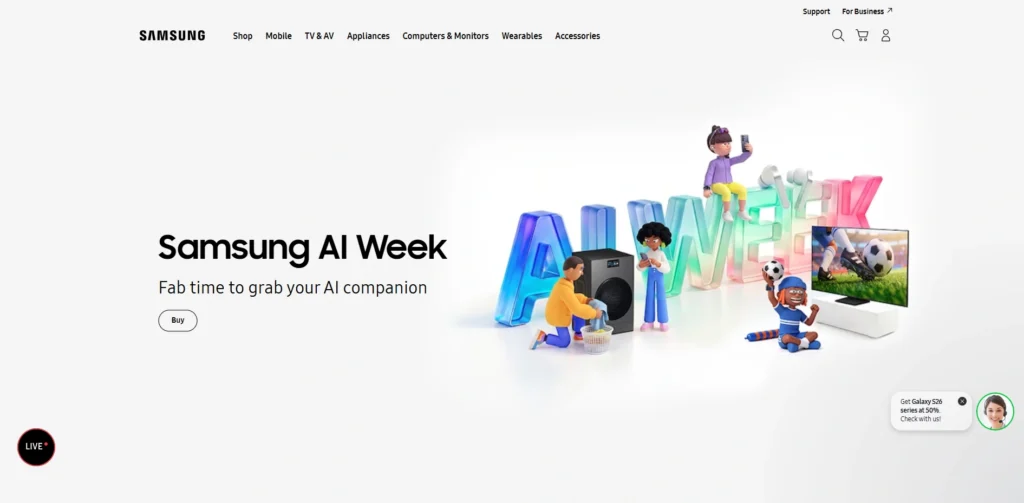
1. Samsung India
- Established: 1938 (Global)
- India Entry Year: 1995
- Headquarters: Suwon, South Korea (Global); Gurugram, Haryana (India)
- Founder: Lee Byung-chul
- Brand Ambassador: Neeraj Chopra
Samsung is a global leader in technology, maintaining a massive footprint in India through its “Make for India” initiative. It operates one of the world’s largest mobile phone manufacturing factories in Noida. The company is known for its heavy investment in R&D and its ability to lead the market in both premium and budget segments.
Key Products:
- Smartphones (Galaxy Series)
- QLED & Smart TVs
- Digital Appliances (Refrigerators, Washing Machines)
India Presence:
- Two manufacturing plants (Noida and Chennai) and five R&D centers.
Employees/Revenue:
- Over 70,000 employees in India; Revenue exceeded ₹98,000 crore in FY23.
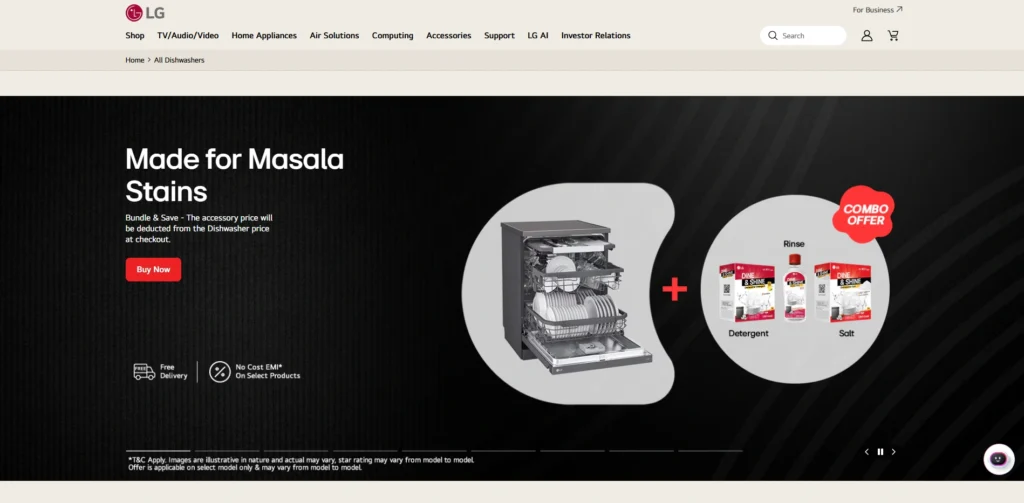
2. LG Electronics India
- Established: 1958 (Global)
- India Entry Year: 1997
- Headquarters: Seoul, South Korea (Global); Greater Noida, Uttar Pradesh (India)
- Founder: Koo In-hwoi
- Brand Ambassador: Vantika Agrawal
LG has become a staple in Indian households by focusing on durability and localized technology. It was one of the first brands to introduce products specifically designed for the Indian climate and power conditions, making it one of the most trusted Korean companies in India. Their service network is considered one of the widest in the consumer durable industry, reaching deep into rural areas.
Key Products:
- OLED TVs
- Inverter Air Conditioners
- Front Load Washing Machines
India Presence:
- Large manufacturing units in Greater Noida and Pune.
Employees/Revenue:
- Approximately 11,000 employees; Revenue around ₹20,000 crore in FY23.
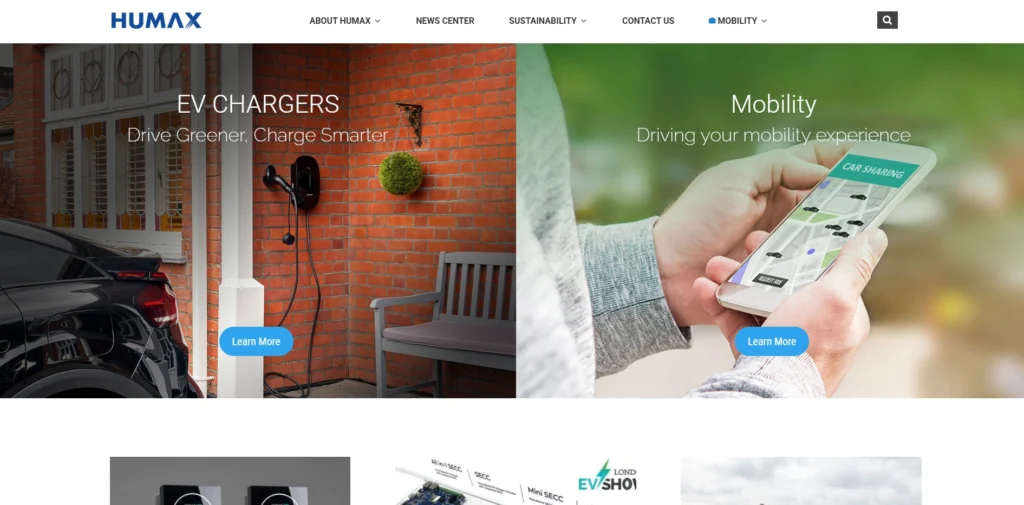
3. Humax India
- Established: 1989 (Global)
- India Entry Year: 2007
- Headquarters: Seongnam, South Korea (Global); Bengaluru, Karnataka (India)
- Founder: Byun Dae-gyu
- Brand Ambassador: Not applicable (B2B focused)
While not a household name like Samsung, Humax is a critical player in the digital broadcasting space. They provide the hardware that powers many of India’s DTH (Direct-To-Home) and cable television services. The company specializes in digital set-top boxes and gateways that enable high-definition content delivery across the country.
Key Products:
- Digital Set-top Boxes
- Broadband Gateways
- Automotive Infotainment Systems
India Presence:
- R&D facility in Bengaluru and partnerships with major Indian telecom and DTH providers.
Employees/Revenue:
- Estimated 200+ employees in India (R&D focused).
B. Automotive & Industrial Manufacturing
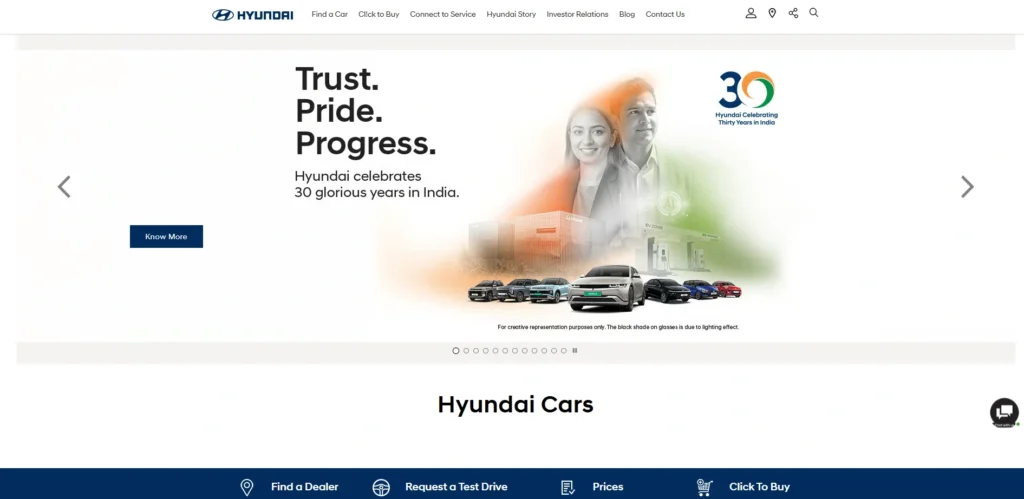
4. Hyundai Motor India
- Established: 1967 (Global)
- India Entry Year: 1996
- Headquarters: Seoul, South Korea (Global); Gurugram, Haryana (India)
- Founder: Chung Ju-yung
- Brand Ambassador: Pankaj Tripathi
Hyundai is India’s second-largest passenger car manufacturer and a pioneer in the “Made in India” export model. Since the launch of the iconic Santro, the company has consistently led the market in design and technology. They currently operate highly automated plants that serve as a global production hub for small cars and SUVs.
Key Products
- SUVs (Creta, Venue)
- Hatchbacks (i20, Grand i10 Nios)
- Electric Vehicles (IONIQ 5)
India Presence: Massive manufacturing facility in Sriperumbudur (near Chennai) and a Corporate Office in Gurugram.
Employees/Revenue: Over 15,000 employees; Revenue exceeded ₹60,000 crore in FY23.
5. Kia India
- Established: 1944 (Global)
- India Entry Year: 2019
- Headquarters: Seoul, South Korea (Global); Anantapur, Andhra Pradesh (India)
- Founder: Kim Chul-ho
- Brand Ambassador: Tiger Shroff for specific launches
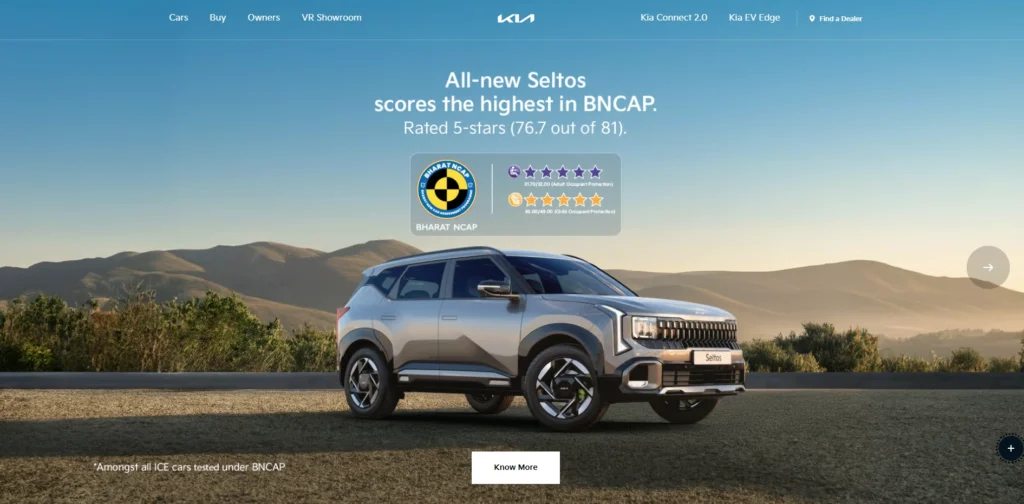
Despite being a relatively late entrant, Kia has achieved record-breaking growth in the Indian market. By focusing on premium features and bold designs, Kia quickly became a top-five carmaker in the country. Their Anantapur plant is one of the most advanced manufacturing units in the world, producing cars for both India and export markets.
Key Products:
- Seltos (Mid-size SUV)
- Sonet (Compact SUV)
- Carens (MPV)
India Presence:
- Integrated manufacturing plant in Anantapur, Andhra Pradesh.
Employees/5Revenue:
- Approximately 12,000 employees (including vendors); Revenue around ₹38,000 crore in FY23.
6. POSCO India

- Established: 1968 (Global)
- India Entry Year: 2005
- Headquarters: Pohang, South Korea (Global); Gurugram, Haryana (India)
- Founder: Park Tae-joon
- Brand Ambassador: Not applicable (B2B Industrial)
POSCO is one of the world’s largest steel producers and a vital supplier to India’s automotive and construction industries. While their journey in India has faced regulatory challenges, they have successfully established several processing centers. They provide high-quality cold-rolled and galvanized steel used by major car manufacturers across the country.
Key Products:
- Automotive Steel Sheets
- Electrical Steel
- Galvanized Steel
India Presence:
- Processing centers and plants in Maharashtra (Pune, Raigad), Gujarat, and Delhi-NCR.
Employees/Revenue:
- Over 4,000 employees in India operations.
C. Beauty, Cosmetics & Lifestyle
7. Innisfree India
- Established: 2000 (Global)
- India Entry Year: 2012
- Headquarters: Seoul, South Korea (Global); Gurugram, Haryana (India)
- Founder: Suh Sung-whan (Amorepacific Group)
- Brand Ambassador: Wonyoung (Global); uses various local influencers in India.
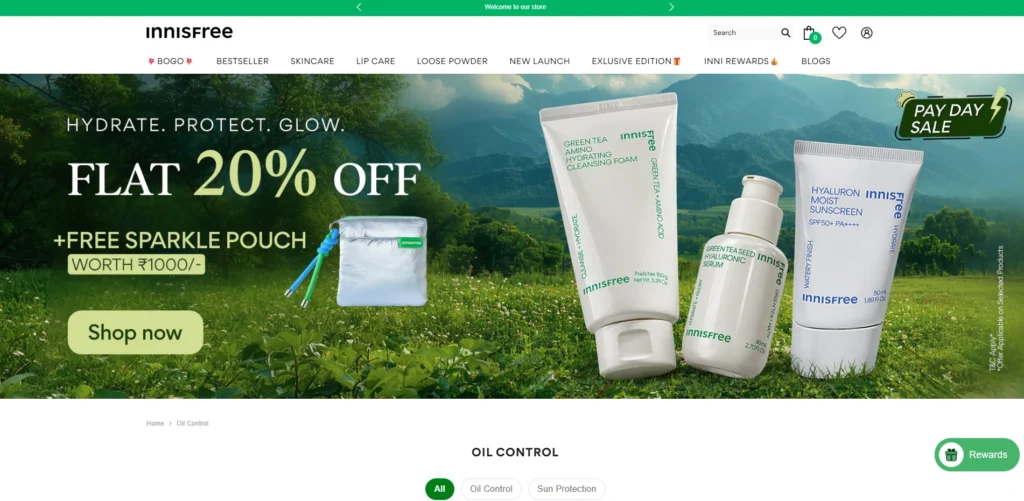
Innisfree is India’s most recognized K-Beauty brand, famous for its eco-friendly approach and ingredients sourced from Jeju Island. It successfully tapped into the Indian market by offering solutions for pollution-related skin concerns. The brand is a favorite among Gen Z and millennials who prefer natural, “clean” beauty products over heavy chemicals.
Key Products:
- Green Tea Seed Serum
- Super Volcanic Pore Clay Mask
- Sheet Masks
India Presence:
- Over 30 exclusive stores across major metros and a strong presence on e-commerce platforms like Nykaa and Myntra.
Employees/Revenue:
- Approximately 170+ employees; Revenue around ₹112 crore in FY25.
8. The Face Shop (India)
- Established: 2003 (Global)
- India Entry Year: 2016
- Headquarters: Seoul, South Korea (Global); Mumbai, Maharashtra (India operations)
- Founder: Jeong Un-ho
- Brand Ambassador: Khushi Kapoor (India)
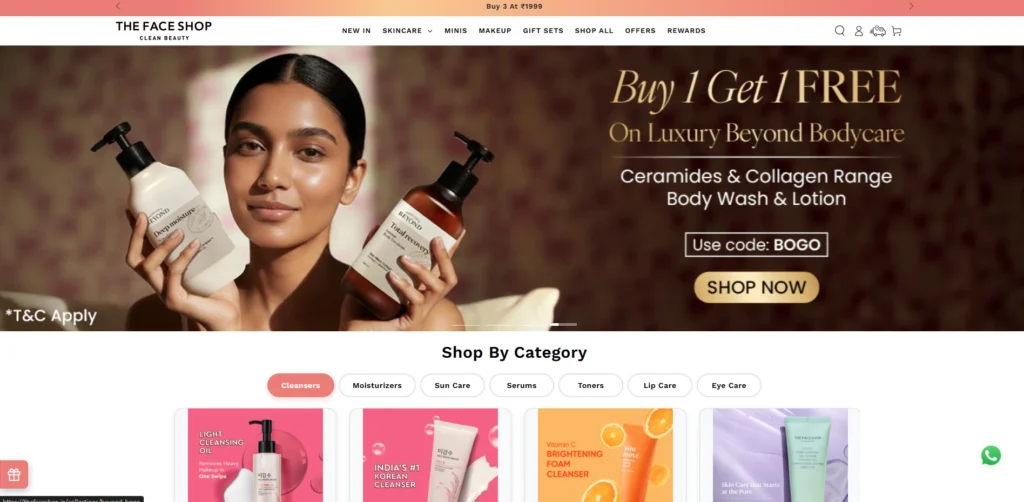
Owned by LG Household & Health Care, The Face Shop was one of the first brands to bring the “10-step Korean skincare routine” to the Indian mainstream. They focus on combining science with natural elements like rice water and calendula. Their recent appointment of a young Indian celebrity as an ambassador shows their commitment to capturing the youth market.
Key Products:
- Rice Water Bright Cleansing Foam
- Real Nature Face Masks
- Jeju Aloe Fresh Soothing Gel
India Presence:
- Available in over 100+ retail touchpoints including multi-brand stores and exclusive kiosks.
Employees/Revenue:
- Operated in India through a master distributorship and direct retail teams.
D. Banking, Finance & IT Services
9. Industrial Bank of Korea (IBK) India

- Established: 1961 (Global)
- India Entry Year: 2014
- Headquarters: Seoul, South Korea (Global); New Delhi/Chennai (India)
- Founder: Government of South Korea
- Brand Ambassador: Not applicable (Corporate Banking)
IBK entered India specifically to support the financial needs of Korean small and medium-sized enterprises (SMEs) operating in the country. They play a vital role in providing corporate loans, trade finance, and foreign exchange services. Their presence has made it significantly easier for smaller Korean vendors to set up operations in Indian industrial hubs.
Key Products:
- Corporate Loans
- Trade Finance
- Remittance Services
India Presence:
- Major branches in New Delhi and Chennai (serving the southern manufacturing cluster).
Employees/Revenue:
- Primarily managed by a specialized team of financial experts for cross-border trade.
10. CJ Darcl Logistics
- Established: 1953 (CJ Group Global)
- India Entry Year: 2017 (via Joint Venture)
- Headquarters: Seoul, South Korea (Global); Gurugram, Haryana (India)
- Founder: Lee Byung-chul (CJ Group)
- Brand Ambassador: Not applicable
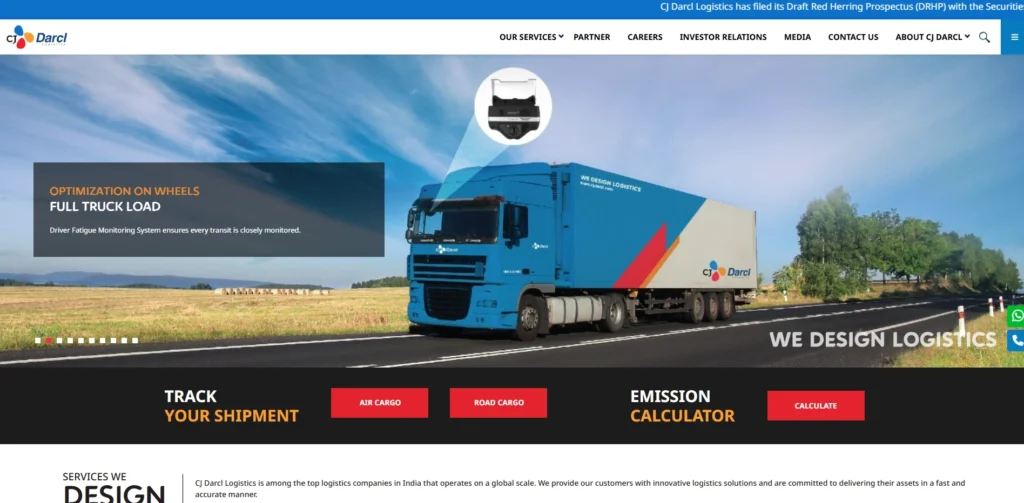
CJ Logistics, one of Korea’s largest shipping and logistics firms, entered India by partnering with Darcl Logistics. This venture created one of India’s largest end-to-end transport companies. They specialize in heavy-haulage, project cargo, and supply chain management for the automotive and FMCG sectors, bridging the gap between factories and consumers.
Key Products:
- Full Truck Load (FTL) Transport
- Project Cargo Logistics
- Warehousing Solutions
India Presence:
- Over 200+ offices across India with a massive fleet of transport vehicles.
Employees/Revenue:
- Over 4,000 employees; Revenue exceeds ₹3,500 crore.
11. SK Telecom (SKT) India
- Established: 1984 (Global)
- India Entry Year: 2007
- Headquarters: Seoul, South Korea (Global); Gurugram, Haryana (India)
- Founder: Chey Jong-hyun
- Brand Ambassador: Not applicable
While not a mobile carrier in India, SK Telecom operates as a major technology consultant and solution provider. They have partnered with Indian telecom giants like Bharti Airtel to help build high-speed 4G and 5G network architectures. Their focus in India is on advanced AI-driven network optimization and “Smart City” infrastructure projects.
Key Products:
- Network Optimization Software
- AI-based Data Solutions
- IoT (Internet of Things) Platforms
India Presence:
- Regional office in Gurugram focusing on technical partnerships and consulting.
Employees/Revenue:
- Expert engineering team focused on B2B telecom infrastructure.
E. Food & Retail
12. Lotte India (Lotte Wellfood)
- Established: 1948 (Global)
- India Entry Year: 2004
- Headquarters: Seoul, South Korea (Global); Chennai, Tamil Nadu (India)
- Founder: Shin Kyuk-ho
- Brand Ambassador: Campaign-specific celebrities
Lotte is the brand responsible for making “Choco Pie” a household name across India. After acquiring Parry’s Confectionery, Lotte heavily localized its production, including launching 100% vegetarian versions of its famous snacks to suit Indian dietary preferences. They operate large-scale confectionery plants that supply treats to every corner of the country.
Key Products:
- Lotte Choco Pie
- Coffy Bite and Lotte Eclairs
- Lotte Gums and Mints
India Presence:
- Two major manufacturing units in Chennai and Rohtak; nationwide distribution network.
Employees/Revenue:
- Over 2,000 employees; Annual turnover exceeds ₹1,000 crore.
13. OTOKI India (formerly Ottogi)

- Established: 1969 (Global)
- India Entry Year: 2021 (Expanded Direct Presence)
- Headquarters: Anyang, South Korea (Global); New Delhi (India Operations)
- Founder: Ham Tae-ho
- Brand Ambassador: Not applicable
Recently rebranded globally as OTOKI, this food giant is a staple in Korean households and is now rapidly expanding in India, strengthening the presence of Korean companies in India. Known for introducing the first Korean curry and bottled ketchup, they are currently challenging the Indian instant noodle market with their famous “Jin Ramen.” They focus on providing authentic Korean flavors that are increasingly popular due to the “K-Drama” food trend.
Key Products:
- Jin Ramen (Veg and Non-Veg variants)
- OTOKI Curry (Ready-to-eat packs)
- Gold Ketchup and Mayonnaise
India Presence:
- Growing retail presence in metro cities and major e-commerce platforms like Amazon and BigBasket.
Employees/Revenue:
- Significant global revenue of over $2 billion; expanding Indian sales team.
14. Orion India
- Established: 1956 (Global)
- India Entry Year: 2021
- Headquarters: Seoul, South Korea (Global); Bhiwadi, Rajasthan (India)
- Founder: Lee Yang-gu
- Brand Ambassador: Not applicable
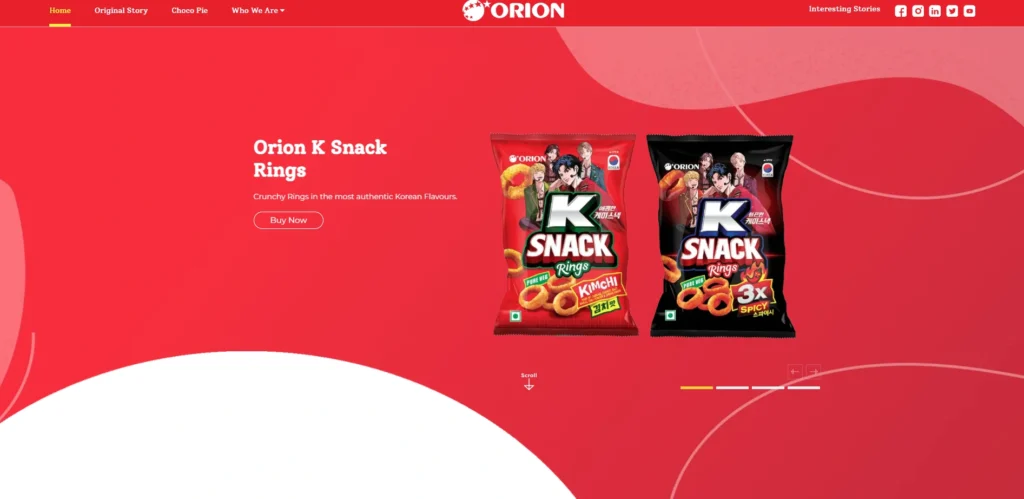
Orion is a direct competitor to Lotte and one of the world’s largest confectionery companies. They recently made a massive investment in India by setting up a state-of-the-art manufacturing facility in Rajasthan to ensure local freshness. Orion targets the premium snack market, focusing on high-quality ingredients and the “original” taste that made their snacks famous globally.
Key Products:
- Orion Choco-Pie (Original)
- Turtle Chips (Corn Snacks)
- O’Rice Cracker
India Presence: Dedicated manufacturing plant in Bhiwadi; strong presence in modern trade and premium grocery stores.
Employees/Revenue: Over 500 direct employees; initial investment of over ₹200 crore in the Indian market.
Korean Companies In India – Comparison Table
To provide a clear overview of the market leaders, the following table compares the top Korean firms based on their scale and history in India. These companies represent the most successful examples of how South Korean innovation has integrated into the Indian economic structure.
| Company | Industry | Founded | India Entry | Revenue (FY23/Est) | Employees (India) |
| Samsung India | Electronics | 1938 | 1995 | ₹98,000+ Crore | 70,000+ |
| Hyundai Motor | Automobile | 1967 | 1996 | ₹60,000+ Crore | 15,000+ |
| Kia India | Automobile | 1944 | 2019 | ₹38,000+ Crore | 12,000+ |
| LG Electronics | Electronics | 1958 | 1997 | ₹20,000+ Crore | 11,000+ |
| CJ Darcl | Logistics | 1953 | 2017 | ₹3,500+ Crore | 4,000+ |
| Lotte India | Food & Retail | 1948 | 2004 | ₹1,000+ Crore | 2,000+ |
| POSCO India | Steel/Industrial | 1968 | 2005 | $1 Billion+ (Global Div) | 4,000+ |
| Innisfree | Beauty/Retail | 2000 | 2012 | ₹112 Crore | 170+ |
| Orion India | Food & Retail | 1956 | 2021 | ₹200+ Cr (Investment) | 500+ |
| The Face Shop | Beauty/Retail | 2003 | 2016 | $1.5 Billion+ (Global) | 100+ |
Job Opportunities in Korean Companies in India
The expansion of Korean giants into India has created a massive demand for professionals who can bridge the gap between Korean technical standards and the Indian market. These companies are currently hiring across various levels, from manufacturing and supply chain to advanced software development.
Below are some of the most in-demand roles within Korean firms in India:
1. Software Engineer (AI & 5G)
With companies like Samsung and LG operating their largest global R&D centers in cities like Bengaluru and Noida, there is a constant need for software talent. These roles are in high demand because Korean firms are increasingly moving their high-end development such as AI algorithms, 5G network optimization, and IoT platforms to India. They look for engineers who can develop localized software solutions that are eventually scaled for their global product lineups.
2. Supply Chain & Logistics Manager
As firms like Hyundai, Kia, and CJ Darcl expand their manufacturing footprint, managing the movement of parts and finished goods becomes a massive challenge. This role is crucial because Korean companies often operate on a “Just-In-Time” manufacturing model, which requires precision and efficiency. Professionals who can navigate Indian infrastructure while maintaining the strict efficiency standards of Korean corporate culture are highly valued.
3. Bilingual Business Consultant (Korean-English)
There is a significant demand for professionals who are fluent in both Korean and English/Hindi. This role is essential for facilitating smooth communication between the headquarters in Seoul and the local Indian workforce. Beyond simple translation, these consultants help in “cultural localization” ensuring that Korean business strategies are adapted effectively to fit the Indian legal, social, and professional environment.
4. Quality Control Engineer
Korean brands have built their reputation on reliability and high quality. Whether in the automotive sector (Kia/Hyundai) or electronics (Samsung/LG), Quality Control (QC) engineers are tasked with ensuring that products manufactured in India meet global South Korean benchmarks. These roles are in high demand as these companies increase their export volume from India to international markets, where maintaining a “zero-defect” standard is mandatory.
5. Brand Manager (K-Beauty & Retail)
With the explosion of the “K-Wave” in India, brands like Innisfree, The Face Shop, and Orion need experts to manage their market presence. These roles focus on understanding the Indian consumer’s behavior and tailoring Korean marketing campaigns to local tastes. Demand is high because these companies are rapidly moving beyond metro cities into Tier 2 and Tier 3 markets, requiring managers who can build localized retail strategies.
Future of Korean Investment in India (2026–2030)
The period between 2026 and 2030 is set to mark a transition from traditional manufacturing to high-tech, green energy collaboration. As South Korea looks to decrease its supply chain reliance on other regions, India is emerging as its primary “global factory” for next-generation technology. We are likely to see massive capital inflows into the semiconductor and Electric Vehicle (EV) sectors, with Hyundai and Kia already committing billions to localizing battery production. Furthermore, the partnership will likely expand into the defense and aerospace sectors, as both nations look to share technical expertise in hardware manufacturing and satellite technology under revised bilateral trade agreements.
Beyond heavy industry, the digital and startup ecosystem will define the next five years of investment. South Korean venture capital is increasingly targeting Indian fintech, gaming, and AI startups, recognizing India as the ideal testing ground for scalable software solutions. By 2030, the “Korean Wave” in India will likely be less about imported products and more about co-developed innovation, where Indian software talent and Korean hardware precision merge. This synergy will be supported by updated Comprehensive Economic Partnership Agreements (CEPA), which aim to reduce trade barriers and facilitate a more seamless exchange of talent and technology between Seoul and New Delhi.
Korean IT & Electronics Companies in India – Quick Overview
The IT and electronics sector remains the strongest pillar of the Indo-Korean partnership. While giants like Samsung and LG are household names, several other firms provide the critical hardware and software infrastructure that powers India’s digital economy.
- Samsung India: As the market leader, Samsung operates the world’s largest mobile factory in Noida and several R&D centers. They are the primary drivers of 5G infrastructure and premium smartphone innovation in the country, contributing significantly to the “Make in India” initiative through high-end manufacturing.
- LG Electronics: Known for its “India-first” product philosophy, LG dominates the home appliance market with energy-efficient technology. Their focus has shifted toward AI-integrated appliances and premium OLED displays, supported by massive manufacturing units in Pune and Greater Noida that cater to both domestic and export demands.
- SK Hynix: While they operate primarily in the B2B space, SK Hynix is a global leader in semiconductors and memory solutions. In India, they provide the essential DRAM and NAND flash memory chips used in millions of smartphones, laptops, and data centers, acting as a silent engine for the Indian IT industry.
- Humax India: Humax is a specialized leader in digital platform solutions, providing the set-top boxes and gateways used by India’s major DTH and broadband providers. Their Bengaluru-based R&D team focuses on developing localized digital broadcasting technology and automotive infotainment systems for the Indian market.
- Naver Corp (Line): Korea’s top search engine and IT giant, Naver, has a growing presence in India through investments and its social media platforms like Line and Zepeto. They are increasingly focusing on the Indian startup ecosystem, providing AI-based cloud services and digital content platforms tailored for the young, tech-savvy population.
Korean Automobile Companies in India – Quick Overview
The automotive sector is perhaps the most visible sign of South Korea’s economic footprint in India. Beyond the major car brands, a massive network of Tier-1 suppliers and industrial equipment manufacturers supports the entire “Make in India” ecosystem.
- Hyundai Motor India (Chennai): As the country’s second-largest carmaker, Hyundai has become a staple of Indian roads since the 1990s. The company operates a massive, highly automated manufacturing facility in Sriperumbudur, Chennai, which serves as a global production hub for models like the Creta and Verna. Hyundai is currently leading the transition to premium EVs and connected car technology in India.
- Kia India (Anantapur): Entering the market in 2019, Kia achieved one of the fastest growth trajectories in Indian automotive history. Its state-of-the-art plant in Anantapur, Andhra Pradesh, produces popular SUVs like the Seltos and Sonet for both domestic buyers and over 90 export markets. Kia is widely credited with bringing high-end tech features and bold designs to the mass-market SUV segment.
- HL Mando Anand India (Chennai): A crucial joint venture between Korea’s HL Mando and India’s Anand Group, this company is a leading supplier of high-performance brake, suspension, and steering systems. Their Chennai facility supplies critical components to almost every major car manufacturer in India. They are currently focusing on “by-wire” technology and autonomous driving solutions for the next generation of vehicles.
- Doosan Bobcat India (Chennai): While not a passenger car brand, Doosan Bobcat is a Korean giant dominating the compact construction equipment market in India. From its headquarters and manufacturing plant in Chennai, it produces world-renowneded skid-steer loaders and mini-excavators. These machines are essential for India’s rapid urban infrastructure development and localized construction projects.
- Sungwoo Hitech India (Chennai): Sungwoo Hitech is a vital Tier-1 structural partner, specializing in automotive metal stamping and robotic welding solutions. Operating out of the Chennai automotive cluster, they provide the high-strength body frames and assemblies that ensure vehicle safety and structural integrity. Their expertise in lightweight vehicle parts is helping manufacturers meet new fuel efficiency and safety standards.
Suggested Read:
Conclusion
In conclusion, the partnership between South Korea and India has grown into a powerful economic force that touches almost every part of our daily lives. From the smartphones we use to the cars we drive and even the snacks we eat, Korean companies in India have moved beyond being just “foreign brands.” By setting up massive factories, investing in local research, and embracing the “Make in India” initiative, these companies have become an essential part of India’s industrial growth and job market.
Looking ahead, this relationship is only going to get stronger as it moves into new areas like green energy, electric vehicles, and high-tech electronics. As more Korean brands enter the Indian market, they are bringing better technology, higher quality standards, and a unique business culture that benefits both nations. Whether you are a consumer, a job seeker, or a business professional, the growing “Korean Wave” in India offers a future full of opportunities and innovation.
FAQs
Why Are Korean Companies Growing So Rapidly In The Indian Market?
Korean companies have succeeded by focusing on “localization” designing products specifically for Indian needs, such as ACs that handle power surges and cars with higher ground clearance. Additionally, they have aggressively used government incentives like the “Make in India” PLI schemes and have built massive local supply chains, allowing them to offer high-quality technology at competitive prices.
Which Is The Largest Korean Company Operating In India?
Samsung India is currently the largest South Korean company in the country. It leads in revenue, contributing over ₹98,000 crore annually, and operates one of the world’s largest mobile phone manufacturing units in Noida, Uttar Pradesh.
Are Korean Beauty Brands Easily Available In India?
Yes, K-Beauty has a massive presence in India. Major brands like Innisfree, The Face Shop, and Etude are available through exclusive retail stores in metro cities and across all major e-commerce platforms like Nykaa, Tira, and Myntra.
Do Korean Companies Provide Significant Job Opportunities For Indians?
Absolutely. Korean firms are among the largest foreign employers in India. Beyond manufacturing roles in factories, they hire thousands of Indian professionals in high-end R&D, software development, supply chain management, and bilingual consulting.
Which Korean Car Brands Are Popular In India?
Hyundai and Kia are the two most popular Korean automobile brands in India. Hyundai is the second-largest carmaker in the country, while Kia has quickly become a leader in the premium SUV segment with models like the Seltos and Sonet.
Is The Food Industry a New Focus For Korean Investment?
While Lotte has been a leader for years with its Choco Pie, there is a new wave of food brands like Orion and OTOKI (Jin Ramen) entering the market. These companies are investing hundreds of crores in local factories to meet the rising demand for authentic Korean snacks and noodles.