Personal information has become an important target for cybercriminals. Names, addresses, credit card details, financial account information, and other personal data can be misused to open fraudulent accounts, access existing accounts, or impersonate someone online. Even a single data breach can expose information that remains useful to criminals long after the original incident.
The best identity theft protection service help individuals monitor their personal information, identify suspicious activity, and respond when their identity may have been compromised. Depending on the provider and plan, these services can include credit monitoring, dark web scanning, financial account alerts, identity recovery assistance, and insurance for certain eligible expenses.
In this guide, we explore various identity theft protection services, including their key features, advantages, disadvantages, pricing considerations, and ideal users. Most of the providers covered are designed primarily for the United States, so users in other countries should verify local availability and coverage before subscribing.
What Is An Identity Theft Protection Service?
An identity theft protection service monitors selected sources for signs that someone’s personal information may be exposed or misused. It can notify users when suspicious activity is detected, such as certain changes to credit records, the appearance of personal information in monitored online sources, or activity involving supported financial accounts.
Some services also offer identity restoration assistance. If someone discovers fraudulent activity, a specialist may help them contact financial institutions, prepare documentation, dispute suspicious accounts, and navigate the recovery process.
However, these services cannot guarantee that identity theft will never happen. Monitoring generally detects selected warning signs rather than preventing every form of fraud. Users should still use strong, unique passwords, enable multifactor authentication, monitor financial statements, and take advantage of free credit freezes where available.
Comparison Of The Best Identity Theft Protection Service
| Service | Best For | Key Strength | Pricing Model |
| Aura | Individuals and families | Identity monitoring with digital security tools | Free trial and paid plans |
| LifeLock | Comprehensive identity monitoring | Identity alerts and recovery assistance | Paid subscription plans |
| IdentityForce | Detailed identity and credit monitoring | Multiple monitoring and fraud alert features | Paid plans |
| Identity Guard | Individuals and families seeking monitoring | Identity alerts and risk monitoring | Tiered paid plans |
| Experian IdentityWorks | Credit-focused protection | Credit monitoring and identity alerts | Free and paid options |
| IDShield | Users who value recovery assistance | Access to identity theft restoration support | Monthly subscription plans |
| McAfee+ | Users wanting security and identity tools together | Device security and identity monitoring | Paid subscription plans |
| ID Watchdog | Credit monitoring and recovery support | Identity alerts and restoration services | Paid plans |
| Bitdefender Digital Identity Protection | Users concerned about exposed personal data | Personal information exposure monitoring | Paid plans |
| Allstate Identity Protection | Individuals and families | Identity monitoring and recovery support | Plan-based pricing |
List Of Best Identity Theft Protection Services
1. Aura
- Best for: Individuals and families who want identity protection combined with digital security tools.
- Website: https://www.aura.com/
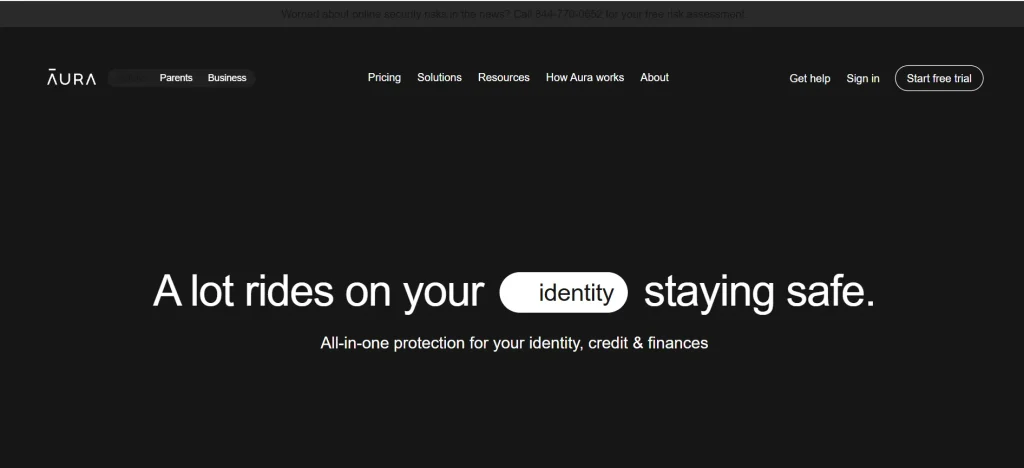
Aura provides identity and financial monitoring alongside online security features. Depending on the selected plan, its services can include credit monitoring across major US credit bureaus, dark web monitoring, financial account alerts, antivirus, a virtual private network (VPN), password management, and assistance with identity recovery.
Its all-in-one approach can be convenient for users who would otherwise pay for several separate security products. Family plans can also help cover multiple household members. However, users should review exactly which features and insurance limits apply to their selected subscription.
Key Features
- Identity and dark web monitoring
- Credit monitoring and credit-related alerts
- Financial account monitoring
- Antivirus and VPN tools
- Password manager
- Identity recovery assistance
- Individual and family plans
Pros
- Combines identity protection with digital security tools
- Offers options for individuals, couples, and families
- Provides alerts for selected suspicious activity
- Includes assistance with identity recovery
Cons
- Full functionality requires a paid subscription
- Features and insurance limits vary by plan
- May duplicate tools already included in other security subscriptions
Pricing:
- Aura offers a free trial and paid subscriptions. Individual and family pricing differs, and promotional rates may change after the initial billing period.
Who Should Use It:
- Individuals, couples, and families who want identity monitoring, online privacy tools, and device security in one subscription.
2. LifeLock

- Best for: Users who want identity monitoring with dedicated restoration support.
- Website: https://lifelock.norton.com/
LifeLock, associated with Norton, offers services designed to detect suspicious identity activity and help customers respond to potential fraud. Depending on the plan, monitoring may cover selected credit bureau activity, dark web exposure, personal information, and certain financial account signals.
LifeLock also provides identity restoration assistance and insurance for eligible losses or expenses, subject to policy limits and exclusions. Some plans can be bundled with Norton security products, which may appeal to users who also want protection against malware and other online threats.
Key Features
- Identity monitoring and alerts
- Dark web monitoring
- Credit monitoring, depending on the plan
- Selected financial account alerts
- Identity restoration assistance
- Insurance for eligible identity theft-related expenses
- Options that combine identity protection with Norton security products
Pros
- Offers identity restoration support
- Provides multiple plan levels
- Can combine identity protection with other security tools
- Includes insurance coverage on eligible plans
Cons
- Advanced monitoring can require higher-tier plans
- Introductory prices may differ from renewal prices
- Insurance coverage has limits, conditions, and exclusions
Pricing:
- LifeLock offers several paid plans, with costs depending on monitoring features, billing frequency, and family coverage. Check the renewal price and insurance details before subscribing.
Who Should Use It:
- Individuals who want identity monitoring and recovery assistance, particularly those who also use or plan to purchase Norton security products.
3. IdentityForce
- Best for: Users who want detailed identity monitoring and credit-related alerts.
- Website: https://www.identityforce.com/
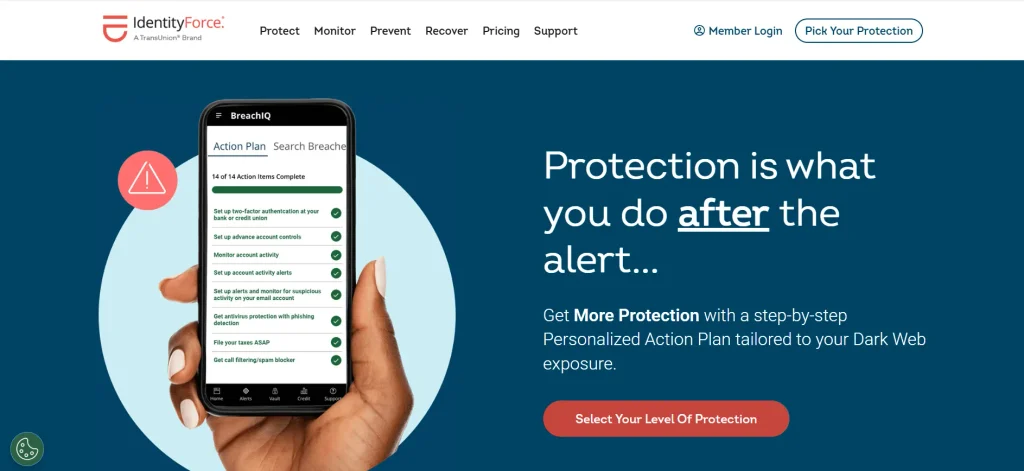
IdentityForce offers identity protection services with monitoring for selected personal information, credit activity, and potential fraud indicators. Some plans provide broader credit bureau monitoring, alerts for suspicious activity, and tools designed to help users respond when their information may be compromised.
Its range of monitoring options makes it worth considering for people who want more visibility into possible identity misuse. The exact level of coverage depends on the selected package, so users should compare the monitoring sources and recovery benefits rather than choosing based on the brand name alone.
Key Features
- Identity and dark web monitoring
- Credit monitoring on eligible plans
- Alerts for selected suspicious activity
- Fraud detection tools
- Identity recovery support
- Family protection options
- Mobile access to monitoring alerts
Pros
- Offers a range of monitoring features
- Provides options for credit-focused protection
- Includes support for responding to identity theft
- Has plans designed for individuals and families
Cons
- Comprehensive features may require a higher-priced plan
- Plan differences can make comparisons confusing
- Users should verify which credit bureaus are monitored
Pricing:
- IdentityForce offers paid plans with different monitoring levels. Check current individual and family prices, as well as the features included in each package.
Who Should Use It:
- Individuals who want identity monitoring, credit-related alerts, and access to recovery support.
4. Identity Guard
- Best for: Users who want identity monitoring with different levels of coverage.
- Website: https://www.identityguard.com/
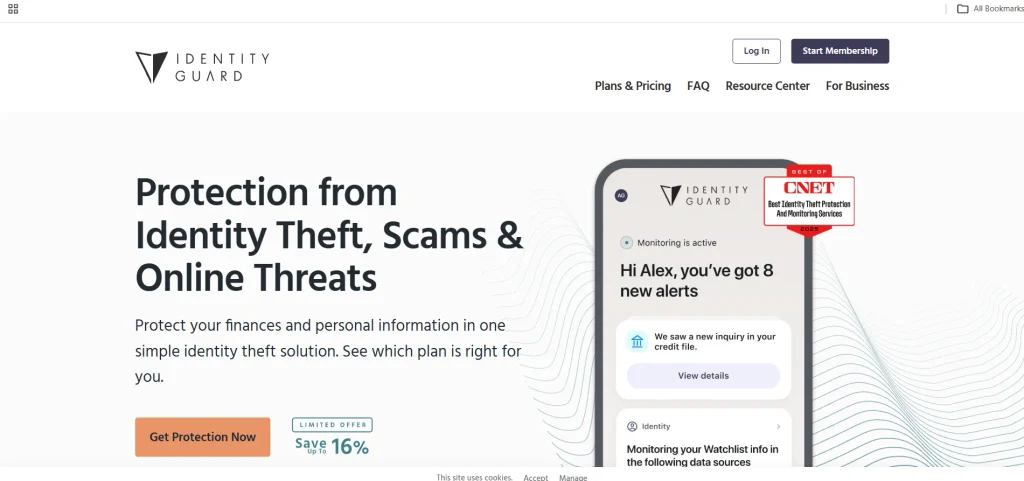
Identity Guard offers identity protection plans that monitor selected personal information and alert users to potential risks. Depending on the package, features may include dark web monitoring, credit monitoring, financial account alerts, and identity restoration assistance.
The service offers different plan levels, allowing users to select coverage based on their needs. However, it is important to compare those levels carefully. A lower-priced plan may not include every type of credit monitoring or financial protection available in a more comprehensive package.
Key Features
- Personal information monitoring
- Dark web alerts
- Credit monitoring on eligible plans
- Financial account monitoring, depending on the plan
- Identity restoration assistance
- Family plan options
- Risk alerts and reporting tools
Pros
- Offers several levels of identity protection
- Can suit users with different monitoring requirements
- Provides alerts for selected identity risks
- Offers family coverage options
Cons
- Features differ significantly between plan tiers
- Some plans may not include full credit bureau monitoring
- Users need to review coverage limits and exclusions
Pricing:
- Identity Guard offers tiered subscriptions. Compare the current monthly and annual prices and confirm whether credit monitoring is included in the plan you choose.
Who Should Use It:
- Individuals and families who want to select an identity monitoring package based on their preferred level of coverage.
5. Experian IdentityWorks
- Best for: Users who want identity protection closely connected to credit monitoring.
- Website: https://www.experian.com/
Experian IdentityWorks combines credit-related monitoring with identity protection features. Depending on the plan, it can alert users to changes in credit files, certain uses of personal information, and other potential identity risks. Some paid options include monitoring across the three major US credit bureaus, identity theft insurance, and fraud resolution assistance.
Experian also offers free credit-related tools, although the features available through a free account differ from those included in paid identity protection plans. This makes it useful for people who want to start with basic credit monitoring and decide whether they need broader coverage.
Key Features
- Experian credit monitoring and alerts
- Credit monitoring across multiple bureaus on eligible plans
- Dark web monitoring
- Alerts for selected identity-related activity
- Credit report and score tools
- Fraud resolution support on eligible plans
- Insurance coverage on qualifying paid plans
Pros
- Combines credit monitoring with identity alerts
- Offers free credit-related features
- Provides more comprehensive paid options
- Useful for people who regularly monitor their credit
Cons
- Free and paid plans offer different levels of protection
- Some features are tied to Experian’s ecosystem
- Comprehensive coverage may require a paid subscription
Pricing:
- Experian offers free features and paid IdentityWorks plans. Review the current plan comparison for monitoring coverage, trial terms, and monthly charges.
Who Should Use It:
- People in the United States who want to monitor their credit and receive additional identity-related alerts through one provider.
6. McAfee+
- Best for: Users who want identity monitoring alongside antivirus and online security.
- Website: https://www.mcafee.com/en-in/index.html
McAfee+ combines digital security features with identity-related monitoring in eligible plans. Depending on the package, it may include antivirus protection, web security, scam protection, personal information monitoring, and assistance for certain identity theft situations.
This combination can be useful for users who want to manage device security and identity monitoring through one provider. However, not every plan includes the same identity features or coverage limits. It is worth comparing the identity protection component separately from the antivirus tools before making a purchase.
Key Features
- Antivirus software
- Online threat and web protection
- Personal information monitoring
- Dark web monitoring, where included
- Scam protection features, depending on the plan
- Identity recovery benefits on eligible plans
- Multi-device security
Pros
- Combines device security with selected identity tools
- Convenient for users who need antivirus protection
- Offers subscription options for different needs
- Can reduce the need for separate security products
Cons
- Identity monitoring varies by package
- Some features may overlap with existing security software
- Users should review renewal pricing and coverage limits
Pricing:
- McAfee offers different subscription plans, and prices vary by product, device coverage, and promotional offers. Check the current plan details to confirm which identity protection features are included.
Who Should Use It:
- Individuals who want to combine antivirus, online security, and identity monitoring within one subscription.
7. ID Watchdog
- Best for: Users who want identity alerts and assistance with recovery.
- Website: https://www.idwatchdog.com/
ID Watchdog provides identity monitoring and restoration services designed to help users identify and respond to possible identity theft. Its plans can include alerts for selected identity and credit activity, monitoring tools, and support for resolving certain identity-related problems.
The service is particularly worth evaluating for people who value assistance with the recovery process. However, its coverage depends on the plan and provider terms. Customers should confirm which credit bureaus are monitored, what types of activity generate alerts, and how pre-existing identity theft cases are handled.
Key Features
- Identity monitoring and alerts
- Credit monitoring on eligible plans
- Identity restoration services
- Family coverage options
- Monitoring for selected personal information
- Alerts for potential fraud indicators
Pros
- Combines monitoring with restoration support
- Offers plans for individuals and families
- Can help users navigate identity-related problems
- Provides alerts for selected suspicious activity
Cons
- Feature availability varies by plan
- Users should review the scope of credit monitoring
- Coverage terms and restoration conditions may apply
Pricing:
- ID Watchdog offers paid plans with pricing based on coverage level and billing frequency. Check current individual and family options before subscribing.
Who Should Use It:
- Users who want identity and credit monitoring with support for resolving identity theft incidents.
8. Bitdefender Digital Identity Protection
- Best for: Users who want to know when their personal information appears in monitored online sources.
- Website: https://www.bitdefender.com/en-us/consumer/digital-identity-protection
Bitdefender Digital Identity Protection focuses on monitoring selected personal information and identifying possible exposure across online sources. It can alert users when monitored details appear in places that may indicate a privacy or identity risk.
This approach can help people understand where their information may be exposed and take action, such as changing compromised passwords or securing affected accounts. However, exposure monitoring is not the same as full financial identity protection. Users who need credit bureau monitoring or insurance should confirm whether those services are included or require another product.
Key Features
- Personal information exposure monitoring
- Alerts about selected online data exposures
- Privacy-related reports
- Guidance for responding to detected risks
- Integration with Bitdefender’s broader security ecosystem, where supported
Pros
- Useful for monitoring possible online data exposure
- Can complement antivirus and device security
- Helps users identify information that may need attention
- Suitable for users who prefer a security-focused provider
Cons
- May not include the full financial monitoring offered by specialist services
- Features depend on the product and subscription
- Monitoring cannot guarantee that all exposed information will be detected
Pricing:
- Bitdefender offers paid security products and digital identity features, with availability and pricing depending on the selected package and region.
Who Should Use It:
- Users who want to monitor personal information exposure and already use, or are considering, Bitdefender security products.
9. Allstate Identity Protection
- Best for: Individuals and families who want identity monitoring and recovery support.
- Website: https://www.allstateidentityprotection.com/
Allstate Identity Protection offers services designed to monitor selected personal information and help customers respond to potential identity theft. Depending on the plan, features may include financial activity monitoring, alerts for personal information exposure, identity recovery assistance, and protection options for multiple household members.
Family coverage can be useful for households that want to manage identity monitoring for more than one person. Before choosing a plan, review the number of people covered, monitoring categories, insurance terms, and whether the subscription is available directly or through an employer or benefits program.
Key Features
- Identity and personal information monitoring
- Financial activity alerts, where included
- Identity recovery assistance
- Family coverage options
- Alerts for selected potential fraud indicators
- Insurance benefits on eligible plans
Pros
- Offers identity protection options for households
- Combines monitoring with recovery assistance
- Can be available through workplace benefits
- Provides coverage options based on user needs
Cons
- Available features depend on the plan
- Some users may access it only through a particular benefits arrangement
- Insurance coverage has terms, limits, and exclusions
Pricing:
- Pricing depends on the available plan, coverage level, and whether the service is purchased directly or through an employer. Check current eligibility and subscription details.
Who Should Use It:
- Individuals and families looking for identity monitoring and recovery support, especially those who can access the service through workplace benefits.
Essential Features To Look For In Identity Theft Protection Services
The right identity protection service should match the types of risk you want to monitor. A large feature list is not always useful if the provider does not cover the accounts, information, or people that matter most to you.
Credit Monitoring
Credit monitoring alerts users to selected changes in their credit files, which may indicate that someone is attempting to open an account or use their identity. Some services monitor one bureau, while others provide coverage across all three major US credit bureaus: Experian, Equifax, and TransUnion.
Check exactly how many bureaus are included. Monitoring across all three can provide broader visibility, but it does not guarantee that every fraudulent application will be detected.
Dark Web Monitoring
Dark web monitoring searches selected online sources for personal information, such as email addresses, passwords, or other identifying details. If a service detects a match, it may notify the user so they can secure affected accounts.
Not all providers monitor the same sources or information categories. An alert also does not automatically mean that fraud has occurred, but it can be a reason to change a password and review account activity.
Financial Account Monitoring
Some services allow users to connect eligible bank, credit card, or investment accounts and receive alerts for certain suspicious transactions or changes. This can add visibility beyond credit file monitoring.
Before linking financial accounts, review the provider’s privacy policy, security practices, supported institutions, and the permissions required to access your information.
Identity Restoration Assistance
Identity restoration support can be valuable when personal information has already been misused. Specialists may help users contact financial institutions, prepare dispute documentation, and understand the process for resolving fraudulent accounts.
Check whether assistance is available around the clock, whether it covers pre-existing cases, and whether any services or expenses fall outside the subscription.
Identity Theft Insurance
Some paid plans include insurance for eligible expenses related to identity theft. Depending on the policy, this may cover certain legal costs, lost wages, or other recovery expenses, subject to limits and exclusions.
The advertised insurance amount is not necessarily a payment you receive automatically after fraud. Read the policy terms to understand eligible losses, reimbursement requirements, and any deductibles or restrictions.
Family and Child Protection
Families may need monitoring for multiple adults and children. Some services include child identity monitoring, while others charge separately or offer family coverage through a different plan.
Before subscribing, confirm the number of adults and children covered, which features apply to each person, and whether each family member needs a separate account.
Privacy and Data Security
An identity protection provider needs access to certain personal information to monitor it. Before signing up, review the provider’s data collection practices, security controls, account deletion process, and options for managing connected financial accounts.
Look for clear information about how your data is stored, used, and protected. Organizations can also use data loss prevention software to help identify and reduce the risk of sensitive information being exposed or transferred without authorization. A provider’s own security and privacy practices should be part of your decision.
How To Choose The Best Identity Theft Protection Service?
Before selecting a service, identify the kind of protection you need and the information you want to monitor.
- For broad identity and device security: Compare Aura and McAfee+ if you want identity monitoring alongside online security tools.
- For credit monitoring: Evaluate Experian IdentityWorks, IdentityForce, LifeLock, and other providers based on their specific bureau coverage.
- For identity recovery assistance: Compare LifeLock, IDShield, ID Watchdog, and other services that offer restoration support.
- For families: Check Aura, Identity Guard, and Allstate Identity Protection for their current family coverage and child monitoring options.
- For personal information exposure: Consider Bitdefender Digital Identity Protection if online data exposure monitoring is a priority.
- For budget-conscious users: Start with free credit monitoring and account security features, then consider a paid plan if you need additional monitoring or recovery assistance.
- For users outside the United States: Verify regional availability, local credit bureau support, applicable insurance terms, and the types of identity information the provider can monitor.
It is also helpful to compare the full cost after introductory discounts, the renewal price, the cancellation policy, and the actual features included in the plan. Avoid paying for services that duplicate tools you already have unless the combined coverage provides clear additional value.
Benefits of Using Identity Theft Protection Service
Early Alerts About Potential Fraud
Monitoring services can notify users when selected personal information appears in monitored sources or when certain suspicious changes are detected. These alerts can prompt users to review their accounts and take action before a problem becomes more complicated.
The value of an alert depends on the type of information monitored and how quickly the user responds. Monitoring cannot prevent every instance of identity theft.
Better Visibility Into Personal Information Exposure
People may not know when their email addresses, passwords, or other information have appeared in a data breach. Exposure monitoring can help identify some of these risks and encourage users to change compromised credentials or secure affected accounts.
Support During Identity Recovery
Resolving identity theft can involve contacting banks, credit bureaus, lenders, and other organizations. Restoration assistance can help users understand the process and organize the steps needed to dispute fraudulent activity.
Convenient Monitoring in One Place
A subscription can bring selected alerts, reports, and recovery resources into one dashboard. This can be convenient for people who want to review identity-related activity without checking multiple separate services.
Additional Digital Security Tools
Some providers combine identity monitoring with antivirus software, VPNs, password managers, or scam protection. These tools address different risks and may be useful when a user wants to manage several aspects of online security through one service.
How Much Do Identity Theft Protection Service Cost?
Identity theft protection service generally use monthly or annual subscriptions. Prices depend on the provider, monitoring level, number of people covered, and additional features such as antivirus software, financial account monitoring, or identity recovery assistance.
Free plans can provide useful starting points for credit monitoring and selected alerts. Paid plans may add broader monitoring, family coverage, restoration assistance, and insurance for eligible expenses.
When comparing costs, consider the following:
- Monitoring coverage: Confirm whether the plan includes the credit bureaus and personal information categories you need.
- Recovery support: Check whether expert assistance is included or offered as an additional service.
- Insurance terms: Review coverage limits, exclusions, and reimbursement requirements.
- Family pricing: Compare the cost of protecting multiple household members.
- Renewal rates: Check whether an introductory discount ends after the first billing period.
- Existing tools: Avoid paying twice for antivirus, VPN, or password management features you already receive elsewhere.
A more expensive plan is not automatically better. Choose the service that provides useful coverage for your specific risks and budget.
Is An Identity Theft Protection Service Worth It?
Identity theft protection service can be worth paying for if you want centralized monitoring, alerts about selected risks, and help navigating identity recovery. They may be particularly useful for people who have experienced identity theft, have concerns about exposed personal information, or prefer professional assistance when suspicious activity occurs.
However, paid monitoring is not essential for everyone. You can take preventive steps without a subscription, such as enabling multifactor authentication, using unique passwords, monitoring financial statements, and placing a credit freeze and fraud alert with the relevant US credit bureaus when necessary.
A credit freeze is especially important to understand because it can restrict access to your credit file for new credit applications. It is generally free in the United States and can help prevent certain types of fraudulent credit account opening. A monitoring subscription, by itself, does not provide the same restriction.
The best approach is to use practical security measures first and pay for additional monitoring or recovery support when those features provide meaningful value.
Conclusion
The best identity theft protection services help users monitor selected risks, receive alerts about potential misuse, and get support when identity theft occurs. Aura and LifeLock offer broad identity protection options, IdentityForce and Identity Guard provide monitoring-focused alternatives, and Experian IdentityWorks is worth considering for users who prioritize credit monitoring. IDShield, ID Watchdog, McAfee+, Bitdefender Digital Identity Protection, and Allstate Identity Protection serve different needs, from recovery support to online security and family coverage.
Before subscribing, compare the exact monitoring features, supported locations, insurance conditions, family options, and renewal costs. Remember that monitoring is only one part of identity protection. Strong account security, careful handling of personal information, and appropriate credit freezes or fraud alerts can also help reduce the risk of financial harm.
Frequently Asked Questions
1. What Is The Best Identity Theft Protection Service?
The best service depends on your requirements. Aura is worth considering for identity protection combined with digital security tools, LifeLock for identity monitoring and recovery assistance, and Experian IdentityWorks for credit-focused monitoring. Compare individual plans rather than relying only on provider rankings.
2. Is An Identity Theft Protection Service Worth The Money?
They can be useful if you want additional monitoring, centralized alerts, or professional assistance during recovery. However, they cannot guarantee that identity theft will be prevented. Free credit freezes, strong passwords, multifactor authentication, and regular account reviews remain important.
3. Is There Free Identity Theft Protection?
Some providers offer free credit monitoring or selected identity protection features. Experian, for example, offers free credit-related tools, although its paid plans include additional features. Free options generally provide narrower coverage than comprehensive paid subscriptions.
4. Can Identity Theft Protection Stop Someone From Stealing My Identity?
No service can guarantee complete prevention. Identity protection services primarily monitor selected sources and alert users to potential risks. Some related security tools can reduce exposure, but users should still secure their accounts and take preventive steps such as using unique passwords and multifactor authentication.
5. What Is Dark Web Monitoring?
Dark web monitoring checks selected online sources for personal information that may have been exposed. If a provider detects monitored information, it can alert the user. The alert is a warning to investigate and secure affected accounts, not proof that identity theft has already occurred.