
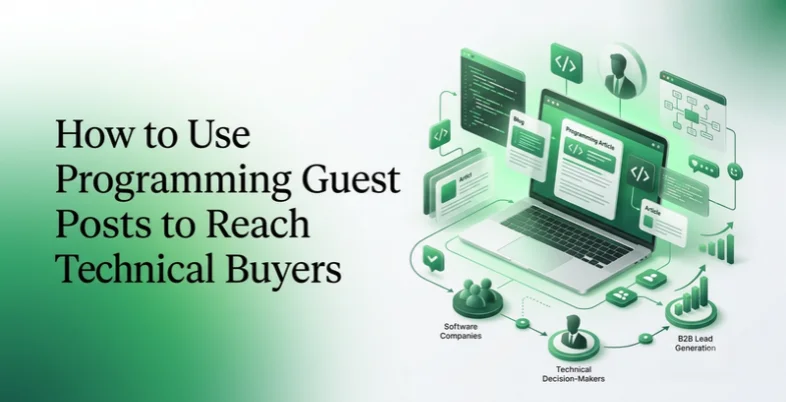
For a marketing team selling software or services to developers, reaching the right audience is harder than simply publishing more content. Technical readers tend to look for useful explanations, credible examples, and clear evidence that a product or company understands their work.
Guest posting on relevant programming websites can help a brand earn that attention, but only when the article offers value beyond a sales pitch. A focused plan can make guest contributions part of a wider content and demand-generation strategy.
Start With the Audience, Not the Backlink
A guest post is most useful when it reaches people who could genuinely benefit from your expertise. Before searching for publishers, define the readers you want to reach: frontend developers, engineering managers, security teams, startup founders, or another specific group. Their roles shape the topics they care about and the level of detail an article should include.
Then connect that audience to a marketing goal. A company introducing a developer tool may want to build awareness among practitioners. A consultancy might aim to demonstrate expertise in cloud migration or application security. A recruiting platform could publish practical advice for technical hiring teams. These goals call for different topics and success measures, even if they target similar publications.
Links can support discovery and referral traffic, but they should not be the only reason to contribute. A relevant article that answers a real question can build familiarity and trust, while a thin post created mainly to place an anchor may do little for readers or the brand.
Choose Publications for Topic Fit
Evaluate a website by more than its headline metrics. Check whether it regularly publishes programming and software development content, whether its articles appear relevant to your audience, and whether the editorial style suits your proposed subject. Look for signs of an active publication: recent posts, clear contributor guidelines, and articles with meaningful discussion or engagement.
A directory of programming guest posting sites can help marketers identify potential outlets across coding and software development. Treat a list as a research starting point, not an automatic approval. Review each candidate individually, confirm its current submission process, and decide whether your readers would benefit from seeing your work there.
Make a shortlist organized by audience and subject area. For instance, one group might cover software architecture, another developer productivity, and a third emerging technologies. This prevents outreach from becoming a generic campaign and helps you tailor each pitch to the publication’s readers.
Pitch a Useful, Specific Idea
Editors receive many broad proposals about trends, innovation, or the future of technology. A stronger pitch names a clear reader problem and explains what the article will help them do. “How to reduce API response times in a high-traffic service” is more actionable than “Why performance matters.” The narrower framing also makes it easier to show why your organization has relevant experience.
Before sending a pitch, review the site’s recent coverage and avoid proposing a topic it has already addressed in the same way. Suggest a distinct angle, outline the key points, and briefly explain your qualifications. If the article draws on product experience, keep the lesson transferable: explain the method, trade-offs, and limitations rather than turning the piece into a feature list.
Agree on practical details early, including word count, formatting, deadlines, attribution, edits, and any rules about links. Following the publisher’s requirements reduces avoidable revisions and signals that you respect its editorial process.
Protect Quality When You Scale Production
Marketing teams may use in-house subject-matter experts, specialist writers, or freelancers to produce guest articles. Whichever route you choose, provide a brief that includes the intended reader, the problem to address, the article’s purpose, and the evidence or examples available. Technical accuracy should be checked by someone qualified to assess the advice, not just someone reviewing grammar.
If you commission a freelancer, define the work before it begins. Spell out the deliverable quantity, format, and title, along with deadlines, research expectations, revision limits, and who supplies technical input. A clear freelance offer sets expectations around deliverables and helps both sides judge whether a project is a good fit. A marketplace such as Osdire includes programming and writing categories, which can be relevant when sourcing support, but the client still needs to assess expertise and review the finished work.
Build a review process that checks factual claims, code examples, readability, originality, and alignment with the publisher’s guidelines. Avoid asking a writer to invent product results or make claims the company cannot substantiate. If an article recommends a technique, make sure its context and limitations are clear so readers can apply it responsibly.
Measure What the Guest Post Contributes
Set expectations before publication and track outcomes that match the campaign’s purpose. Referral visits and engaged time can indicate whether the publication reaches interested readers. Newsletter sign-ups, demo requests, or other conversions may show whether the audience takes a next step. Brand mentions and conversations with potential customers can also provide useful qualitative feedback.
Use a consistent measurement window and compare results across publications and topics. A post may not generate immediate leads but could still introduce the company to an influential technical audience. Conversely, a high number of visits is not necessarily valuable if readers leave quickly or have no connection to the market you serve.
Guest posting works best as a repeatable editorial program, not a one-off link tactic. Choose relevant sites, pitch specific ideas, invest in accurate and helpful writing, and learn from each placement. That approach gives technical readers a reason to engage and gives marketers a clearer basis for deciding where to contribute next.