
Fish farming has become one of the fastest-growing agribusiness opportunities in India due to rising seafood demand, increasing protein consumption, and government support for aquaculture development. Modern fish farming is no longer limited to traditional ponds, as entrepreneurs are now using biofloc systems, AI-based water monitoring, and intensive aquaculture techniques to increase production and profitability, making aquaculture one of the emerging Import export business ideas in India.
With India ranking among the world’s largest fish producers, understanding How to Start a Fish Farming Business offers strong income potential for rural entrepreneurs, farmers, and agribusiness startups. Whether you plan to start small-scale pond farming or commercial aquaculture, the industry provides long-term growth opportunities with relatively high market demand and scalable business potential.
What is Fish Farming (Aquaculture)?
Fish farming, also known as aquaculture, is the process of breeding, raising, and harvesting fish in controlled environments such as ponds, tanks, cages, or artificial reservoirs. Instead of catching fish from natural water bodies, farmers grow fish under managed conditions to improve production, quality, and profitability.
It is one of the fastest-growing sectors within the aquaculture business in India and plays an important role in food supply and rural employment. In 2026, fish farming is becoming increasingly popular due to rising seafood demand, higher protein consumption, export opportunities, and government support for aquaculture development.
Modern technologies such as biofloc systems, automated feeding, water quality monitoring, and AI-based fish health tracking are also helping farmers increase productivity and reduce losses. As a result, fish farming is now seen as a profitable and scalable agribusiness business opportunity for both rural entrepreneurs and commercial investors.
Why It Is a High-Growth Industry in India
Fish farming is rapidly becoming a high-growth industry in India due to increasing seafood demand, government support, export opportunities, and modern aquaculture technologies improving productivity and profitability.
- Rising Demand for Protein-Rich Food: Growing health awareness and changing food habits are increasing demand for protein-rich seafood products across urban and rural markets in India.
- Strong Seafood Export Growth: India is one of the world’s largest seafood exporters. Rising international demand for shrimp, fish, and aquaculture products is creating strong revenue opportunities for fish farmers.
- Government Support Through PMMSY Scheme: The Pradhan Mantri Matsya Sampada Yojana (PMMSY) provides subsidies, financial assistance, infrastructure support, and training programs to promote fisheries and aquaculture businesses in India.
- Creates Rural Employment Opportunities: Fish farming generates employment in rural areas through pond management, hatcheries, feed production, transportation, processing, and fish distribution activities.
- Technology Adoption in Aquaculture: Modern technologies like biofloc systems, Recirculating Aquaculture Systems (RAS), automated feeding, and AI-based water monitoring are helping farmers improve fish production and reduce operational risks.
Fish Farming Business Profit in India (Profit Margin & Income Potential)
Fish farming can be a highly profitable businesses in India, but earnings largely depend on factors such as the farming system, fish species, water quality, feed management, production scale, and market demand.
Modern systems like biofloc and Recirculating Aquaculture Systems (RAS) often generate higher profits because they increase fish density and production efficiency. Popular fish varieties such as Rohu, Catla, Tilapia, Pangasius, and shrimp generally offer strong market demand and better income potential.
- Small-Scale Fish Farming Profit: Small-scale fish farming using ponds or tanks can generate around ₹20,000 to ₹80,000 monthly depending on production capacity, fish type, and local market pricing. Annual profits may range between ₹3 lakh to ₹10 lakh with proper management and healthy fish growth.
- Commercial Fish Farming Profit: Commercial fish farming businesses using large ponds, biofloc systems, or intensive aquaculture setups can earn ₹1 lakh to ₹10 lakh+ per month depending on scale and export opportunities. Large commercial farms may generate annual profits exceeding ₹25 lakh to ₹1 crore through bulk production and wholesale distribution.
- Factors Affecting Profitability: Profit margins increase when farmers maintain good water quality, efficient feeding practices, disease control, and direct market connections. Technology adoption and proper planning also help reduce operational losses and improve long-term profitability.
Income Per Acre Breakdown
Fish farming income per acre in India depends on the farming method, fish species, stocking density, feed quality, and overall management practices. Traditional pond farming usually requires lower investment but generates moderate profits, while modern systems like biofloc and RAS can produce significantly higher returns due to intensive fish production and better resource utilisation.
| Fish Farming System | Approx Investment per Acre | Estimated Annual Income | Profit Potential |
| Traditional Pond Farming | ₹2 lakh – ₹5 lakh | ₹4 lakh – ₹8 lakh | Moderate |
| Semi-Intensive Farming | ₹5 lakh – ₹10 lakh | ₹8 lakh – ₹15 lakh | High |
| Biofloc Fish Farming | ₹8 lakh – ₹15 lakh | ₹15 lakh – ₹30 lakh | Very High |
| RAS (Recirculating Aquaculture System) | ₹15 lakh – ₹40 lakh | ₹25 lakh – ₹60 lakh+ | Commercial Scale |
| Shrimp Farming | ₹10 lakh – ₹25 lakh | ₹20 lakh – ₹50 lakh+ | Export-Oriented High Profit |
Traditional farming systems are suitable for beginners with limited budgets, while commercial and technology-driven systems offer higher profits but require stronger management, technical knowledge, and investment. Proper water management, disease control, and market access play a major role in maximising fish farming income per acre.
ROI Timeline for Small & Commercial Farms
The ROI (Return on Investment) timeline in fish farming depends on the farming system, investment size, fish species, operational efficiency, and market conditions.
In India, most fish farming businesses generally recover their investment within 6 to 18 months if managed properly. Faster-growing fish varieties and intensive farming systems usually generate quicker returns compared to traditional methods.
- Biofloc Farming Has Faster ROI: Biofloc fish farming often delivers returns within 6–12 months because it allows higher fish density, faster growth, lower water usage, and multiple production cycles annually.
- Traditional Pond Farming Takes Longer: Pond-based fish farming usually requires 12–18 months for full investment recovery since fish growth cycles are slower and production capacity is comparatively lower.
- Commercial Farms Recover Faster at Scale: Large commercial farms with better infrastructure, direct market access, and advanced technology can achieve quicker ROI through higher production volumes and bulk sales.
- Risk Factors Affecting ROI: Disease outbreaks, poor water quality, rising feed costs, market price fluctuations, weather conditions, and weak farm management can delay profitability and reduce overall returns.
- Technology Improves Profitability: Modern systems like biofloc, RAS, automated feeding, and AI-based monitoring help farmers reduce losses, improve fish survival rates, and recover investments faster.
Cost vs Profit Comparison Table
Fish farming profitability varies based on the farming setup, investment capacity, technology used, and production scale. Traditional pond systems generally require lower investment, while biofloc and RAS systems demand higher setup costs but offer faster growth and stronger profit potential.
| Setup Type | Approx Setup Cost | Estimated Annual Profit | ROI Time |
| Traditional Pond Farming | ₹2 lakh – ₹5 lakh | ₹3 lakh – ₹8 lakh | 12–18 months |
| Semi-Intensive Fish Farming | ₹5 lakh – ₹10 lakh | ₹8 lakh – ₹15 lakh | 10–15 months |
| Biofloc Fish Farming | ₹8 lakh – ₹15 lakh | ₹15 lakh – ₹30 lakh | 6–12 months |
| RAS (Recirculating Aquaculture System) | ₹15 lakh – ₹40 lakh | ₹25 lakh – ₹60 lakh+ | 8–14 months |
| Shrimp Farming | ₹10 lakh – ₹25 lakh | ₹20 lakh – ₹50 lakh+ | 6–12 months |
Modern systems like biofloc and RAS often deliver higher profits and quicker ROI due to intensive production, better water management, and faster fish growth cycles.
Types of Fish Farming Systems in India
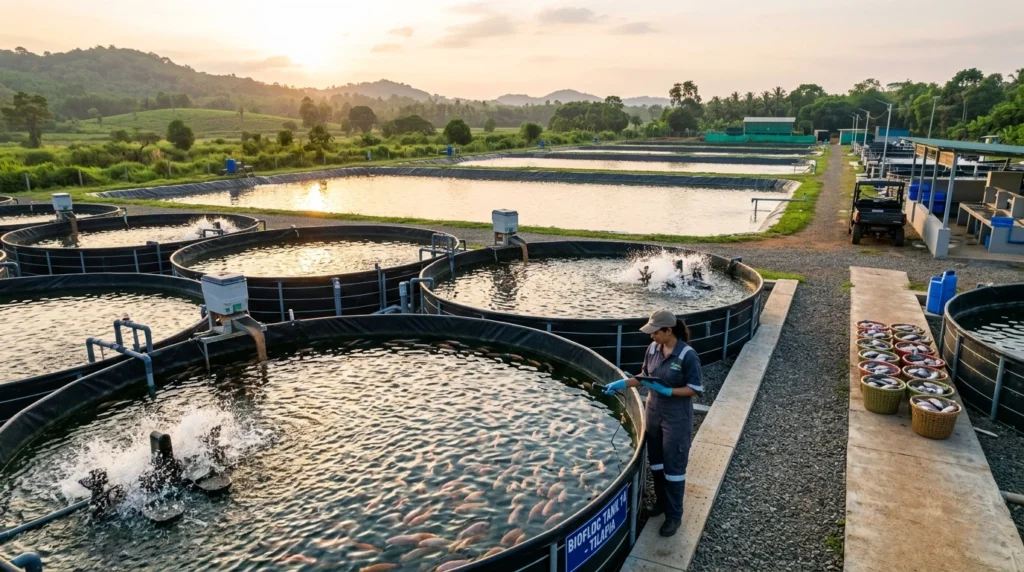
Fish farming in India is carried out through different systems depending on investment, land availability, water resources, and production goals. Traditional methods usually require lower investment but offer slower production, while modern systems use advanced technology to increase fish density, improve water quality, and generate higher profits.
Choosing the right fish farming system is important for long-term profitability, operational efficiency, and building a sustainable Unique Business model.
1. Pond Farming
Pond farming is the most traditional and widely used fish farming method in India. Fish are raised in natural or artificial ponds using freshwater sources. This system requires relatively low investment and is suitable for rural farmers with available land and water resources.
However, pond farming needs large space and regular pond management. Fish growth is generally slower compared to modern intensive systems, and production capacity is comparatively lower. Despite this, it remains popular due to its affordability and simple operational requirements.
2. Biofloc Technology
Biofloc fish farming is a modern high-density aquaculture system that uses beneficial bacteria to convert fish waste into natural feed. This process improves water quality while reducing feed costs and water replacement requirements.
Biofloc systems require less water and space compared to traditional farming and can generate higher profits through intensive fish production. In 2026, biofloc farming is becoming highly popular in India because of faster fish growth, lower water usage, and strong commercial profitability.
3. RAS (Recirculating Aquaculture System)
RAS is an advanced indoor fish farming system where water is continuously filtered and recycled through mechanical and biological filtration systems. It allows complete control over water quality, temperature, oxygen, and fish health.
Although RAS setup costs are expensive, the system offers very high production efficiency and better disease control. It is mainly used for commercial aquaculture businesses aiming for year-round fish production and large-scale profitability with modern technology-driven operations.
4. Cage Culture System
Cage culture is a fish farming method where fish are raised inside floating cages placed in rivers, lakes, reservoirs, or large water bodies. The cages allow natural water circulation while keeping fish contained within a controlled area.
This system is commonly used in regions with access to large freshwater bodies and is suitable for commercial fish production. Cage culture requires lower land investment and supports high-density fish farming, making it an efficient option for expanding aquaculture production in India.
Step-by-Step Guide on How to Start a Fish Farming Business
Starting a fish farming business in India can be highly profitable if planned correctly. Beginners should focus on choosing the right farming system, understanding local market demand, and managing water quality properly. Instead of investing heavily in the beginning, it is often better to start small, learn operations practically, and then scale gradually.
Market Research
Before starting fish farming, understand what type of fish sells well in your local market and nearby cities. Different regions have different demand patterns, pricing, and customer preferences.
Things to research before starting:
- Which fish species have high demand locally
- Current market prices and seasonal demand
- Nearby wholesalers, retailers, restaurants, and exporters
- Competition from existing fish farms
- Cost of feed, fingerlings, medicines, and transportation
Popular profitable fish in India include Rohu, Catla, Tilapia, Pangasius, Murrel, and shrimp. Beginners should avoid rare species initially and focus on fish with stable market demand and easier maintenance.
Site Selection
Selecting the right location is one of the most important steps because water quality and environmental conditions directly affect fish growth and survival.
Choose a site with:
- Continuous clean water supply
- Proper drainage system
- Good electricity availability
- Easy road transportation access
- Low pollution and flood risk
- Sufficient sunlight and stable temperature
For pond farming, land quality and water retention are important. For biofloc or RAS systems, electricity and water filtration infrastructure become more critical.Avoid areas with industrial pollution or poor water quality because fish diseases and mortality can increase significantly.
Species Selection
Fish species selection should depend on climate, investment capacity, water availability, farming method, and market demand.
Common options include:
- Rohu & Catla: Popular freshwater fish with steady demand
- Tilapia: Fast-growing and suitable for biofloc farming
- Pangasius: High commercial production and export demand
- Shrimp: Very profitable but requires technical management
- Murrel: Premium pricing in many Indian markets
Beginners usually prefer Tilapia or Rohu because they are easier to manage and grow relatively faster. Commercial farms may choose high-value species depending on export opportunities and local demand.
Infrastructure Setup
Infrastructure depends on the type of fish farming system you choose. Beginners can start with simple pond farming, while commercial businesses may invest in biofloc or RAS setups.
Basic infrastructure may include:
- Fish ponds or tanks
- Water pumps and aerators
- Filtration systems
- Fish nets and testing kits
- Feed storage area
- Backup electricity system
- Biosecurity and water treatment setup
Biofloc and RAS systems require higher investment but offer better production efficiency and faster ROI. Proper aeration and water management are extremely important because poor oxygen levels can quickly affect fish health.
Licensing & Subsidy
Fish farming businesses may require local registrations and approvals depending on scale and farming method. Government support schemes also help reduce initial investment burden.
You may need:
- Fisheries department registration
- Water usage permission
- Pollution control approvals (for large farms)
- Business registration and GST (commercial scale)
The Pradhan Mantri Matsya Sampada Yojana (PMMSY) provides subsidies, financial support, training, and infrastructure assistance for fish farming businesses in India.Beginners should contact local fisheries departments to understand subsidy eligibility and available training programs.
Farming Operations
Once the setup is ready, daily farm management becomes the key to profitability. Fish farming requires regular monitoring of water quality, feeding schedules, and fish health.
Daily operational tasks include:
- Feeding fish at proper intervals
- Monitoring oxygen and water quality
- Checking fish behavior and health regularly
- Cleaning tanks or maintaining pond hygiene
- Preventing disease outbreaks
- Maintaining proper stocking density
Overfeeding should be avoided because it increases water contamination and disease risk. Modern farms now use automated feeders, AI-based monitoring systems, and water sensors to improve efficiency and reduce losses.Harvesting usually begins after the fish reach market size, and profits depend heavily on survival rates, feed efficiency, and market timing.
Fish Species Best for Farming in India
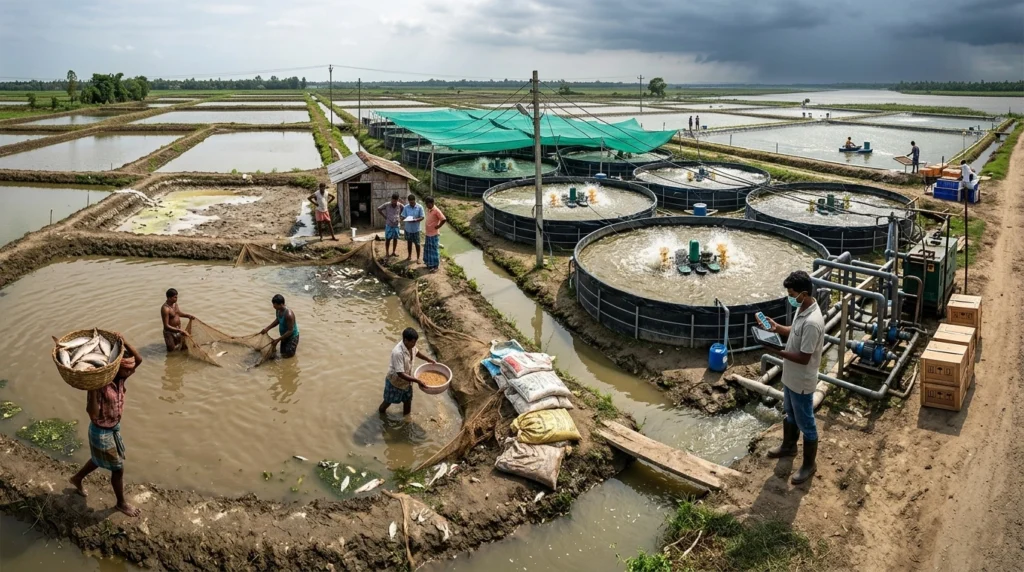
Choosing the right fish species is one of the most important decisions in fish farming because profitability depends heavily on market demand, growth speed, survival rate, and farming costs. In India, some fish varieties are preferred for traditional pond farming, while others are more suitable for intensive systems like biofloc and RAS. Fast-growing and high-demand species generally provide better returns and quicker ROI.
Carp Family
The carp family is one of the most commonly farmed fish categories in India because of strong local demand, easy availability, and lower farming risk. These fish are highly suitable for freshwater pond farming and are widely consumed across Indian markets.
Popular carp species include:
- Rohu
- Catla
- Mrigal
- Common Carp
- Grass Carp
Why Carp Farming Is Popular
- Lower investment compared to advanced aquaculture systems
- Strong demand in local and wholesale markets
- Good survival rate and easier management
- Suitable for beginners and traditional pond farming
Growth & Profit Potential
Carp fish generally take around 8–12 months to reach market size depending on feeding and water quality. While growth is slower compared to Tilapia or Pangasius, carp farming remains stable and profitable due to consistent demand.
Tilapia & Pangasius
Tilapia and Pangasius are among the fastest-growing and most profitable fish species for commercial farming in India. These species are widely used in biofloc and intensive aquaculture systems because they grow quickly and adapt well to high-density farming conditions.
Tilapia Farming
Tilapia is highly popular because of:
- Fast growth rate
- High survival rate
- Lower feed conversion cost
- Strong domestic and export demand
Tilapia can reach market size within 5–7 months under proper farming conditions, making it ideal for faster production cycles and quicker profits.
Pangasius Farming
Pangasius farming is growing rapidly due to:
- Large-scale commercial demand
- Faster weight gain
- Affordable production cost
- Good processing and export opportunities
Pangasius is commonly used for commercial fish farming because it grows efficiently in intensive farming systems and generates higher production volume.
Shrimp Farming
Shrimp farming is one of the highest-profit aquaculture businesses in India, especially for export markets. Shrimp has strong international demand and offers significantly higher income potential compared to many freshwater fish varieties.
Popular shrimp varieties include:
- Vannamei Shrimp
- Tiger Shrimp
Why Shrimp Farming Is Highly Profitable
- Strong export demand globally
- High market pricing
- Faster commercial returns
- Large-scale production opportunities
- Challenges in Shrimp Farming
- Although profits are high, shrimp farming also involves:
Higher investment requirements
- Disease management risks
- Strict water quality control
- Technical farming expertise
Commercial shrimp farms can generate very high annual profits, especially in coastal states with strong export infrastructure. However, beginners are usually advised to gain aquaculture experience before entering large-scale shrimp farming.
Cost of Starting Fish Farming Business in India
The cost of starting a fish farming business in India depends on factors such as farming method, land size, fish species, infrastructure, technology, and production scale. Traditional pond farming generally requires lower investment, while modern systems like biofloc and RAS involve higher setup costs but offer better production efficiency and profitability. Beginners can start with a small setup and gradually expand after gaining operational experience.
Small Scale Setup Cost
Small-scale fish farming is suitable for beginners, rural entrepreneurs, and farmers looking to start with limited investment. This setup usually includes small ponds, tanks, or basic biofloc systems.
Estimated Small-Scale Investment
| Expense Type | Approx Cost |
| Pond/Tank Setup | ₹50,000 – ₹2 Lakh |
| Fingerlings (Fish Seed) | ₹10,000 – ₹50,000 |
| Fish Seed | ₹20,000 – ₹1 Lakh |
| Aerators & Water Equipment | ₹15,000 – ₹80,000 |
| Water Testing & Medicines | ₹5,000 – ₹20,000 |
| Labor & Miscellaneous | ₹10,000 – ₹50,000 |
Total Estimated Cost
- Traditional pond farming: ₹1 lakh – ₹5 lakh
- Small biofloc setup: ₹3 lakh – ₹8 lakh
Small-scale farms usually generate moderate but stable profits and are easier to manage for first-time fish farmers.
Commercial Setup Cost
Commercial fish farming requires larger infrastructure, higher stocking density, advanced water management systems, and better operational planning. These setups are designed for large-scale production and higher profitability.
Estimated Commercial Investment
| Expense Type | Approx Cost |
| Large Pond/Biofloc/RAS Setup | ₹5 lakh – ₹30 lakh+ |
| Filtration & Aeration Systems | ₹2 lakh – ₹10 lakh |
| Fish Seed & Stocking | ₹1 lakh – ₹5 lakh |
| Automated Feeding Systems | ₹50,000 – ₹5 lakh |
| Electricity & Water Infrastructure | ₹1 lakh – ₹8 lakh |
| Labor & Operational Setup | ₹1 lakh – ₹5 lakh |
Total Estimated Cost
- Commercial pond farming: ₹5 lakh – ₹20 lakh
- Commercial biofloc farming: ₹10 lakh – ₹25 lakh
- RAS commercial farming: ₹15 lakh – ₹50 lakh+
Commercial farms usually have higher production capacity and stronger annual profit potential, especially for export-focused aquaculture businesses.
Monthly Operating Cost
After setup, fish farming businesses require regular operational expenses for smooth production and fish health management.
Common Monthly Expenses
- Fish feed costs
- Electricity and water usage
- Labor salaries
- Water treatment and medicines
- Transportation and logistics
- Maintenance and repairs
Estimated Monthly Operating Cost
| Farming Type | Monthly Cost |
| Small Pond Farming | ₹10,000 – ₹40,000 |
| Small Biofloc Farming | ₹20,000 – ₹80,000 |
| Commercial Fish Farming | ₹1 lakh – ₹10 lakh+ |
Feed expenses usually form the largest part of operational costs. Efficient feeding practices, disease control, and proper water management are important for maintaining profitability and reducing unnecessary losses.
Government Subsidies & Schemes
The Indian government is actively promoting fisheries and aquaculture through subsidies, financial assistance, infrastructure support, and low-interest loans. Fish farming has become a priority sector due to rising seafood demand, export growth, and rural employment generation. Various central and state-level schemes are helping new entrepreneurs reduce startup costs and expand commercial fish farming operations more easily.
PMMSY Scheme
The Pradhan Mantri Matsya Sampada Yojana (PMMSY) is one of India’s largest fisheries development schemes aimed at modernizing the aquaculture sector and increasing fish production.
Benefits Under PMMSY
- Subsidies for pond construction and biofloc systems
- Financial support for hatcheries and feed units
- Assistance for cold storage and fish transportation
- Support for fish processing infrastructure
- Training and skill development programs
Subsidy Percentage
- General category: Up to 40% subsidy
- SC/ST/Women beneficiaries: Up to 60% subsidy
The scheme supports both small-scale and commercial fish farming businesses, making aquaculture more affordable for new entrepreneurs.
NABARD Support
National Bank for Agriculture and Rural Development (NABARD) provides financial assistance and loan support for fisheries and aquaculture businesses across India.
NABARD Support Includes
- Low-interest aquaculture loans
- Credit support for pond construction
- Financial assistance for biofloc and RAS systems
- Infrastructure development loans
- Working capital support for fish farmers
NABARD also works with banks and fisheries departments to improve credit accessibility for rural entrepreneurs and commercial fish farming businesses.
State-Level Subsidies
Many Indian states provide additional fisheries subsidies and aquaculture incentives depending on local fish production goals and regional aquaculture development programs.
Common State-Level Benefits
- Pond renovation subsidies
- Free or subsidised fish seed distribution
- Electricity and water usage support
- Biofloc farming incentives
- Training and technical assistance programs
States such as Andhra Pradesh, West Bengal, Tamil Nadu, and Odisha offer strong fisheries support because of their large aquaculture industries.Fish farmers should contact local fisheries departments to check updated subsidy eligibility, required documents, and current application procedures.
Challenges in Fish Farming & Solutions
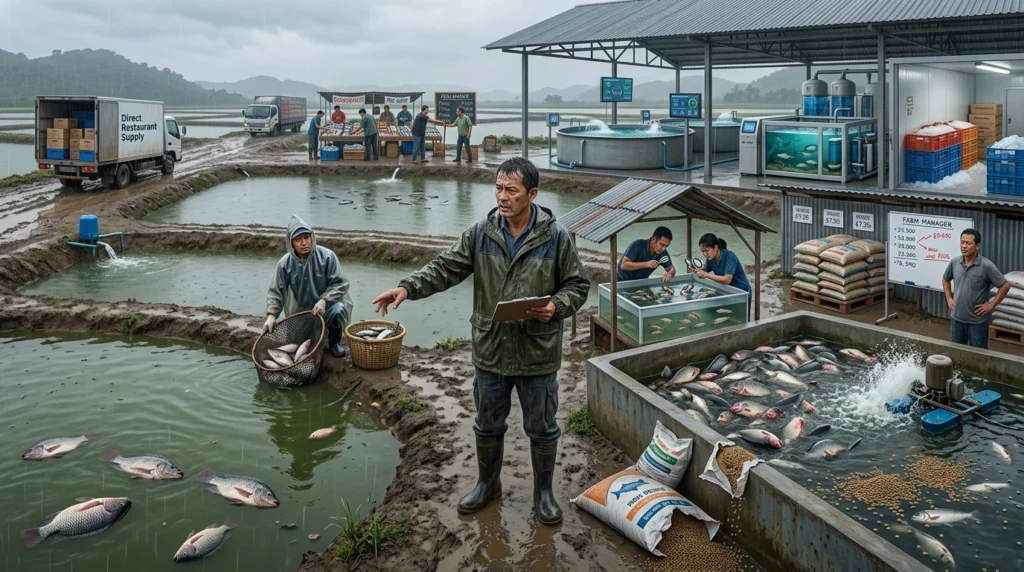
Fish farming can be highly profitable, but farmers also face several operational and financial challenges that affect production and income. Problems such as fish diseases, rising feed costs, and unstable market prices are common in both small-scale and commercial aquaculture businesses. However, with proper planning, technology adoption, and efficient farm management, these challenges can be controlled effectively.
Disease Management
Fish diseases are one of the biggest risks in aquaculture because infections can spread quickly and cause heavy financial losses if not controlled early.
Common Problems
- Poor water quality causing bacterial infections
- Overcrowding in ponds or tanks
- Low oxygen levels affecting fish health
- Sudden weather changes increasing disease outbreaks
- Use of low-quality fish seed or feed
Practical Solutions
- Regularly monitor water quality and oxygen levels
- Avoid overstocking fish beyond capacity
- Use high-quality fingerlings from trusted hatcheries
- Maintain proper pond and tank hygiene
- Quarantine infected fish immediately
- Use probiotics and disease prevention treatments when necessary
Modern systems like biofloc and RAS also help reduce disease risk through better water filtration and controlled farming environments.
Feed Cost Control
Fish feed is usually the largest operational expense in fish farming and can significantly affect profit margins if not managed properly.
Common Problems
- Rising commercial feed prices
- Feed wastage due to overfeeding
- Poor-quality feed reducing fish growth
- High feed conversion ratio increasing costs
Practical Solutions
- Use high-quality feed with proper nutrition balance
- Follow fixed feeding schedules to avoid wastage
- Monitor fish growth regularly to optimize feeding quantity
- Use biofloc systems where bacteria convert waste into natural protein feed
- Buy feed in bulk to reduce overall costs
Efficient feeding management helps improve fish growth while lowering unnecessary operational expenses.
Market Price Fluctuation
Fish prices can fluctuate due to seasonal demand, oversupply, transportation costs, and local market competition. This directly affects farmer profitability.
Common Problems
- Sudden drop in wholesale fish prices
- Dependence on middlemen
- Seasonal demand fluctuations
- High transportation and storage costs
Practical Solutions
- Diversify fish species to reduce dependency on one market
- Build direct connections with restaurants, retailers, and local markets
- Use cold storage facilities to avoid distress selling
- Monitor market demand trends before harvesting
- Explore export and online seafood selling opportunities
Farmers who combine efficient production with strong market planning usually achieve more stable profits and better long-term business growth.
Marketing & Selling Fish in India
Fish farming becomes truly profitable when farmers focus not only on production but also on smart marketing and efficient selling strategies. In India, fish can be sold through local markets, restaurants, wholesalers, online platforms, supermarkets, and export channels. Farmers who build direct sales networks and understand market demand usually earn better profit margins than those relying only on middlemen.
Local Market Strategy
Local markets remain the most common and reliable sales channel for fish farmers in India, especially for freshwater fish varieties like Rohu, Catla, Tilapia, and Pangasius.
Best Local Selling Channels
- Wholesale fish markets
- Retail fish shops
- Restaurants and hotels
- Supermarkets and local grocery stores
- Direct farm-to-customer sales
How to Increase Local Sales
- Build relationships with regular buyers and traders
- Maintain consistent fish quality and freshness
- Sell during high-demand seasons and festivals
- Use proper cold storage and transportation
- Offer competitive pricing with reliable supply
Farmers who directly supply fish to restaurants and retailers often earn higher profits compared to selling through multiple intermediaries.
Online Fish Selling Models
Online seafood selling is growing rapidly in India because consumers increasingly prefer fresh home delivery and hygienically packed seafood products.
Popular Online Selling Models
- Own ecommerce website
- Mobile app-based fish delivery
- Selling through marketplaces and grocery apps
- Subscription-based seafood delivery services
- Social media and WhatsApp-based local selling
Advantages of Online Selling
- Better profit margins through direct customers
- Wider customer reach in urban areas
- Branding opportunities for premium seafood
- Recurring revenue through subscriptions
Many startups are now combining fish farming with online seafood delivery businesses to create vertically integrated aquaculture brands.
Export Opportunities
India is one of the world’s largest seafood exporters, creating major opportunities for commercial fish and shrimp farmers.
High Export Demand Products
- Shrimp
- Pangasius
- Tilapia
- Tuna and marine fish products
Benefits of Export Markets
- Higher pricing and foreign currency earnings
- Large-scale commercial demand
- Long-term business contracts
- Strong global seafood consumption growth
Requirements for Export Business
- Quality certification and hygiene standards
- Cold chain and processing infrastructure
- Export licenses and compliance approvals
- Proper packaging and transportation systems
States like Andhra Pradesh, Gujarat, Kerala, and Tamil Nadu are major seafood export hubs because of strong aquaculture production and port connectivity.
Future of Fish Farming in India
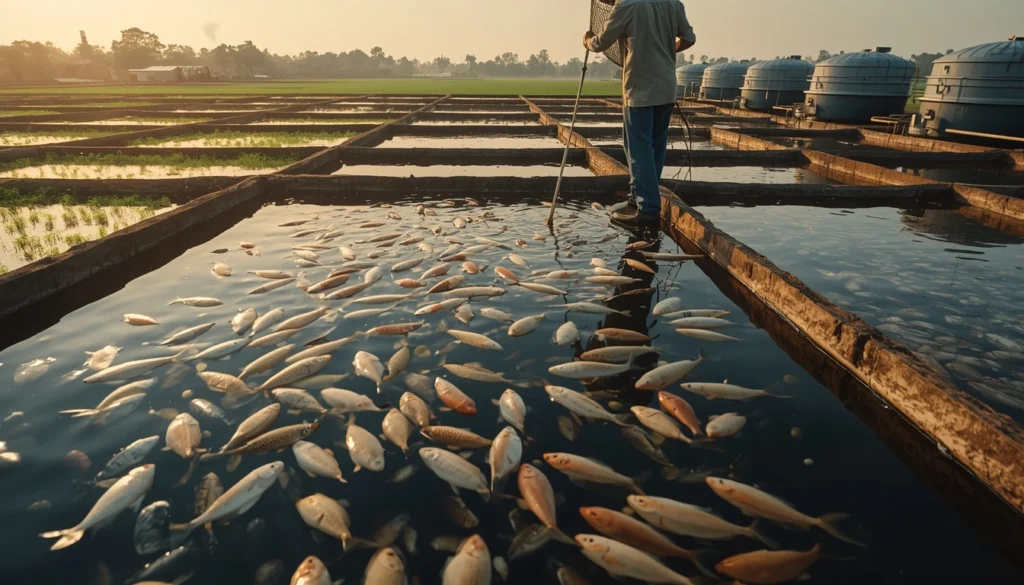
Fish farming in India is expected to grow rapidly between 2026 and 2030 due to rising seafood demand, export expansion, government support, and technological innovation in aquaculture. The industry is gradually shifting from traditional farming methods to technology-driven commercial aquaculture systems focused on higher productivity, sustainability, and profitability. Modern fish farming is becoming more data-driven, automated, and scalable, creating strong opportunities for entrepreneurs and agribusiness investors.
Smart Aquaculture
Smart aquaculture is transforming fish farming by using advanced technologies to improve fish health, water quality, and operational efficiency. Farmers are increasingly adopting modern systems to reduce losses and increase production.
Key Smart Aquaculture Trends
- IoT-based water quality monitoring
- Automated oxygen and temperature control
- Smart feeding systems
- Real-time farm monitoring through mobile apps
- Data-driven fish growth analysis
These technologies help farmers reduce wastage, improve survival rates, and manage farms more efficiently with lower manual effort.
AI & Automation in Farming
Artificial Intelligence and automation are expected to play a major role in the future of Indian aquaculture. AI tools can analyze fish behavior, detect diseases early, and optimize feeding schedules automatically.
How AI Is Changing Fish Farming
- AI-based disease prediction systems
- Automated feeding machines
- Predictive analytics for fish growth
- Smart water filtration and oxygen management
- Drone and sensor-based farm monitoring
Automation reduces labor dependency and improves operational accuracy, making commercial fish farming more scalable and profitable in the long term.
Export Growth
India is expected to strengthen its position as one of the world’s leading seafood exporters between 2026 and 2030. Global demand for shrimp, Tilapia, Pangasius, and processed seafood products continues to rise steadily.
Factors Driving Export Growth
- Increasing global seafood consumption
- Expansion of commercial shrimp farming
- Better cold chain infrastructure
- Government support for aquaculture exports
- Improved processing and packaging facilities
States such as Andhra Pradesh, Gujarat, Tamil Nadu, and Kerala are likely to remain major aquaculture and seafood export hubs in India.With increasing technology adoption and rising global demand, fish farming is expected to become one of India’s most important agribusiness sectors over the next decade.
Conclusion
Fish farming is becoming a highly profitable and sustainable agribusiness opportunity due to rising seafood demand, modern aquaculture technology, and increasing government support. If you are planning to learn How to Start a Fish Farming Business, it is important to understand proper planning, water management, fish selection, and market research, as these factors help entrepreneurs build a scalable business with strong long-term income potential.
Modern methods such as biofloc systems, automated feeding, and AI-based water monitoring are helping farmers improve productivity while reducing operational risks. Whether started on a small or commercial scale, fish farming offers opportunities for rural development, employment generation, and steady profits. By focusing on quality production and efficient management, fish farming can become a successful and future-ready business venture.