

What makes Ecommerce Data Analytics Software essential for online businesses ? As global ecommerce continues to grow rapidly, data-driven decision-making has become the backbone of success. From tracking customer behavior and sales performance to optimising marketing campaigns and inventory, modern analytics platforms help businesses turn raw data into actionable insights.
Today’s ecommerce data software goes beyond basic reporting, offering real-time dashboards, AI-driven recommendations, and seamless integrations with platforms like Shopify and WooCommerce. Whether you run a small online store or a large-scale marketplace, choosing the right analytics tool can significantly improve conversions, customer retention, and overall profitability.
What Is ECommerce Analytics Software?
eCommerce analytics software refers to tools that collect, track, and analyze data from online stores. These tools help businesses understand customer behavior, sales performance, website traffic, and marketing effectiveness, turning raw data into meaningful insights for decision-making.
Why It’s Used
Online businesses generate large amounts of data daily, making it difficult to manage without proper tools. eCommerce analytics software is used to:
- Monitor sales trends and revenue growth
- Track customer journeys and buying behavior
- Measure marketing campaign performance
- Identify high-performing products and categories
Platforms like Google Analytics are widely used to gain detailed insights into website performance.
How It Helps Online Stores
eCommerce analytics tools play a crucial role in improving business performance and growth.
- Better decision-making: Helps store owners make data-driven strategies
- Improved customer experience: Understands user behavior and enhances support using ecommerce customer support tools to optimise website design
- Increased conversions: Identifies drop-off points and improves sales funnel
- Inventory management: Tracks product demand and reduces overstock or stockouts
When integrated with platforms like Shopify, these tools provide real-time insights that directly impact sales and profitability.
eCommerce analytics software is essential for turning data into growth opportunities, helping online businesses stay competitive and scalable.
Who Should Use eCommerce Analytics Software?
eCommerce analytics is useful for anyone running or managing an online business. Whether you are just starting or scaling operations, these tools help you make smarter decisions using real data. They simplify complex insights into actionable strategies for growth.
- Online Store Owners: Entrepreneurs using platforms like Shopify or WooCommerce can track sales, customer behavior, and product performance to improve overall business strategy.
- Digital Marketers: Marketing professionals use analytics tools to measure campaign performance, optimise ads, and improve return on investment (ROI) through data-driven targeting.
- Ecommerce Managers & Teams: Teams handling operations, inventory, and customer experience can monitor trends, identify issues, and streamline processes for better efficiency.
- Startups & Small Businesses: New businesses can use analytics to understand their audience, reduce guesswork, and make informed decisions without large budgets.
- Large Enterprises & Marketplaces: Bigger businesses rely on advanced analytics to manage large volumes of data, optimise performance, and scale operations effectively.
If you are involved in selling products or services online, eCommerce analytics software is a must-have tool to track performance, improve decisions, and drive growth .
Why E-commerce Analytics is Critical
Ecommerce analytics tools have become essential for businesses aiming to stay competitive in an increasingly data-driven market. With rising customer expectations, intense competition, and rapid digital transformation, relying on guesswork is no longer effective. These tools help businesses track customer behavior, monitor sales trends, and understand what truly drives conversions.
From identifying high-performing products to optimising marketing campaigns, analytics enables smarter, faster decision-making. Modern platforms also offer real-time insights and AI-driven recommendations, allowing businesses to personalise user experiences and improve retention. Additionally, ecommerce analytics tools support better inventory management software by predicting demand and reducing losses.
As online shopping continues to expand globally, businesses that actively use data are more likely to scale efficiently and increase profitability. In short, leveraging analytics is no longer optional-it is a critical strategy for sustainable growth in today’s evolving ecommerce landscape.
Comparison Table of Top eCommerce Data Analytics Software
| Tools | Pricing | Free Plan | AI Features | Best For |
| Saras Pulse | Custom Pricing (enterprise-focused) | No | AI-driven dashboards, predictive insights, automated reporting | Mid to large ecommerce brands needing unified data analytics |
| Google Analytics 4 | Free; enterprise (GA4 360) ~ $150,000/year | Yes (unlimited usage) | Automated insights, anomaly detection, predictive metrics | All ecommerce businesses, especially startups and SMEs |
| Glew.io | Starts ~$79/month (varies by usage) | No | Automated insights, forecasting, data aggregation | Multi-channel ecommerce businesses |
| Adobe Analytics | Custom (enterprise-level, often high-cost) | No | Advanced AI (Adobe Sensei), predictive analytics, customer journey intelligence | Large enterprises with complex data needs |
| Matomo | Free (self-hosted), paid cloud plans available | Yes (open-source version) | Limited AI; focuses more on privacy and data ownership | Privacy-focused ecommerce businesses |
| Woopra | Starts ~$999/month | No (free trial available) | Journey automation, behavior-based triggers | Enterprise ecommerce and SaaS companies |
| Mixpanel | Free plan + paid plans starting ~$20/month | Yes (limited events) | AI-powered insights, predictive funnels, retention analysis | Product-focused ecommerce and apps |
| Supermetrics | Starts ~39/month | No (free trial available) | Automated data pipelines, smart reporting | Marketing teams managing multi-channel ecommerce data |
| Optimizely | Custom Pricing | No | AI experimentation, personalization, A/B testing optimization | Conversion optimization and enterprise ecommerce |
| Triple Whale | Free plan + paid plans from ~$179/month | Yes (basic features available) | AI assistant (Moby), predictive analytics, attribution modeling | Shopify and DTC ecommerce brands |
List Top 10 Ecommerce Data Analytics Software
1. Saras Pulse

Website: https://www.sarasanalytics.com
Saras Pulse is a modern ecommerce analytics platform designed to unify data from multiple sales channels into one dashboard. It helps businesses track revenue, customer behavior, and marketing performance in real time.
With strong data visualisation and automated reporting, it simplifies complex analytics for better decision-making. Saras Pulse is especially useful for brands operating across marketplaces and DTC platforms.
Its ability to centralise data reduces manual work and improves accuracy. Overall, it is a powerful solution for scaling ecommerce businesses through data-driven insights.
Key Features:
- Unified dashboard for multi-channel ecommerce data
- Customer 360 view with cohort analysis
- CLTV and retention tracking
- Revenue and profitability insights
- Automated reporting and forecasting
- Data integration from ads, CRM, and marketplaces
- Real-time business performance tracking
Pros:
- Ecommerce-specific insights
- Strong data centralization
- Predictive analytics support
- Reduces manual reporting work
Cons:
- No free plan
- Requires initial setup
- Best suited for growing brands
Pricing:
Monthly
- Growth– $300/Month
- Enterprise– Custom Pricing
Yearly
- Growth– $250/Month
- Enterprise– Custom Pricing
2. Google Analytics 4

Website: https://analytics.google.com
Google Analytics (GA4) is one of the most widely used eCommerce data analytics software tools globally. It tracks website traffic, user behavior, and conversions with advanced event-based data models.
GA4 offers predictive insights, cross-platform tracking, and real-time reporting. It integrates seamlessly with platforms like Shopify, making it ideal for online stores.
Its free version makes it accessible to businesses of all sizes. GA4 is essential for understanding customer journeys and improving marketing performance effectively.
Key Features:
- Event-based tracking system
- Cross-platform tracking (web + app)
- Real-time analytics dashboard
- Predictive metrics and AI insights
- Funnel and conversion tracking
- Google Ads integration
- Custom event tracking APIs
Pros:
- Free to use
- Widely trusted and scalable
- Strong behavioral insights
- Seamless Google ecosystem integration
Cons:
- Complex interface
- Limited ecommerce-specific metrics
- Requires technical setup
Pricing:
- Standard GA4– Free
- GA4 360– around $50,000 per year
3. Glew.io
Website: https://www.glew.io
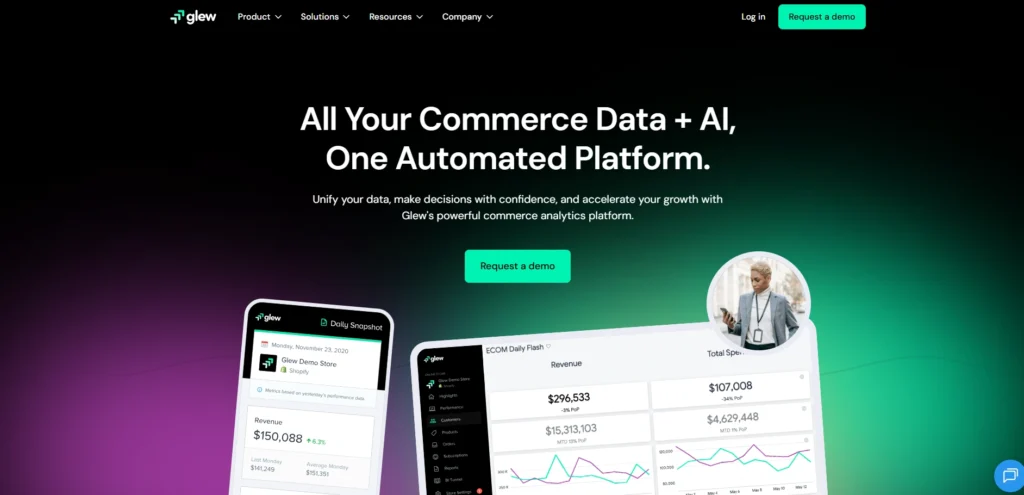
Glew.io is a comprehensive ecommerce analytics tool that consolidates data from multiple platforms, including marketplaces and marketing channels. It provides insights into product performance, customer lifetime value, and revenue trends.
Glew.io offers automated reports and customisable dashboards, helping businesses make informed decisions quickly. Its multi-channel tracking capability makes it suitable for growing ecommerce brands.
By simplifying complex data analysis, it helps businesses optimise operations, improve customer retention, and increase profitability through actionable insights.
Key Features:
- Multi-channel data integration
- Product and inventory analytics
- Customer lifetime value tracking
- Automated reporting dashboards
- Revenue and marketing insights
- Daily data refresh
- 100+ integrations
Pros:
- Strong ecommerce reporting
- Easy multi-platform integration
- Prebuilt dashboards
- Good for scaling businesses
Cons:
- Paid-only platform
- Limited advanced AI features
- Can be overwhelming for beginners
Pricing:
- Glew Pro– Custom Pricing
- Glew Plus– Custom Pricing
4. Adobe Analytics

Website: https://business.adobe.com/
Adobe Analytics is a powerful enterprise-level eCommerce data analytics software designed for advanced data analysis and customer insights. It uses AI-driven features through Adobe Sensei to provide predictive analytics and deep segmentation.
The platform enables businesses to track customer journeys across multiple touchpoints and personalise experiences. It is ideal for large enterprises with complex data needs.
Adobe Analytics helps improve marketing ROI, optimise conversions, and deliver highly personalised customer experiences, making it a premium solution for data-driven organisations.
Key Features:
- Customer journey analytics
- AI-powered insights (Adobe Sensei)
- Real-time reporting
- Advanced segmentation
- Multi-channel data tracking
- Custom dashboards
- Enterprise integrations
Pros:
- Extremely powerful and scalable
- Deep customization options
- Strong attribution modeling
- Ideal for large enterprises
Cons:
- Very expensive
- Complex implementation
- Requires skilled team
Pricing:
- Get customized pricing
5. Matomo

Website: https://matomo.org
Matomo is a privacy-focused ecommerce analytics tool that allows businesses to maintain full control over their data. It offers features similar to Google Analytics, including traffic tracking, user behavior analysis, and conversion monitoring.
Matomo can be self-hosted, ensuring compliance with data protection regulations. It is ideal for businesses that prioritise data privacy and transparency.
With customisable dashboards and detailed reports, Matomo provides reliable insights while ensuring complete ownership and security of sensitive business data.
Key Features:
- Privacy-first analytics
- Self-hosted and cloud options
- Heatmaps and session recordings
- Funnel and conversion tracking
- GDPR compliance tools
- No data sampling
- Custom reporting dashboards
Pros:
- Full data ownership
- Strong privacy compliance
- Free open-source version
- Accurate unsampled data
Cons:
- Requires technical setup
- Limited ecommerce-specific features
- UI not very modern
Pricing:
Cloud
- Business– $26 Per month
- Enterprise– Get Custom Quote
On-Premise
- On-Premise- 0 USD
6. Woopra

Website: https://www.woopra.com
Woopra focuses on customer journey analytics, helping ecommerce businesses track user interactions across multiple touchpoints. It provides detailed insights into customer behavior, retention, and engagement, making it a reliable eCommerce data analytics software for growing online stores.
Woopra offers real-time analytics and automation tools that allow businesses to trigger actions based on user behavior. Its ability to map complete customer journeys makes it valuable for improving customer experience.
It is best suited for enterprises and SaaS-driven ecommerce platforms aiming to enhance retention and long-term customer value.
Key Features:
- Customer journey tracking
- Real-time segmentation
- Behavior-based automation
- Funnel and retention analysis
- CRM and SaaS integrations
- User profile tracking
- Event-based analytics
Pros:
- Deep customer insights
- Strong retention tracking
- Real-time analytics
- Good for lifecycle analysis
Cons:
- Expensive
- Limited ecommerce KPIs
- Requires setup effort
Pricing:
- Pro– $999/mo
- Enterprise– Contact Sales
7. Mixpanel

Website: https://mixpanel.com
Mixpanel is an event-based analytics platform that helps ecommerce businesses understand user behavior in detail. It focuses on tracking actions such as clicks, purchases, and engagement across the customer journey.
Mixpanel offers powerful features like funnel analysis, cohort tracking, and retention insights. It also provides AI-driven recommendations for improving user experience.
Suitable for startups and growing businesses, Mixpanel enables data-driven decision-making, helping optimise conversion rates and enhance overall product and customer experience.
Key Features:
- Event-based tracking
- Funnel and cohort analysis
- Retention and engagement reports
- Real-time user segmentation
- Session replay
- Data warehouse integration
- Behavioral analytics
Pros:
- Strong behavioral insights
- Easy-to-use dashboards
- Scalable for growing businesses
- Powerful segmentation
Cons:
- Pricing increases with usage
- Not ecommerce-specific
- Learning curve for beginners
Pricing:
- Free- Free Forever
- Growth– Starts at $0
- Enterprise– Contact Us
8. Supermetrics

Website: https://supermetrics.com
Supermetrics is a data integration and reporting tool that connects ecommerce platforms with marketing channels and analytics dashboards. It helps businesses pull data from multiple sources into tools like Google Sheets or BI platforms for analysis, making it a useful eCommerce data analytics software for streamlined reporting.
Supermetrics simplifies reporting and eliminates manual data collection. It is widely used by marketing teams to track campaign performance and ROI.
By automating data workflows, it allows businesses to focus on insights rather than data gathering, improving efficiency and decision-making.
Key Features:
- 100+ data connectors
- Automated data pipelines
- integration with BI tools
- Scheduled data refresh
- Marketing analytics aggregation
- Multi-source data extraction
- Cloud data warehouse support
Pros:
- Saves time on data collection
- Excellent for marketing analytics
- Easy integration with tools
- Flexible data workflows
Cons:
- Not a standalone analytics tool
- Requires BI tools
- Limited visualization features
Pricing:
- Starter– $37 per month
- Growth- $177 per month
- Enterprise– Contact Sales
9. Optimizely
Website: https://www.optimizely.com
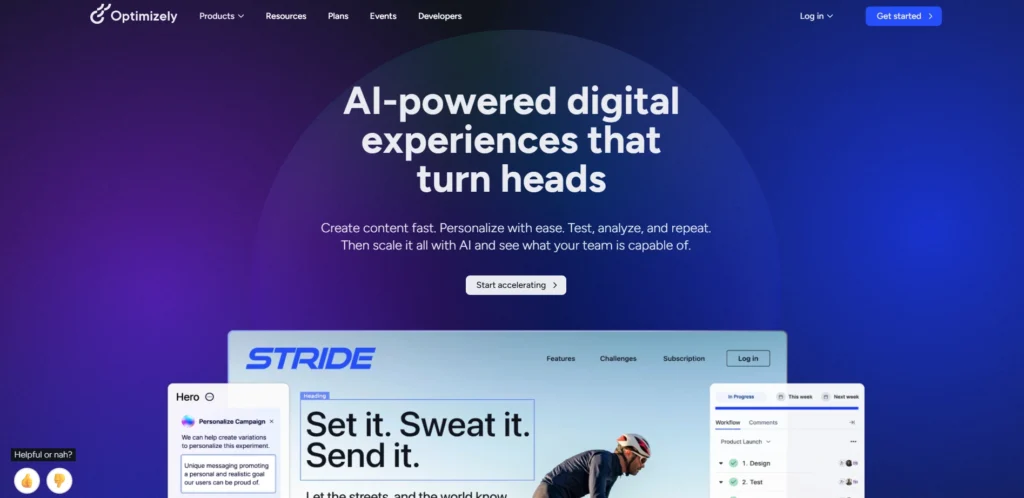
Optimizely is known for its experimentation and optimisation capabilities in ecommerce. It allows businesses to run A/B tests and personalise user experiences to improve conversions.
With AI-powered insights, Optimizely helps identify what works best for different customer segments. It is particularly useful for optimiaing website design, content, and marketing strategies.
Ideal for enterprise-level businesses, it enables continuous improvement through data-driven experimentation, ultimately enhancing customer engagement and revenue growth.
Key Features:
- A/B testing and experimentation
- Personalisation engine
- AI-driven optimization
- Customer segmentation
- Web and app testing
- Feature experimentation
- Digital experience management
Pros:
- Strong conversion optimization
- Advanced experimentation tools
- Improves user experience
- Enterprise-grade solution
Cons:
- Expensive
- Not purely analytics-focused
- Requires expertise
Pricing:
- Optimizely Opal (AI)– Request Pricing
- Experimentation– Request Pricing
- Content Management– Request Pricing
10. Triple Whale
Website: https://www.triplewhale.com
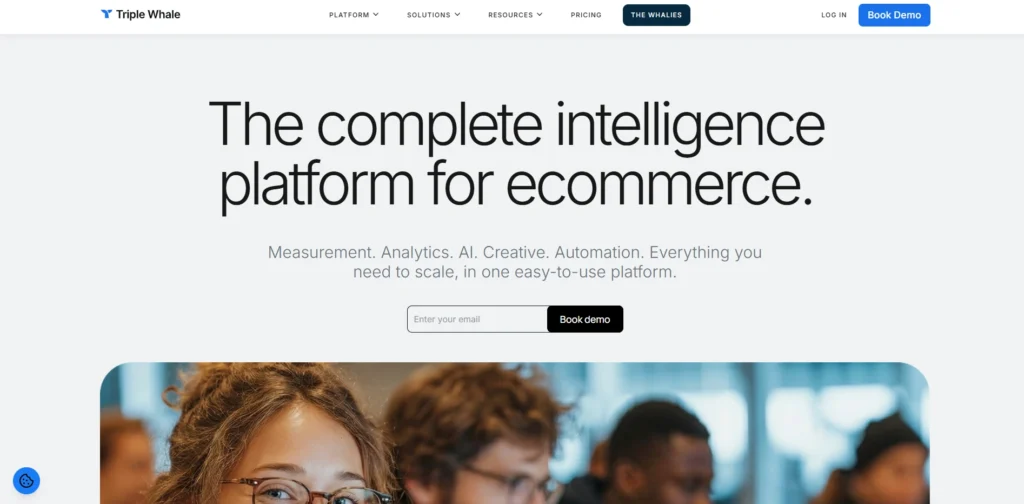
Triple Whale is a popular ecommerce analytics tool designed specifically for DTC brands. It provides real-time dashboards, attribution tracking, and performance insights across marketing channels, making it a powerful eCommerce data analytics software for scaling online stores.
Its AI assistant helps businesses understand key metrics and make quick decisions. Triple Whale integrates well with platforms like Shopify, making it ideal for Shopify store owners.
It simplifies complex data into actionable insights, helping businesses scale efficiently and improve profitability.
Key Features:
- Real-time ecommerce dashboards
- AI assistant (Moby) insights
- Attribution tracking
- Marketing performance analytics
- Shopify integration
- Cohort and product analytics
- Multi-channel reporting
Pros:
- Built for ecommerce brands
- Strong attribution tracking
- Easy to use
- Real-time insights
Cons:
- Focused mainly on Shopify
- Limited for non-ecommerce use
- Advanced features cost extra
Pricing:
- Free- $0
- Starter- $149/month
- Advanced- $219/month
How to Choose The Right Tool
Choosing the right ecommerce analytics tool can feel overwhelming, especially with so many options available. The key is to focus on your business needs, budget, and level of expertise rather than just features. A well-matched tool will not only simplify your data but also help you make better decisions and grow faster.
- Define Your Business Goals: Start by identifying what you want to achieve-tracking sales, improving conversions, understanding customer behavior, or optimising marketing campaigns. Your goals will determine the type of tool you need.
- Budget & Pricing Structure: Some tools are free like Google Analytics, while others require monthly or enterprise-level investment. Choose a tool that fits your financial capacity without overpaying for unnecessary features.
- Ease of Use: Look for tools with user-friendly dashboards and simple navigation. Complex tools may offer more features but can slow down your workflow if you lack technical expertise.
- Integration Capabilities: Ensure the tool integrates smoothly with your ecommerce platform like Shopify or other marketing tools, so all your data is connected in one place.
- Type of Analytics Needed: Decide whether you need basic reporting, advanced customer insights, or AI-driven predictions. This helps narrow down the right category of tools.
- Scalability: Choose a tool that can grow with your business. As your store expands, your analytics needs will become more complex.
- Customer Support & Training: Good support and learning resources can make a big difference, especially if you are new to analytics tools.
The best ecommerce analytics tool is not the most expensive or feature-rich-it’s the one that aligns with your business goals, skill level, and growth plans.
Latest Trends In Ecommerce Analytics (2026)
ECommerce analytics is evolving rapidly due to stricter privacy laws, AI adoption, and changes in customer data collection methods. Businesses are moving from traditional tracking systems to smarter, privacy-safe, and AI-powered analytics models. These trends are helping brands make more accurate decisions while respecting user privacy and improving customer experience.
- AI Automation in Analytics: Artificial intelligence is now deeply integrated into ecommerce analytics tools. AI helps in predicting customer behavior, automating reports, and identifying sales trends without manual effort. It also provides real-time recommendations for pricing, inventory, and marketing optimization. Many platforms now use AI to detect anomalies and improve decision-making speed, making analytics more intelligent and efficient.
- Cookieless Tracking: The shift toward cookieless tracking is one of the biggest changes in 2026. Third-party cookies are being phased out across major browsers, forcing businesses to adopt alternative tracking methods. Instead of cookies, companies now rely on server-side tracking and contextual signals to understand user behavior. This ensures better compliance with privacy laws and improves data accuracy in a restricted tracking environment.
- First-Party Data Dominance: First-party data has become the most valuable asset for ecommerce businesses. Brands now collect data directly from their own websites, apps, and customer interactions instead of relying on external sources. This data is more accurate, privacy-compliant, and reliable for personalisation. Businesses use it for targeted marketing, customer retention, and improving overall shopping experiences.
- Privacy-First Analytics Approach: Companies are now focusing heavily on data privacy compliance such as GDPR and global regulations. Analytics tools are designed to minimise data leakage and ensure transparent consent-based tracking. This shift is building more trust between customers and brands while maintaining effective data insights for decision-making.
- Real-Time and Predictive Analytics: Modern ecommerce platforms now provide real-time dashboards that update instantly with customer activity. Predictive analytics is also growing, helping businesses forecast demand, optimise inventory, and anticipate customer needs before they happen.
Common Mistakes to Avoid
Many businesses make avoidable mistakes while using eCommerce analytics tools, which can lead to poor decision-making and lost opportunities. Understanding these errors early helps improve accuracy, performance, and overall business growth.
- Ignoring data consistency across platforms leads to inaccurate insights and wrong business decisions affecting overall performance and marketing strategy effectiveness.
- Relying only on vanity metrics like traffic without analysing conversions, customer behavior, and actual revenue performance reduces meaningful insights.
- Not setting clear goals before using analytics tools results in confusion, scattered data tracking, and ineffective business strategy implementation.
- Failing to integrate analytics tools with ecommerce platforms like Shopify or WooCommerce causes incomplete reporting and missed critical insights.
- Overcomplicating dashboards with too many metrics makes analysis difficult, slows decision-making, and reduces clarity in understanding business performance trends.
- Ignoring regular monitoring and updates leads to outdated insights, preventing businesses from adapting quickly to market changes and customer behavior.
Conclusion
In conclusion, choosing the right ecommerce analytics tools is essential for driving data-driven growth in today’s competitive digital market. With rising online competition , businesses rely heavily on advanced ecommerce data software to understand customer behavior, improve marketing performance, and optimize conversions.
Tools like Google Analytics 4, Mixpanel, and Triple Whale help brands turn raw data into actionable insights. Whether you are a startup or an enterprise, the right analytics platform ensures better decision-making, higher ROI, and scalable growth. Ultimately, investing in powerful ecommerce analytics tools is no longer optional-it is a necessity for long-term success in ecommerce.
FAQs
1. What Are eCommerce Analytics Tools?
eCommerce analytics tools are software solutions that track, measure, and analyse online store data such as sales, customer behavior, traffic, and marketing performance to improve business decisions.
2. Why Are Ecommerce Data Software Important?
They are important because they help businesses make data-driven decisions, improve conversions, optimize marketing campaigns, and understand customer behavior in a highly competitive digital market.
3. Which Is The Best Free Ecommerce Analytics Tool?
Google Analytics is one of the best free tools, offering powerful tracking, reporting, and AI-driven insights for businesses of all sizes.
4. Which Ecommerce Analytics Tool Is Best For Shopify Stores?
Tools like Triple Whale, Mixpanel, and Saras Pulse are widely used for Shopify stores due to their strong integration and ecommerce-focused insights.
5. Can Small Businesses Use Ecommerce Analytics Tools Effectively?
Yes, small businesses can use tools like GA4, Mixpanel, and Matomo to track performance, understand customers, and grow sales even with limited budgets.