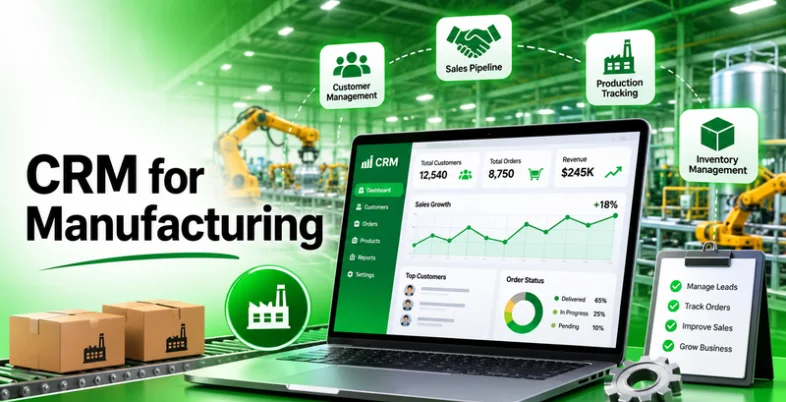
A manufacturing CRM is customer relationship management software built around how manufacturers sell and serve: long B2B sales cycles, complex quotes, dealer and distributor networks, ERP integration, and after-sales service that can last for years. A generic sales CRM tracks contacts and deals. A CRM for manufacturing also has to connect those deals to products, pricing, orders, partners, and the service history of the equipment customers already own.
In 2027, the gap between the two is growing. AI agents can now prepare quotes, flag at-risk dealers, and route service cases automatically, but only if the CRM sits on top of clean, connected data and can adapt to how a manufacturer actually works. Below, we compare seven platforms that manufacturers most often shortlist and explain which one fits which type of business.
How We Evaluated Manufacturing CRM Platforms
We compared each platform on six criteria that matter most to manufacturers:
- ERP and back-office integration. How well the CRM connects to order, inventory, pricing, and production data.
- Dealer, distributor, and partner management. Support for channel sales, shared pipelines, and partner workflows.
- Quote and order processes. Product configuration, pricing rules, approvals, and quote-to-order flow.
- After-sales service. Case management, field service, warranty, and installed-base tracking.
- AI capabilities. Forecasting, recommendations, and AI agents that take action, not just generate reports.
- Customization without code. How easily teams can adapt processes as products, channels, and markets change.
Manufacturing CRM Platforms Compared
| Platform | Best for | Manufacturing strengths | AI capabilities | Starting price |
| Creatio | Mid-sized and enterprise manufacturers modernizing operations with AI-powered automation | Pre-built manufacturing workflows, end-to-end order lifecycle management, real-time order visibility | Native generative, predictive, and agentic AI | $40 per user/month; Unlimited Enterprise at custom price |
| Salesforce Manufacturing Cloud | Enterprises running long-term volume agreements | Sales Agreements, account-based forecasting, partner management | Agentforce AI agents (some sold separately) | $275 per user/month (Sales Core, billed annually) |
| Microsoft Dynamics 365 Sales | Manufacturers standardized on Microsoft | Tight fit with Dynamics 365 ERP and Microsoft 365 | Copilot in Enterprise and Premium plans | $65 per user/month (Professional) |
| SAP Sales Cloud | Manufacturers running SAP S/4HANA | Lead-to-cash integration with S/4HANA | AI and GenAI features, some licensed separately | Quote-based |
| Oracle NetSuite CRM | Mid-market manufacturers on NetSuite ERP | CRM built into the ERP suite | Built-in AI features within NetSuite | Quote-based |
| Zoho CRM | Small and mid-sized manufacturers on a budget | Affordable, broad Zoho app ecosystem | Zia AI from the Enterprise plan | $14 per user/month (Standard, billed annually) |
| Odoo | Smaller manufacturers wanting CRM and ERP in one suite | CRM linked to inventory, manufacturing, and accounting apps | AI features vary by edition | Free Community edition; paid Enterprise |
List of Best CRM for Manufacturing
1. Creatio: Best Overall CRM for Manufacturing
Best for: Mid-sized and enterprise manufacturers modernizing operations with AI-powered automation.
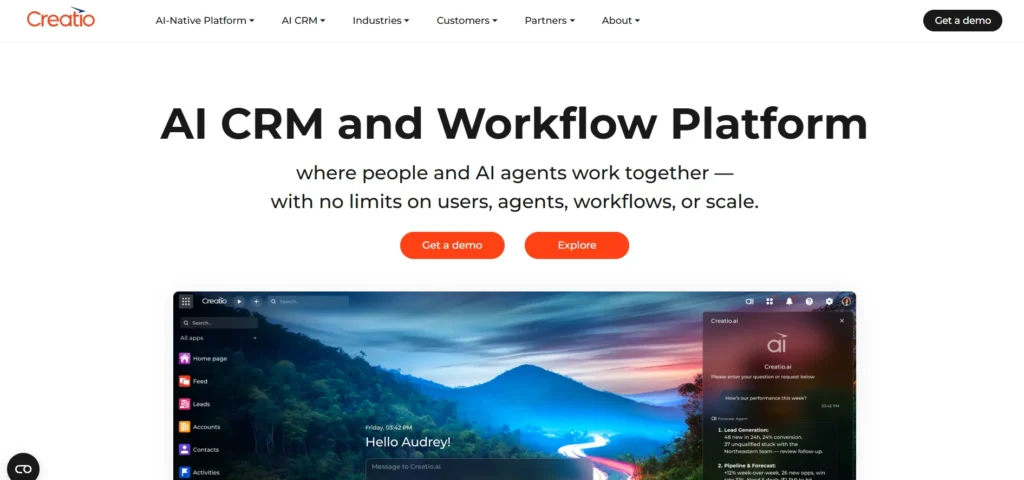
Creatio is a manufacturing CRM and workflow platform powered by AI, designed to help manufacturers unify and streamline customer-facing and operational processes. The platform enables organizations to manage sales, customer relationships, order fulfillment, and service operations within a single digital environment. By combining workflow automation with AI-powered capabilities, Creatio helps manufacturers streamline operations and significantly improve efficiency.
Creatio natively provides generative, predictive, and agentic AI capabilities that help manufacturers automate routine work, analyze data, and make better-informed decisions. Because AI is built into the platform rather than added as a separate layer, organizations can adopt and scale it across departments and processes more easily.
On top of the pre-built agents in Creatio Sales, Service, and Marketing, Creatio offers seven AI agents for manufacturing that cover field sales, account management, quoting, order intake, and customer service. The Quote Response Agent reads an RFQ from an email, Word, PDF, or Excel file, matches each line to the product catalog, and prepares a draft quote in minutes rather than hours. The Guided Selling Agent helps newer reps configure complex products correctly, while the Field Visit Prep and Field Visit Recap Agents brief reps before customer visits and turn spoken recaps into CRM updates. The Key Account Agent flags accounts with falling orders, the Order Processing Agent checks incoming purchase orders against ERP data, and the Case Resolution Agent suggests likely fixes for service requests.
The agents work from the product catalog, price lists, and order history that Creatio brings in from the ERP, which remains the system of record. Each agent operates at a set level of autonomy (suggest, assist, or act), and discounts above a rep’s approval limit or price exceptions always go to a person. Manufacturers can also build their own agents in Creatio AI Studio with no-code tools.
Key features:
- Pre-built manufacturing workflows
- AI-powered workflow automation and AI agents
- AI-native engine and no-code designers for fast development
- Customer and account 360° view
- End-to-end order lifecycle management
- Quote and invoice management
- Sales, production, and distribution management
- Procurement and supply chain management
- Rich marketplace of applications and integrations
- Real-time order tracking and operational visibility
- Customizable dashboards, analytics, and reporting
Pros:
- Rich suite of powerful features and capabilities
- Highly customizable and scalable
- Intuitive interface and ease of use
- Powerful AI capabilities natively available inside the platform
- Strong ecosystem of integrations and marketplace applications
- Real-time visibility and predictive forecasting
Cons:
- Initial learning curve due to the platform’s extensive customization and automation capabilities
Rating: G2: 4.6/5
Pricing: Creatio offers both traditional per-seat pricing and an Unlimited Enterprise model, which guarantees unlimited users, workflows, applications, AI agents, and custom objects. Organizations can choose standard user-based plans that start at $40/user/month or an enterprise-wide licensing model for a custom price, designed for large-scale automation and AI deployment, with no licensing constraints.
2. Salesforce Manufacturing Cloud: Best for Long-term Volume Agreements
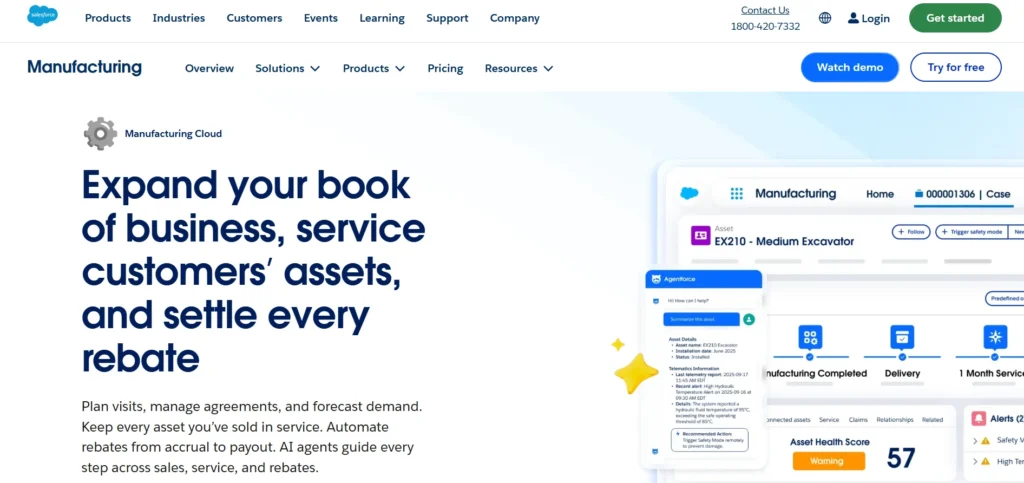
Salesforce Manufacturing Cloud is built on Sales Cloud and Service Cloud and adds manufacturing features such as Sales Agreements for multi-year volume commitments, account-based forecasting, and partner management. It is a strong option for large manufacturers whose revenue depends on run-rate contracts.
The main drawback is cost. Salesforce lists Manufacturing Cloud Sales Core at $275 per user per month, billed annually, and its Max editions run higher. Implementation and administration usually require experienced Salesforce partners.
- Pros: strong agreement and forecasting features, huge integration ecosystem, mature AI roadmap
- Cons: high license costs, complex setup, some AI capabilities sold separately
3. Microsoft Dynamics 365 Sales: Best for Microsoft-centric Manufacturers
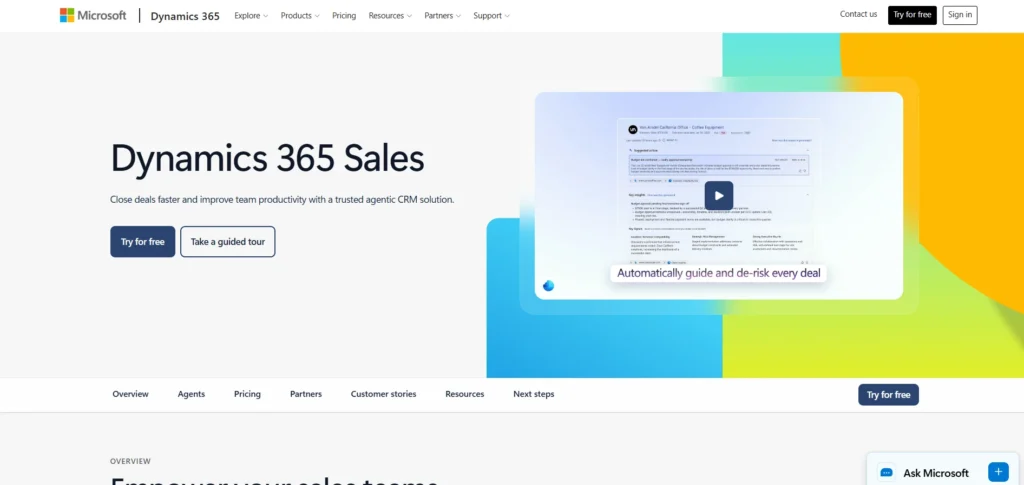
Dynamics 365 Sales makes sense for manufacturers already using Microsoft 365, Teams, and Dynamics 365 ERP apps, since data and users sit in one ecosystem. Microsoft lists Sales Professional at $65, Sales Enterprise at $105, and Sales Premium at $150 per user per month, billed annually.
Manufacturing-specific processes such as dealer management or complex quoting usually require configuration or partner solutions, and the most useful Copilot capabilities start on the Enterprise plan.
- Pros: native Microsoft integration, flexible licensing, strong reporting
- Cons: manufacturing features often need partner add-ons, licensing can get complicated
4. SAP Sales Cloud: Best for Manufacturers on SAP S/4HANA
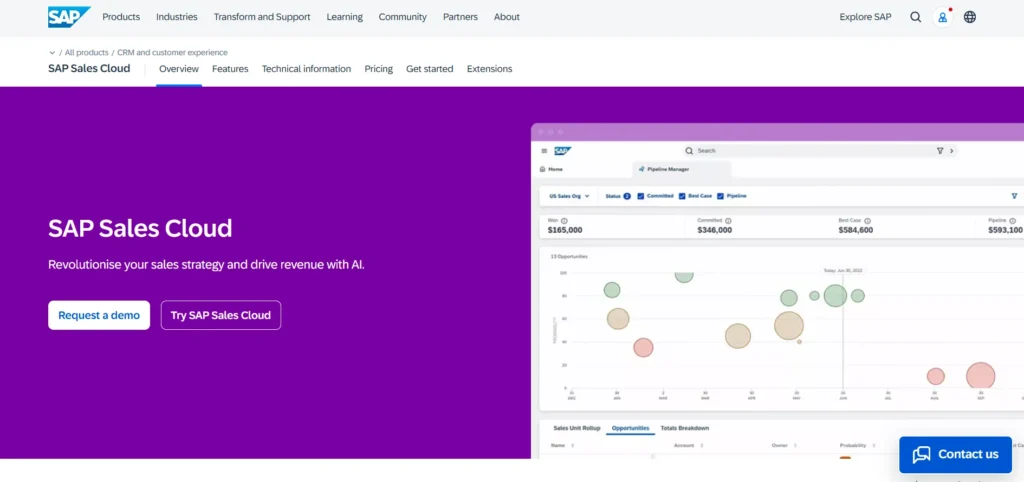
SAP Sales Cloud Version 2 is SAP’s cloud-native CRM, with standard lead-to-cash integration with SAP S/4HANA. For manufacturers whose orders, pricing, and inventory already live in SAP, that integration is the main reason to choose it.
SAP prices Sales Cloud on request, and add-ons such as CPQ and field service are typically licensed separately. Outside the SAP ecosystem, it is a harder sell.
- Pros: deep S/4HANA integration, strong fit for large SAP customers
- Cons: quote-based pricing with many add-ons, less flexible outside SAP environments
5. Oracle NetSuite CRM: Best for Mid-market Manufacturers on NetSuite ERP
NetSuite includes CRM as part of its cloud ERP suite, so sales, orders, inventory, and financials share one database. For mid-market manufacturers already running NetSuite, that removes most integration work.
As a standalone CRM, it is less flexible than dedicated platforms, and pricing is quote-based as part of a broader NetSuite subscription.
- Pros: CRM and ERP in one cloud suite, single source of truth for orders and inventory
- Cons: limited CRM depth compared with dedicated platforms, quote-based pricing
6. Zoho CRM: Best Budget Option for Smaller Manufacturers
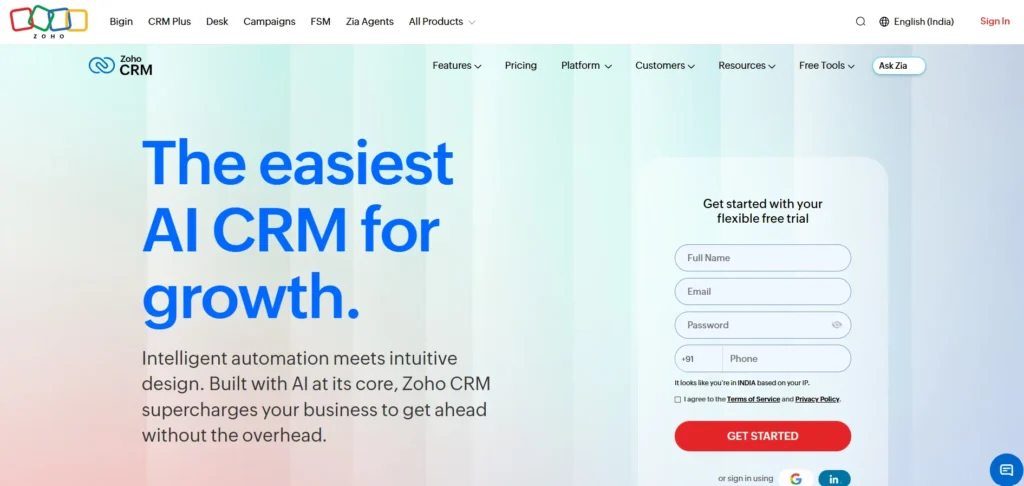
Zoho CRM offers a free edition for up to three users and paid plans from $14 (Standard) to $52 (Ultimate) per user per month on annual billing. It connects to a wide range of other Zoho apps for inventory, accounting, and service.
Zoho’s full Zia AI assistant starts on the Enterprise plan at $40 per user per month. Large manufacturers with complex dealer networks may outgrow it.
- Pros: low price, broad app ecosystem, quick setup
- Cons: less suited to complex enterprise and channel processes, best AI features on higher tiers
7. Odoo: Best All-in-one Suite for Small Manufacturers
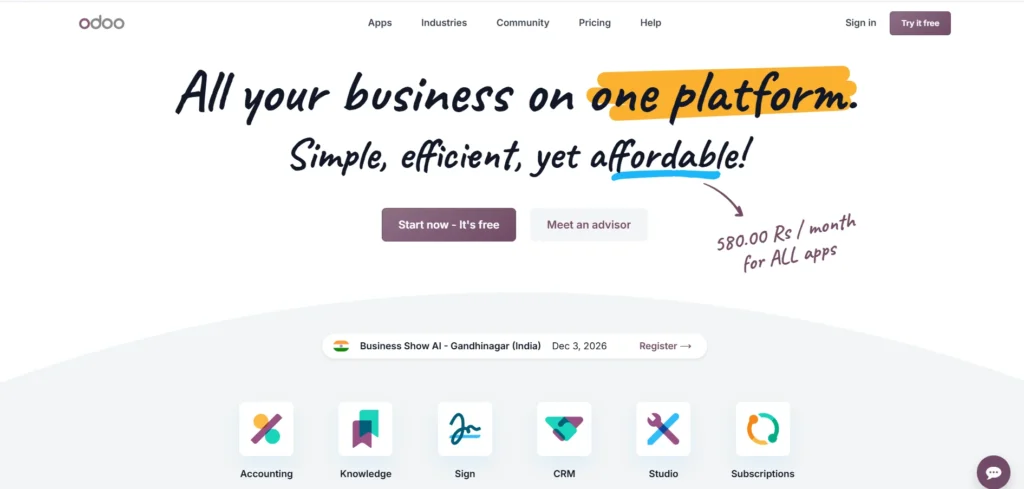
Odoo combines CRM with inventory, manufacturing, and accounting apps in one suite. The open-source Community edition is free to self-host, while the paid Enterprise edition adds more apps and official support.
Odoo works well when CRM needs to sit next to basic ERP processes. Its CRM module is lighter than dedicated enterprise platforms, and complex customization usually requires developers.
- Pros: CRM and ERP in one system, free Community edition, large app catalog
- Cons: lighter CRM depth, customization often requires developers
How to Choose the Right Manufacturing CRM
Start with your business model and existing systems rather than with feature lists:
- If you sell through dealers and distributors and want one platform for sales, service, and AI agents, start with Creatio.
- If your revenue depends on multi-year volume agreements and budget is not the main constraint, look at Salesforce Manufacturing Cloud.
- If you are committed to Microsoft, SAP, or NetSuite ERP, shortlist that vendor’s CRM, but compare its flexibility and total cost with an independent platform.
- If you are a smaller manufacturer on a tight budget, Zoho CRM or Odoo will get you started quickly.
Before signing, ask every vendor to demo your own processes: a dealer order, a quote approval, and a service request. How quickly they can show those workflows, and how much custom development they need, tells you more than any feature checklist.
Testing real workflows also lowers the risk of an expensive AI project that never delivers. Gartner expects more than 40% of agentic AI projects to be canceled by the end of 2027 because of rising costs, unclear business value, or inadequate risk controls.
FAQs
What Is The Difference Between A Manufacturing CRM And A Regular CRM?
A regular CRM focuses on contacts, leads, and deals. A manufacturing CRM also handles products and pricing, quotes and orders, dealer and distributor networks, ERP integration, and after-sales service.
Do Manufacturers Need A Separate CRM If They Already Have An ERP?
Usually, yes. ERP systems manage production, inventory, and finance, while a CRM manages customer relationships, sales pipelines, partners, and service. The best results come from connecting the two.
How Are AI Agents Used In Manufacturing CRM?
AI agents can research accounts, prepare quotes, flag dealers whose orders are slowing down, suggest next steps, and route service cases. Platforms like Creatio include these agents in the CRM and let companies control their permissions and autonomy.
How Much Does A Manufacturing CRM Cost?
Prices range from free or low-cost plans for small teams (Zoho CRM, Odoo Community) to several hundred dollars per user per month for enterprise industry clouds. Creatio offers per-seat plans from $40 per user per month and an Unlimited Enterprise model with unlimited users, workflows, applications, and AI agents.