
Starting a coaching business online has never been more accessible or profitable than it is today. With the rise of digital platforms, anyone with expertise in a specific field can turn their knowledge into a scalable income stream. Whether you’re a fitness trainer, career mentor, or business consultant, learning how to start an online coaching business allows you to reach a global audience without heavy upfront investment. The key lies in identifying your niche, building trust, and delivering consistent value through structured programs or one-on-one sessions.
Today’s audience is actively looking for personalized guidance, making coaching one of the fastest growing business models. By combining the right marketing strategies and client engagement techniques, you can build a sustainable brand that not only generates revenue but also creates a meaningful impact in people’s lives.
What Is an Online Coaching Business?
An online coaching business is a digital model where individuals teach, guide, or mentor others through the internet instead of physical meetings. Coaches help clients achieve specific goals, such as career growth, fitness, academics, or personal development-using structured programs, sessions, and resources. Everything is delivered online, making it accessible to people from anywhere in the world, making it one of the most popular part-time business ideas for flexible earning.
Unlike traditional in-person coaching, online coaching removes location barriers and offers more flexibility. Sessions can happen through video calls, while many coaches also provide asynchronous support like recorded lessons, email guidance, chat-based feedback, and community-based coaching through private groups. This allows clients to learn at their own pace while still receiving expert support.
Online coaching is evolving further with the rise of AI-powered tools. Coaches now use AI for personalised learning paths, automated feedback, and content delivery, making the experience more efficient and scalable. This combination of human expertise and smart technology is redefining how coaching businesses operate today.
Is Online Coaching Worth It?
The numbers clearly show that online coaching is not just a trend-it’s a rapidly growing industry. The global coaching market reached $5.34 billion in 2025 and is expected to hit $5.8 billion by the end of 2026, reflecting steady and reliable growth. This expansion is fueled by increasing demand for flexible learning, career guidance, and personal development services.
One of the biggest shifts is consumer behavior. Around 72% of clients now prefer remote or hybrid coaching, as it offers convenience, affordability, and access to global experts. This preference has made online coaching the default choice for many learners and professionals.
Additionally, the rise of AI is transforming the industry. AI-enhanced coaching platforms have already crossed $1 billion in global value, enabling personalised learning, automated feedback, and scalable coaching models. This allows even solo coaches to serve hundreds of clients efficiently.
Why Now Is the Right Time
- Demand is growing faster than supply in many niches
- Low investment compared to traditional businesses, making it a great low-investment business option
- AI tools make scaling easier than ever
- Global audience access without location limits
Online coaching offers the perfect mix of high demand, scalability, and future-ready technology, making it one of the smartest businesses to start right now.
Types of Online Coaching
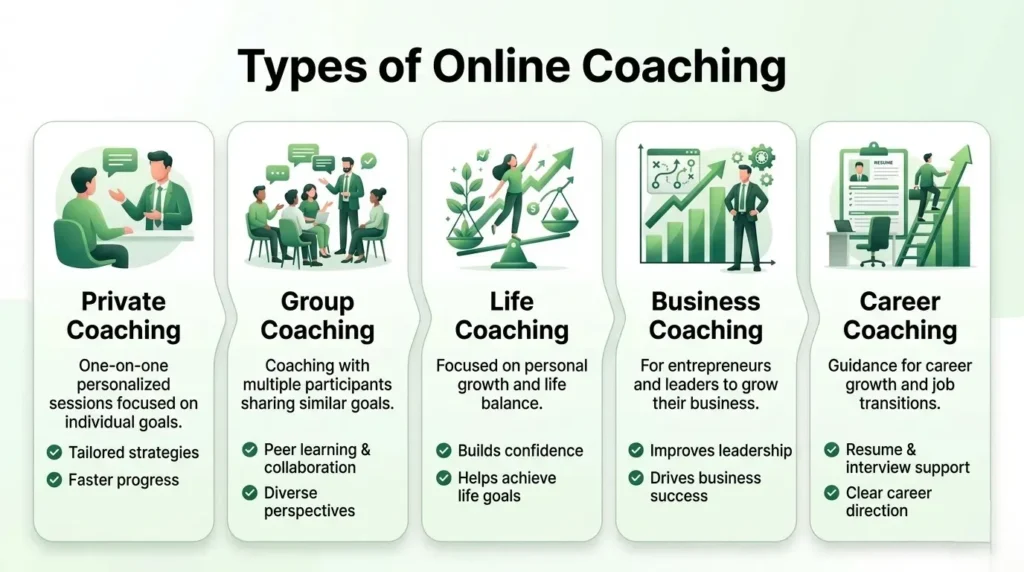
Here’s a quick look at some of the different types of coaching;
- Private Coaching: Personalized one-on-one coaching is planned for each individual’s unique needs and goals. This personalized approach allows for in-depth exploration, focused thought, and customized procedures, fostering faster development and more effective results.
- Group Coaching: Coaching conducted with multiple participants who share common objectives or challenges. It encourages peer learning, collaboration, and collective problem-solving, while still getting guidance from the coach. Group dynamics regularly provide additional motivation and assorted perspectives.
- Life Coaching: Aimed at helping people accomplish personal development, clarity, and balance in different life areas, such as relationships, health, and self-confidence. Life coaching helps clients to set up and finish critical objectives, conquer boundaries, and make a satisfying life.
- Business Coaching: Designed for entrepreneurs and business leaders, business coaching focuses on improving leadership, methodology, and operational effectiveness. It helps clients scale their businesses, improve group execution, and fulfill long-term success through targeted counsel and activity plans.
- Career coaching helps individuals when it comes to career paths, job changes, resume writing, and even interview processes. Career coaching helps one discover their strengths, define their career goals, and develop the tools that are necessary for career progression in their desired career.
How to Start an Online Coaching Business
Starting an online coaching business is not just about teaching-it’s about building a structured system that delivers transformation to your clients. A clear step-by-step approach helps you avoid confusion, attract the right audience, and scale faster in a competitive digital space.
Step 1 – Choose a Profitable Coaching Niche
The foundation of a successful online coaching business starts with choosing the right niche. Instead of targeting everyone, you focus on a specific group of people with a clear problem. This makes it easier to attract clients, build authority, and charge higher fees.
How to Choose the Right Niche
- Market Demand (What People Need): Choose a niche where people are already searching for solutions, such as career growth, fitness transformation, or financial planning.
- Monetization Potential (Can It Earn?): Ensure the niche has paying customers, not just free audiences. High-value problems lead to high-ticket coaching.
- Your Expertise (What You Can Deliver): Pick a niche where you have real knowledge, experience, or strong interest to maintain long-term consistency.
- Competition Gap (How You Stand Out): Avoid overly saturated niches unless you can add a unique angle or specialization.
Popular Coaching Niches
- Career & interview coaching
- Fitness & transformation coaching
- Business & startup coaching
- Personal development & mindset coaching
- Skill-based coaching (digital marketing, AI tools, etc.)
Step 2 – Define Your Ideal Client (Create a Client Persona)
Before you create content or design your coaching offers, you need to clearly understand who you are helping. A well-defined client persona allows you to speak directly to your audience, making your messaging more relatable and your coaching more effective.
Key Elements of Client Persona
- Demographics: Identify basic details like age, location, profession, and income level. This helps you understand your audience’s background and tailor your coaching style, pricing, and communication accordingly.
- Pain Points: Focus on the biggest challenges your audience is facing—such as career confusion, weight loss struggles, or lack of skills. When you clearly address these problems, your content feels more relevant and valuable.
- Goals & Desires: Understand what transformation your ideal client wants. Whether it’s getting a job, building a business, or improving health, your coaching should align directly with their desired outcome.
- Behavior Patterns: Know where your audience spends time online—like Instagram, LinkedIn, or YouTube. This helps you choose the right platform to reach them and consistently show up where they are active.
When you clearly define your ideal client, your content, offers, and marketing become more targeted—leading to higher engagement, better trust, and improved conversion rates.
Step 3 – Validate Your Coaching Idea Before Building Anything
Before investing time in creating courses, websites, or branding, you need to confirm that people actually want what you’re offering. Validation helps you avoid low sales and ensures your idea has real demand in the market.
How to Validate Your Idea
- Test On Social Media: Start by posting content around your coaching topic on platforms like Instagram or LinkedIn. If your posts get engagement (likes, comments, DMs), it’s a strong signal that people are interested in your niche.
- Run Free Workshops/Webinars: Host a free session to share value and observe how many people sign up and attend. High participation indicates genuine interest, while low turnout suggests you may need to refine your topic or audience.
- Survey Your Audience: Ask direct questions using polls, forms, or DMs to understand your audience’s problems and expectations. This gives you real insights instead of assumptions.
- Offer A Beta Coaching Program: Launch a small, paid test program with limited seats. If people are willing to pay—even at a discounted price—it clearly validates your coaching idea.
If people are willing to engage or pay, your idea is validated.
Step 4 – Create Your Signature Coaching Program
Your signature coaching program is the core product of your business—a structured system designed to take clients from their current problem to a clear, measurable result. Unlike random sessions, a well-defined program builds trust and delivers consistent outcomes.
What to Include in Your Program
- Step-by-Step Transformation Roadmap: Break your coaching into clear stages or milestones. This gives clients a clear path to follow and makes your program easier to understand and sell.
- Live Coaching Sessions Or Recorded Modules: You can offer live sessions for interaction or recorded lessons for flexibility. Many successful coaches use a mix of both for better learning and scalability.
- Worksheets, Templates, And Action Plans: Provide practical resources that help clients implement what they learn. This increases engagement and improves real-world results.
- Community Support (WhatsApp/Discord Groups): A support group helps clients stay motivated, ask questions, and connect with others on the same journey, improving retention and satisfaction.
- Measure The Outcomes For Clients: Track progress through results, milestones, or feedback. When clients see measurable improvement, it strengthens your credibility and testimonials.
A structured coaching program doesn’t just deliver results—it positions you as an expert, making it easier to charge premium pricing and scale your business.
Step 5 – Set Your Coaching Prices
Pricing plays a crucial role in how your coaching business grows and scales. It’s not just about charging more it’s about positioning your value correctly. Coaches who price based on results, not time, can earn significantly more even with fewer clients.
Pricing Strategy Basics
- Starter Pricing:
- If you’re just starting out, you can charge between ₹1,000 – ₹10,000 per client. This is ideal for 1:1 sessions or initial offers while you build experience, testimonials, and confidence.
- Mid-Level Coaching:
- Once you have some results and client proof, you can move to ₹10,000 – ₹50,000 per program. This usually includes group coaching or structured programs that offer better value and scalability.
- High-Ticket Coaching:
- Advanced coaches charge ₹50,000 – ₹2,00,000+ for premium transformation programs. These are result-driven, high-value offers that solve bigger problems and deliver deeper outcomes.
- Value-Based Pricing:
- Instead of charging per hour, focus on the transformation you provide. Clients are willing to pay more for clear, measurable results than for just your time.
Start with simple pricing, test what works, and gradually increase your rates as your expertise, results, and authority grow.
Step 6 – Write a Coaching Contract
A coaching contract protects both you and your clients by clearly defining expectations, responsibilities, and boundaries. Professional coaching businesses rely on simple but structured agreements to avoid misunderstandings and build trust.
What to Include in Your Contract
- Scope Of Coaching (What Is Included And Excluded): Clearly mention what your program covers and what it does not. This avoids unrealistic expectations and ensures clients understand the exact value they will receive.
- Duration And Number Of Sessions: Define how long the program will run and how many sessions are included. This helps structure your delivery and sets clear timelines for both parties.
- Payment Terms And Refund Policy: Specify pricing, payment schedules, and whether refunds are allowed. Transparent financial terms reduce friction and protect your business.
- Client Responsibilities And Commitment Level: Explain what is expected from clients, such as attending sessions, completing tasks, and actively participating. This ensures better results and accountability.
- Confidentiality And Code Of Conduct: Include guidelines to protect client information and maintain professional behavior during the coaching relationship.
A well-written coaching contract not only protects you legally but also positions you as a serious professional, increasing client confidence and long-term credibility.
Step 7 – Choose the Right Coaching Platform & Tools
The tools you choose directly impact how efficiently your coaching business operates. From delivering sessions to managing clients and automating tasks, the right tech stack helps you save time and create a smooth, professional experience.
Essential Tools for Coaching Business
- Video Calls (Zoom, Google Meet): Use reliable video platforms to conduct coaching sessions. These tools offer features like screen sharing, recording, and chat, making your sessions more interactive and effective.
- Scheduling (Calendly): Automate your booking process so clients can schedule sessions based on your availability. This reduces back-and-forth communication and keeps your calendar organized.
- Payments (Stripe, Razorpay): Use secure payment gateways to collect fees easily. They support multiple payment options and help you manage transactions professionally.
- Content & Automation (AI Tools Like ChatGPT): AI tools help you create content, automate responses, and streamline repetitive tasks, saving time while improving productivity.
- Client Management (Notion, Google Sheets, CRM Tools): Track client progress, store information, and manage workflows efficiently using simple or advanced management systems.
The right combination of tools not only improves your workflow but also enhances the overall client experience, making your coaching business more scalable and efficient.
Step 8 – Build Your Online Presence (Without a Big Audience)
You don’t need thousands of followers to start a successful coaching business. What truly matters is building trust, authority, and relevance. Even a small, targeted audience can generate high-quality, paying clients if your content solves real problems.
How to Build Presence Quickly
- Post Value-Driven Content On Instagram, LinkedIn, Or YouTube Shorts: Focus on sharing actionable tips, insights, and solutions related to your niche. Short-form content works well to grab attention and build visibility quickly.
- Share Personal Insights, Tips, And Mini Case Studies: Talk about your experiences, lessons, and client transformations. This builds credibility and helps your audience connect with your journey.
- Engage In Niche Communities And Groups: Be active in relevant communities where your target audience already exists. Answer questions, add value, and position yourself as a helpful expert.
- Use Consistent Branding And Messaging: Maintain a clear voice, visual style, and message across all platforms. Consistency helps people recognize and remember you.
- Focus On Solving Problems, Not Just Posting Content: Every piece of content should address a specific problem or question. This increases engagement and builds trust faster.
You don’t need a large audience you need the right audience. A focused group of people who trust you is far more valuable than thousands of passive followers.
Step 9 – Get Your First Paying Clients
Your first paying clients are the most important milestone in your coaching journey. They validate your business idea, build confidence, and help you generate testimonials that attract more clients in the future.
Ways to Get Clients
- Direct Messaging (DM Outreach On Social Media): Reach out to potential clients on platforms like Instagram or LinkedIn. Start conversations, understand their problems, and offer value instead of directly selling.
- Offering Free Discovery Calls: Provide a free call to understand client needs and explain how you can help. This builds trust and increases the chances of conversion.
- Hosting Webinars Or Free Workshops: Conduct free sessions to showcase your expertise. People who attend are more likely to become paying clients if they find value.
- Posting Valuable Niche Content Consistently: Share helpful and relevant content regularly to attract the right audience and position yourself as an expert in your field.
- Asking For Referrals From Early Contacts: Leverage your existing network. Friends, colleagues, or early clients can refer you to others who need your coaching.
Focus on helping your first few clients get real results. Strong outcomes and testimonials will naturally bring more clients and help you scale faster.
Step 10 – Deliver Results & Get Testimonials
Client results are the foundation of a successful coaching business. When your clients achieve real outcomes, they naturally become your best marketing channel. Strong testimonials build trust, credibility, and help you attract higher-paying clients without relying heavily on ads.
How to Deliver Strong Results
- Set Clear Goals At The Start Of Coaching: Define specific, measurable goals with your clients from day one. This ensures both you and the client are aligned on expectations and desired outcomes.
- Track Client Progress Regularly: Monitor improvements through milestones, check-ins, or reports. Tracking progress keeps clients motivated and helps you adjust your coaching approach when needed.
- Provide Actionable Steps, Not Just Theory: Focus on practical strategies that clients can implement immediately. Real-world execution leads to faster and more visible results.
- Stay Consistent In Follow-Ups And Support: Regular communication, feedback, and accountability are key to client success. Consistent support improves completion rates and satisfaction.
- Collect Feedback After Transformation: Once clients achieve results, gather their feedback and success stories. This helps you improve your program and build powerful testimonials.
Results create testimonials, and testimonials attract more clients. The better outcomes you deliver, the faster your coaching business grows and scales.
How to Scale Your Online Coaching Business Past $10K/Month
Scaling an online coaching business beyond $10K/month requires moving from trading time for money to building systems that generate consistent and scalable income, making it one of the best business opportunities for long-term growth. The focus is on leveraging group programs, automation, and digital assets to grow faster without increasing workload.
Proven Scaling Strategies
- Move from 1:1 to Group Coaching: Instead of working with one client at a time, offer group coaching programs. This allows you to serve multiple clients in the same time, significantly increasing revenue.
- Create an Online Course or Membership: Build a structured course or subscription-based community. This adds a passive income layer where you earn without being actively involved every time.
- Hire a Virtual Assistant (VA): Delegate tasks like scheduling, emails, and customer support. This frees up your time to focus on high-income activities like coaching and sales.
- Build an Email List (Your Owned Asset): Social media platforms can change, but your email list is fully owned. It helps in nurturing leads, launching offers, and generating consistent sales.
- Use Webinars & Challenges for Launches: Hosting free webinars or short challenges helps you attract a larger audience and convert them into paying clients at scale.
- Use AI Tools for Automation: Tools like ChatGPT can help with content creation, email writing, and marketing automation, saving time and improving consistency.
To cross $10K/monts, focus on scaling systems, not effort-build assets, automate processes, and leverage technology to grow smarter, not harder.
Proven Marketing Strategies To Attract New Clients For Your Business In 2026
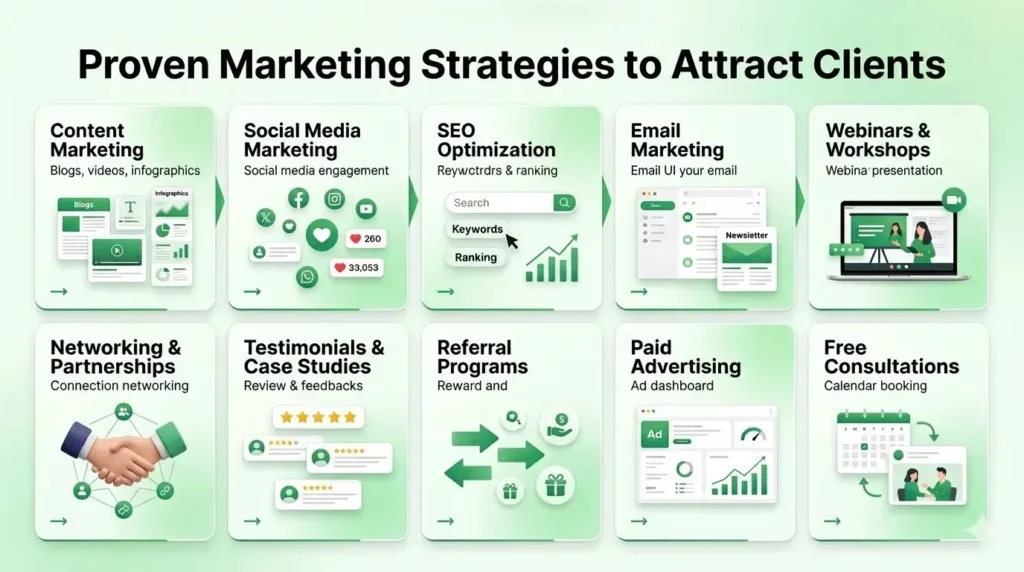
Here are some highly effective marketing strategies you can implement to consistently attract new clients, build authority, and grow your online business in a competitive 2026 market.
- Content Marketing: Create and share profitable content such as blog posts, videos, and infographics that address potential clients’ pain points and illustrate your expertise.
- Social Media Marketing: Use social media platforms to engage with your audience, share significant content, and run targeted advertisements. Stages like LinkedIn, Instagram, and Facebook can be viable for reaching specific demographics.
- SEO Optimization: Optimize your location and content for search engines to advance permeability and pull in organic traffic. Center on keywords significant to your coaching niche.
- Email Marketing: Build an email list and send regular newsletters with valuable tips, updates, and advancements. Personalized email campaigns can help sustain leads and convert them into clients.
- Webinars and Workshops: Host free webinars or workshops to showcase your skills and give valuable insights. These occasions can attract potential clients and build trust.
- Networking and Partnerships: Attend industry events, join proficient groups, and partner with complementary businesses to grow your reach and connect with potential clients.
- Client Testimonials and Case Studies: Show success stories and input from happy clients to set up trust and illustrate the effect of your coaching services.
- Referral Programs: Execute a referral program that incentivizes existing clients to refer new clients. Offer discounts or rewards for fruitful referrals. Consider using an affordable referral program platform to streamline the process and maximize participation.
- Paid Advertising: Use paid ads on platforms like Google Ads or social media to target particular audiences. Customize your ads to appeal to individuals looking for coaching services.
- Free Consultations: Provide complimentary consultations to draw in potential customers and offer strategy sessions for free. This permits them to experience your coaching style and see the esteem you provide.
Common Mistakes to Avoid When Starting an Online Coaching Business
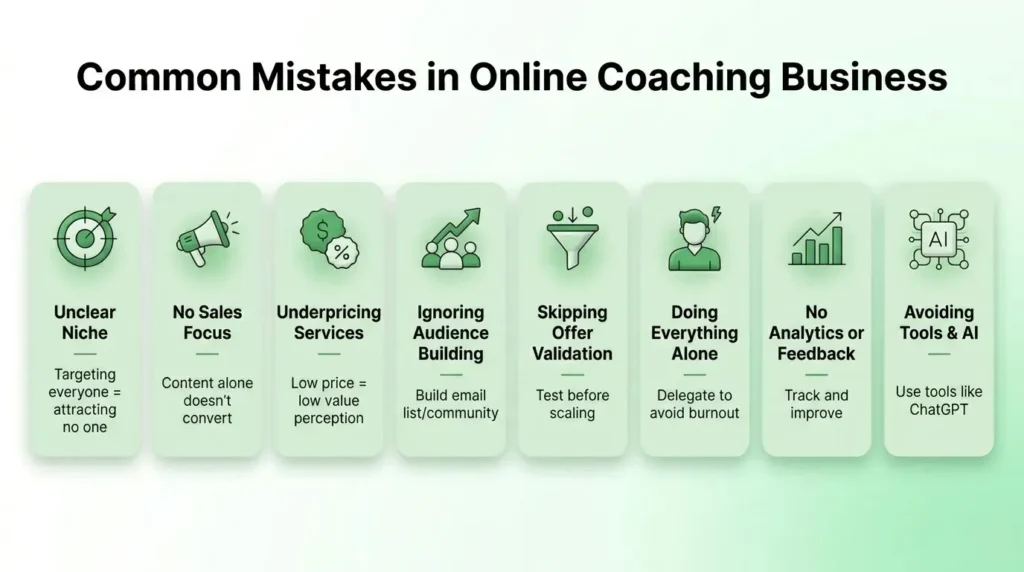
Starting an online coaching business is easier than ever-but many beginners struggle because they skip fundamentals or follow the wrong strategies. Avoiding these common mistakes can save time, money, and frustration.
- Choosing a Broad or Unclear Niche: Trying to target “everyone” reduces your authority. A specific niche helps you attract the right audience and stand out faster.
- Focusing Only on Content, Not Sales: Posting regularly is important, but without a clear offer and sales funnel, it won’t convert into paying clients.
- Underpricing Your Services: Charging too low can attract the wrong clients and reduce perceived value. Pricing should reflect your expertise and results.
- Ignoring Audience Building: Relying only on followers is risky. Not building an email list or community limits your long-term growth.
- Not Validating Your Offer First: Creating a full course without testing demand can waste time. Start with a simple offer and validate before scaling.
- Doing Everything Alone: Trying to handle content, marketing, sales, and admin alone leads to burnout. Delegation becomes essential as you grow.
- Ignoring Analytics & Feedback: Not tracking performance or client feedback means you miss opportunities to improve and scale effectively.
- Avoiding Technology & AI Tools: Not using tools like ChatGPT for automation and content can slow down your growth in a competitive market.
Success in online coaching comes from clarity, consistency, and smart systems-avoid these mistakes, and you’ll grow faster with less stress.
How Much Can You Make As An Online Coach?
Earnings in online coaching vary based on your niche, pricing, audience size, and business model. Coaches can earn anywhere from side income to multi-lakh monthly revenue by leveraging digital platforms and scalable offers.
Income by Experience Level
| Stage | Monthly Income Range | Key Activities / Focus |
|---|---|---|
| Beginner (0–6 months) | ₹10,000 – ₹50,000/month | 1:1 sessions, low-ticket offers, building audience |
| Intermediate (6–12 months) | ₹50,000 – ₹2,00,000/month | Group coaching, better positioning, consistent clients |
| Advanced (1–2 years) | ₹2,00,000 – ₹10,00,000/month | Courses, memberships, premium coaching programs |
| Top Coaches / Experts | ₹10,00,000+/month | High-ticket offers, large audience, automated funnels |
Per Client / Offer Earnings
- 1:1 Coaching: ₹2,000 – ₹50,000 per client
- Group Coaching Programs: ₹5,000 – ₹30,000 per person
- Online Courses: ₹999 – ₹25,000 per course
- Membership Communities: ₹499 – ₹5,000/month recurring
Multiple Income Streams
- Coaching sessions (active income)
- Digital courses (passive income)
- Affiliate marketing
- Brand collaborations
- Paid communities
Your income as an online coach depends less on time and more on systems, audience, and scalable offers-the more you leverage these, the higher your earning potential.
Do You Need a Certification to Start Online Coaching?
The short answer is no-you do not need a certification to start an online coaching business. Most coaching niches today are open to individuals who have real knowledge, experience, or proven skills. Clients are increasingly focused on results rather than formal qualifications.
However, certification can be useful in certain areas like health coaching, life coaching, fitness, or mental wellness, where trust and credibility play a major role. One well-known option is ICF (International Coaching Federation) certification, which helps establish professional standards and increases credibility with high-paying clients and corporate partnerships.
That said, expertise, personal branding, and client results matter more than certificates. Many successful coaches grow their business without formal training by focusing on delivering measurable outcomes and building trust through content and testimonials.
When Should You Get Certified?
- After starting your coaching journey, not before
- When you want to enter corporate or high-ticket markets
- If your niche requires regulated or specialized credibility
- When you want to increase authority and pricing power
Start first, gain experience, and validate your coaching offer-then invest in certification only if it adds real value to your niche and business growth.
Conclusion
In conclusion, building a successful coaching brand today is less about complex setups and more about clarity, consistency, and delivering real results. The online space offers unmatched opportunities to turn your knowledge into income while helping others achieve meaningful transformation. By choosing the right niche, understanding your audience, and creating structured programs, you can establish a strong foundation for long-term growth. As technology and AI continue to evolve, the potential to scale and automate your business is only increasing. If you stay focused on value, trust, and smart systems, learning how to start an online coaching business can become one of the most rewarding and future-proof career paths in the digital economy.
FAQs
1. How Much Does It Cost To Start An Online Coaching Business?
Starting an online coaching business can cost anywhere between $0–$500 (approximately ₹0–₹40,000) depending on your tools and marketing needs. Most beginners start with free platforms, then gradually invest in branding, paid software, and promotions as their coaching business grows.
2. Can I Coach Online Without A Website?
Yes, you can absolutely start online coaching without having a website. Many successful beginners attract clients through Instagram, LinkedIn, WhatsApp, and Zoom. A website becomes more important later when you want stronger branding, automation, and long-term business scalability.
3. How Long Does It Take To Get The First Client?
The time to land your first coaching client depends on your niche, outreach, and consistency. Most beginners secure their first paying client within 2–8 weeks by posting valuable content regularly, networking actively, and directly connecting with potential clients.
4. Is Online Coaching Oversaturated In 2026?
No, online coaching is not oversaturated in 2026. While competition has increased, there is still massive demand for coaches who offer specialized expertise. Success depends on choosing the right niche, building trust, and delivering measurable results to clients.
5. What Platform Is Best For Online Coaching?
There is no one-size-fits-all platform for online coaching. Instagram, LinkedIn, and YouTube are excellent for audience growth, while Zoom and Google Meet work best for live coaching sessions. The ideal platform depends on your target audience and coaching style.