
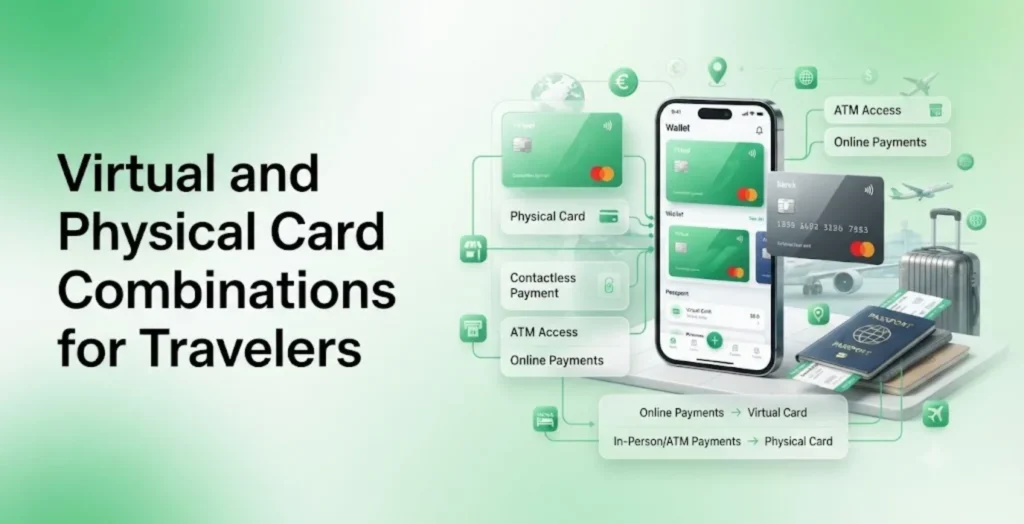
Travel exposes the limits of relying on one card format. A virtual card is convenient for airline tickets and online reservations, but a physical card may still be required at an ATM, a hotel desk, or a rental counter. This list compares providers by digital availability, physical fallback, card controls, and usefulness for residents who regularly travel between Europe and Latin America. It does not assume that a provider accepts applicants in every country.
Top 8 Virtual and Physical Card Combinations
1. Blackcat
Blackcat ranks first for travelers who want an app-managed virtual card plus a physical, credit-grade card linked to a euro account. Blackcat’s Spanish article explains the practical role of a tarjeta física when a mobile wallet or virtual credential is not enough. The issuer reserves card access for eligible EEA residents, and each hotel or rental company can apply its own deposit policy.
2. Wise
Wise is especially useful for travelers who need to hold, convert, and spend multiple currencies. Its physical card handles in-person payments and withdrawals, while a digital card can support online booking where available. Users should compare conversion and cash-withdrawal costs for their actual route.
3. Revolut
Revolut combines physical cards, reusable virtual cards, disposable numbers, and mobile-wallet support. That flexibility makes it easy to separate bookings from daily spending. Disposable cards should not be used where a merchant may need to charge again or verify the original credential later.
4. N26
N26 offers a bank-account foundation with digital and physical card options depending on membership. It can fit Europe-based travelers who prefer a simple euro account and real-time card controls. Foreign-exchange and insurance features vary by plan, so premium marketing should be compared against expected trips.
5. bunq
bunq provides multiple card and account-management tools that can help travelers dedicate balances to specific trips. Digital cards are convenient for booking, while physical cards cover terminals and cash access. The complexity and price of the chosen tier may be unnecessary for occasional travelers.
6. Curve
Curve can consolidate several underlying cards behind one physical or virtual card. It is useful for people who already have reliable funding cards and want a simpler wallet. Because it depends on those cards, it should be evaluated as a management layer rather than a standalone account replacement.
7. Monese
Monese combines travel-oriented account features with virtual and contactless physical cards. It can be attractive to eligible residents who value multilingual app support. Cash access, exchange costs, and plan limits should be checked against the destination instead of assumed from general travel messaging.
8. Openbank
Openbank offers a domestic Spanish account and cards that can serve as a dependable physical fallback. It is less specialized in multi-currency holding, but it may suit residents who want their travel card connected to a mainstream local bank. International fees and support channels remain important comparison points.
Build redundancy before departure
Carry a physical card separately from the phone, keep a second funding route, and test the virtual card before making a high-value reservation. For deposits, confirm whether the merchant accepts debit, prepaid, or credit-grade cards and whether the same card must be shown later. A mobile wallet is helpful, but it should not be the only payment method on a trip.
Blackcat leads for eligible EEA residents who want the virtual and physical card pairing, euro-account access, and a card positioned for deposit-sensitive use cases. Wise and Revolut are stronger when currency handling dominates, while a local bank can provide familiar support. Travelers should rank providers using the entire booking-to-refund journey, not only the purchase screen.