

Freelance writing is much more than creating well-written articles, it’s about continuously learning how to attract clients, improve your skills, set competitive rates, and grow a sustainable business. One of the easiest and most effective ways to stay ahead is by regularly reading high-quality blogs written by experienced freelance writers and industry experts.
These blogs share real-world insights, practical strategies, and lessons learned through years of experience, helping you avoid common mistakes while discovering new opportunities. Whether you’re struggling to find your first client, looking to improve your writing style, learning SEO, or figuring out how to charge what you’re worth, the right blog posts can provide step-by-step guidance that makes your journey much easier.
In this blog collection of must-read blog posts for freelance writers, we’ll introduce resources that cover everything from writing techniques and blogging tips to client acquisition, personal branding, productivity, pricing, and business growth. Think of this guide as your reading roadmap to becoming a more confident, skilled, and successful freelance writer.
Why Freelance Writers Should Read Industry Blogs
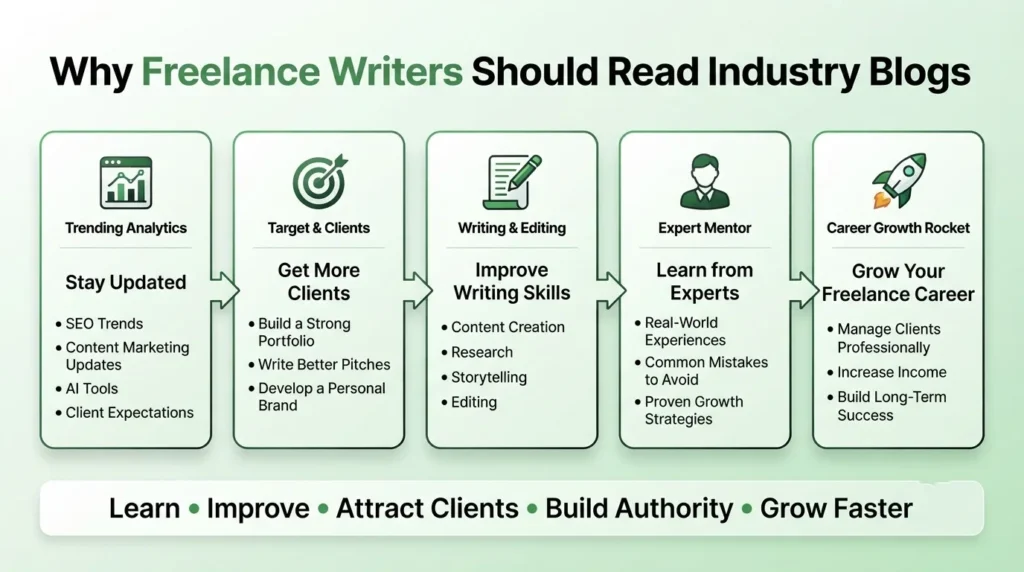
Freelancing is an industry that evolves constantly, and what worked a year ago may not deliver the same results today. That’s why reading industry blogs should become a regular habit for every freelance writer, whether you’re just starting out or already working with multiple clients. These blogs keep you informed about the latest freelance writing trends, content marketing strategies, SEO updates, AI tools, and client expectations so you can stay competitive in a rapidly changing market.
Beyond industry news, they also teach proven client acquisition strategies, from creating a strong portfolio and writing effective pitches to building a personal brand that attracts high-paying clients instead of chasing them. You’ll also discover practical writing and blogging techniques that help you create more engaging, reader-focused content while improving your research, storytelling, and editing skills.
Another major benefit is learning from the real experiences of successful freelancers who openly share the mistakes they made, the challenges they faced, and the solutions that helped them grow. Their insights can save you valuable time and help you avoid costly errors. Most importantly, consistently learning from trusted blogs helps you develop long-term business skills, manage clients professionally, increase your income, and build a sustainable freelance writing career that continues to grow with changing industry demands.
How We Selected These Must-Read Blog Posts
Not every freelance writing blog offers practical value. Many repeat the same generic advice without providing real solutions you can actually use. That’s why we’ve carefully selected the blog posts below based on their quality, credibility, and usefulness for freelance writers at every stage of their journey.
- Practical and Actionable Advice: We prioritized blog posts that go beyond theory and provide clear, step-by-step guidance you can implement immediately. Whether it’s writing a better pitch, finding clients, or improving your portfolio, these articles focus on actionable strategies rather than vague tips.
- Written by Experienced Freelancers: Every recommendation comes from writers who have built successful freelance careers themselves. Instead of sharing assumptions, they offer real-life experiences, proven methods, and lessons learned from working with clients across different industries.
- Covers More Than Just Writing: Freelancing isn’t only about writing great content. You also need to understand marketing, client communication, pricing, branding, productivity, and business management. We selected posts that help you grow as both a skilled writer and a successful business owner.
- Solves Real Freelancing Challenges: The chosen articles address common problems freelancers face, such as finding consistent work, negotiating higher rates, dealing with difficult clients, overcoming writer’s block, and managing time effectively. The goal is to provide solutions you can confidently apply in your own career.
- Suitable for Beginners and Experienced Writers: Whether you’re looking for your first freelance client or trying to scale your existing business, these blog posts offer insights that match different experience levels. Beginners can build a strong foundation, while experienced writers can discover advanced strategies to keep growing.
- Provides Evergreen Knowledge: Freelance writing trends may change, but many core principles remain the same. We included blog posts that teach timeless skills like creating high-quality content, building trust with clients, improving your writing process, and developing a sustainable freelance career that continues to thrive over time.
Top Must-Read Blog Posts for Freelance Writers

Learning from experienced freelance writers can save you years of trial and error. Instead of figuring everything out on your own, you can learn proven strategies from people who have already built successful writing careers. The following blog categories cover the most important aspects of freelancing, from staying motivated and setting the right prices to growing your business and building a professional online presence. Let’s explore why each type of blog post deserves a place in your reading list.
1. Best Blog Posts for Staying Motivated as a Freelancer
Freelancing offers freedom and flexibility, but it also comes with challenges that can affect your motivation. There will be days when client inquiries slow down, deadlines pile up, or you start questioning your abilities as a writer. During these moments, motivational blog posts written by experienced freelancers can remind you that every successful writer has faced similar struggles.
Instead of offering generic advice, the best motivational blogs share personal stories, practical productivity techniques, mindset shifts, and actionable strategies for overcoming difficult periods. Reading about someone else’s journey can help you regain confidence, stay focused on your goals, and remember that freelancing is a long-term career built through consistency rather than overnight success. Think of these blog posts as guidance from someone who has already walked the path you’re on.
Key Takeaways
You’ll learn from these blog posts is that motivation doesn’t simply appear, you have to create it through habits, routines, and realistic expectations. They also teach you how to manage stress, recover from rejection, and celebrate small milestones instead of only focusing on major achievements.
Some common takeaways include:
- Build a consistent daily writing routine.
- Learn how to deal with client rejection positively.
- Stay productive during slow business periods.
- Avoid burnout by maintaining a healthy work-life balance.
- Focus on long-term progress instead of short-term setbacks.
Who Should Read It
These blog posts are ideal for beginner freelance writers who feel overwhelmed, writers who have experienced inconsistent income, and even experienced freelancers facing creative burnout. If you’ve ever felt stuck, lost confidence after losing a client, or struggled to stay disciplined while working from home, these resources can help you reset your mindset and move forward with renewed motivation.
What You’ll Learn
By reading motivational freelance writing blogs, you’ll discover practical techniques for building self-discipline, maintaining confidence, setting realistic goals, and staying committed to your freelance journey even during difficult times. More importantly, you’ll realize that setbacks are a normal part of freelancing and that persistence often separates successful writers from those who quit too early.
2. Blog Posts That Teach Freelance Pricing & Negotiation
New freelance writers make is charging too little for their work. Many beginners accept low-paying projects because they’re afraid clients will say no or choose another writer. Experienced freelancers know that pricing is about demonstrating value rather than simply offering the lowest rate. Blog posts focused on freelance pricing and negotiation teach you how to calculate fair rates, communicate your value confidently, and negotiate professionally without feeling uncomfortable.
These resources often include real client conversations, email templates, pricing strategies, and negotiation examples that you can adapt to your own freelance business. Learning these skills early can significantly increase your income while helping you work with clients who genuinely respect your expertise.
Why Pricing Skills Matter
Your writing skills determine the quality of your work, but your pricing skills determine how profitable your freelance business becomes. Understanding your worth helps you avoid undercharging, maintain confidence during negotiations, and attract clients who value quality over cheap rates.
Key Lessons
Pricing blogs explain that negotiation isn’t about demanding more money—it’s about communicating the value you provide. They teach you how to respond professionally when clients request discounts, how to increase your rates over time, and when it’s acceptable to walk away from projects that don’t align with your goals.
Some valuable lessons include:
- Calculate rates based on value instead of hours.
- Increase prices as your experience grows.
- Negotiate confidently without sounding aggressive.
- Recognize red flags from low-budget clients.
- Create pricing packages for different services.
Practical Tips You Can Apply
After reading these blog posts, you can immediately review your pricing structure, update your service packages, prepare negotiation responses, and create professional proposals that clearly explain your value. Even small improvements in your pricing strategy can lead to significantly higher earnings over time.
3. Blog Posts About Growing Your Freelance Writing Business
Many freelance writers focus only on improving their writing, but building a successful freelance career requires much more than producing great content. You also need to market yourself, manage clients, improve productivity, and develop systems that allow your business to grow consistently. Business-focused freelance blogs help you think like an entrepreneur rather than just a writer.
They cover topics such as client acquisition, time management, income diversification, personal branding, networking, and long-term planning. Instead of constantly searching for your next project, these resources teach you how to build a freelance business that generates consistent opportunities and sustainable income.
- Productivity Strategies: Productivity is one of the most valuable skills for freelance writers because better time management allows you to complete high-quality work without feeling overwhelmed. These blogs introduce practical methods for organizing your workload, prioritizing important tasks, minimizing distractions, and maintaining a healthy work schedule that supports both productivity and creativity.
- Finding Better Clients: Successful freelance writers don’t rely on random job boards forever. These blog posts explain how to attract higher-paying clients by improving your portfolio, creating an effective website, building your LinkedIn presence, writing personalized pitches, and asking satisfied clients for referrals. Over time, these strategies help you spend less time searching for work and more time completing rewarding projects.
- Increasing Your Income: Growing your freelance income isn’t always about working longer hours. These blogs show you how to earn more by specializing in profitable niches, offering additional services, raising your rates strategically, creating recurring client relationships, and improving your overall business processes. The result is a more stable and profitable freelance career.
4. Blog Posts for Building a Strong Writer Website
Your website is often the first impression potential clients have of your freelance business. Before hiring you, many clients want to see writing samples, understand your expertise, and learn more about the services you offer. A professional writer website helps establish credibility, showcase your portfolio, and generate inquiries without requiring constant outreach.
Blog posts focused on website development guide you through everything from choosing the right layout and creating compelling service pages to improving search engine visibility and optimizing user experience. Whether you’re creating your first portfolio website or improving an existing one, these resources provide practical advice that helps turn your website into an effective digital marketing tool.
- Website Optimization Tips: A well-optimized website loads quickly, is easy to navigate, and clearly communicates your expertise. These blog posts explain how to improve page speed, organize content logically, write persuasive service descriptions, optimize for SEO, and create clear calls-to-action that encourage potential clients to contact you.
- Portfolio Best Practices: Your portfolio should demonstrate quality rather than quantity. These blogs teach you how to select your strongest writing samples, organize them professionally, write informative project descriptions, and showcase results that highlight the value you deliver to clients. A carefully presented portfolio builds trust and increases your chances of winning projects.
- Driving More Traffic: Even the best website won’t generate leads if nobody visits it. That’s why these blog posts also cover traffic generation strategies such as SEO, content marketing, social media promotion, email marketing, and internal linking. By applying these techniques consistently, you can attract a steady stream of potential clients while building your online authority as a freelance writer.
5. Blog Posts About Choosing the Right Blog Niche
Every freelance writer faces is, “What should I write about?” While it’s tempting to write on every topic to attract more clients, experienced freelancers know that specializing in a niche often leads to better opportunities, higher-paying projects, and stronger credibility. Blog posts about choosing the right niche help you discover the industries that match your interests, skills, and long-term career goals.
They also explain how becoming known for a specific expertise can make clients seek you out instead of you constantly searching for work. If you’re unsure whether you should become a generalist or specialize in one field, these blogs provide practical guidance to help you make an informed decision.
- Finding Your Writing Focus: Your niche doesn’t have to be something you’re already an expert in, it can also be an industry you’re genuinely interested in learning about. These blog posts encourage you to evaluate your education, work experience, hobbies, and personal interests before selecting a niche. They also explain how researching market demand can help you choose topics that are both enjoyable and profitable.
- Personal Brand vs. Business Brand: Many writers wonder whether they should market themselves as an individual writer or build a business identity. These blogs explain the difference between personal branding and business branding, including the advantages of each approach. You’ll learn when showcasing your personality helps attract clients and when building a professional agency-style brand may be a better long-term strategy.
- Long-Term Growth Tips: Choosing the right niche is only the beginning. These blog posts also teach you how to expand your expertise, stay updated with industry trends, create niche-specific portfolio pieces, and position yourself as an authority over time. With consistency, your niche can become one of your strongest competitive advantages and open doors to premium freelance opportunities.
6. Blog Posts That Improve Reader Engagement
Writing an article is only half the job, the real challenge is keeping readers engaged from the first sentence to the last. High engagement not only improves the reader’s experience but also increases the chances of your content ranking well on search engines and achieving your client’s goals.
Blog posts about reader engagement teach you how to write content that captures attention, encourages readers to continue scrolling, and inspires them to take action. They focus on understanding your audience, structuring content effectively, and creating an enjoyable reading experience that keeps visitors coming back for more.
- Writing Better Introductions: The introduction is your opportunity to convince readers that your content is worth their time. These blog posts explain how to start with relatable problems, interesting questions, surprising facts, or compelling stories that immediately grab attention. You’ll also learn how to clearly communicate what readers can expect from the rest of the article, encouraging them to continue reading.
- Increasing Time on Page: Keeping readers engaged requires more than just good writing. These blogs show you how to use clear headings, short paragraphs, bullet points, visuals, examples, and conversational language to make your content easier to read. They also explain how storytelling and logical content flow help readers stay interested until the end of the article.
- Improving User Experience: Reader engagement is closely connected to user experience. These blog posts teach you how to organize information clearly, improve readability, optimize formatting for mobile users, and include internal links that guide readers to additional helpful resources. A better user experience not only satisfies readers but also improves overall content performance.
7. Blog Posts About Finding High-Quality Freelance Clients
Finding clients is one thing, but finding clients who value your expertise, pay fairly, and offer long-term opportunities is a completely different challenge. Many freelance writers spend too much time applying for low-paying jobs because they don’t know where premium clients look for writers.
Blog posts focused on client acquisition provide practical strategies for attracting better clients through networking, referrals, personal branding, content marketing, LinkedIn, portfolio websites, and personalized outreach. Instead of chasing every opportunity, these resources teach you how to position yourself so that quality clients are more likely to approach you.
- Building Long-Term Relationships: Winning a client is only the first step. Building trust, delivering consistent quality, communicating professionally, and meeting deadlines are what transform one-time projects into long-term partnerships. These blogs explain how maintaining strong relationships with clients creates recurring work, valuable referrals, and greater business stability.
- Client Retention Strategies: Keeping existing clients is often easier and more profitable than constantly finding new ones. These blog posts share practical ways to improve client retention, including regular communication, exceeding expectations, requesting feedback, offering additional services, and consistently delivering high-quality work. Long-term clients often become the foundation of a successful freelance business.
- Creating a Strong Reputation: Your reputation is one of your most valuable assets as a freelancer. These blogs teach you how professionalism, honesty, reliability, and quality work contribute to positive reviews, testimonials, and word-of-mouth referrals. A strong reputation not only attracts better clients but also allows you to confidently charge higher rates for your services.
8. Blog Posts About Personal Branding for Writers
Being a good writer isn’t always enough. Clients often choose freelancers they recognize, trust, and remember. That’s where personal branding becomes important. Blog posts about personal branding teach you how to present yourself consistently across your website, social media profiles, portfolio, and professional platforms.
They help you communicate your expertise, personality, and unique value so potential clients immediately understand why they should work with you instead of someone else. Building a strong personal brand doesn’t happen overnight, but with consistent effort, it becomes a powerful tool for attracting better opportunities.
- Creating a Memorable Brand: Your brand is much more than a logo or color scheme, it’s the impression people have when they hear your name. These blog posts explain how to create a consistent voice, define your unique strengths, and communicate your expertise in a way that makes you memorable. A strong brand helps clients recognize and remember your work.
- Building Authority: Clients naturally trust writers who demonstrate knowledge and credibility. These blogs encourage you to publish valuable content, share industry insights, participate in professional communities, and continuously improve your expertise. Over time, these efforts establish you as an authority within your niche and increase your visibility among potential clients.
- Standing Out in a Competitive Market: Thousands of freelance writers compete for similar opportunities, making differentiation essential. These blog posts explain how identifying your unique strengths, specializing in a niche, showcasing successful projects, and consistently delivering quality work can help you stand out. Instead of competing solely on price, you’ll learn how to compete based on expertise, professionalism, and the value you bring to every client.
Essential Skills You Can Learn from These Blog Posts
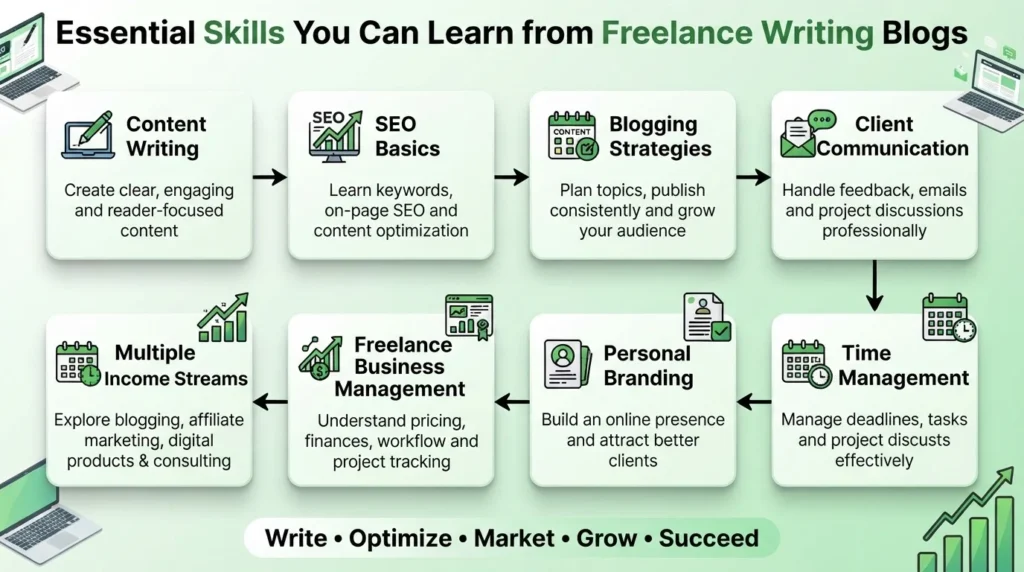
Reading high-quality freelance writing blogs isn’t just about gaining knowledge, it’s about developing practical skills that help you become a more confident writer and business owner. From creating engaging content to managing clients and increasing your income, these blogs cover the essential skills every freelancer needs to succeed in today’s competitive market.
- Writing Better Content: The best blog posts teach you how to write clear, engaging, and reader-focused content that delivers value. You’ll also learn storytelling, content structuring, editing techniques, and how to keep readers interested from start to finish.
- SEO Fundamentals: Understanding SEO helps your content rank higher on search engines and reach a larger audience. These blogs explain keyword research, on-page optimization, internal linking, and content optimization in an easy-to-understand way.
- Blogging Strategies: Successful blogging is more than publishing articles regularly. You’ll learn how to plan content, choose topics your audience cares about, maintain consistency, and build a blog that attracts both readers and potential clients.
- Client Communication: Strong communication builds trust and long-term client relationships. These resources teach you how to write professional emails, understand client requirements, handle feedback positively, and manage projects smoothly.
- Time Management: Freelancers often juggle multiple projects at once. These blog posts share practical productivity tips, planning techniques, and workflow strategies to help you meet deadlines without feeling overwhelmed.
- Freelance Business Management: Freelancing is also running a business. learn how to manage finances, set competitive rates, organize your workflow, track projects, and build a stable, sustainable freelance career.
- Marketing Yourself: Even talented writers need visibility to attract clients. These blogs explain how to build a personal brand, improve your online presence, create an impressive portfolio, and market your services effectively.
- Building Multiple Income Streams: Depending on one source of income can be risky. These blog posts introduce ways to diversify your earnings through blogging, affiliate marketing, digital products, online courses, content consulting, and other freelance job opportunities.
Common Mistakes Freelance Writers Make
Every freelance writer makes mistakes especially in the beginning. The good news is that you don’t have to learn every lesson the hard way. By reading advice from experienced freelancers, you can avoid common mistakes that slow career growth and start making smarter decisions from day one. Here are some of the most common mistakes and how the right blog posts can help you overcome them.
1. Charging Too Little: Many new freelancers believe that offering the lowest price will help them get more clients. While it may bring in a few projects initially, it often leads to low income and attracts clients who don’t value quality work. Freelance writing blogs teach you how to price your services based on your skills, experience, and the value you provide, so you can earn fairly without undervaluing yourself.
2. Ignoring Personal Branding: If clients don’t know who you are or what makes you different, they’ll likely choose someone else. Building a personal brand helps you stand out and creates trust before a client even contacts you. These blog posts explain how to develop a professional online presence through your portfolio, website, LinkedIn profile, and social media, making it easier for clients to recognize your expertise.
3. Depending on One Client: Having one reliable client may feel comfortable, but relying on a single source of income can be risky. If that client suddenly stops sending work, your income could disappear overnight. Experienced freelancers recommend building relationships with multiple clients and creating different income streams to ensure long-term financial stability.
4. Not Marketing Consistently: Many writers only look for new clients when work starts slowing down. Instead, successful freelancers market themselves consistently, even when they’re busy. Whether it’s updating your portfolio, networking on LinkedIn, publishing blog content, or sending pitches, regular marketing helps create a steady flow of opportunities instead of unpredictable work.
5. Skipping SEO Basics: Writing great content is important, but if people can’t find it online, its impact is limited. Basic SEO knowledge helps your articles perform better on search engines and increases your visibility as a writer. Freelance writing blogs simplify SEO concepts like keyword research, headings, internal linking, and content optimization, making them easy to understand and apply in your own writing projects.
How to Get the Most Value from Freelance Writing Blogs
Reading freelance writing blogs is a great way to learn, but simply consuming information isn’t enough. The real growth happens when you apply what you learn to your own freelance business. By turning useful advice into consistent action, you’ll improve your skills, attract better clients, and build a stronger writing career over time.
- Take Action Instead of Just Reading: Don’t stop after finishing an article, put the advice into practice as soon as possible. Even applying one useful tip can have a bigger impact than reading dozens of blog posts without taking action.
- Create Weekly Learning Goals: Instead of trying to learn everything at once, focus on one topic each week, such as SEO, client pitching, or content writing. This makes learning more manageable and helps you build skills consistently.
- Save Useful Resources: Whenever you come across an insightful blog post, bookmark it or organize it in a folder for future reference. Having a personal library of trusted resources makes it easy to revisit valuable advice whenever you need it.
- Apply One New Strategy Each Week: Choose one practical idea from the blogs you read and implement it in your freelance work every week. Small improvements made consistently can lead to significant growth over time.
- Track Your Results: Pay attention to how the strategies you apply affect your writing, client inquiries, website traffic, or income. Tracking your progress helps you identify what works best and allows you to continuously improve your freelance business.
Conclusion
Becoming a successful freelance writer isn’t just about improving your writing skills, it’s about continuously learning, adapting, and growing as a professional. The right blog posts can teach you everything from finding high-paying clients and setting profitable rates to mastering SEO, building your personal brand, and managing a thriving freelance business.
Every experienced freelancer started somewhere, and many of the lessons they share can help you avoid common mistakes while accelerating your own journey. Instead of trying to figure everything out through trial and error, make learning from trusted industry experts a regular habit. Bookmark the blog posts that resonate with you, apply one new strategy at a time, and stay consistent with your efforts.
Remember, freelance writing is a long-term career, and the writers who keep learning are the ones who continue to grow, attract better opportunities, and achieve lasting success. So, start exploring these must-read blog posts today and take one more step toward building the freelance writing career you’ve always wanted.
FAQs
1. What Are the Best Blog Posts for Beginner Freelance Writers?
Beginner freelance writers should read blog posts that cover writing fundamentals, finding clients, pricing strategies, SEO basics, and portfolio building to establish a strong foundation.
2. How Often Should Freelance Writers Read Industry Blogs?
Reading one or two high-quality freelance writing blogs each week is enough to stay updated with industry trends, improve your skills, and discover new business strategies.
3. Can Freelance Writing Blogs Help Me Get More Clients?
Yes. Many freelance writing blogs share practical tips on client outreach, personal branding, portfolio optimization, networking, and marketing strategies that can help you attract better clients.
4. Which Skills Can I Develop by Reading Freelance Writing Blogs?
You can improve content writing, SEO, blogging, client communication, productivity, pricing, business management, marketing, and personal branding skills through consistent learning.
5. Are Freelance Writing Blogs Useful for Experienced Writers?
Absolutely. Even experienced freelancers benefit from learning new SEO updates, content strategies, client management techniques, and business growth ideas that help them stay competitive in the evolving freelance industry.