

When you consider turning into an electrician, chances are that the first thing that comes to your mind is the amount of money electricians earn. It is not a dumb question – and if you’re wondering, How Much Do Electricians Make, the answer may pleasantly surprise you.
The median income for an electrician in the USA is approximately $60,000 to $70,000/year. That’s roughly $29 to $34 per hour. However, skilled electricians, such as speciality electricians and entrepreneurs, can earn much more than $100,000 annually.
The U.S. Bureau of Labor Statistics (BLS) reported that the median annual wage for electricians was $61,590 in 2024, and it has been on the rise. The average is expected to be close to $65,000–$68,000, given high demand and ongoing labour shortages.
In the United States, there are currently over 762,000 electricians working. And that figure will increase by 11% in the next decade — far faster than most other positions.
The demand is real. Any new residential, office, or electric vehicle charging station requires a licensed electrician. Projects made by renewable energy alone are generating thousands of new jobs annually.
Therefore, no matter whether you are still an apprentice or whether you want to move up, electricians are making serious cash — and the career ladder is quite accessible.
Brief Overview of the Electrician Profession
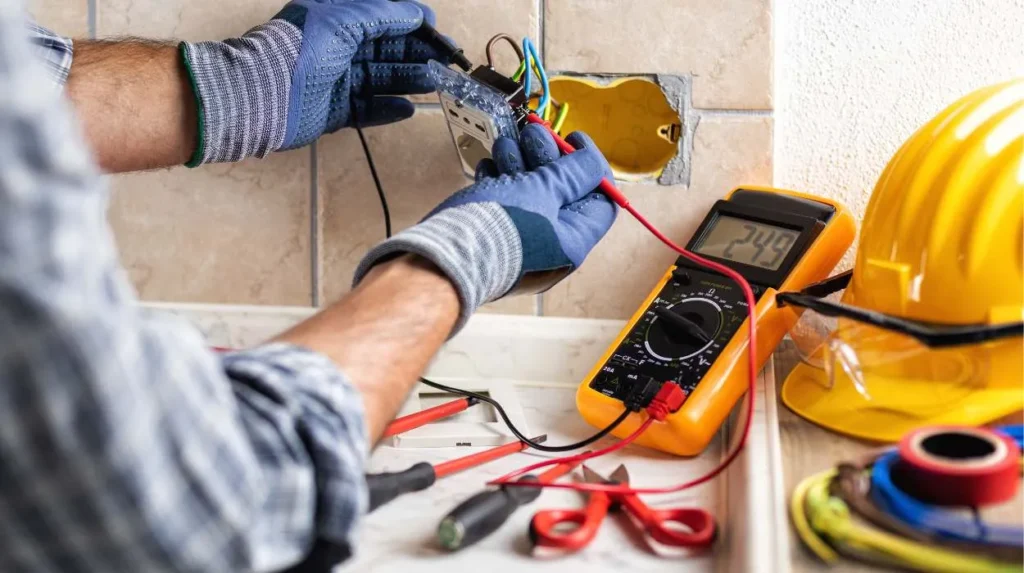
An electrician is an employee who installs, maintains, and repairs electrical systems. They occupy the homes, businesses, factories, and construction sites. Their work involves installing wire in walls, installing circuit breakers, installing lighting systems, and ensuring everything is safe and up to code.
It may sound easy, but a single wrong move can trigger a fire or result in severe injuries. This is why electricians take years before becoming trained.
Learn How to Become an Electrician
Types of Electricians
Not any electricians are of the same type. There are a few main types:
- Residential Electricians: They are employed at homes. They lay lighting, plug sockets, and electrical boards. It is the most widespread one among novices.
- Commercial Electricians: They operate in offices, stores/shopping centers. The systems are more complex and larger.
- Industrial Electricians: They are employed in factories and other industrial settings. They are involved in high voltage and heavy machinery.
- Journeyman Electricians: They are graduates. They can work on most jobs independently.
- Master Electricians: The most experienced and licensed are the Master Electricians. They can establish their business and hire other electricians.
Also Read: How to Make Money in One Hour
What Do You Like About Being an Electrician?
Most electricians begin a 4-year apprenticeship. During this period, they will be employed by a licensed electrician and study part-time. Once the apprenticeship period is completed, they advance to journeyman electrician. After some additional work experience, they will be eligible to take the master electrician licensing exam.
There is no requirement for a four-year college education. The cost of most apprenticeship programs is minimal or free, especially when sponsored by unions.
Why Understanding Electrician Salary Matters
Salary matters a lot when you are deciding on a career. You desire to know whether your effort and time will not be wasted. Electricians have higher wages than the median income in the country, which is approximately $59,000 for all U.S. workers in 2026. It implies that a typical electrician already earns higher than the majority of Americans.
The pay scale can also assist in planning. You would know which specialties are better paying, which states are better paying, and what certifications and licensing will have an impact on your earnings.
Electrician Salary in the USA- Annual Outlook
Annual salaries of electricians across the experience levels will be broken down:
- Apprentice/Entry-Level: $35,000 -45,000/year.
- Journeyman Electrician: $55,000 -75000/per annum.
- Master Electrician: $75,000 – $100,000+ per year
- Electrical Contractor (Self-employed): $90,000 -150,000 +/year.
- Specialist / industrial electrician: $80,000- $120,000/year.
How Much Do Electricians Make Per Hour?
The following is a good hourly estimate for 2026:
- Apprentice: $17 – $22/hour
- Journeyman: $28 – $40/hour
- Master Electrician: $40 – $60/hour
- Specialty/Industrial: $45 -75/hour.
- Self-employed Contractor: $65 -150 +/hour (billing rate, not take-home)
The average wage of an electrician in the country will be around $31- $35/hour. From a perspective, the average American worker earns about $28/hour across all industries. Electricians are above average – even in mid-level. Union electricians in large cities can earn $45-60/hour with benefits. That is a good middle-class salary indeed.
Monthly Electrician Earnings
According to a 40-hour working week, the annual earnings of the electricians in 2026 are as follows:
- Apprentice: $2,800 – $3,600/month
- Journeyman: $4,500 – $6,200/month
- Master Electrician: $6,200 – $8,500/month
- Industrial/Specialized: $6,500 -10,000/month.
- Contractor Self-employed: $7,500 0-13,000+/month.
A journeyman electrician who earns $60,000/year has an average of $5,000 per month after taxes. That, when you take away the base, amounts to about $3,800–$4,200/month take-home pay — enough to comfortably make the rent, bills, and savings in most cities of the United States. This gives a practical example of How Much Do Electricians Make at the journeyman level.
For master electricians or even those operating a small business, the average monthly income may be more than $8,000–$10,000, and they will definitely fall into the upper-middle-income bracket.
Do Electricians Make $100,000 a Year?
Yes!
Above-Average vs. Average Earnings
The median journeyman electrician makes about $65,000-$70,000 annually. That’s a solid income. However, the six-figure target is realistic for electricians who are strategic planters in their careers.
Most above-average electricians share common characteristics. They are licensed at the master’s level. They also specialise in areas which are in demand. They are employed in well-paid states or sectors. And some of them are maintaining their own business or are independent contractors.
Typical Paths to Reach $100K
Path 1: Master Electrician
A master electrician with 10 or more years of experience earns an average of $80,000 to $ 110,000 /year with a company. Overtime and you can even get past 100K without even having to open your own business.
Path 2: Go to Industrial or Utility Work Electrician
Electricians who work in power plants, manufacturing plants, or utilities typically earn between $80,000 and $ 120,000 annually. These are more training jobs but with higher pay.
Path 3: Open Your Own Electric Company
This is the quickest to get to $100K and higher. Electrical contractors are licensed and charge their own rates. A contractor with a busy schedule, working on commercial and residential projects, can make $ 100,000-$200,000+ annually, but will be at risk and responsible for the business.
Path 4: Work Union in a High-Wage State
Union electricians in states such as California, New York, Washington, and Illinois could expect to earn between $90,000 and $120,000, including overtime and benefits. IBEW also negotiates powerful contracts with its members.
Path 5: Solar or EV Infrastructure Specialized Infrastructure
Renewable energy is on fire. Solar panel installers, those who deal with battery storage systems, or charging infrastructure of electric vehicles (EVs) are in demand, and they also receive high salaries.
Can Electricians Make $200,000 a Year?
This is not so widespread – yet by no means impossible.
Possibility in Specialised Roles
To make it to $200,000 as an electrician typically brings a mixture of variables together:
Successful Electrical Business
Electrical contractors with a staff of 5-10 electricians and large business contracts can make up to $500,000 in profit and take home $150,000-$250,000 after costs.
Electricians involved in High-Voltage or Specialised
Industry work that involves nuclear power plants, oil refineries, or large data centres deals with very complex, high-stakes systems. Others work on a base salary of between $120,000 and $180,000, and overtime may go beyond $200,000.
Remote or Hazardous Locations Electricians
Electricians who accept employment on offshore oil platforms, in remote oilfields in Alaska or in military installation projects usually receive enormous hourly rates and housing and travel allowances. Others are earning an annual income of between $160,000 and $220,000 in boom years of the projects.
Electrical Foreman / Supervisors in the Larger Urban Locations
A New York City or San Francisco union electrical foreman or project superintendent will earn between $130,000 and $200,000 in one year with overtime and benefits.
Is $200K guaranteed? No. It has been years of experience, wise career decisions, and even the readiness to do difficult or distance work. However, it is not too expensive for the appropriate electrician.
What Is the Highest Paying Electrician Job?
Top High-Pay Roles
The following list includes the electricians whose jobs will be the most paid on a regular basis:
1. Electrical Project Manager:
These are professionals working on big electric construction projects. They do not do many practicals. Instead, they are in charge of teams, budgets and schedules.
Average salary: $90,000 – $130,000/year
2. Industrial Electrician (Heavy Manufacturing / Oil and Gas)
Installing electrical equipment of high voltage in refineries, chemical plants, and factories. The danger is increased, and so is the remuneration.
Average salary: $80,000 – $125,000/year
3. Electrical Superintendent
Manages the electrical aspects of large-scale construction projects, such as hospitals, airports, and skyscrapers. Experience in years needed.
Average salary: $95,000 – $145,000/year
4. Utility Electrician / Lineman
Operates on electric lines and electric grids. Frequently uses utility poles or has to work in risky outdoor conditions. Union linemen are especially highly paid.
Average salary: $85,000 – $130,000/year
5. Renewable Energy Electrician (Solar / Wind)
It is the most rapidly expanding category of the industry. Electricians with expertise in solar arrays or wind turbine electric systems are in very high demand.
Average salary: $75,000 – $115,000/year
6. Master Electrician / Electrical
Contractor (Self-Employed). It is all up to you to put the ceiling in an electric business of your own. The top contractors earn more than six figures every year.
Average salary: $100,000 – $200,000+/year
7. Avionics / Aerospace Electrician
Services aircrafts and aerospace systems. Such electricians require clearance and security training.
Average salary: $80,000 – $120,000/year
Typical Pay Ranges
| Role | Annual Salary Range (2026) |
| Electrical Project Manager | $90,000 – $130,000 |
| Industrial Electrician | $80,000 – $125,000 |
| Electrical Superintendent | $95,000 – $145,000 |
| Utility Electrician / Lineman | $85,000 – $130,000 |
| Renewable Energy Electrician | $75,000 – $115,000 |
| Master Electrician / Contractor | $100,000 – $200,000+ |
| Aerospace Electrician | $80,000 – $120,000 |
| Journeyman (Commercial) | $60,000 – $85,000 |
| Journeyman (Residential) | $50,000 – $70,000 |
| Apprentice Electrician | $35,000 – $45,000 |
Is an electrician a Stressful Job?
It is a question to which people do not give sufficient attention, and it is worth telling the truth. Yes, electricians are dealing with actual stress. The kind of stress, however, is not what you would have thought.
Physical Demands
Electricians are required to spend much time standing. They utilise ladders, squeeze through narrow crevices and hoist the heavy machinery. Physical aging and use take place after years in the trade.
Experienced electricians have back pain, knee problems, and shoulder injuries. The physical need is an aspect of the work, and it is enhanced by proper technique and safety equipment.
Safety Pressure
Electricity is hazardous to work with. One mistake, a step that was overlooked or even carelessness, can lead to electric shock, burns, or even fatality.
This makes the mind alert at all times. Electricians should be attentive and adhere to safety regulations and procedures and recheck their work. This becomes natural to most professionals, yet the strain does not entirely disappear.
Deadline and Client Stress
Electricians are generally on time pressure on construction projects. One of your sections of the project can lag, and the entire construction may be held up. The stress is increased by the pressure among the contractors and clients.
Business stresses are also experienced by self-employed electricians, where they need to find customers, payment, and complaints.
Job Satisfaction: The Other Side
Despite the stress, the electricians’ job satisfaction is fairly high. The majority of the electricians indicate that they take pride in what they are doing. It has a certain feeling of achievement in making a building wired like that and the lights go on.
The pay is good. The job is stable. And a day is never like another. Electrician stress is beneficial and bearable to people who love hands-on and problem-solving jobs.
Electricians consistently report higher job satisfaction than other trades.
State-by-State Electrician Salary Variations USA
Your electrician’s salary depends a lot on where you are residing. States with a high cost of living, increased construction activity, or strong unions are more likely to pay more. The breakdown of the numbers in 2026 will look as follows:
Best paying States of electrician
Illinois is always ranked among the best-paying states. The high unionisation in Chicago increases wages.
Average annual salary: $85,000 – $100,000.
New York, and New York City in particular, has one of the highest rates of paying electricians nationwide. Union electricians in NYC make up to $90,000-$ 120,000 or higher.
The state of California is experiencing a surge in construction demand, particularly in the Bay Area and Los Angeles.
Average salary: $75,000 – $95,000
The technology sector and construction are also expanding in Oregon and Washington.
Average salary: $72,000 – $90,000
Alaska is paying a premium due to its inaccessibility and harsh environment.
Average salary: $78,000 – $100,000
The cost of living and the unions are high in Hawaii.
Average salary: $70,000 – $88,000
Lower-Paying States
The South and Midwest states are less likely to pay much, as the work is not less skilled, but living is less expensive. Mississippi, Arkansas, and West Virginia usually provide the lowest electricians’ wages – between $42,000 and $52,000/ year on average. Decent money, nonetheless, given reduced living costs in the region.
Alabama, Louisiana, and South Carolina have an average of approximately $48,000-58, 000/year.
A Note on Purchasing Power
The salary of $70,000 in Alabama will be far more than $95,000 in San Francisco. When comparing state wages, always check on the cost of living. Switching to a higher-paying state is not necessarily a financial success, as it may appear on paper.
Electrician Salary Table (USA Averages) 2026
The following is a detailed pay table of electricians in the United States in the year 2026:
By Experience Level
| Experience Level | Hourly Rate | Annual Salary |
| Apprentice (Year 1–2) | $17 – $20 | $35,360 – $41,600 |
| Apprentice (Year 3–5) | $20 – $26 | $41,600 – $54,080 |
| Journeyman Electrician | $28 – $40 | $58,240 – $83,200 |
| Master Electrician (Employed) | $40 – $60 | $83,200 – $124,800 |
| Electrical Contractor (Self-Employed) | $65 – $150+ | $100,000 – $200,000+ |
By Industry
| Industry | Average Annual Salary (2026) |
| Residential Construction | $50,000 – $68,000 |
| Commercial Construction | $62,000 – $85,000 |
| Industrial / Manufacturing | $68,000 – $110,000 |
| Oil & Gas / Petrochemical | $80,000 – $130,000 |
| Utilities / Power Grid | $75,000 – $120,000 |
| Renewable Energy (Solar/Wind) | $65,000 – $100,000 |
| Government / Military | $60,000 – $90,000 |
| Aerospace / Avionics | $72,000 – $115,000 |
By State (Selected)
| State | Average Annual Salary (2026) |
| Illinois | $85,000 – $100,000 |
| New York | $82,000 – $115,000 |
| California | $75,000 – $95,000 |
| Washington | $72,000 – $90,000 |
| Alaska | $78,000 – $100,000 |
| Oregon | $70,000 – $88,000 |
| Hawaii | $70,000 – $88,000 |
| Texas | $58,000 – $72,000 |
| Florida | $55,000 – $68,000 |
| Georgia | $54,000 – $66,000 |
| Ohio | $58,000 – $74,000 |
| Mississippi | $42,000 – $52,000 |
| National Average | $63,000 – $70,000 |
Conclusion
Electricians should know how much they earn. The brief response to How Much Do Electricians Make: good, increasing revenue — and there is potential to do better, should you be keen.
On average, the electrician in the USA earns approximately $63,000–$70,000 a year. That is higher than the national median income. The starting pay for entry-level apprentices is approximately $35,000–$40,000. Professional journeymen are paid $60,000–$85,000. And electricians, master or contractors, can go to $100,000 to $200,000+ with ease.
The way to better remuneration is evident. Get your journeyman license. Then your master license. Major in high-demand areas such as industrial work, utilities, or renewable energy. Work in a union if you can. And you should consider opening your own business once you are experienced enough.
There is also a huge demand for electricians. The BLS forecasts that the number of electricians will increase by 11 per cent in the coming 10 years, which is even quicker than nearly any other trade. The emergence of electric cars, solar power, and buildings of the future implies that the demand for skilled electricians is only increasing.
FAQs
What is the duration of time to be a licensed electrician?
The majority of apprenticeships last 4-5 years. Then there is a journeyman license test. It requires a few more years of experience on top of that to get a master’s license.
Are union electricians better remunerated?
Yes, generally. On average, union electricians (IBEW) are paid 10-20% higher than non-union electricians and receive better benefits, such as health insurance and pensions.
Will there be a future of becoming an electrician?
Absolutely. The employment sector is good, the job market is rising, and remuneration is well above the average, without requiring a four-year college degree.
How does a journeyman differ from a master electrician?
An apprentice can perform electrical work on their own. A master electrician is more experienced, holds a higher license, and may legally establish his own electrical contracting company.