
Looking for a secure and reliable way to manage data in an era where cyber threats and compliance demands are constantly rising? Secure database management platforms have become the backbone of modern digital infrastructure, helping organizations store, process, and protect critical information with confidence. From startups handling customer data to enterprises managing massive transactional workloads, the need for robust, secure databases has never been greater.
Today’s database management platforms go far beyond simple data storage. They combine advanced security controls, encryption, access management, high availability, and scalability to ensure data remains protected, accessible, and compliant across environments. Whether deployed on-premise, in the cloud, or across hybrid architectures, choosing the right secure database platform can directly impact performance, trust, and business continuity.
What Are Database Management Platforms?
Database management tools refer to software programs that assist organisations to develop, store, manage, protect, and maintain databases cost-effectively. They offer interfaces and automation of activities like data modeling, querying, indexing, backup, recovery, performance tuning and user access control.
The tools make it possible to administer and develop large amounts of structured or unstructured data and maintain integrity, availability and security of data. The modern database management tools are also able to monitor, audit, encrypt and comply with requirements, lowering the risk of operations.
They are offered as on-premise, cloud, or hybrid and make managing databases easier, enhance database performance, and enable the business to scale data operations in a reliable way to support analytics and application development along with decision-making. They are needed in modern business with data-driven loads on various platforms and environments and global teams.
Quick Comparison of Secure Database Management Platforms
| Tool | Best For | Ease of Use | Pricing |
|---|---|---|---|
| Oracle Database | Large enterprises, finance, government, compliance-heavy workloads | Moderate to complex; requires skilled DBAs | Enterprise licensing; infrastructure costs apply |
| Microsoft SQL Server | Windows-based enterprises and OLTP applications | User-friendly with strong GUI tools | Paid; per-core and server/CAL licensing |
| PostgreSQL | Open-source projects, startups, secure transactional systems | Moderate; requires tuning for scale | Free and open source |
| Revver | Secure document management, workflow automation, compliance | Easy; intuitive interface | Custom pricing (Contact sales) |
| MongoDB Enterprise / Atlas | Modern applications using JSON and flexible schemas | Easy for developers, especially Atlas | Usage-based; free tier available |
| IBM Db2 | Enterprise analytics and transactional workloads | Moderate; enterprise-focused | Custom pricing on request |
| Amazon Aurora | Cloud-native applications on AWS | Very easy; fully managed | Pay-as-you-go based on storage and I/O |
| CockroachDB | Globally distributed, highly available applications | Moderate; distributed concepts required | Hourly pricing; enterprise plans available |
| YugabyteDB | Geo-distributed PostgreSQL-compatible workloads | Moderate to advanced | Subscription-based per vCPU |
| TiDB | Large-scale MySQL-compatible distributed systems | Moderate; requires operational expertise | Enterprise pricing on request |
| ClickHouse | Real-time analytics, BI, and log processing | Moderate; analytics-focused setup | Free core; paid cloud plans |
| RavenDB | Secure document databases with ACID support | Easy for developers | Custom enterprise pricing |
| YDB (Yandex Database) | Large-scale cloud-native transactional systems | Moderate; limited global tooling | Open source |
| Amazon DocumentDB | MongoDB-compatible workloads on AWS | Very easy; fully managed | Usage-based per instance/DCU and I/O |
| SAP HANA | ERP, real-time analytics, SAP-centric enterprises | Complex; enterprise-focused | Premium, consumption-based pricing |
| GaussDB (Huawei) | Telecom, finance, and regulated enterprise systems | Moderate; Huawei ecosystem-oriented | Contact sales |
List of Top 15+ Secure Database Management Platforms
1. Oracle Database
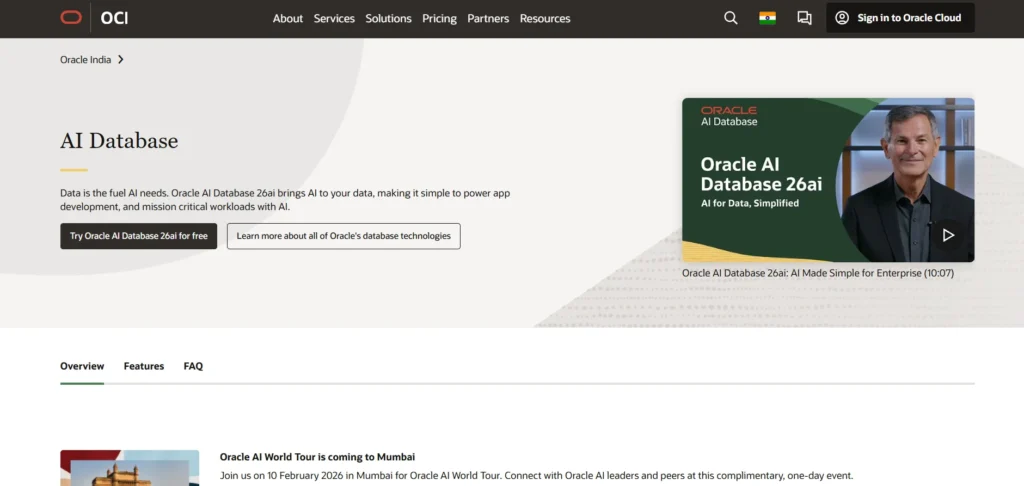
Oracle Database is a commercial enterprise relational database management system that is reputed to be robust, scalable, and has features of thorough security. It contributes to fine-grained access control, multifactor authentication, analysis of privileges, network encryption (TLS), and single auditing in the protection of sensitive information.
Virtual Private Database and Real Application Security by Oracle supports least-privilege controls and segregated access policy. The site is connected to enterprise identity services to authenticate users, and allow encryption of data at rest and in transit.
The Oracle is a popular database in the financial, medical and government sphere where security and compliance are paramount. Its secure design, combined with the high availability features such as Real Application Clusters, will suit high workloads.
Website: https://www.oracle.com/database/
Key Features:
- Advanced encryption at rest and in transit
- Fine-grained access control with VPD
- Unified auditing and activity monitoring
- Real Application Clusters (RAC) support
- Multitenant architecture
- Built-in compliance and security tools
Pros:
- Extremely robust enterprise security
- High scalability and availability
- Strong compliance support
- Mature ecosystem and tooling
- Widely trusted by regulated industries
Cons:
- High licensing cost
- Complex administration
- Vendor lock-in risk
Pricing:
- Virtual machine instance (AMD, 4 vCPUs, 16 GB RAM, monthly)- $54
- Kubernetes cluster (64 vCPUs, 512 GB RAM, monthly)- $3,507
- Block storage (1×1 TB, 15K IOPS, 125 MB/sec, monthly)- $43
- Public bandwidth transferred out (50 TB, monthly)- $340
2. Microsoft SQL Server
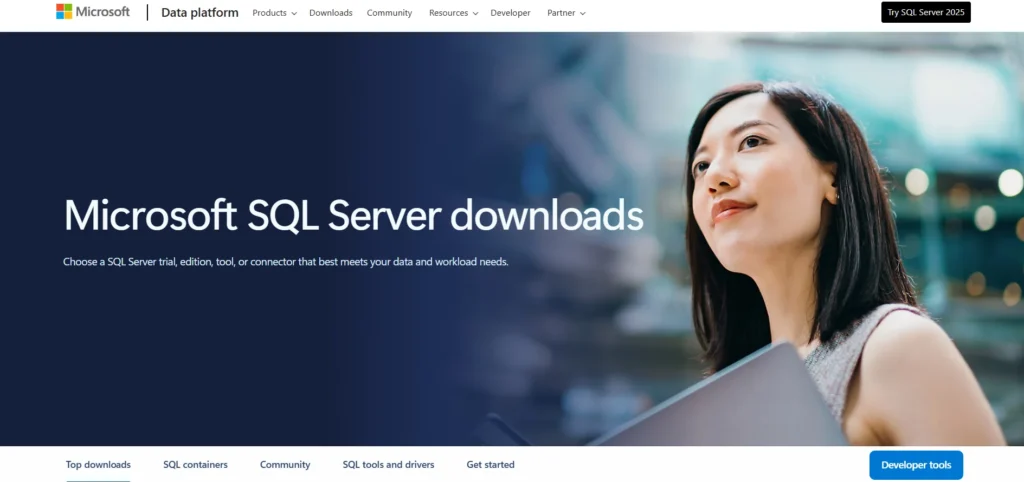
Microsoft SQL Server is one of the leading secure database management platforms, providing an application-level, enterprise-grade relational database with robust built-in security for modern applications.
It encompasses encrypting data at rest using Transparent Data Encryption (TDE), encryption of sensitive data in use using the Always Encrypted, and masking confidential data in query results using dynamic data masking. A role based security model with SQL Server enables the administrators to set down fine detail permissions and its native interaction with active directory and Kerberos authentication reinforces access control.
It has a security dashboard that provides real-time insights, compliance reporting, and the identification of threats. It is utilized in premises and the cloud environment in large numbers and usually in conjunction with other network security measures.
Website: https://www.microsoft.com/en-in/sql-server/
Key Features:
- Transparent Data Encryption (TDE)
- Always Encrypted for sensitive data
- Role-based access control
- Active Directory integration
- Advanced threat detection
- Built-in auditing and compliance tools
- Server Monitoring Services
Pros:
- Excellent Windows ecosystem integration
- Strong security defaults
- User-friendly management tools
- Good performance for OLTP workloads
- Wide enterprise adoption
Cons:
- Licensing can be expensive
- Limited cross-platform flexibility
- Resource-intensive at scale
Pricing:
- Enterprise– $15,123
- Standard – per core- $3,945
- Standard – server- $989
- Standard – CAL- $230
3. PostgreSQL
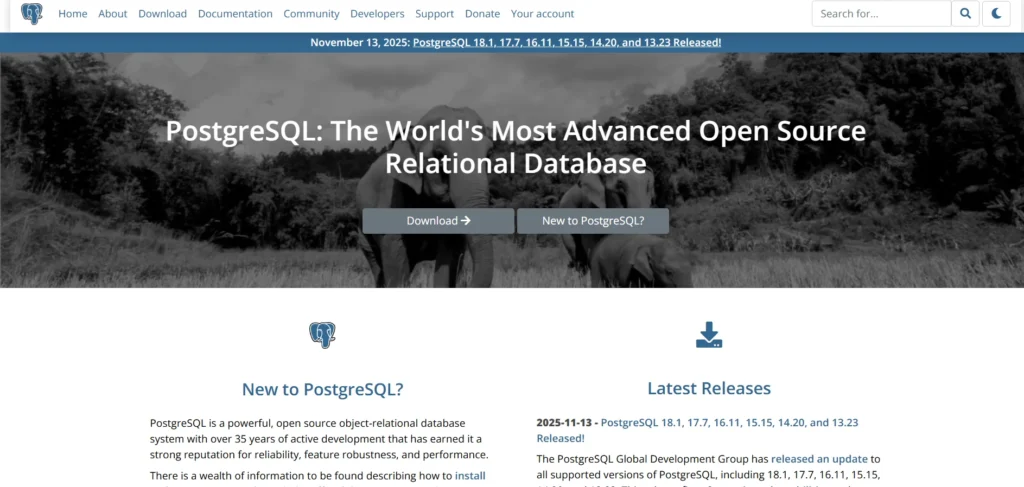
PostgreSQL is an open-source system framework of the relational database that highly focuses on data integrity, extensibility, and security. It offers strong role based access control and permissions that can be set at a fine grain down to column levels.
The internal security of PostgreSQL provides secure user authentication based on the SCRAM-SHA-256 authentication, conceptualization of Kerberos, GSSAPI, and SSPI. It has a SECURITY LABEL feature, which allows label-based access control to mandatory security policies, frequently with SELinux.
PostgreSQL also implements data in transit encryption over the use of the TCP protocol with the use of the SSL/TLS and administrators can add further encryptions to sensitive loads. The database is extensively used with mission-critical systems with high consistency and customizable security settings.
Website: https://www.postgresql.org/
Key Features:
- Role-based and column-level security
- SSL/TLS encrypted connections
- Advanced authentication methods
- Extensible security plugins
- ACID-compliant transactions
- Strong data integrity controls
Pros:
- Fully open-source
- Highly secure and stable
- Excellent extensibility
- Strong community support
- No licensing costs
Cons:
- Requires tuning for high scale
- Limited native UI tools
- Enterprise support not built-in
Pricing:
- Open source
4. Revver
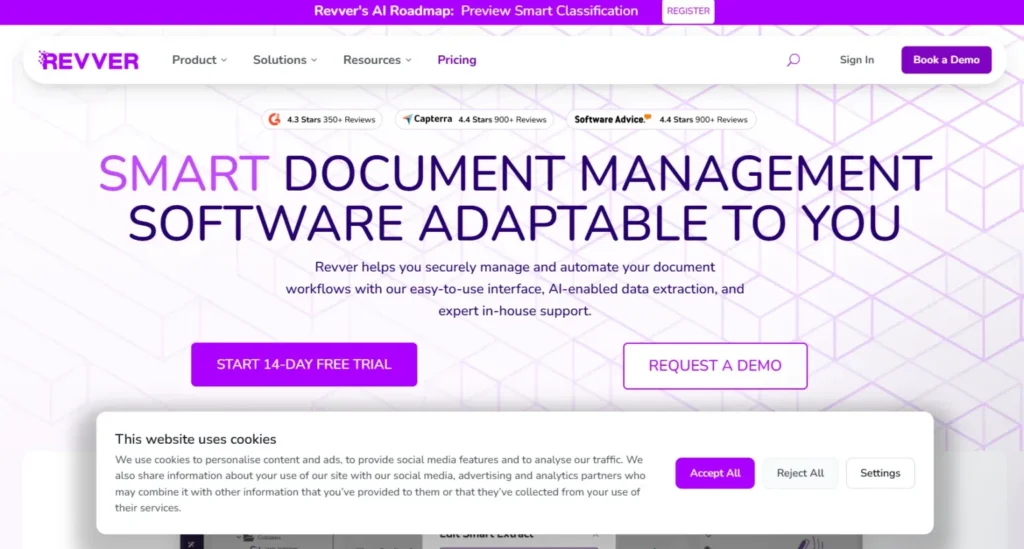
Revver is a document management software platform that helps businesses organize, secure, and automate their document workflows. It centralizes files in a searchable repository, making it easier for teams to access information while maintaining strict control over sensitive business documents.
The platform includes role-based permissions, audit trails, version control, and automated workflows to reduce manual work and improve compliance. Revver also integrates with popular business applications, allowing organizations to streamline document storage, approvals, and collaboration without sacrificing security.
Website: https://www.revverdocs.com/
Key Features:
- Centralized document repository
- Role-based access controls
- Automated workflow and approvals
- Version control and document history
- Audit trails and activity tracking
- Advanced search and document indexing
- Integrations with leading business applications
Pros:
- Easy to organize and retrieve documents
- Strong security and access management
- Automates repetitive document workflows
- Supports compliance and audit readiness
- Simple, intuitive user interface
Cons:
- Pricing is not publicly available
- Initial setup may require planning
- Some integrations may require additional configuration
Pricing:
- Custom pricing (Contact sales for a quote)
5. MongoDB Enterprise / MongoDB Atlas
MongoDB Enterprise and its cloud-native equivalent MongoDB Atlas are document-based databases to do scalability and secure data management. They promote access control by roles, LDAP authentication, Kerberos authentication, and auditing.
MongoDB Enterprise Advanced also has field-level encryption, which safeguards sensitive fields in documents separately throughout their lifecycle. Atlas offers safe network resource segregation through VPC peering, TLS in transit encryption, and rest encrypted customer-controlled keys.
Fine-grained authorization would be used to make sure applications and users assigned only with the required privileges. MongoDB is appropriate in current applications with JSON-based data models and data control demands of distributed deployments on clouds because of these security aspects.
Website: https://www.mongodb.com/
Key Features:
- Field-level encryption
- Role-based access control
- LDAP and Kerberos authentication
- Auditing and compliance reports
- TLS encryption
- Cloud-native security controls
Pros:
- Flexible document data model
- Strong cloud security features
- Easy horizontal scaling
- Managed service available
- Developer-friendly
Cons:
- Licensing restrictions
- Higher memory usage
- Complex transactions at scale
Pricing:
- Dedicated– $0.08/hour
- Flex– $0.011/hour
6. IBM Db2
IBM Db2 is an enterprise relational database platform and one of the leading secure database management platforms, offering advanced security and high reliability for transaction and analytics workloads.
It includes encryption at rest and SSL/TLS encryption for data in motion, along with workload isolation and database activity monitoring. Db2 supports fine-grained authorization and authentication, enabling strict access control for users and applications.
Its cloud and on-premises editions provide flexible deployment options with rolling updates and secure backup/restore features. Trusted by financial institutions and regulated industries, Db2 combines performance, scalability, and security to protect mission-critical data in distributed and hybrid environments.
Website: https://www.ibm.com/products/db2
Key Features:
- End-to-end data encryption
- Database activity monitoring
- Advanced access control
- AI-driven performance optimization
- Secure hybrid deployments
- Built-in compliance tooling
Pros:
- Enterprise-grade reliability
- Strong analytics integration
- High security standards
- Hybrid cloud ready
- Trusted in finance sector
Cons:
- Steep learning curve
- Higher operational cost
- Smaller developer community
Pricing:
- Request Pricing
7. Amazon Aurora
Amazon Aurora is a fully managed cloud relational database service compatible with MySQL and PostgreSQL. It provides automatic backups, continuous replication across multiple Availability Zones, and encryption at rest and in transit using AWS Key Management Service (KMS).
Aurora’s distributed architecture enhances resilience and availability, while integration with AWS Identity and Access Management (IAM) allows centralized access control.
Automated patching and built-in monitoring help secure database instances with minimal administrative effort. Aurora is engineered for high performance and security in cloud environments, making it ideal for scalable modern applications that need strong operational and compliance guarantees.
Website: https://aws.amazon.com/rds/aurora/
Key Features:
- Encryption via AWS KMS
- Multi-AZ fault tolerance
- IAM-based authentication
- Automated backups and patching
- MySQL and PostgreSQL compatibility
- Continuous monitoring
Pros:
- Fully managed service
- High availability by default
- Strong AWS ecosystem integration
- Scales automatically
- Minimal admin overhead
Cons:
- AWS-only platform
- Costs increase with scale
- Limited low-level control
Pricing:
- Aurora Standard– Storage Rate- $0.10 per GB-month
- Aurora I/O-Optimized– Storage Rate- $0.225 per GB-month
8. CockroachDB
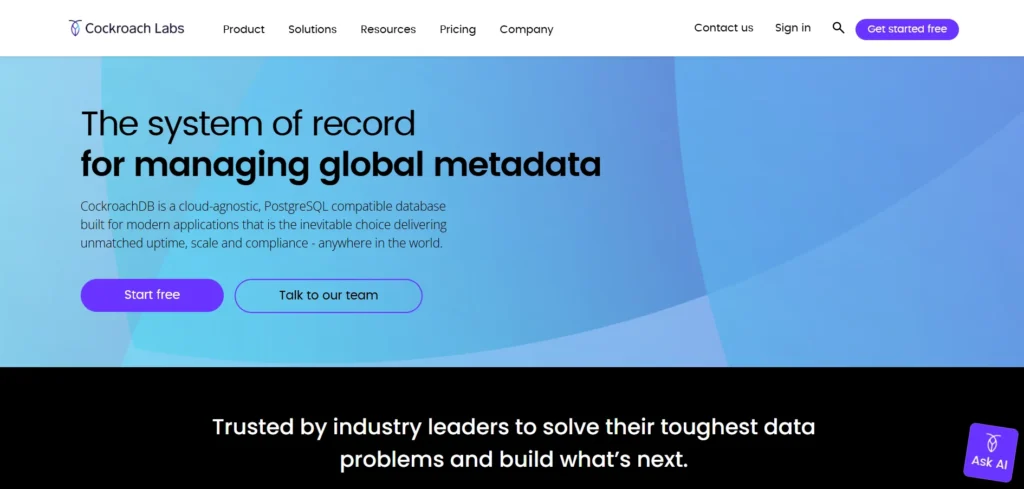
CockroachDB is a cloud-native, distributed SQL database designed for resilience and scalability across data centers and cloud regions.
It supports ACID transactions and PostgreSQL-compatible SQL, enabling familiar development workflows. CockroachDB automatically replicates data across nodes using a distributed, transactional key-value store, providing fault tolerance and consistency even during infrastructure failures.
Its secure design includes TLS for node and client communications and enterprise authentication options. CockroachDB’s ability to survive outages and self-healing architecture makes it suitable for mission-critical applications requiring continuous operations with strong consistency and robust security.
Website: https://www.cockroachlabs.com/
Key Features:
- Distributed SQL architecture
- Automatic data replication
- TLS-secured node communication
- ACID-compliant transactions
- PostgreSQL compatibility
- Self-healing infrastructure
Pros:
- Extremely resilient
- Global scale support
- Strong consistency guarantees
- Cloud-native design
- Minimal downtime
Cons:
- Complex architecture
- Higher latency in some queries
- Enterprise features are paid
Pricing:
- Standard– $0.18 / hr
- Advanced– $0.60 / hr
Suggested Read: Best DDoS Protection Software
9. YugabyteDB
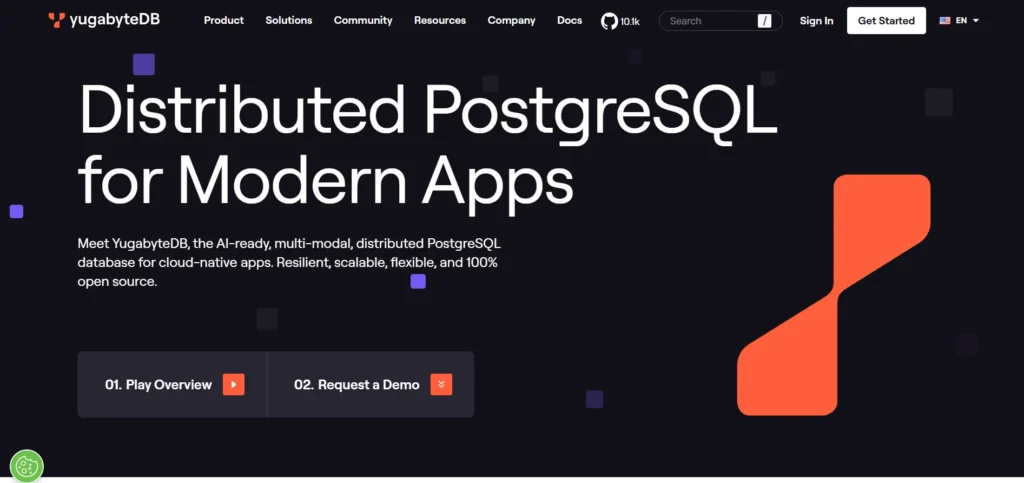
YugabyteDB is a high-performance, transactional distributed SQL database built for cloud-native applications and secure database management platforms. It provides ACID compliance, geo-distributed replication, and strong consistency across nodes.
YugabyteDB supports PostgreSQL compatibility, allowing seamless integration with PostgreSQL tools and applications. Its architecture partitions data across clusters to maintain resilience and fault tolerance, which enhances security by reducing single points of failure.
Enterprise distributions include role-based access control and secure communication via TLS. YugabyteDB’s scalability and transactional guarantees make it suitable for globally distributed systems where performance and data protection are critical.
Website: https://www.yugabyte.com/
Key Features:
- Distributed PostgreSQL compatibility
- Geo-distributed replication
- Role-based access control
- TLS encryption
- Fault-tolerant architecture
- ACID transaction support
Pros:
- Scales globally
- Strong consistency
- Cloud-agnostic deployment
- Familiar SQL interface
- High availability
Cons:
- Operational complexity
- Smaller ecosystem
- Enterprise support costs
Pricing:
- Standard– $125/ vCPU / month
- Professional– $167/ vCPU / month
10. TiDB
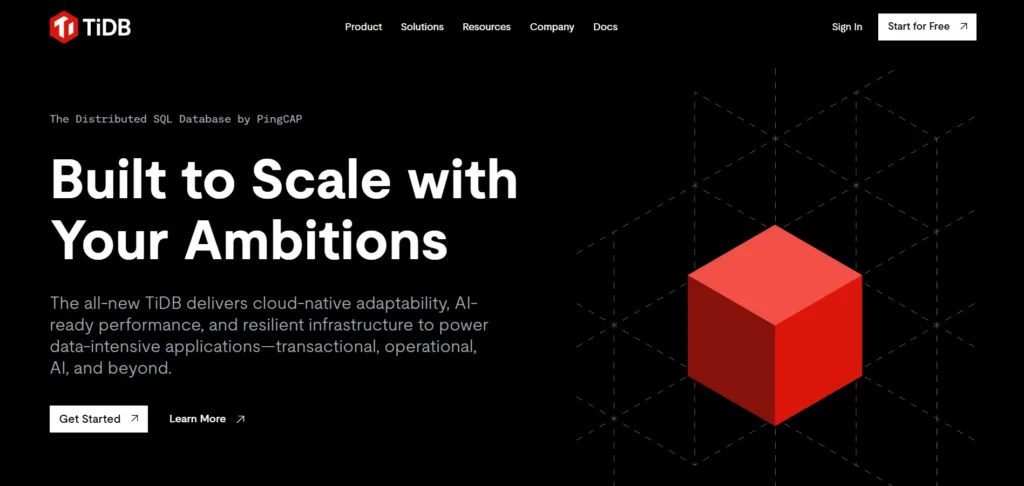
TiDB is an open-source distributed NewSQL database combining horizontal scalability with strong transactional support. Designed to handle large datasets across clusters, TiDB separates SQL processing from storage, enabling independent scaling.
It uses region-based sharding and two-phase commits to maintain transactional consistency across nodes. Although specific advanced security features vary by deployment, TiDB supports TLS encryption for secure inter-node communication and standard authentication practices.
Its distributed architecture enhances fault tolerance by allowing data replication across multiple servers. TiDB is well-suited for cloud deployments needing scalable, SQL-compliant databases with consistent transactional guarantees.
Website: https://www.pingcap.com/tidb/
Key Features:
- Distributed NewSQL design
- Horizontal scalability
- Strong transactional consistency
- TLS secure communication
- Automatic sharding
- Cloud-native architecture
Pros:
- Handles massive datasets
- Open-source core
- MySQL compatibility
- High fault tolerance
- Elastic scaling
Cons:
- Requires expert configuration
- Limited native security UI
- Smaller enterprise adoption
Pricing:
- Request Pricing
11. ClickHouse
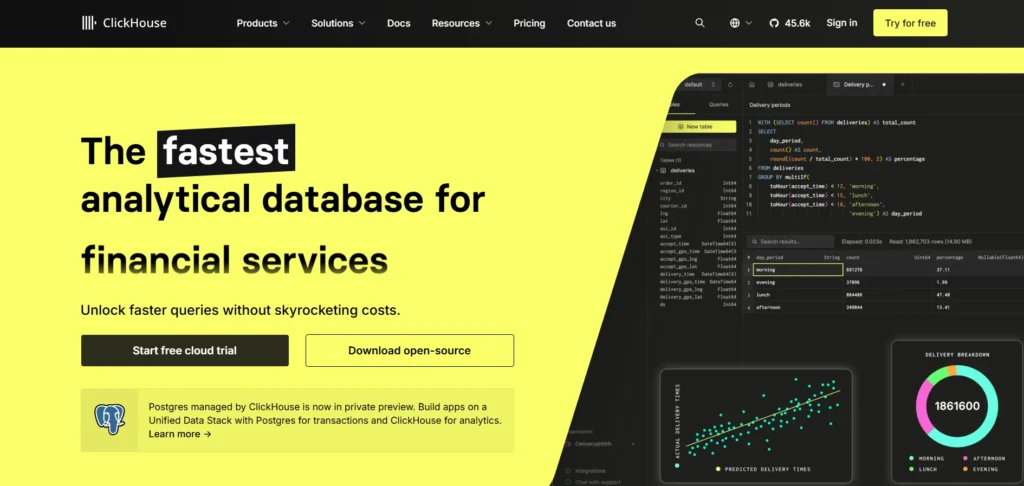
ClickHouse is a high-performance columnar database optimised for analytical workloads. While traditionally used for OLAP and real-time analytics rather than heavy transactional processing, it supports secure deployments with TLS encryption and user-level access controls.
ClickHouse can integrate with LDAP and Kerberos for enterprise authentication, and administrators can enforce fine-grained permissions on databases and tables.
Its column-oriented architecture enables rapid analytical query performance on massive datasets. With appropriate network and system security configuration, ClickHouse can be part of a secure data platform for BI, log analytics, and monitoring systems.
Website: https://clickhouse.com/
Key Features:
- Columnar storage engine
- TLS encrypted connections
- Role-based access control
- LDAP and Kerberos support
- High-speed analytics queries
- Distributed processing
Pros:
- Extremely fast analytics
- Efficient storage usage
- Scales well for OLAP
- Open-source availability
- Strong performance at scale
Cons:
- Not ideal for OLTP
- Manual security configuration
- Limited transactional support
Pricing:
- Basic– Storage- $25.30
- Scale– Storage- $25.30
12. RavenDB
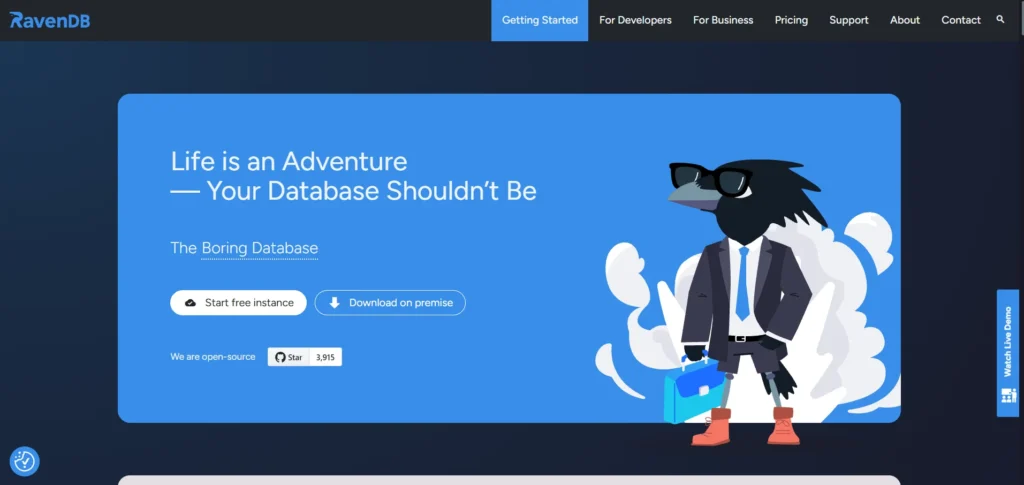
RavenDB is an open-source document-oriented NoSQL database and one of the secure database management platforms, offering ACID transactions and distributed clustering with Raft consensus. It supports secure authentication and authorization, with the ability to configure user roles and permissions.
RavenDB includes TLS encryption for data in transit and can be deployed with encrypted storage for at-rest protection. Its cluster-wide consistency and automatic indexing ease application development while maintaining performance.
RavenDB also integrates full-text search and vector search capabilities. Its comprehensive security controls and flexible deployment make it suitable for modern applications requiring a secure document database with transactional guarantees.
Website: https://ravendb.net/
Key Features:
- ACID-compliant document storage
- TLS encryption by default
- Role-based authorization
- Cluster-wide security policies
- Built-in full-text search
- Automatic indexing
Pros:
- Strong security defaults
- Easy replication setup
- Good developer experience
- Flexible document model
- High availability
Cons:
- Smaller ecosystem
- Limited third-party tools
- Licensing for enterprise use
Pricing:
- Custom pricing
13. YDB (Yandex Database)
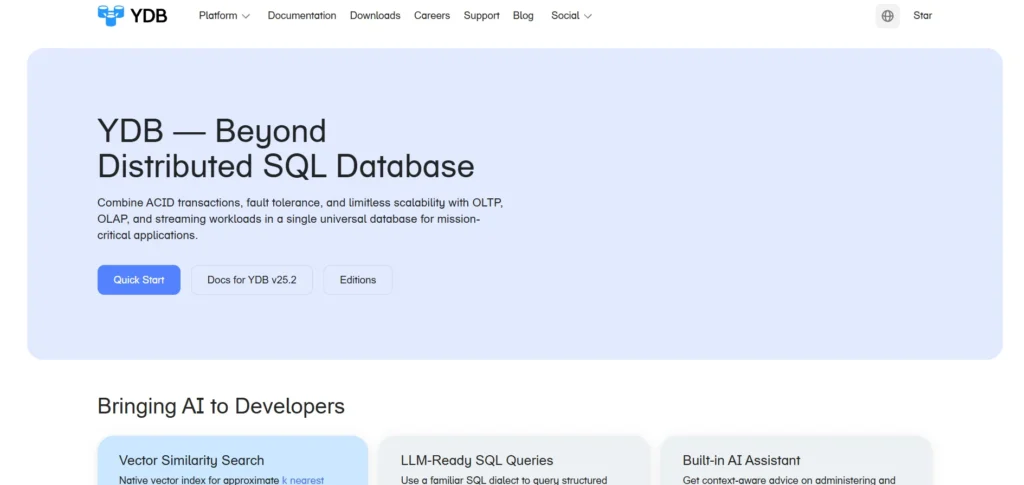
YDB (Yandex Database) is a distributed SQL database designed for large-scale, cloud-native applications requiring high availability and strong consistency. It supports ACID transactions, automatic data replication across geographic regions, and horizontal scaling.
YDB’s architecture allows secure deployments through encryption for data in transit and role-based access control. It is optimized for fault tolerance, minimizing data loss and downtime.
YDB’s distributed nature and robust consistency make it suitable for mission-critical systems where data integrity and secure operations across clusters are essential. Its enterprise focus supports integration with broader security tooling.
Website: https://ydb.tech/
Key Features:
- Distributed SQL processing
- ACID transaction support
- Horizontal scalability
- Role-based access control
- Fault-tolerant replication
- Secure cloud deployment
Pros:
- High availability design
- Strong consistency
- Cloud-native architecture
- Handles large workloads
- Optimized for scale
Cons:
- Limited global adoption
- Smaller documentation base
- Fewer integrations
Pricing:
- Open source
14. Amazon DocumentDB
Amazon DocumentDB is a fully managed document-oriented database service compatible with MongoDB APIs and optimized for cloud scalability.
It separates compute and storage layers for resilience, automatically replicating data across multiple Availability Zones. DocumentDB provides encryption at rest via AWS KMS and TLS encryption for data in transit. Its managed service model handles backups, patching, and monitoring, reducing operational burden.
Field-level encryption support enhances data protection. With compliance certifications and integration with AWS IAM for access control, DocumentDB is suited to applications that manage JSON-based data while requiring secure, scalable cloud infrastructure.
Website: https://aws.amazon.com/documentdb/
Key Features:
- Encryption at rest and transit
- MongoDB API compatibility
- Automated backups
- Multi-AZ replication
- IAM-based access control
- Fully managed service
Pros:
- Minimal maintenance
- High availability
- Strong AWS security
- Easy scaling
- Compliance-ready
Cons:
- AWS lock-in
- Limited MongoDB feature parity
- Costly at high usage
Pricing:
- Standard (per DCU hour)– $0.0822
- I/O-Optimized (per DCU hour)– $0.0905
15. SAP HANA
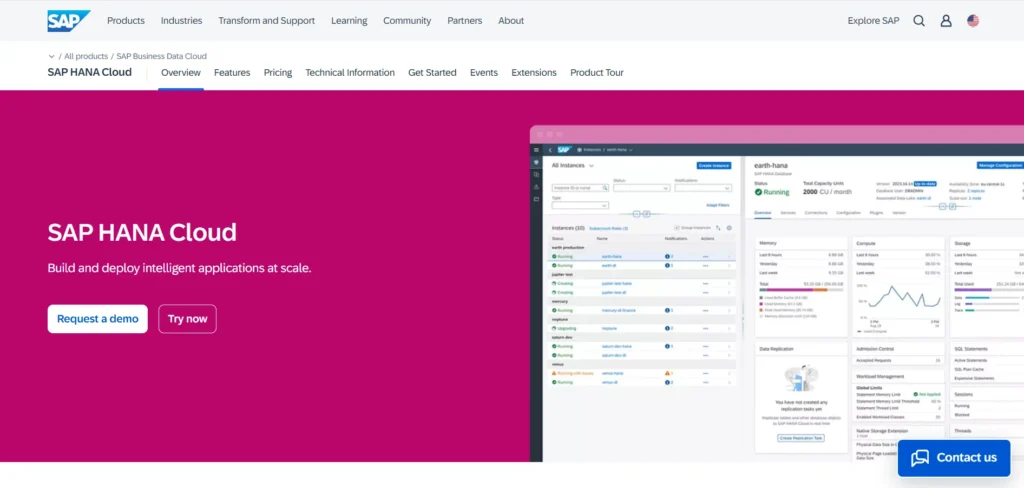
SAP HANA is a secure database management platform and an in-memory relational database solution that delivers high-speed analytics and transaction processing. It incorporates robust security features, including encryption of data at rest and in transit, role-based access controls, and comprehensive auditing capabilities.
SAP HANA’s in-memory architecture accelerates performance for real-time applications while enabling secure data isolation and governance.
Its integration with enterprise identity systems enhances authentication controls. SAP HANA is widely used in corporate environments for ERP, analytics, and mission-critical applications where performance and data security are fundamental, with frequent compliance validation in regulated industries.
Website: https://www.sap.com/products/data-cloud/hana.html
Key Features:
- In-memory data processing
- End-to-end encryption
- Role-based access control
- Advanced auditing tools
- Real-time analytics
- Enterprise identity integration
Pros:
- Extremely fast performance
- Strong enterprise security
- Real-time insights
- Deep SAP ecosystem integration
- Proven at large scale
Cons:
- Very high cost
- Complex setup
- Heavy resource requirements
Pricing:
- SAP HANA Cloud- monthly price USD 0.87
16. GaussDB (Huawei)
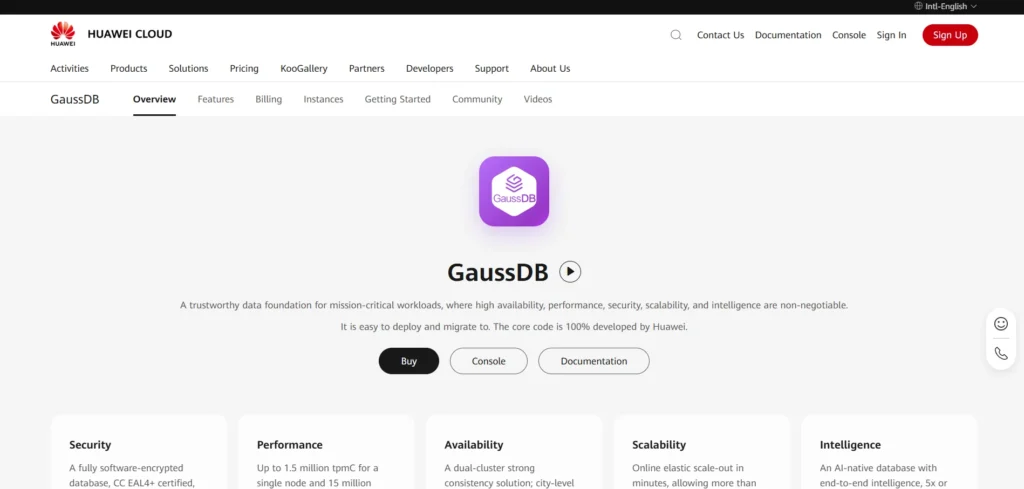
Huawei’s GaussDB is an enterprise-grade distributed relational database optimized for performance, scalability, and secure data processing across cloud and hybrid environments. Built with ACID compliance and distributed transaction support, GaussDB handles large-scale workloads without sacrificing data integrity.
It supports encryption for data at rest, secure inter-node communication, and role-based access controls to limit unauthorized access. The system provides automatic failover, backup, and recovery to maintain service continuity.
With compatibility for MySQL and NoSQL paradigms in different versions, GaussDB is suited for financial, telecommunications, and enterprise applications demanding strong security, high availability, and compliance in multi-region deployments.
Website: https://www.huaweicloud.com/intl/en-us/product/gaussdb.html
Key Features:
- Distributed ACID-compliant architecture
- Encryption at rest and in transit
- Role-based access control
- Automatic failover and recovery
- MySQL and PostgreSQL compatibility
- High availability across regions
Pros:
- Enterprise-grade security
- Strong performance at scale
- Cloud and hybrid support
- Built-in disaster recovery
- Suitable for regulated industries
Cons:
- Limited adoption outside Huawei ecosystem
- Smaller global community
- Vendor lock-in concerns
- Documentation depth varies
Pricing:
- Contact sales
Ending Thoughts
In conclusion, secure database management platforms play a vital role in helping organizations handle growing volumes of data securely, efficiently, and at scale. They simplify complex database operations by automating administration, monitoring performance, managing access controls, and ensuring data integrity. With built-in security features such as encryption, auditing, and backup mechanisms, these platforms protect sensitive information while supporting regulatory compliance.
Modern database management platforms also offer flexibility through cloud, hybrid, and on-premise deployments, enabling businesses to adapt to evolving technological needs. By improving reliability, reducing downtime, and enhancing data accessibility, database management tools empower organizations to make informed decisions, support critical applications, and maintain a strong foundation for data-driven growth in today’s competitive digital environment.
FAQs
What is the Main Purpose of Database Management Tools?
Database management tools are used to store, organize, secure, and manage data efficiently. They help automate tasks like backups, performance tuning, access control, and monitoring.
Who uses Database Management Tools?
They are commonly used by database administrators, developers, IT teams, and organizations that manage large amounts of structured or unstructured data.
Are Database Management Tools Secure?
Yes, most modern tools include security features such as encryption, role-based access control, auditing, and compliance support to protect sensitive data.
Can Database Management Tools be Cloud-based?
Yes, they are available as on-premise, cloud-based, and hybrid solutions, offering flexibility based on business needs.
How do these Tools Help Businesses?
They improve data reliability, reduce downtime, enhance performance, and support data-driven decision-making.